A 100 kVA generator delivers about 145 A at 400 V three‑phase and about 435 A on 230 V single‑phase.
I’ve worked with commercial generators for years, and I’ll walk you through how to answer the common question 100 Kva Generator How Many Amps with clear formulas, real examples, and practical tips. This guide covers math, real-world factors, sizing, breaker and cable guidance, and lessons from hands-on experience so you can make confident decisions for installations and loads.
Source: forumelectrical.com
Understanding the basics: kVA, kW, and current
kVA is a measure of apparent power. It includes both real power (kW) and reactive power. When you ask 100 Kva Generator How Many Amps you are really asking how much current that apparent power will draw at a given voltage.
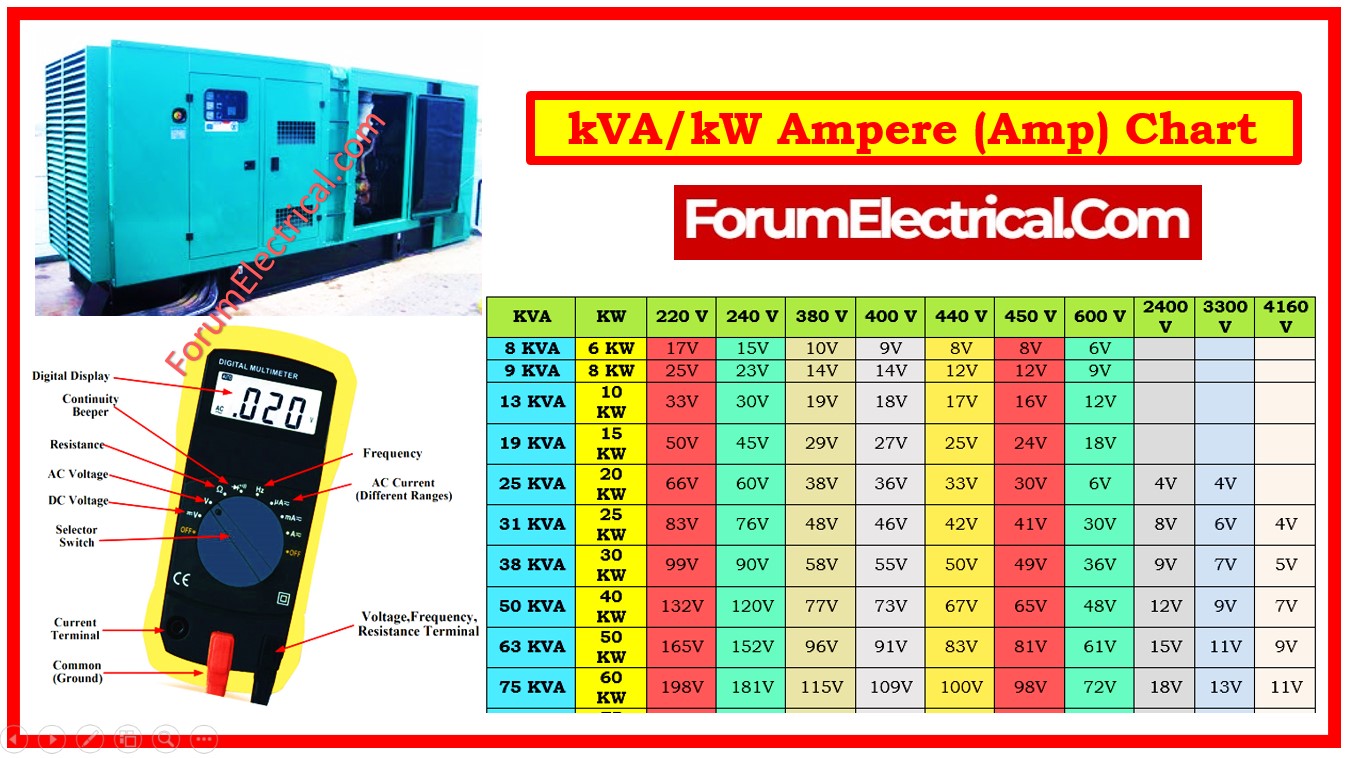
For three‑phase systems use the formula I = (kVA × 1000) / (√3 × V). For single‑phase use I = (kVA × 1000) / V. These formulas give the current in amps directly from kVA without needing power factor if you stay in kVA. Always check the supply voltage because the current changes with voltage.
Common voltages change the answer. That is why the single line “100 Kva Generator How Many Amps” can have many correct numbers depending on site voltage and phase configuration.
Source: electrical-equipment.org
How to calculate amps for a 100 kVA generator (formulas and examples)
Step 1: Choose formula based on phase
- Three‑phase: I = (kVA × 1000) / (√3 × Voltage)
- Single‑phase: I = (kVA × 1000) / Voltage
Step 2: Plug in numbers for common voltages
- 400 V three‑phase: I = 100000 / (1.732 × 400) ≈ 144.3 A
- 415 V three‑phase: I ≈ 139.1 A
- 480 V three‑phase: I ≈ 120.3 A
- 208 V three‑phase: I ≈ 277.7 A
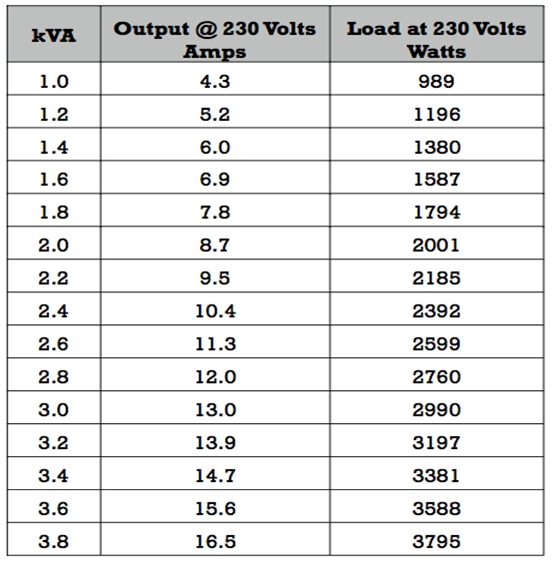
- 230 V single‑phase: I = 100000 / 230 ≈ 434.8 A
- 240 V single‑phase: I ≈ 416.7 A
These examples directly answer 100 Kva Generator How Many Amps for many practical voltages. Keep the formula in your notes and you can compute any other voltage quickly.
Practical tip: round to sensible values for cable and breaker selection, but always use exact calculations for final engineering.
Source: ade-power.com
Real‑world considerations: power factor, starting currents, and load types
kVA already accounts for apparent power so power factor does not change the amps when you use kVA. If you only have kW, convert to kVA by dividing by power factor: kVA = kW / PF. That matters when moving between energy and apparent power.
Starting currents for motors and compressors can be many times running current. When someone asks 100 Kva Generator How Many Amps for a site that has motor loads, treat inrush separately. Typical motor starting can be 4–8× running amps. That means a 100 kVA generator sized for 145 A running current at 400 V may need headroom for starts.
Load diversity and duty cycle matter. Resistive heating load is steady. HVAC and pumps are cyclic. Plan for the worst‑case starting plus the running loads together.
Source: daelimtransformer.com
Sizing, breakers, and cable selection for a 100 kVA generator
Use the calculated amps for conductor and breaker sizing but also apply safety margins and code requirements. A common industry guideline is to size conductors and overcurrent protection with a margin for continuous loads—often 125%—but local electrical codes and manufacturer recommendations must be followed.
Steps to size protection and cables
- Determine continuous and non‑continuous loads.
- Calculate full load amps from the 100 Kva Generator How Many Amps result for the site voltage.
- Apply code factors for continuous loads, derating, and ambient temperature.
- Choose breaker and cable sizes rated above the expected maximum and compatible with the generator’s short‑circuit capability.
Always consult the generator manual for allowable breaker settings. Manufacturer specs often limit the maximum breaker size or require specific breaker types to protect the alternator.
Source: ade-power.com
Personal experience and practical tips from the field
I once sized a 100 kVA generator for a small clinic. The nameplate current at 400 V was about 144 A. The real challenge was multiple air‑conditioning units starting together. We added a soft starter on the largest compressor and staggered A/C starts. That approach kept peak demand within the generator’s capability.
Lessons learned:
- Always model starting currents early. It’s easier than retrofitting.
- Speak with the facility’s operators to learn load patterns before final sizing.
- Record actual running currents during commissioning to validate assumptions.
These field tips show how the raw answer to 100 Kva Generator How Many Amps needs real‑world context to be useful.
Source: gfepowerproducts.com
Common questions answered (PAA-style)
What is the simplest way to find amps from kVA?
- Use I = (kVA × 1000) / (√3 × V) for three‑phase or I = (kVA × 1000) / V for single‑phase. Plug in your voltage and compute.
Does power factor change the amps if I use kVA?
- No. kVA already accounts for apparent power. Power factor matters when converting kW to kVA.
How do motor starts affect a 100 kVA generator?
- Motor starts can draw several times the running current. Plan for inrush and consider soft starters or staggered starts.
Should I size the breaker to the exact generator full load amps?
- No. Follow code and manufacturer guidance. Many designs use a margin (for example 125%) for continuous loads, but check local rules.
How to adjust for altitude and temperature?
- High altitude and hot temperatures reduce generator output. Refer to derating tables or manufacturer guidance when answering 100 Kva Generator How Many Amps in those conditions.
Source: genpowerusa.com
Frequently Asked Questions of 100 Kva Generator How Many Amps
What is the full load current of a 100 kVA generator at 400 V three‑phase?
At 400 V three‑phase the full load current is roughly 144 A. Use the three‑phase formula for a precise value.
How many amps does a 100 kVA generator supply at 230 V single‑phase?
At 230 V single‑phase it supplies about 435 A. That is simply 100000 divided by 230.
Do I need to consider power factor when calculating amps from kVA?
No, kVA already includes apparent power. Power factor is needed only when converting between kW and kVA.
Can a 100 kVA generator run large motors?
Yes, but you must consider motor starting currents and possible use of soft starters or reduced‑voltage starting. Without management, multiple large starts can overload the generator.
How should I size cables and breakers for a 100 kVA generator?
Calculate the full load amps based on site voltage, then apply code derating factors and a safety margin. Always follow manufacturer rules and local electrical codes.
Conclusion
Knowing 100 Kva Generator How Many Amps is simple math but using that number correctly needs context. Use the correct formula, check your site voltage, plan for motor starts, and follow code and manufacturer guidance for protection and wiring. Start with the amp values shown here, validate with measurements during commissioning, and adjust for real conditions like temperature and altitude.
Take action: calculate your site’s amps now, compare to your generator nameplate, and consult the generator manual or an electrician before finalizing breakers or cable sizes. Leave a comment with your voltage and load mix if you want help with a tailored calculation.