
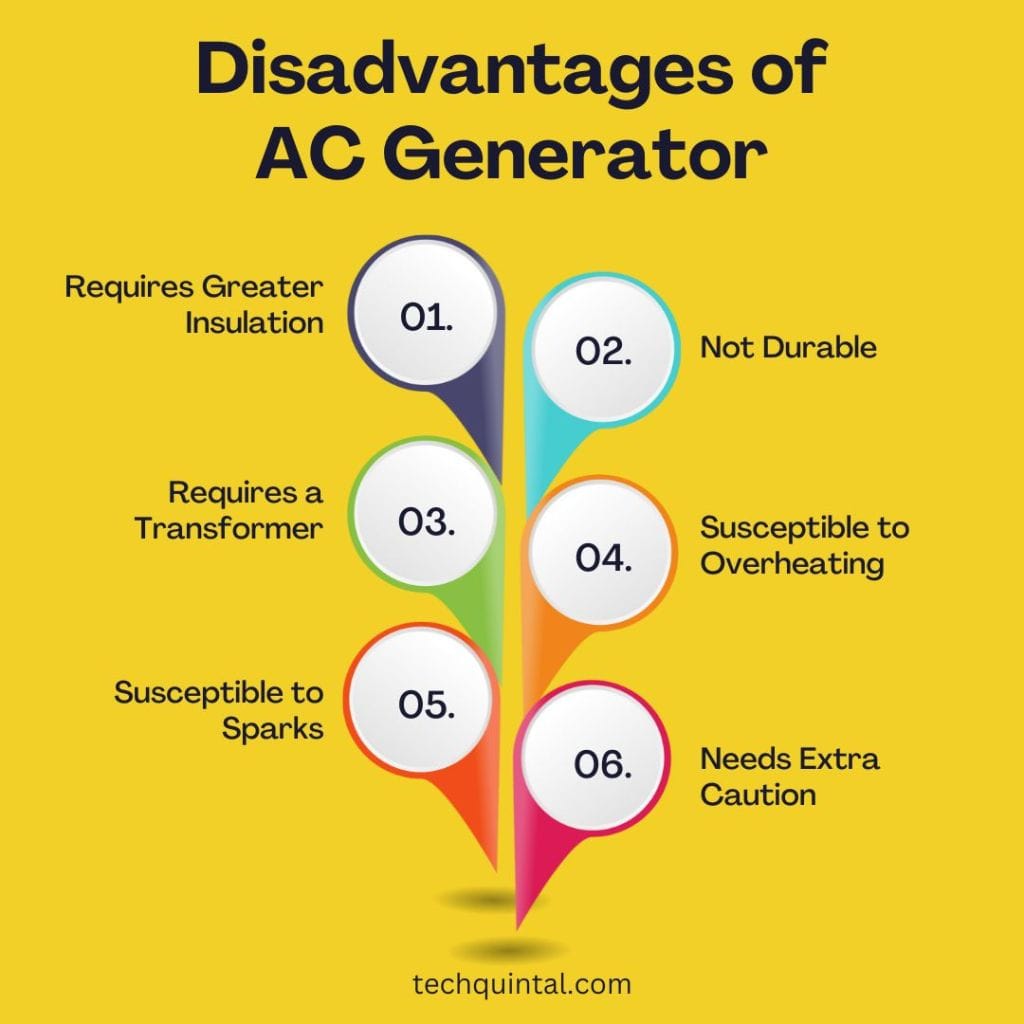
When considering an AC generator for your power needs, it’s essential to weigh the pros and cons. While AC generators offer many advantages, they also come with some significant drawbacks that you should know about.
Understanding these disadvantages can help you make an informed decision that affects your energy efficiency, costs, and overall satisfaction. We will dive into the potential pitfalls of AC generators, ensuring you’re equipped with the knowledge to choose the best power solution for your situation.
Stay with us as we explore these critical issues—your future energy choices depend on it.

Credit: slideplayer.com
High Maintenance Needs
High maintenance needs can be a significant drawback of AC generators. While they are essential for providing reliable power, the upkeep required can be demanding. Understanding these maintenance requirements can help you make informed decisions about your energy needs.
Frequent Check-ups
AC generators require regular inspections to ensure they operate efficiently. You should plan for routine check-ups every few months. Ignoring these can lead to larger issues down the road.
- Check oil levels
- Inspect coolant levels
- Examine belts and hoses
Neglecting these tasks can result in costly repairs. Have you ever experienced a breakdown because you missed a simple check? Keeping a maintenance schedule can prevent these headaches.
Parts Replacement
Over time, certain parts of your AC generator will wear out and need replacement. Common components that may need replacing include:
- Fuel filters
- Spark plugs
- Battery
These replacements can add up, both in terms of time and cost. Being proactive can save you from unexpected downtime.
Specialized Skills Required
Not everyone can handle maintenance tasks for AC generators. Some repairs may require specialized knowledge or tools. You might need to hire a professional technician, which can increase your ongoing costs.
Have you considered whether you want to take on this responsibility? Understanding your comfort level with maintenance can guide your decision-making.
Fuel Dependence
AC generators typically rely on fuel, which means you need to monitor fuel consumption regularly. Running out of fuel can halt operations, leading to inconveniences.
Are you prepared for the extra effort needed to keep your generator fueled? It’s not just about having a backup; it’s about ensuring it’s ready when you need it most.
Regular maintenance is also essential for minimizing the environmental impact of your AC generator. Poorly maintained generators can emit harmful pollutants.
Are you considering the broader implications of your generator’s maintenance? Taking care of your equipment can benefit both your wallet and the planet.

Credit: www.scienceflip.com.au
Cost Of Operation
The cost of operation for an AC generator can significantly impact your budget. Understanding these costs is crucial for making an informed decision. You might think that the initial purchase price is the only factor, but ongoing expenses can add up quickly.
Initial Purchase Price
The upfront cost of an AC generator can be quite high. Depending on the size and features, prices can range from a few hundred to several thousand dollars. You need to consider your power needs and how much you’re willing to invest.
Fuel Costs
AC generators require fuel to operate, which can lead to ongoing expenses. Gasoline, diesel, or propane are common options, and prices can fluctuate. Have you checked fuel prices lately? They can dramatically affect your monthly costs.
Maintenance Expenses
Regular maintenance is necessary to keep your AC generator in good condition. This includes oil changes, filter replacements, and inspections. Skipping maintenance can lead to costly repairs down the line, so budgeting for these services is essential.
While not a direct cost, noise and vibration can lead to additional expenses. If your generator is too loud, you might need to invest in soundproofing solutions or face complaints from neighbors. Have you thought about how this could impact your living environment?
Wear And Tear
AC generators experience wear and tear over time. This can lead to breakdowns that require costly repairs or even replacements. Planning for these potential expenses can help you avoid surprises.
Understanding the cost of operation for AC generators is vital. It’s more than just the initial purchase price; ongoing expenses can affect your financial planning. Take the time to evaluate all factors before making a decision. What costs have you considered in your generator search?
Voltage Fluctuations
Voltage fluctuations are a common issue with AC generators. These variations can cause problems for both equipment and users. Understanding these fluctuations is essential to grasping the disadvantages of AC generators.
What Causes Voltage Fluctuations?
Voltage fluctuations often stem from changes in the load on the generator. When devices turn on or off, the demand for power changes. This can create sudden spikes or drops in voltage.
Another factor is the generator’s design. Some generators struggle to maintain a steady output, especially under varying loads. This inconsistency can lead to significant fluctuations.
Impact On Equipment
Your electronic devices are sensitive to voltage changes. A sudden spike can damage components, while a drop can lead to malfunction or shutdown. For example, I once experienced a power surge that fried my laptop’s power supply, causing a frustrating delay in my work.
Industrial machinery is even more vulnerable. Many machines require precise voltage levels to operate correctly. Fluctuations can result in reduced efficiency and increased wear and tear.
Effect On Performance
Voltage fluctuations can also affect the overall performance of your AC generator. If the generator struggles to maintain a steady voltage, it can operate less efficiently. This inefficiency can lead to higher fuel consumption and increased operational costs.
Have you noticed your generator running louder during load changes? This noise may indicate that it’s working harder to compensate for voltage fluctuations. Over time, this can lead to premature wear and potential failures.
Mitigating Voltage Fluctuations
To reduce the impact of voltage fluctuations, consider using voltage regulators. These devices help stabilize the output, ensuring a consistent voltage level. Investing in a good quality regulator can protect your equipment and improve performance.
- Regular maintenance of your generator can also help.
- Ensure it is properly sized for your needs to avoid overloading.
- Monitor your load changes to anticipate fluctuations.
Have you taken steps to manage voltage fluctuations? Assessing your generator’s performance can lead to better decision-making and minimize risks associated with voltage instability.
Noise And Vibration Issues
AC generators can create significant noise and vibration. These issues can affect both the environment and human health. Understanding these problems is important for users.
Source Of Noise
The main source of noise in AC generators is the engine. The engine runs at high speeds, producing loud sounds. Other components, like cooling fans, can also add to the noise.
Impact On Surroundings
Excessive noise can disturb nearby residents. This can lead to complaints and conflicts. In some areas, noise levels may exceed legal limits. This could result in fines or restrictions.
Health Concerns
Constant exposure to loud noise can harm health. It can cause stress and sleep problems. Long-term exposure may even lead to hearing loss.
Vibration Effects
Vibration from AC generators can cause physical discomfort. It can lead to fatigue and decreased productivity. Strong vibrations may also damage nearby equipment.
Mitigation Strategies
Using sound barriers can help reduce noise. Placing the generator on rubber mats can limit vibration. Regular maintenance can also minimize issues.
Environmental Impact
The environmental impact of AC generators is a significant concern. While they provide essential power, their contribution to pollution and resource depletion cannot be overlooked. Understanding these effects can help you make informed decisions about energy use.
Air Pollution
AC generators, especially those running on fossil fuels, emit harmful gases. These include carbon dioxide, sulfur dioxide, and nitrogen oxides. Such emissions contribute to air quality degradation, which affects both health and the environment.
Every time you use an AC generator, you might unknowingly be adding to the smog in your area. If you live in a densely populated region, this pollution could be even more pronounced. Have you ever noticed how the air feels heavy after a long summer of generator use?
Noise Pollution
Noisy generators can disrupt the peace of your neighborhood. The hum of engines can be irritating, especially during quiet evenings. This constant noise can impact mental well-being and disturb local wildlife.
Think about your own experiences. Have you ever struggled to enjoy a peaceful evening because of a generator running nearby? It’s not just annoying; it’s a reminder that our energy choices affect everyone around us.
Resource Depletion
AC generators often rely on non-renewable resources like oil and coal. Extracting these resources can lead to habitat destruction and biodiversity loss. As these resources dwindle, the environmental cost of power generation increases.
You may not realize it, but every time you fill up your generator, you contribute to this cycle. The more you rely on these energy sources, the more pressure is put on our planet’s finite resources. What alternatives could you consider to reduce this impact?
Waste Generation
Generators produce waste, both from fuel and the machines themselves. Old generators, if not disposed of properly, can leak harmful substances into the soil and water. This waste not only harms ecosystems but can also affect your health.
Have you ever thought about what happens to your old generator? Many people overlook the importance of proper disposal. Ensuring your equipment is recycled or disposed of responsibly is crucial for minimizing waste impact.
As you weigh the benefits and drawbacks of using an AC generator, consider how your choices affect the environment. Small changes in your energy habits can lead to a healthier planet. Are you ready to rethink your energy options?
Complex Design
AC generators have a complex design that can be hard to understand. This complexity affects maintenance and repairs. Knowing how they work requires a good grasp of electrical principles.
Intricate Components
AC generators contain many parts. Each part plays a specific role. A failure in one component can impact the whole system. This makes troubleshooting difficult.
Higher Maintenance Needs
The intricate design leads to more maintenance. Regular checks are essential to keep the generator running. This can increase costs for users.
Installation Challenges
Installing an AC generator is not simple. It requires skilled technicians. Mistakes during installation can lead to serious issues.
Limited User Understanding
Many users struggle to understand the system. This lack of knowledge can cause operational errors. Users may not perform basic troubleshooting effectively.
Cost Implications
The complexity often results in higher costs. Repairs can be expensive due to specialized parts. New users may find these costs overwhelming.
Shorter Lifespan
AC generators are vital in many applications, from powering homes to supporting industrial operations. However, one significant drawback is their shorter lifespan compared to other power generation systems. Understanding this limitation can help you make informed decisions when considering an AC generator for your needs.
Factors Affecting Lifespan
Several factors contribute to the lifespan of an AC generator. These include:
- Usage Frequency:Frequent operation can lead to wear and tear.
- Load Conditions:Running under heavy loads consistently may shorten the generator’s life.
- Maintenance Practices:Inadequate maintenance accelerates deterioration.
Impact Of Environmental Conditions
The environment plays a crucial role in the longevity of an AC generator. Extreme temperatures, humidity, and exposure to dust can all lead to faster degradation. Have you ever noticed how equipment in harsh environments fails sooner than expected?
Comparison With Other Generators
AC generators typically have a shorter lifespan than their DC counterparts. While AC generators are efficient, they often require more frequent repairs and replacements. This could mean higher overall costs for you in the long run.
Importance Of Regular Maintenance
To maximize the lifespan of your AC generator, regular maintenance is essential. Schedule routine checks to identify and fix issues early. A simple oil change or filter replacement can make a significant difference.
Investment Considerations
When purchasing an AC generator, consider the potential for a shorter lifespan. Weigh the initial cost against the long-term expenses of maintenance and possible replacements. Would investing in a more durable option save you money over time?
Credit: manney.medium.com
Frequently Asked Questions
What Are The Main Drawbacks Of Ac Generators?
AC generators can be less efficient compared to DC generators. They typically require more complex components, leading to higher maintenance costs. Additionally, AC generators may produce harmonic distortions, affecting power quality. These factors can limit their application in sensitive environments.
How Do Ac Generators Compare To Dc Generators?
AC generators are often larger and heavier than DC generators. While AC generators can generate higher voltages, DC generators provide more stable output. Maintenance requirements also differ; DC generators need more frequent attention. Overall, the choice depends on specific energy needs and applications.
Are Ac Generators Suitable For All Applications?
No, AC generators are not suitable for every application. They work well for large-scale power generation but may struggle in low-power settings. Sensitive electronic devices often require a stable DC supply. Evaluating the specific energy requirements is essential before choosing an AC generator.
What Is The Impact Of Ac Generator Efficiency?
Efficiency impacts operating costs and energy consumption. Lower efficiency means higher fuel consumption, increasing operational expenses. Additionally, inefficient AC generators can lead to greater emissions and environmental concerns. Maximizing efficiency is crucial for sustainable and cost-effective energy solutions.
Conclusion
AC generators have some clear disadvantages. They can be expensive to maintain. Noise levels can be high, causing discomfort. Efficiency may drop under certain conditions. They require regular inspections to ensure safety. These factors can lead to higher operating costs.
Understanding these downsides helps in making informed decisions. Weigh the pros and cons carefully. This way, you can choose the right generator for your needs. Make sure to consider all aspects before investing.