
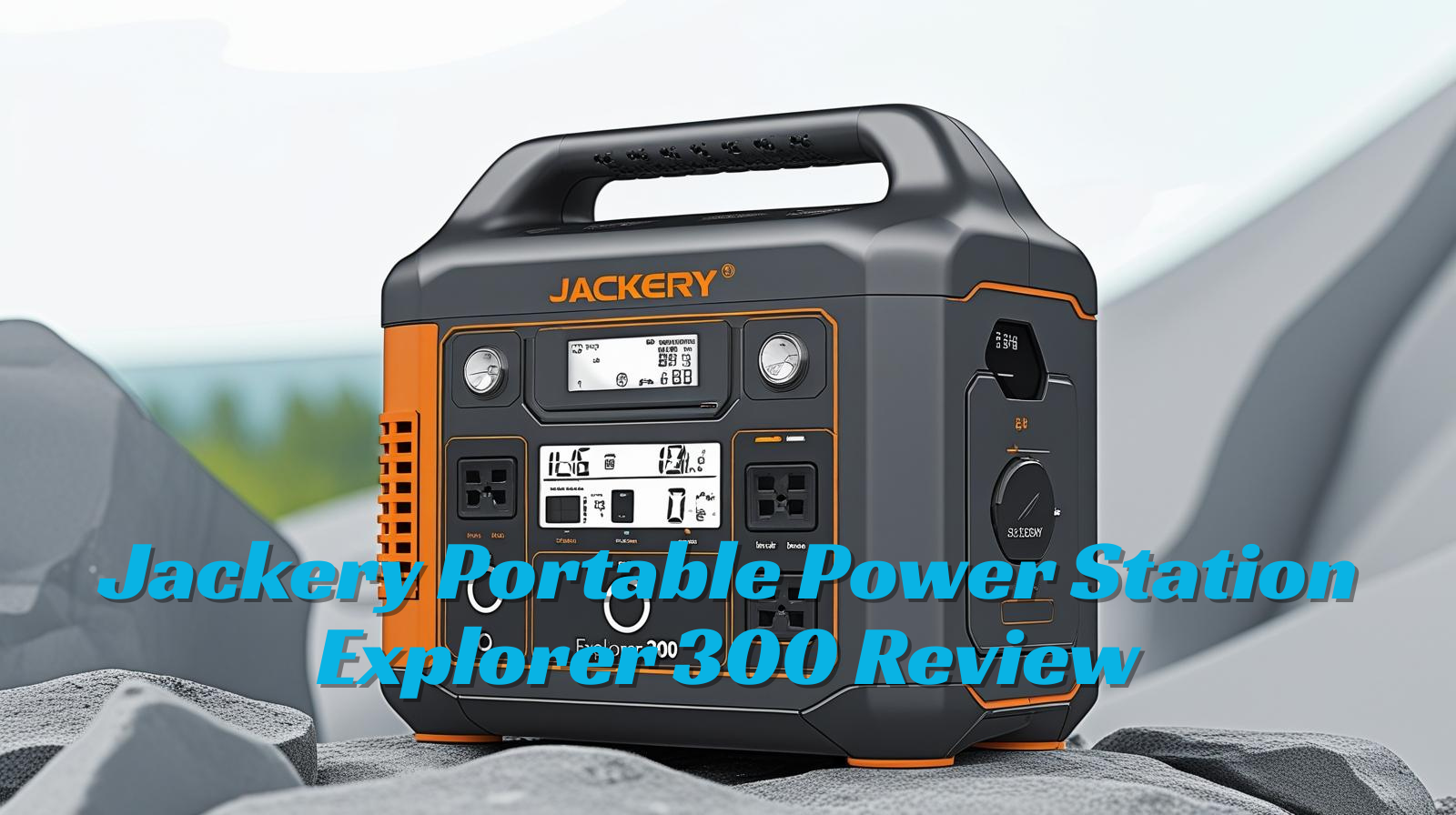
This guide helps plan small-device backup with the original Jackery Explorer 300. Check the actual appliance draw, required duration and charging arrangement; the similarly named 300 Plus and 300 V2 have different specifications.
The Jackery Portable Power Station Explorer 300 has been one of the most popular compact power stations for years — and in 2026, it remains a strong contender for anyone who values portability and simplicity.
In this in-depth review, I’ll cover real-world performance, runtime estimates, pros and cons, comparisons, customer feedback, and everything you need to know before buying. Whether you’re a weekend camper, digital nomad, photographer, or preparing for emergencies, this Jackery Explorer 300 review will help you decide if it’s the right fit.
Jackery Explorer 300 Key Specifications
- Battery Capacity: 293Wh Lithium-ion (NMC chemistry)
- Output Power: 300W continuous (500W surge)
- AC Outlets: 2 × Pure Sine Wave 110V outlets
- Ports: 60W PD USB-C (bidirectional – input & output), QC 3.0 USB-A, standard USB-A, 12V DC car port (supports up to 6 devices simultaneously)
- Weight: 7.1 lbs (3.2 kg)
- Dimensions: 9.1″ × 5.2″ × 7.8″
- Recharge Time: Up to 80% in just 2 hours using wall outlet + 60W PD USB-C dual input
- Solar Compatibility: Works with Jackery SolarSaga 100W panel (sold separately) with built-in MPPT controller
- Other features: Cooling fan, pass-through charging and display. Jackery support lists the fan at ≤55dB; verify operating conditions and seller warranty terms.
Seller ratings: No current dated rating or review count has been verified here. Check the exact model and review dates on the seller listing.
Check Latest Price & Buy on Amazon
Real-World Performance: How Does the Jackery Explorer 300 Actually Perform?
This is a research-based guide, not a hands-on test or a verified survey of hundreds of owners. Check current Jackery Explorer 300 documentation and the exact model on your device. Runtime estimates use assumptions, not independent measurements.
Camping and trips: Match small devices to the station’s documented output limits and energy budget. It has a cooling fan, so noise-free operation or a particular number of hours cannot be promised.
Medical equipment: Compatibility and overnight duration cannot be assumed. Follow the equipment provider’s approved power instructions and prescribed settings. For planning only, 293.8Wh × an assumed 80% usable fraction gives 235.04Wh: about 7.83 hours at a constant 30W or 3.92 hours at 60W, before additional reserve.
Photography, Drones & Camera Gear Photographers and content creators appreciate the multiple ports and pure sine wave output. It safely recharges camera batteries and drone batteries multiple times between shoots without risking damage to sensitive electronics.
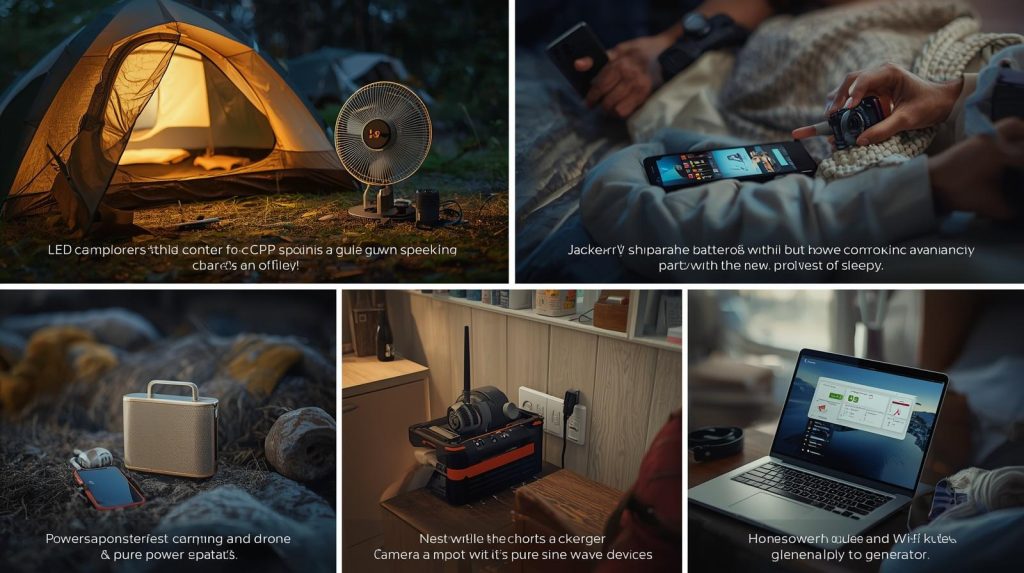
Power outages: Budget for compatible communications, computer and lighting loads. Compare battery energy with expected consumption. Medical equipment requires its own approved backup arrangement; a general power-station rating does not establish medical-device safety.
Illustrative runtime calculations: These use 293.8Wh × an assumed 80% usable fraction = 235.04Wh. The factor is not measured efficiency. No medical-device runtime or compatibility is guaranteed; idle consumption and accessories reduce the available duration.
| Device | Approx. Power Draw | Estimated Runtime / Charges |
|---|---|---|
| Smartphone (3,000–4,000 mAh) | 10–15W | 18–25 full charges |
| Laptop (MacBook / Dell) | 45–65W | Illustrative: 235.04Wh ÷ 45–65W ≈ 3.6–5.2h, not measured |
| LED Camping Light | 5–10W | Illustrative: 235.04Wh ÷ 5–10W ≈ 23.5–47h before extra idle losses |
| CPAP Machine (standard) | 30–60W | Illustrative only: about 3.9–7.8h at constant 30–60W; no medical guarantee |
| Portable Mini Fridge | 40–55W | Illustrative: about 4.3–5.9h at constant 40–55W; measure compressor cycling |
| Small Fan | 15–25W | Illustrative: about 9.4–15.7h at constant 15–25W |
Note: Actual results vary based on device efficiency and temperature. Always calculate your total load to stay under 300W.
Pros and Cons of the Jackery Explorer 300
Pros:
- Extremely portable at just 7.1 lbs with a sturdy built-in handle — easy to carry or pack in your car
- Fast dual-input charging (80% in ~2 hours)
- Pure sine wave output does not guarantee compatibility with every sensitive or medical device; check the device manufacturer’s requirements.
- Battery operation has no combustion exhaust, but a cooling fan may run; follow ventilation and environmental instructions.
- Versatile port selection for charging up to 6 devices at once
- Excellent solar compatibility with built-in MPPT controller
- Reliable build quality and strong customer support from Jackery
Cons:
- 300W power limit — not suitable for high-wattage appliances like full-size refrigerators, microwaves, space heaters, or power tools
- Solar panel sold separately (adds extra cost)
- Basic LCD display (no detailed remaining runtime estimate in all modes)
- Older lithium-ion battery chemistry offers fewer cycles (~500) compared to newer LiFePO4 models
Jackery Explorer 300 vs Explorer 300 Plus (2026 Comparison)
| Feature | Explorer 300 | Explorer 300 Plus |
|---|---|---|
| Battery Type | Lithium-ion (NMC) | LiFePO4 (much longer lifespan) |
| Cycle Life | ~500 cycles | 3,000–4,000+ cycles |
| Weight | 7.1 lbs | Slightly heavier |
| App Control | No | Yes (WiFi/Bluetooth in some versions) |
| Built-in Light | No | Available in some variants |
| Price | Usually more affordable | Higher |
Recommendation: Choose the standard Explorer 300 if you prioritize maximum lightness and lower cost. Go for the Explorer 300 Plus if you want better long-term durability and modern features.
Checks When Reading Owner Feedback

The earlier anonymous quotations have no verified source. Use these practical checks when comparing owner reports; they are not a dated owner survey.
- For overnight equipment, require an approved power arrangement and a measured device-specific test rather than an anonymous testimonial.
- For road trips, compare the charging inputs with the device energy used between stops.
- A panel does not guarantee multi-day backup. Compare daily sunlight, input energy and consumption.
- Check running and startup loads against the documented limits. Stop and investigate an overload rather than treating protection as a routine operating mode.
Tips to Get the Most Out of Your Jackery Explorer 300
- Use dual charging (wall outlet + PD USB-C) whenever possible for the fastest recharge.
- Keep total power draw under 300W continuous to avoid overload.
- Turn off unused ports to conserve battery life.
- For solar use, invest in the official Jackery SolarSaga 100W panel for best efficiency.
- Store at 50–70% charge in a cool, dry place and top it up every 2–3 months.
- Calculate your devices’ wattage before heading out — this prevents surprises.
Who Should Buy the Jackery Explorer 300?
Perfect For:
- Weekend campers and road trippers
- Photographers and drone pilots
- Medical-equipment users need a separate compatibility assessment and backup plan from their equipment provider.
- Remote workers and digital nomads
- Homeowners wanting quiet backup power for short outages
- Anyone who values lightweight portability above raw power
Consider Something Else If:
- You need to run high-wattage appliances (600W+)
- You want multi-day heavy usage without frequent recharging
- You prioritize maximum battery lifespan (then look at LiFePO4 models)
Final Verdict
The Jackery Portable Power Station Explorer 300 continues to be an excellent choice in 2026 for anyone seeking a compact, lightweight, and user-friendly portable power solution. Its combination of portability, fast charging, pure sine wave output, and quiet operation makes it ideal for camping, travel, photography, and emergency preparedness.
While it has clear limitations on high-power devices, it delivers exactly what most light-to-medium users need — reliable, clean power without the hassle of gas generators.
If your power needs stay under 300W and you want something easy to carry, the Explorer 300 is highly recommended.
Check Current Price and Buy the Jackery Explorer 300 on Amazon (Frequently on sale — great time to grab one!)
Have questions about running a specific device (like your CPAP, laptop, or drone)? Drop a comment below and I’ll help calculate the expected runtime for you.
Thanks for reading this Jackery Explorer 300 review! Share your own experience in the comments — I’d love to hear how it’s working for you.
1 thought on “Jackery Portable Power Station Explorer 300 Review 2026”