Can artificial light charge solar panels? Yes, artificial light can make a photovoltaic (PV) panel generate electricity, and that electricity can sometimes charge a connected battery. But an important distinction comes first: solar panels do not store charge themselves. They convert light into electrical power. A rechargeable battery, power bank, or solar-powered device stores energy only if the panel supplies suitable voltage and current through an appropriate charging circuit.
The practical answer is less exciting for full-size rooftop or portable panels. Ordinary room lighting is far weaker than direct sunlight, and the light spectrum is different. A panel under an LED desk lamp may register a voltage on a meter yet deliver too little usable power to charge a phone, solar generator, or home battery at a meaningful rate. Small indoor photovoltaic cells designed for very low-power electronics are a different story: they can operate from indoor light and may recharge tiny batteries or capacitors.
This distinction is supported by research, not guesswork. The U.S. Energy Information Administration states that some PV cells convert artificial light to electricity. The National Institute of Standards and Technology (NIST) demonstrated that a small silicon module under LED lighting could supply a wireless sensor and charge a small battery. That does not mean a typical household lamp can efficiently recharge a large solar battery.
Quick Answer: Will Solar Panels Work Under Artificial Light?
| Light source | Can a compatible PV cell produce power? | Practical expectation |
|---|---|---|
| Direct outdoor sunlight | Yes | Normal design condition for outdoor solar panels |
| Sunlight through a window | Yes | Output depends on glazing, angle, and available light |
| LED desk or ceiling lamp | Often yes | Usually very low output from conventional panels |
| Fluorescent office light | Often yes | Can support purpose-built indoor PV devices |
| Incandescent or halogen lamp | Often yes | Heat and electricity use make this an impractical charging method |
| Completely dark room | No useful PV output | No incident light to harvest |
These are qualitative expectations, not guaranteed performance figures. A device may not charge even when its panel produces some power, because the charger has a minimum input requirement. For a real-world result, the panel, light source, distance, and charging electronics must be tested together.
How Can Artificial Light Make a Solar Panel Generate Electricity?
Solar cells respond to photons, which are packets of light energy. When photons with suitable energy are absorbed by the cell’s semiconductor, they can create mobile electrical charges. The cell’s structure separates those charges, allowing current to flow through an external circuit. This is the photovoltaic effect. The U.S. Department of Energy’s PV cell guide explains that output depends on both the properties of the light and the cell.
The source of the photons does not have to be the sun. LEDs, fluorescent lamps, and other electric lights can emit photons that certain photovoltaic materials absorb. However, not every wavelength is absorbed equally, and the intensity reaching the panel is crucial. Outdoor solar modules are optimized and rated under standardized sunlight conditions, not under a household lamp. Their advertised wattage therefore tells you little about the tiny amount they may generate indoors.
Why do solar panels generate less power indoors?
The main reasons are lower light intensity and a different spectrum. A typical indoor lamp spreads its output over a room, while outdoor sunlight can deliver much greater optical energy to a panel. Lamp light may also have a narrower range of wavelengths. Fraunhofer ISE’s indoor photovoltaics research overview explains why cells designed for indoor lighting often use different absorber materials from conventional crystalline-silicon rooftop modules.
Distance and direction add another challenge. A desk lamp aimed away from a panel may deliver very little usable light to it. Moving the lamp closer can increase the light reaching the panel, but can also introduce heat or damage risks depending on the lamp and module. The best answer is not to place a high-heat bulb directly against a panel; it is to use the correct charging source for the device.
Can LED Lights Charge Solar Panels?
Yes, an LED light can illuminate a photovoltaic cell and produce electrical output. NIST tested miniature PV modules under white LED illumination and found that the devices could harvest indoor energy. In one demonstration, even a relatively low-performing silicon mini-module supplied more power than a wireless temperature sensor used while the light remained on. The study also investigated charging small batteries.
That result is useful for understanding the technology but should not be generalized to a full-size solar generator. A miniature temperature sensor uses very little energy compared with a smartphone, refrigerator, or portable power station. The output of an indoor solar cell may be adequate for a low-duty-cycle sensor and still be far below the minimum input needed by a larger device’s charge controller.
If you are trying to recharge a solar garden light with an LED bulb, the answer depends on the garden light’s panel and charging circuit, the LED brightness at the panel, and how long it remains illuminated. It might accumulate some charge under suitable conditions, but it is not safe to promise that any LED bulb will fully recharge any solar light overnight. Follow the product manufacturer’s instructions.
Can Fluorescent Lights Charge Solar Panels?
Fluorescent lighting can also provide photons that some photovoltaic cells convert into electricity. Office environments with long periods of illumination are among the settings studied for indoor energy harvesting. Research published through NIST and other institutions explores how cell material, illumination spectrum, and power-management circuits affect performance under artificial light.
As with LEDs, the important distinction is between harvesting small amounts of energy for electronics and charging large batteries. A solar calculator or sensor may need only tiny amounts of power, while a portable power station needs far more. The presence of light alone does not guarantee a practical charging rate.
Do Incandescent or Halogen Bulbs Work Better?
Incandescent and halogen lamps emit light and can make a compatible solar cell generate current. They also release substantial heat. Using such a lamp solely to charge a panel is normally an inefficient way to move energy from the electrical grid into a battery, because energy is lost when electricity becomes lamp light and again when the panel converts part of that light back to electricity.
Heat introduces another problem. High temperatures can reduce the performance of some solar cells and may damage nearby plastic, coatings, wiring, or battery enclosures. Do not place a hot lamp close to a solar panel, battery, or charging device in an attempt to speed up charging. For normal charging, use direct outdoor sunlight or the manufacturer-approved wall or USB charger.
How Much Power Can a Solar Panel Make From a Light Bulb?
There is no trustworthy universal number such as “a 100-watt bulb charges a 100-watt solar panel at 10 watts.” Bulb electrical wattage is not the same as optical power falling on the panel. Much of the bulb’s light misses the panel, some wavelengths are not converted efficiently, and additional losses occur in wiring and charging electronics. The panel’s outdoor nameplate rating is not an indoor output guarantee.
For perspective, the NIST indoor PV study tested miniature modules under a specified LED illumination of 1,000 lux, a bright indoor-light condition. Different photovoltaic materials produced different conversion efficiencies under that particular test. The findings show that artificial-light harvesting is technically possible, not that a rooftop solar module will deliver its rated power under 1,000 lux. Do not use those laboratory percentages as a charging-time calculator for an unrelated product.
A simple charging-time example
Suppose a small solar device’s charging electronics actually deliver 0.05 watts into a battery under a particular lamp. Over eight hours, that would be 0.4 watt-hours of energy before accounting for changes in illumination or battery losses. This is a hypothetical arithmetic example, not a measured output for any specific lamp or panel. A battery requiring 20 watt-hours of input would need much more energy than this setup could provide in a single night.
The practical way to estimate charging is to measure usable power at the charger input under the exact lighting conditions, not merely the panel’s open-circuit voltage. Then compare the measured watts with the battery’s required watt-hours and the charge controller’s minimum operating conditions. A voltage reading with almost no current can be misleading.
Can You Charge a Solar Battery With Artificial Light?
In principle, yes. A photovoltaic panel can provide energy to a battery when illuminated by artificial light, provided a compatible charging circuit receives sufficient voltage and current. But a battery does not charge simply because a panel produces a small voltage. Charge controllers and battery-management systems have operating thresholds and safety requirements.
For a small solar calculator, watch, or indoor sensor, artificial-light charging can be practical. For a large solar generator or home battery, household lighting is generally not a useful energy source. If the battery has a manufacturer-approved AC charging input, plugging it into an outlet is normally the more direct method. Never connect a lamp, PV module, or improvised wiring to a battery without the correct charging electronics.
Can Artificial Light Charge a Portable Solar Panel?
A folding portable solar panel may generate a little electricity indoors if it receives enough light, but that does not mean it will charge a power station. Many portable power stations require the solar input to reach a specified voltage and sufficient usable power before charging starts. Weak or intermittent illumination may fail to meet those conditions, and the station may display zero charging watts.
Check the power station’s solar input specifications and the panel’s electrical characteristics. If you are testing a small panel indoors, use only manufacturer-approved connections and avoid high-heat lamps. If the goal is to keep an emergency battery charged, choose direct sunlight or a supported AC or vehicle charging method rather than depending on an indoor bulb. Our portable power station not charging guide covers common input problems.
What About Solar Garden Lights and Solar Calculators?
Small solar-powered consumer devices illustrate the distinction between energy harvesting and high-power charging. A solar calculator can run on a tiny amount of light because its electronics have very low power requirements. Some indoor sensors and watches are specifically engineered to work with ambient lighting and low-power storage systems. Their photovoltaic cells and power-management circuits are chosen for that purpose.
Solar garden lights often use small panels and rechargeable batteries intended primarily for outdoor daylight. Artificial lighting may produce some charge under favorable conditions, but the amount varies widely. A bright lamp shining on a garden light is not necessarily a substitute for hours of outdoor daylight. If a garden light no longer holds charge, the cause could be battery aging, shading, dirty panels, or a fault rather than insufficient lamp brightness alone.
Are Special Indoor Solar Panels Different From Rooftop Panels?
Yes. Indoor photovoltaics is a specialized area of research and product development. Fraunhofer ISE describes indoor PV devices that use materials optimized for the narrower spectrum and lower intensity of artificial lighting. The goal is often to power small wireless sensors, electronic labels, and Internet of Things devices without frequent battery replacement.
NIST’s 2021 work compared silicon with gallium arsenide and gallium indium phosphide under white LEDs. Its results showed that materials performed differently under indoor lighting. Fraunhofer ISE also reported in 2025 that specially engineered indoor cells achieved high conversion efficiency under low-light test conditions. These findings are encouraging for miniature electronics, but they do not make ordinary room lights a practical energy source for an entire household.
If you are choosing a PV component for an indoor project, look for data measured under the specific lamp spectrum and illuminance you expect to use. A cell advertised only with standard outdoor test-condition wattage may not provide enough information for indoor design. The NIST measurement work discusses why artificial-light performance requires careful characterization.
Is Using Artificial Light to Power Solar Panels Energy Efficient?
Generally not when the lamp itself runs on electricity from the grid and the objective is to charge a battery. The energy path is grid electricity to lamp, lamp light to photovoltaic panel, and panel electricity to battery. Every conversion has losses. If you already have a compatible wall charger, direct charging avoids the unnecessary light-production and light-capture steps.
There is an important exception in how to think about indoor PV: a building’s lights may already be on for another purpose. A tiny sensor harvesting some of that otherwise unused light can reduce battery replacements or wiring needs. That is different from turning on extra lamps just to charge a solar panel. The energy harvested by the sensor still originates from the lighting system; it is not free energy.
How to Test a Small Solar Panel Under Artificial Light Safely
- Choose a small, low-voltage photovoltaic module and read its manufacturer documentation.
- Use a cool-running LED lamp at a safe distance; do not place hot bulbs against the module.
- Keep the setup dry and away from exposed household wiring.
- Measure the panel’s output with suitable equipment and observe how it changes with lamp direction and distance.
- Use a manufacturer-approved charging circuit if you intend to charge a rechargeable battery.
- Compare the actual charging power with the battery’s capacity and minimum input requirements.
- Stop if the module, lamp, wiring, or battery becomes unusually hot or shows signs of damage.
This experiment is suitable only for equipment designed for safe low-voltage testing. Do not experiment with roof-mounted solar strings, grid-tied inverters, exposed battery cells, or improvised mains connections. If you are unsure how to measure current safely, ask a qualified technician or use a commercially designed educational solar kit.
Artificial Light vs Sunlight for Solar Charging
| Factor | Sunlight outdoors | Typical artificial indoor lighting |
|---|---|---|
| Light intensity at panel | Often much greater | Usually much lower |
| Light spectrum | Broad | Often narrower and lamp-dependent |
| Conventional rooftop panel output | Designed for this condition | Usually a tiny fraction of outdoor output |
| Practical home battery charging | Yes with proper system | Generally not useful |
| Very low-power sensors | Possible | Possible with optimized indoor PV |
| Cost of light source | Sunlight requires no purchased fuel | Electric lamps consume electricity |
For more background on how solar cells turn light into electricity, read how solar panels work. If your question is whether solar panels can keep producing at night, see our related guide on solar panels and batteries. In ordinary darkness, PV generation stops; a battery can supply stored energy but cannot make an unlit panel produce electricity.
Frequently Asked Questions
Can a light bulb charge a solar panel at night?
A light bulb can cause a compatible photovoltaic cell to produce some electricity at night, but the panel itself does not store a charge. A connected battery may receive a small amount of energy if the charging electronics work under that illumination. A household bulb is generally not a practical substitute for sunlight when charging large batteries.
Do solar panels work with LED lights?
Yes, some photovoltaic cells can harvest LED light. NIST has demonstrated indoor LED-powered photovoltaic devices for small wireless electronics. Ordinary rooftop modules usually produce very little usable power under typical indoor LEDs compared with direct sunlight.
Can fluorescent lights power a solar panel?
They can make compatible cells generate electricity. Whether that electricity is enough for the intended device depends on lamp intensity, spectrum, cell material, and charging circuitry. Purpose-built indoor PV systems are better suited to low-power electronics than conventional rooftop panels.
Will a solar panel charge through a window?
A solar panel can generate power from daylight passing through a window, but glazing, angle, shading, and distance from the window may reduce the light reaching it. Indoor window placement is not equivalent to an unobstructed outdoor installation.
Can artificial light fully charge a solar power bank?
It depends on the power bank, its panel, and the lighting conditions. Most built-in solar panels on consumer power banks are small, and indoor lighting provides little energy. Do not assume that a lamp will fully charge the bank in a useful time. Check the manufacturer’s charging specifications and use its approved USB charging input when available.
Which artificial light works best for solar panels?
There is no single best lamp for every PV material. The result depends on the light spectrum, intensity at the panel, and the cell’s response. LEDs are commonly used in indoor PV research, while specialized indoor cells may be optimized for particular LED spectra. For ordinary charging, outdoor sunlight is the practical choice.
Does a solar panel need UV light?
No. Photovoltaic cells can use suitable visible light, and many can also respond to other wavelengths depending on their semiconductor material. NIST’s indoor LED experiments demonstrate electricity generation without requiring sunlight or ultraviolet radiation.
Can a flashlight charge a solar panel?
A flashlight may produce a measurable electrical response from a small panel when aimed at it, but the energy delivered is generally limited. It is especially inefficient if the flashlight itself runs from a battery: energy is lost converting stored electricity into light and back into electricity.
Can solar panels power a house using indoor lights?
Not practically. Indoor lamps would need electricity to run, and the photovoltaic panels would recover only part of the lamp’s light energy. This cannot produce more energy than it consumes. For a home, use properly designed outdoor solar generation and approved grid or battery connections.
How can I tell whether my panel is charging a battery indoors?
Check the charging device’s actual input-watt reading or another manufacturer-approved measurement method. A solar panel’s open-circuit voltage alone does not prove that useful energy is entering the battery. If the charger does not meet its minimum input conditions, the battery may not charge at all.
Bottom Line: Can Artificial Light Charge Solar Panels?
Artificial light can make a solar cell generate electricity, and with suitable electronics that energy can charge a battery. The key limits are how much light reaches the cell, how well the cell responds to that spectrum, and whether the charging circuit accepts the resulting power. Small purpose-built indoor PV devices can be useful for sensors and low-power gadgets. Standard rooftop panels and portable solar generators are designed primarily for sunlight and should not be expected to charge efficiently from household lamps.
If your goal is to charge a battery at night, use its approved wall charger or another supported charging source. If your goal is an indoor electronics project, choose an indoor-rated PV module and measure performance under the exact lighting conditions. The difference between those two applications is the most important takeaway.
Research Sources
- U.S. Energy Information Administration: Photovoltaics and Electricity — confirms some PV cells convert artificial light.
- NIST: Common Solar Tech Can Power Smart Devices Indoors — indoor LED experiments and low-power sensor demonstration.
- NIST: Indoor Light Energy Harvesting for Battery-Powered Wireless Sensors — battery-charging study.
- U.S. Department of Energy: Solar Photovoltaic Cell Basics — cell physics and light dependence.
- Fraunhofer ISE: Indoor Photovoltaics — differences between indoor and outdoor PV.
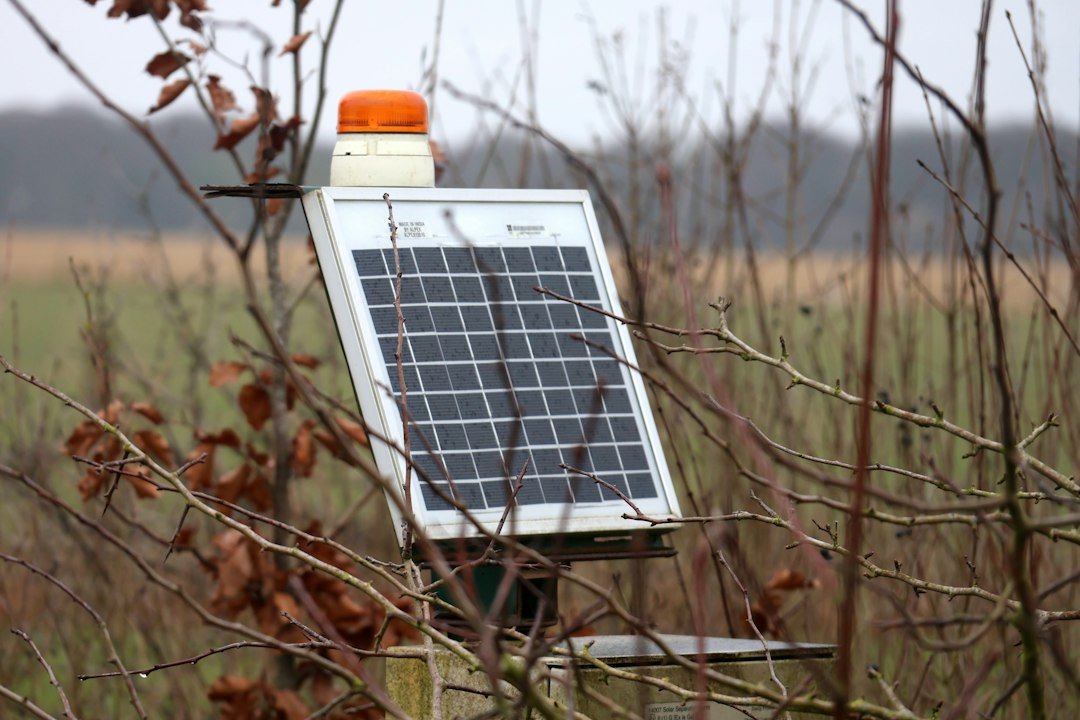
Editorial note: This article separates verified indoor PV research from practical expectations for consumer chargers. No universal indoor charging rate is claimed. Illustrative calculations are labeled hypothetical. Featured image shows a solar panel outdoors; it does not depict an artificial-light charging experiment. Photo: Ulad Ramanenka / Unsplash.