
No, most grid-connected home solar panels do not need batteries to work. A properly designed solar array can supply electricity to your home while the sun is shining and draw additional power from the utility grid when needed. Batteries are optional for many households. They become more important when you want stored solar electricity after sunset, backup power during outages, or a home that operates without a utility connection.
That distinction matters because a solar panel, an inverter, a battery and the utility grid each do a different job. You can install panels without storage, but a standard grid-tied solar system generally shuts down when the grid fails, even in bright sunshine. A battery alone does not guarantee backup either: the installation needs compatible equipment and controls designed to operate safely when disconnected from the grid.
This guide explains when solar panels need batteries, what happens at night and during blackouts, how much storage a household might need, and how to decide whether the additional expense is worthwhile.
Do solar panels need batteries to generate electricity?
Solar photovoltaic modules convert sunlight into direct-current (DC) electricity. They do not require a battery for that physical process. A home typically uses alternating-current (AC) electricity, so an inverter converts the solar power into electricity that the home can use. In a conventional grid-connected installation, the utility grid supplies any shortfall and may receive surplus generation according to the applicable interconnection agreement.
For example, imagine a house consuming 2,000 watts at noon while the solar array supplies 1,400 watts. Ignoring minor losses, the remaining 600 watts can come from the grid. If the solar array supplies more than the house is using, the system may export the excess under the utility’s rules. There is no battery in this example, yet the solar panels are still working normally.
The U.S. Department of Energy’s guidance on grid-connected renewable energy explains the role of the utility connection. The grid can effectively serve as an alternative source of electricity when the solar system is not producing enough, but it is not a physical battery that guarantees backup power.
How does solar work without a battery?
A grid-tied solar system generally has panels, mounting equipment, an inverter, protective electrical equipment and a utility-approved connection. When sunlight is available, the inverter supplies compatible AC electricity for the house. The utility makes up any difference between solar production and household consumption. At night, the panels produce essentially no electricity, so the home uses grid electricity unless another energy source is available.
Some utility tariffs credit exported solar energy, while others pay relatively little for exports. Net metering and net billing are not identical, and the terms differ across utilities and states. A home can operate without batteries under either arrangement, but the financial value of storing excess electricity can change significantly.
Read our guide on how solar panels work for the basic photovoltaic process. A solar system’s ability to generate electricity is separate from its ability to store that electricity.
What happens to solar power at night without batteries?
Solar panels cannot produce meaningful electricity without sunlight. At night, a grid-connected home without storage normally uses utility electricity. That is not a malfunction and does not mean the panels were ineffective during the day. They may have reduced daytime electricity purchases, and any exported power may have earned credits depending on the local tariff.
With a battery, some daytime solar energy can be stored and used later. Whether that saves money depends on the price of purchased electricity, the compensation for exports, storage losses, battery cost and how the battery is operated. Batteries do not create additional solar energy: they shift when generated electricity is used.
Do solar panels need batteries during a power outage?
If you want a conventional grid-connected solar installation to power your home during a blackout, you generally need a compatible backup arrangement. Most standard grid-tied inverters automatically stop exporting power when the grid fails. This anti-islanding behavior helps protect utility workers and equipment. Even a sunny rooftop cannot be assumed to power household outlets during an outage.
A properly designed battery-backup system can isolate the house or selected circuits from the grid and supply electricity within the battery’s power and energy limits. Some specialized solar inverters also offer limited daytime backup functions without batteries, but these require equipment explicitly designed for that capability and have important operating limits. Never assume a typical solar inverter includes that feature.
Ask an installer which circuits will operate in an outage, whether the system can restart and recharge from solar while disconnected from the grid, and how it behaves when the battery reaches its minimum charge. For a broader explanation, see can solar panels power a house?
When are batteries necessary for solar panels?
Batteries are not universally necessary, but they may be essential for a particular goal. An off-grid house has no utility supply to cover nights and cloudy periods, so it normally needs substantial energy storage or another dependable generator. A home seeking blackout protection needs compatible backup equipment, which often includes batteries. A homeowner seeking only to reduce daytime electricity purchases may have no need for storage at all.
| Your goal | Is a battery needed? | Important qualification |
|---|---|---|
| Use solar electricity while the grid is available | Usually no | Grid-tied inverter and approved connection are still required |
| Reduce daytime electricity bills | Usually no | Savings depend on consumption and tariff |
| Use stored solar energy after sunset | Yes, for stored solar energy | The grid can supply nighttime electricity instead |
| Power selected circuits during blackouts | Often yes | Requires compatible backup inverter, isolation and controls |
| Operate an off-grid home overnight | Normally yes | Storage or another dependable source must cover demand |
| Maximize savings under a time-of-use tariff | Maybe | Financial benefit depends on rates, losses and storage cost |
Solar panels with batteries versus without batteries
Neither setup is automatically better for every home. The key tradeoff is lower complexity and initial cost versus the flexibility of storing energy and potentially operating during an outage.
| Feature | Solar without battery | Solar with compatible battery |
|---|---|---|
| Initial investment | Usually lower | Higher because of storage and associated equipment |
| Daytime solar generation | Yes | Yes |
| Nighttime electricity | Usually from utility | Battery can supply some loads |
| Typical grid outage behavior | System shuts down | Backup possible if specifically designed |
| Maintenance and components | Fewer components | More equipment and monitoring |
| Best fit | Grid-connected bill reduction | Resilience, self-consumption or off-grid goals |
A battery can add value by keeping essential appliances running during outages, but its presence also introduces energy losses, equipment aging and eventual replacement considerations. For households with reliable electricity and favorable export credits, solar without storage can be a sensible financial starting point.
How many batteries do you need for a solar system?
There is no fixed battery count based on the number of solar panels. Battery sizing starts with the loads you want to run, the hours they must operate and how much usable energy the battery can deliver. Two homes with the same solar array may need very different storage capacities.
First list the essential devices, their running power in watts and the estimated hours of use during an outage. Multiply watts by hours to estimate watt-hours, then divide by 1,000 to obtain kilowatt-hours (kWh). Add realistic allowance for inverter losses, battery operating limits, temperature and unexpected use. Separately check peak power and motor starting demands: a battery with enough energy may still lack sufficient output power to start a pump or air conditioner.
Example: sizing a battery for essential household loads
| Essential load | Illustrative average draw | Hours | Energy |
|---|---|---|---|
| Refrigerator, averaged over cycling | 75 W | 12 | 0.90 kWh |
| Lights | 40 W | 6 | 0.24 kWh |
| Internet router | 12 W | 12 | 0.144 kWh |
| Laptop and device charging | 50 W | 4 | 0.20 kWh |
| Total | 1.484 kWh |
This hypothetical list requires about 1.48 kWh of delivered energy. It does not establish a battery size by itself. A real refrigerator may use more or less electricity, starting power can be much higher than average draw, and the inverter consumes energy. A professional design should account for usable battery capacity, reserve settings, round-trip losses and the desired number of backup hours or days.
For a whole-home system, calculate loads for heating, cooling, cooking, water heating, well pumps and electric vehicle charging separately. These can overwhelm a small backup battery. Ask installers to provide a load schedule and explain the difference between total nameplate battery capacity and usable capacity.
Can a 10 kWh battery run a house overnight?
It depends on how much electricity the household consumes overnight and how much of the battery’s capacity is usable. A home that needs 5 kWh overnight may be able to cover that demand with a suitably configured 10 kWh battery. A home using 20 kWh overnight cannot expect one 10 kWh battery to cover everything. The inverter’s output rating and appliance starting currents also matter.
Consider two hypothetical households. One uses only refrigeration, lighting and electronics during an outage; another runs central air conditioning, electric heating and a well pump. Their battery requirements can differ dramatically even though both have the same number of solar panels. Avoid battery recommendations based solely on the square footage of a house.
What kind of battery works with home solar panels?
Modern home energy storage often uses lithium-ion battery systems, including lithium iron phosphate (LFP) chemistry, but compatibility matters more than a chemistry label alone. The battery, inverter, battery management system, controls and installation must be approved to work together. Some systems are AC-coupled, while others use a hybrid inverter and DC-coupled storage.
AC-coupled storage can sometimes be added to an existing grid-tied solar installation, but not every inverter or electrical panel supports every battery product. DC-coupled storage may be efficient for certain new installations, yet it also requires compatible equipment. Ask the installer for the complete supported equipment list and a documented operating plan for normal use and outages.
Residential batteries should be installed according to manufacturer instructions and applicable electrical, building and fire codes. The U.S. Department of Energy’s solar systems integration information provides background on how storage and controls support solar use. Do not build a home battery bank from loose cells or connect storage directly to household wiring without qualified design and installation.
Do solar panels charge batteries directly?
Solar panels produce DC power, but a battery requires controlled charging within specific voltage, current and temperature limits. In a typical residential system, a compatible charge controller, hybrid inverter or other approved power electronics manages that process. You cannot safely assume that connecting a solar panel’s wires directly to a household battery is acceptable.
Solar charging also depends on the available sunlight and the home’s competing electricity demand. If the solar array is generating less than the home is consuming, there may be little surplus to charge the battery. Some systems can charge batteries from the grid, but whether that is allowed, economical or eligible for a particular incentive depends on the product and local rules.
Can you add batteries to existing solar panels later?
Often yes, but the feasibility and cost depend on your existing inverter, electrical service, available space, utility agreement and desired backup function. An AC-coupled battery may allow an existing solar array to remain in place, while another installation might require changes to inverters, wiring or service equipment. A battery that can store solar energy is not necessarily configured to provide backup during an outage.
Before purchasing, ask for a written compatibility assessment, a diagram showing which circuits will be backed up, any permit and interconnection requirements, and a complete price including installation. Check whether adding storage affects warranties or requires an update to the utility agreement. If you plan to add batteries in a few years, ask your solar installer whether a storage-ready design is worthwhile today.
Are solar batteries worth the extra cost?
There are two separate benefits to evaluate: financial savings and backup resilience. A battery may save money when it stores low-cost solar electricity for use during expensive evening periods, or when exporting excess solar power pays very little. But batteries add substantial equipment and installation costs and incur charging and discharging losses. In a location with favorable export compensation and reliable grid service, a battery may not pay for itself through bill savings alone.
Backup power has a different value. A household with frequent outages, medical refrigeration needs, a well pump or work-from-home equipment may value reliability even if the financial payback is long. A battery also has a finite warranty and usable life. Compare the full installed price, warranty, guaranteed usable capacity, expected cycling and replacement costs rather than looking only at the advertised price per kWh.
For the cost of the solar array itself, read how much home solar panels cost. For a wider financial assessment, see do solar panels save money? Do not assume that incentives available in an earlier year remain in effect in 2026; verify current federal, state and utility rules for the specific installation and tax year.
What happens if the battery runs out during an outage?
If the battery reaches its minimum allowed charge and no other power source is available, the backed-up circuits may lose power. A compatible system may recharge from solar when sunlight returns, but that depends on the inverter, battery controls, available solar production and restart capability. Some systems require a reserve level to restart; others have different limitations.
This is why backup design should include more than a battery capacity figure. Ask the installer how the system behaves after several cloudy days, whether it can recharge while islanded, which loads will be shed automatically, and whether a generator can be integrated safely. A plan for conserving electricity during an outage is often as important as the hardware.
Can you live off-grid with solar panels but no batteries?
For a typical home requiring electricity at night, a solar-only system without storage or another dependable energy source is not practical. The sun is unavailable overnight, and output varies with weather and seasons. An off-grid property usually combines appropriately sized solar generation with batteries and sometimes a backup generator. Specialized direct-solar applications can operate only when sunlight is available, but that is not equivalent to providing normal household electricity around the clock.
Off-grid systems must be designed for periods of poor sunlight, not merely average sunny days. A battery that works well for a brief urban blackout may be too small for a remote cabin during several consecutive cloudy days. Consult a qualified off-grid designer for a site-specific energy budget and safe equipment configuration.
Do portable solar panels need batteries?
Not always. Some portable solar panels can supply compatible devices through dedicated charging electronics in daylight. Others are designed to connect to a portable power station or battery. If you want to use energy after dark, some form of storage is needed. A portable solar panel is not automatically safe to connect to a household outlet or an arbitrary battery.
Plug-in balcony solar is a different product category: its purpose is generally to offset grid electricity while sunlight is available. Our guide to plug-in solar panels explains how those systems work and why ordinary grid-connected models do not automatically provide outage backup.
Frequently asked questions
Will solar panels work without a battery and without the grid?
Some specially designed systems can supply limited loads directly when sunlight is available, but a standard grid-tied home system generally cannot operate independently without compatible islanding or backup equipment. For normal household electricity at night, you need storage or another power source.
Do solar panels store electricity themselves?
No. Solar photovoltaic panels convert sunlight into electricity; they do not store meaningful amounts of energy for later household use. A battery is a separate device that stores electrical energy.
Do I need a battery for net metering?
Usually not. Many grid-connected solar installations participate in net metering or net billing without batteries. Eligibility and export compensation depend on the utility and current local rules.
Can a solar battery power an air conditioner?
Potentially, if the battery and inverter can handle the air conditioner’s running and starting power and the available stored energy is sufficient. Whole-home cooling can consume energy rapidly, so ask for a load-specific design rather than relying on a generic battery-size claim.
Is it better to install batteries at the same time as solar panels?
It can be convenient when backup is a priority, but buying both at once is not automatically the best financial decision. Compare a solar-only proposal with a solar-plus-storage proposal, including future expansion options, electrical upgrades, warranty coverage and installation costs.
Can I use solar energy at night without batteries?
Not directly from the panels. A grid-connected household can use utility electricity at night, and any credits earned from daytime exports may offset part of the bill depending on the tariff. That is different from physically storing the daytime solar electricity.
Final verdict: do solar panels need batteries?
Solar panels do not need batteries to produce electricity or reduce daytime grid purchases. If you have a reliable utility connection, a conventional grid-tied solar installation can work without storage. Batteries become valuable when you want to use your own stored solar energy at night, protect essential loads during an outage or operate off-grid. The correct choice depends on your utility rates, outage risk, electricity demand and budget.
Before choosing a battery, get a written design that separates energy capacity in kWh from output power in kW, identifies the backed-up circuits, and confirms inverter compatibility and code compliance. Compare that plan with the simpler solar-only alternative. The goal is not to buy the largest battery; it is to build a system that reliably serves the household’s actual needs.
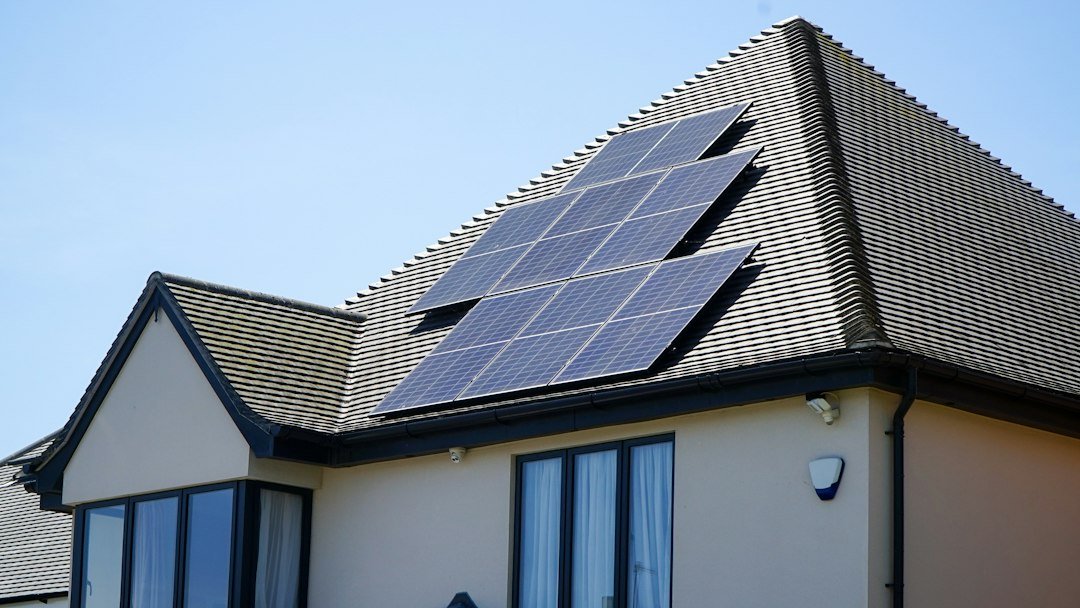
Featured photo: Watt A Lot / Unsplash. Solar roof photograph illustrates a residential solar installation; it does not imply the pictured home has battery storage.
Further reading: U.S. DOE: Grid-Connected Renewable Energy Systems; U.S. DOE: Solar Systems Integration; U.S. DOE: Planning a Home Solar Electric System.
1 thought on “Do Solar Panels Need Batteries? Home Solar Explained”