
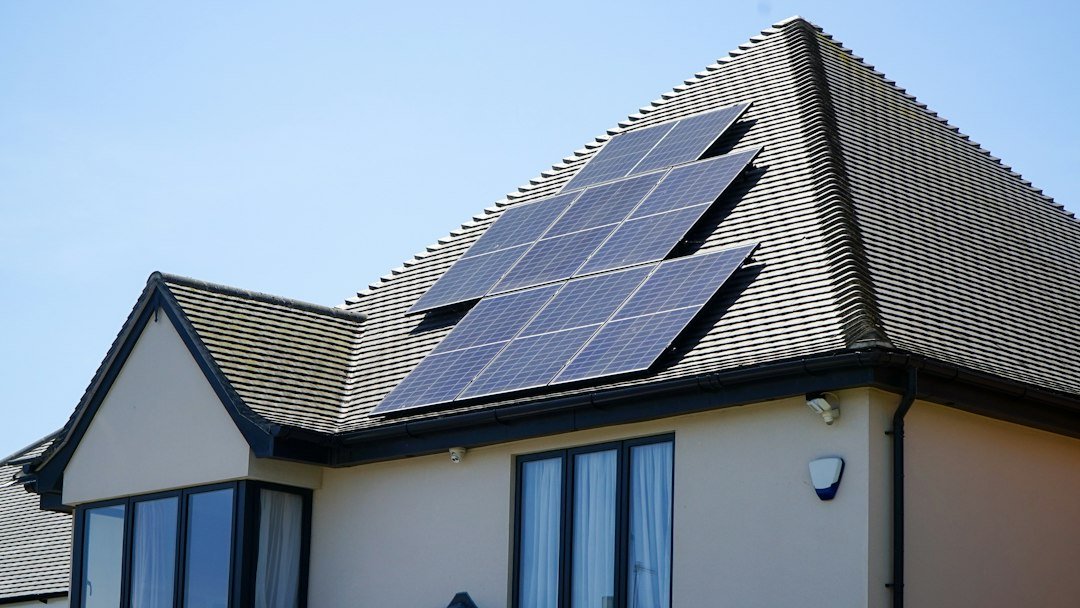
How much do solar panels and a battery cost in 2026? For a U.S. home, a useful starting point is the price of a complete rooftop solar installation plus a properly installed home battery. EnergySage reports an average of $31,135 for a 12-kW solar system and $15,647 for a typical 13.5-kWh home battery, both before available incentives. Adding those separate marketplace averages produces an illustrative $46,782 budget. It is not an actual combined-system quote: the average solar and battery examples come from different datasets, and an integrated installation may share equipment or labor.
Smaller solar arrays can cost less, while whole-home backup, multiple batteries, roof repairs, and electrical upgrades can make a project substantially more expensive. The right answer depends on the household’s annual electricity consumption, desired backup loads, utility tariff, roof, location, and the exact battery design. This 2026 guide explains the numbers, what they include, how to size storage, and which claims to question before signing a contract.
How Much Do Solar Panels and a Battery Cost Together?
For transparent comparisons, start with two independently reported marketplace figures rather than a sales pitch. EnergySage’s June 2026 solar pricing guide reports a 12-kW average of $31,135 and roughly $2.60 per installed watt across its marketplace. Its separate July 2026 battery cost guide reports an average installed battery price of $15,647 for 13.5 kWh of storage. These are U.S. marketplace samples, not a single national price or a quote for every home.
The table below uses EnergySage’s system-size-specific solar prices for 6, 8, 10, and 12 kW, plus the $15,647 battery average. Each row is an arithmetic planning example. In practice, the combined price may be different because equipment choices, shared installation work, inverter compatibility, permit fees, backup wiring, and contractor pricing vary.
| Solar size | Solar-only marketplace example | 13.5-kWh battery average | Illustrative sum |
|---|---|---|---|
| 6 kW | $16,080 | $15,647 | $31,727 |
| 8 kW | $20,960 | $15,647 | $36,607 |
| 10 kW | $25,800 | $15,647 | $41,447 |
| 12 kW | $31,135* | $15,647 | $46,782 |
*The 12-kW figure is EnergySage’s reported overall average for a typical installation; its size-specific table reports $30,720 for 12 kW. We use the prominently reported $31,135 overall example here and disclose the difference rather than pretending the two samples are identical. The battery figure is the separate 13.5-kWh installed average. All totals are before incentives, and none represents a binding package offer.
What Is Included in a Solar-Plus-Battery Installation?
A complete rooftop solar system includes photovoltaic modules, mounting hardware, inverter equipment, electrical protection, wiring, engineering, labor, permitting, inspections, and utility interconnection. The battery side adds storage modules, a compatible inverter or power-conversion equipment, controls, communications, and any required backup gateway or transfer equipment. The proposal should explain whether the battery can power selected circuits or the whole house when the utility grid fails.
Some solar-plus-storage systems share inverter hardware. Others use separate solar and battery inverters. Neither architecture is universally best: equipment compatibility, conversion losses, upgrade flexibility, warranty terms, and backup functions all matter. The contractor should provide a single-line electrical diagram or clear system description and itemize what the price covers. A battery purchased separately at a retail price is not necessarily ready to power a home.
Why the quoted battery price can differ from the battery’s sticker price
Installed home batteries require more than the battery enclosure. Site preparation, code-compliant mounting, wiring, electrical panels, control equipment, commissioning, and permits can affect the total. A contractor may also need to rearrange backed-up circuits or upgrade equipment. Ask for the installed price, not just the product price, and confirm whether tax, labor, permit fees, and commissioning are included.
What if your roof or electrical panel needs work?
A roof nearing replacement can complicate a solar project because future roof repairs may require removing and reinstalling panels. Electrical service upgrades or difficult cable runs can also change the price. Request separate written line items for roof work, service-panel changes, trenching, structural reinforcement, and any unusual access costs. Those extras should not be silently assumed to be part of a national average.
How Much Does a Solar Battery Cost by Itself?
EnergySage’s July 2026 review reports a typical installed 13.5-kWh battery cost of $15,647 before incentives. The same review gives first-half 2026 marketplace examples for individual brands: a 13.5-kWh Tesla system averages about $13,055, while a 10-kWh Enphase example averages about $14,290 and a 15-kWh FranklinWH example about $18,480. These are quoted-marketplace averages for the specified products and capacities, not universal retail price tags or quotes for every installation.
The most useful comparison unit is dollars per usable kilowatt-hour of battery capacity, but even that does not tell the full story. A battery with more energy storage may still have a limited maximum output power. Conversely, a battery with sufficient output may not last through a long outage. Compare usable kWh, continuous and surge power, supported loads, warranty terms, efficiency, and backup functionality before choosing based on price alone.
How Many Batteries Do You Need With Solar Panels?
Solar array size and battery capacity measure different things. Solar capacity is usually expressed in kilowatts (kW), a power rating. Battery capacity is expressed in kilowatt-hours (kWh), an amount of stored energy. An 8-kW solar array does not automatically require an 8-kWh battery, and a 13.5-kWh battery does not guarantee 13.5 hours of power. The appropriate storage capacity depends on which appliances you need, their consumption, and how long you want them to run.
Example: backing up a few essential appliances
Imagine a refrigerator, internet router, some lighting, and occasional device charging consuming an average of 500 watts while running. Over 12 hours, that average load would use 0.5 kW × 12 hours = 6 kWh of electricity. A battery with 13.5 kWh of nominal capacity might have enough stored energy for that illustrative demand, but the usable energy, inverter losses, minimum reserve, appliance starting surges, and actual duty cycles must be checked. This is arithmetic for planning, not a guaranteed runtime.
Example: air conditioning and whole-home backup
A household running central air conditioning, electric water heating, cooking equipment, and other heavy loads can consume far more energy than a few essential circuits. Some batteries may not support the simultaneous starting or running power of those appliances even if their capacity looks large. Whole-home backup can require multiple batteries, load management, and additional electrical equipment. Ask the installer to identify exactly which circuits will remain energized during an outage and the expected runtime under realistic conditions.
Do you need storage for every day of bad weather?
Not necessarily. Grid-connected homeowners may want a battery primarily for evening electricity use or brief outages. Off-grid homeowners must plan for extended periods of poor solar production and may need much more storage plus a backup generation strategy. A system that works well on a sunny summer day can perform very differently during short winter days or several cloudy days in a row. Use location-specific solar production modeling and realistic household loads rather than a generic battery-count rule.
Can You Add a Battery to Existing Solar Panels?
Often yes, but compatibility and installation costs matter. An existing grid-connected solar system may need a battery-specific inverter, hybrid inverter, gateway, or changes to its wiring and protection equipment. Some systems can be retrofitted with AC-coupled storage, while others may require different equipment. A qualified installer must check the existing inverter, panel capacity, utility agreement, and local electrical requirements.
When comparing a retrofit with a combined new installation, request the total incremental installed battery cost and a clear statement of the new system’s backup capabilities. Ask whether the solar panels can recharge the battery during a utility outage. Not every battery retrofit can do so in every operating mode, and a standard grid-connected solar inverter ordinarily shuts down when the grid is unavailable unless compatible backup controls are installed.
Are Solar Panels Cheaper Without a Battery?
Yes, the initial equipment and installation bill is generally lower when you omit storage. A grid-connected solar-only system can still supply electricity to the house during sunny periods and may export excess generation according to the utility’s rules. A battery is not required simply to benefit from daytime solar production. For an explanation of the trade-off, see our guide to whether solar panels need batteries.
However, lower upfront cost does not automatically mean the solar-only option has the best long-term economics. Some utility tariffs compensate exported electricity poorly or charge more during evening peak hours. Storage can shift some daytime solar generation to later use. Whether that produces enough additional savings to justify the battery depends on the tariff, battery efficiency, cycling, installation cost, and warranty. Request a written comparison for your actual utility plan.
How Much Can Solar Panels and a Battery Save?
A savings estimate should start with the homeowner’s electricity bills and local rate structure, not a national claim that solar will eliminate every bill. Solar can reduce purchased electricity; storage can sometimes reduce purchases at expensive hours or increase the portion of solar electricity used onsite. Fixed customer charges may remain, and electricity may still be imported during extended cloudy periods or when the battery is depleted.
A useful installer proposal should show expected annual solar generation, self-consumption, exported kilowatt-hours, battery charging and discharging assumptions, round-trip efficiency, remaining grid purchases, and projected bill changes. It should also disclose rate escalation assumptions and any anticipated battery replacement or service costs. A simple payback estimate that ignores financing, equipment replacements, and the time value of money is not the same as a full financial analysis.
An illustrative battery payback check
Suppose adding storage increases the installed cash price by $15,647. If the battery saves an additional $500 a year compared with the same solar-only system, dividing $15,647 by $500 yields roughly 31.3 years of simple payback. If the additional annual savings were $1,500, the arithmetic would be about 10.4 years. Neither figure predicts real-world results; they are hypothetical comparisons before maintenance, financing, battery degradation, and other factors. Backup resilience may have value even when the financial payback is unattractive.
Does the Federal Solar Tax Credit Apply in 2026?
For a new U.S. homeowner installation placed in service in 2026, the former 30% federal Residential Clean Energy Credit under Section 25D is not available. The IRS states that the credit applies to qualifying installations from 2022 through December 31, 2025, and is unavailable for property placed in service after that date. This applies to the former homeowner credit for qualifying solar and battery property; do not subtract 30% from a 2026 package estimate on that basis.
Some earlier installations may involve unused-credit carryforwards, and state, local, or utility programs can have separate rules. Business-owned systems and leases can also involve different tax arrangements. A homeowner should verify any claimed incentive with the administering agency or a qualified tax professional. Sales materials that show an outdated federal discount can materially misrepresent the upfront cash required for a new 2026 project.
Is It Better to Install Solar Panels and a Battery Together?
A combined installation can simplify system design and give the contractor an opportunity to coordinate inverters, monitoring, wiring, permits, and commissioning. It may also reduce some duplicated work compared with installing solar and storage in two separate projects, although the amount of any savings is not guaranteed. Request an itemized combined quote and a solar-only quote so you can see the actual incremental cost of storage.
Installing solar first can be reasonable when your budget is limited or you are unsure whether a battery will be valuable under the utility tariff. If you plan to add storage later, tell the installer before selecting the inverter and electrical layout. A system described as battery-ready should come with a written list of compatible equipment, any future upgrade work, and estimated installation requirements. Marketing language alone does not establish compatibility.
What Affects the Total Solar and Battery Installation Price?
- Solar array size: A larger array generally needs more panels and mounting hardware, though price per watt can vary with size.
- Battery capacity and output: More usable storage or higher backup power may require additional modules and electrical equipment.
- Roof complexity: Shading, multiple roof planes, steep pitch, age, and roof material affect design and labor.
- Local labor and permits: Contractor pricing, inspections, utility rules, and permit processes vary.
- Backup scope: A few critical circuits can require a different design from whole-home backup.
- Equipment integration: Inverter compatibility, gateways, monitoring, and wiring changes can affect costs.
- Financing: Interest, dealer fees, and loan terms may make total repayment higher than the cash price.
- Incentives: Only verified programs for your location and ownership structure should be counted.
How to Compare Solar-Plus-Storage Quotes
Get more than one detailed written proposal and compare systems with similar goals. A quote for 6 kW of solar and one battery is not directly equivalent to 10 kW of solar and two batteries. Normalize the solar price by DC watts, compare the battery by usable kWh, and examine the annual energy estimate and backup power rating. Ask for the installed cash price and financed total separately.
- Collect twelve months of electricity bills and list appliances that must run during an outage.
- Ask for the proposed solar array rating, annual kWh production, and shading assumptions.
- Request the battery’s usable capacity, continuous power, surge capability, and warranty.
- Identify which circuits receive backup and whether solar can recharge the battery when the grid is down.
- Get separate line items for solar equipment, storage, electrical upgrades, roof work, permits, and labor.
- Verify local utility export rules and any genuine state or utility incentive.
- Compare cash cost, total financed repayment, projected savings, and installer service responsibilities.
For broader solar-only pricing, see our 2026 solar panel cost guide. For the basic electricity flow, read how home solar panels work. These guides complement this article rather than replacing the combined solar-and-storage cost comparison.
Frequently Asked Questions
How much are solar panels with one battery in 2026?
Using EnergySage’s reported averages, a typical 12-kW solar installation at $31,135 plus a 13.5-kWh installed battery at $15,647 adds up to $46,782 before incentives. This is a planning illustration based on separate datasets, not a national package price or a contractor quote. A smaller array, different battery, or more complex installation changes the total.
How much do solar panels and two batteries cost?
There is no reliable universal price. Two batteries increase storage capacity, but the incremental cost of the second unit can differ from the first because some controls and installation work may be shared. Request an itemized quote that shows both batteries, usable capacity, supported loads, and the complete installed price. Do not simply double a one-battery package without checking the system design.
Can solar panels work without a battery?
Yes. Grid-connected solar can reduce utility electricity purchases while the sun is shining. A battery is optional for many households. However, a typical grid-connected solar-only system does not provide automatic backup power during a grid outage.
Is a Tesla Powerwall included with rooftop solar?
Do not assume it is. Tesla Powerwall is a separate energy storage product and may be offered as part of a package or as an additional item. Check the written proposal for the exact model, quantity, capacity, installation scope, and backup configuration.
Can one solar battery power an entire house?
It depends on the battery’s continuous power rating, usable energy, and the home’s simultaneous loads. Some homes can back up selected essential circuits with one battery, while whole-home backup or long outages may require more equipment. A qualified installer should calculate the load and explain the expected limitations.
Is the old 30% federal solar tax credit still available in 2026?
No, not for a newly completed homeowner-owned residential solar or battery installation under the former Section 25D credit. The IRS says that credit is unavailable for property placed in service after December 31, 2025. Check any other applicable incentive separately.
The Bottom Line
For a first-pass U.S. budget in 2026, a 6-kW solar array plus an average-size home battery adds up to about $31,727 using the separate EnergySage marketplace examples; an 8-kW setup adds up to about $36,607; and the reported typical 12-kW solar average plus battery adds up to about $46,782. None of those figures is a fixed installed package price. The final cost can change with battery brand, roof work, electrical upgrades, utility rules, and financing.
Choose a system based on the electricity you use, the circuits you need during an outage, and the value of storing energy under your utility tariff. A clear written quote with a solar-only alternative and a detailed backup plan is more useful than an advertised starting price. For safety, installation and electrical modifications should be performed by qualified professionals under applicable local requirements.
Sources and Editorial Notes
- EnergySage: Solar Panel Cost in 2026 (updated June 30, 2026; state data updated October 23)
- EnergySage: Solar Battery Cost in 2026 (updated July 13, 2026)
- IRS: Residential Clean Energy Credit
Pricing methodology: Solar and battery figures are independently published marketplace averages, not matched project quotes. The combined figures are arithmetic examples only. Photo: Watt A Lot / Unsplash; the photo depicts rooftop solar, not a verified battery installation or the equipment used in the cost examples.