
How much does a battery for solar panels cost in 2026? For a typical U.S. home, an installed solar battery is often a five-figure purchase. EnergySage’s July 2026 marketplace analysis reports an average quoted installed price of $15,647 for 13.5 kilowatt-hours (kWh) of battery storage, before any available incentives. That’s roughly $1,159 per kWh for that example, but your actual price can differ substantially by location, brand, installation design, and whether you need blackout backup. Source: EnergySage, updated July 13, 2026.
If you already own solar panels, a battery retrofit may cost more than adding storage during a new solar installation because electrical upgrades, labor, permits, and compatible control equipment may be needed. If you’re comparing a full new solar-and-battery system instead of the battery alone, see our separate solar panels plus battery cost guide. This article focuses specifically on what the battery system costs, why quotes differ, and how to avoid paying for more storage than you need.
Solar Battery Cost in 2026: Quick Answer
Home battery quotes are commonly compared in dollars per usable kilowatt-hour. EnergySage reports a national marketplace average of approximately $15,647 for a 13.5-kWh installed system, while Solar.com’s October 2026 guide lists several popular installed options from roughly $10,650 to $17,250 depending on the model and included backup equipment. These are reported marketplace prices, not binding offers for every address.
| 2026 market example | Reported installed price | Important qualification |
|---|---|---|
| EnergySage typical 13.5-kWh system | $15,647 | Average marketplace quote, before incentives |
| Enphase IQ Battery 5P | About $10,650 | Solar.com median with backup equipment |
| Enphase IQ Battery 10C | About $14,250 | Solar.com median, September 2026 pricing |
| Tesla Powerwall 3 | About $15,000 | Solar.com median when installed with solar |
| FranklinWH aPower 2 | About $17,250 | Solar.com median when installed with solar |
The Solar.com figures above come from its October 1, 2026 comparison using installer price lists from September 2026. They should not be read as the exact price of the battery hardware alone or as quotes for a retrofit at your home. Source: Solar.com, October 2026. Ask each installer to identify battery hardware, backup controls, electrical work, labor, taxes, permits, and any required utility interconnection charges separately.
What Makes a Solar Battery Expensive?
The battery cells are only one part of a functioning residential energy-storage installation. A quote may include an enclosure, battery management electronics, inverter or power conversion equipment, monitoring hardware, gateway or transfer equipment, breakers, wiring, mounting, permitting, inspection, labor, and commissioning. Some homes need a new electrical subpanel or service changes. A low online equipment price is therefore not the same as a completed, code-compliant installed price.
Costs also change with installation location. A simple wall-mounted installation close to compatible electrical equipment can differ from a project that requires long cable runs, weather protection, major electrical modifications, or multiple battery units. Local installer competition, utility rules, and building requirements also influence bids. This is why two homes buying the same nominal battery capacity can receive different prices.
How Much Does a 5-kWh, 10-kWh, or 15-kWh Solar Battery Cost?
There is no universally reliable national price for every battery size. Smaller systems may have higher installed cost per kWh because certain equipment and labor costs are fixed. Larger systems can be more expensive overall even if their per-kWh cost is lower. The most useful comparison is among real bids for the same backup capability and usable capacity.
As an illustrative calculation only, applying the approximately $1,159/kWh figure implied by EnergySage’s typical 13.5-kWh installation would yield about $5,795 for 5 kWh, $11,590 for 10 kWh, and $17,385 for 15 kWh. These are arithmetic illustrations, not verified market quotes for those sizes; real prices do not necessarily scale linearly. In particular, a small backup-ready system can need the same costly gateway or electrical work as a larger system.
| Usable storage | Illustrative cost at $1,159/kWh | How to interpret it |
|---|---|---|
| 5 kWh | $5,795 | Math example, not an installer quote |
| 10 kWh | $11,590 | Math example, not an installer quote |
| 13.5 kWh | $15,647 approximately | EnergySage’s reported typical installed quote |
| 15 kWh | $17,385 | Math example, not an installer quote |
To get an accurate number, ask at least a few qualified installers to quote the same usable storage capacity, continuous power output, outage-backup functionality, and warranty conditions. Do not compare a 5-kWh consumption-only battery with a 15-kWh whole-home backup installation as though they were interchangeable.
2026 Solar Battery Prices by Brand
Brand choice affects more than the sticker price. Batteries differ in usable capacity, power output, warranty terms, expansion options, thermal management, and compatibility with existing solar equipment. EnergySage’s first-half 2026 marketplace data provides a useful snapshot of commonly quoted systems. Its reported brand averages include Tesla at $967/kWh, Enphase at $1,429/kWh, FranklinWH at $1,232/kWh, and EcoFlow at $1,365/kWh. These are marketplace averages, not fixed retail prices.
For example, EnergySage reports approximately $13,055 for a typical 13.5-kWh Tesla quote and about $14,290 for a typical 10-kWh Enphase quote in its dataset. Solar.com’s September 2026 installer figures report a median around $15,000 for a Powerwall 3 installed with solar. The numbers differ because they come from different marketplaces, product mixes, installation assumptions, and reporting periods. Both sources can be informative without either being a universal nationwide quote.
Compare a quote’s actual included components before declaring one brand cheaper. An inverter integrated into a battery system, an optional backup gateway, a required smart panel, or the need to replace incompatible equipment can change the total project cost substantially. Check the current manufacturer’s specifications and have the installer explain exactly which functions are included.
Battery-Only Price vs Installed Solar Battery Cost
Online shopping results often show a battery module price without installation. Some products also exclude an inverter, gateway, transfer switch, or other equipment necessary for the intended system. A homeowner cannot safely assume that buying the battery module alone provides a working rooftop solar backup system.
A complete installed quote should specify usable energy in kWh, continuous output in kW, supported surge capability, required power electronics, electrical panel work, mounting, permits, commissioning, monitoring, and warranty. Ask whether taxes and post-installation service are included. If you are adding storage to an existing array, confirm compatibility with the current inverter and solar layout before ordering equipment.
Is It Cheaper to Install Batteries With New Solar Panels?
It can be. When batteries and rooftop panels are installed as one project, some design, permitting, inspection, wiring, and labor activities can be coordinated. A retrofit years later may require additional site visits and changes to the existing electrical design. Solar.com’s October 2026 guide states that pairing storage with a new solar installation is generally less expensive than adding it afterward because work can be shared.
However, the combined price is not automatically the lowest possible option for every homeowner. If your existing solar inverter already supports a compatible battery, a retrofit may be straightforward. If it does not, replacing equipment can increase the cost. Get written quotes for both approaches when planning a new system, especially if you are uncertain whether backup power will be important later.
How Much Battery Storage Do You Need?
Battery capacity is measured in kilowatt-hours (kWh), which describe stored energy. Output power is measured in kilowatts (kW), which describe how much electricity the battery can supply at once. A system may have enough stored energy for a refrigerator and lights overnight but lack the instantaneous power required to start an air conditioner. Both specifications matter.
Start by listing the appliances you want during an outage. Record each device’s average power consumption, starting surge where applicable, and expected hours of use. Multiply watts by hours and divide by 1,000 to estimate kWh. Then account for conversion losses, battery operating limits, reserve capacity, and whether solar can recharge the battery during the outage. For detailed system planning, see do solar panels need batteries?.
Example: Essential-load backup calculation
Suppose your essential devices average 250 watts in total over a 12-hour period. The energy requirement is 250 W × 12 hours = 3,000 Wh, or 3 kWh. If the battery system can deliver only 85% of its nominal capacity as useful AC energy under those conditions, a simplified estimate is 3 ÷ 0.85 ≈ 3.53 kWh of nominal storage. These are hypothetical inputs for teaching the method, not a recommendation for a particular house.
A refrigerator or pump may have intermittent running cycles and a higher startup surge than its average power suggests. Whole-home loads, electric heating, water heating, air conditioning, and EV charging can require much more energy than an essentials-only backup plan. A qualified installer can measure or model the home’s actual load profile.
Does a Solar Battery Save Money on Electricity Bills?
Sometimes. Batteries can store solar energy for later use, shift electricity consumption away from expensive time-of-use periods, or preserve backup power for outages. Financial benefits depend on your utility tariff, export compensation, electricity prices, battery round-trip efficiency, operating strategy, and incentives. In areas with generous credit for exported solar electricity and infrequent outages, storage may be harder to justify financially.
Do not confuse a battery’s ability to lower certain electricity charges with a guarantee that it will pay for itself. A savings estimate should include installed cost, degradation, potential maintenance, financing charges, and realistic daily cycling. If the goal is primarily outage protection, the value of keeping critical appliances running may be more important to you than simple financial payback.
Solar Battery Tax Credits and Incentives in 2026
U.S. federal and state incentives can materially affect the final cost, but eligibility changes over time and by ownership structure. According to EnergySage’s updated 2026 federal tax-credit guide, the homeowner-owned residential clean energy credit for new installations ended for property placed in service after 2025. Do not subtract an assumed 30% federal homeowner credit from a 2026 battery quote without checking the current rules and your situation. Source: EnergySage’s 2026 federal solar tax credit guide.
State rebates, utility programs, and special battery incentives may still be available in certain service territories, sometimes with enrollment limits or requirements for participating in a grid-support program. Ask installers to identify each incentive by its official program name and confirm eligibility with the program administrator. For a tax decision, consult current IRS guidance or a qualified tax professional rather than relying on an old blog post.
Solar Battery Installation Cost: Questions to Ask an Installer
- What is the total installed price before and after individually identified incentives?
- How many usable kWh and how many continuous kW are included?
- Does the quote include backup capability, isolation equipment, and the required gateway or transfer controls?
- Will the battery work with my current solar inverter, or is a replacement required?
- Which circuits will remain powered during a grid outage?
- What are the estimated runtime and recharge assumptions for my actual loads?
- Are permits, inspection, taxes, monitoring fees, and electrical upgrades included?
- What does the warranty cover, and who provides local service?
- Is the price contingent on financing, a lease, or participation in a utility program?
A written, itemized quote makes it easier to compare offers fairly. Beware of promises of unlimited backup or guaranteed savings that do not explain the home’s energy demand and system constraints. A home battery is a substantial electrical installation and should be designed and installed by appropriately qualified professionals under applicable codes and utility requirements.
Lithium-Ion vs Lead-Acid Solar Batteries: Which Costs Less?
Lithium-based batteries, including lithium iron phosphate (LFP), are commonly used in modern residential energy storage. Lead-acid batteries are still encountered in certain off-grid applications. Comparing only the initial battery purchase price can be misleading because usable depth of discharge, cycle life, maintenance, charging requirements, space, weight, and replacement intervals can differ.
A lower initial price does not necessarily produce a lower cost per delivered kWh over the system’s life. For a fair comparison, estimate usable energy, expected lifetime energy throughput under the manufacturer’s conditions, inverter and charging compatibility, replacement costs, and maintenance. Always follow the manufacturer’s installation and ventilation requirements; battery chemistry alone does not make a system risk-free.
Can You Add a Battery to Existing Solar Panels?
Often yes, but the method depends on the existing equipment. An AC-coupled battery may integrate with a grid-connected solar installation using its own conversion and control hardware. A DC-coupled design may require a compatible hybrid inverter or other modifications. Backup functionality also requires approved grid isolation and load management. An installer must verify the exact product compatibility and the home’s electrical layout.
Do not assume every battery will work with every inverter or that adding storage automatically keeps the lights on during a blackout. Some systems are configured only for bill management, while others support designated backup circuits. Our solar inverter explainer describes why power conversion is central to the design.
How Long Do Solar Batteries Last?
Battery lifespan depends on chemistry, temperature, cycling, depth of discharge, installation environment, and product design. A manufacturer’s warranty may state a term in years, a throughput or cycle condition, and a minimum retained capacity. Compare the full warranty language rather than assuming every battery lasts the same number of years.
Battery performance gradually changes over time, so the energy available late in its service life may be lower than when it was new. Check whether the warranty covers labor and shipping as well as the battery unit. Ask who will handle a replacement or repair if the original installer is no longer operating.
Frequently Asked Questions
How much is a battery for solar panels in the USA?
EnergySage reported a typical installed quote of about $15,647 for 13.5 kWh of residential battery storage in July 2026, before incentives. Smaller and larger systems, different brands, and local installation requirements can produce substantially different prices.
How much does a 10-kWh solar battery cost?
There is no single nationwide price. As a rough arithmetic illustration, 10 kWh at $1,159 per kWh would equal $11,590, but that is not a verified quote for a particular 10-kWh product. Solar.com’s September 2026 installer figures reported a median around $14,250 for the Enphase IQ Battery 10C. Always check what installation and backup equipment are included.
How much does a Tesla Powerwall cost in 2026?
Solar.com reported a median installed price of about $15,000 for Powerwall 3 when paired with solar, based on September 2026 installer lists. EnergySage’s first-half 2026 marketplace dataset reported a different typical Tesla quote of about $13,055. Neither figure guarantees a price for your address.
Do solar panels need batteries?
No. Many grid-connected solar systems work without battery storage. Batteries become useful when you want stored solar electricity for later use, time-of-use management, or appropriately designed outage backup. Whether they are financially worthwhile depends on local conditions.
Is a battery cheaper if I already have solar panels?
Not necessarily. Adding a battery later can involve separate permitting, labor, and equipment modifications. It may be simple if the existing inverter and electrical system are compatible, but a retrofit can also cost more than installing storage alongside a new solar array.
Can one battery power an entire house?
It depends on the battery’s usable capacity and power output and the home’s electrical loads. Some homes can back up selected essential circuits with one unit; whole-home operation, particularly for large heating or cooling loads, may require additional storage and power capability.
Is there a 30% federal tax credit for solar batteries in 2026?
Do not assume so. EnergySage’s 2026 tax-credit guide says the federal residential homeowner credit ended for newly placed-in-service homeowner-owned systems after 2025. State or utility incentives may still apply, and other ownership structures have different rules. Confirm the applicable official requirements before budgeting.
Can I install a solar battery myself to save money?
A grid-connected home battery involves high-energy electrical equipment, interconnection requirements, and protective controls. Improper installation can create fire, shock, or backfeed hazards. Use a qualified installer and follow local code and manufacturer requirements rather than assuming a do-it-yourself installation is safe or permitted.
Bottom Line: How Much Does a Battery for Solar Panels Cost?
A useful U.S. starting point in 2026 is approximately $15,647 installed for a typical 13.5-kWh home battery, based on EnergySage’s July marketplace analysis. Popular product quotes vary, and the actual price depends on your home’s electrical design, desired backup capability, and location. The cheapest battery module is not necessarily the cheapest complete installation.
Decide first whether your priority is outage backup, electricity-bill savings, or both. Then size the system around real energy use and compare itemized local quotes that include installation, controls, and warranty coverage. If you are still deciding whether to add storage, read our guide to whether solar panels need batteries.
Sources and Pricing Methodology
- EnergySage, Solar Battery Cost in 2026, updated July 13, 2026 — national marketplace average, typical 13.5-kWh quote, and brand pricing from first-half 2026 quotes.
- Solar.com, Best Solar Batteries of 2026, updated October 1, 2026 — reported median installed prices based on September 2026 installer price lists.
- EnergySage, Federal Solar Tax Credit Guide (2026) — updated explanation of federal homeowner tax-credit changes.
- U.S. Department of Energy, Solar Energy and Storage Basics — background on battery storage and solar integration.
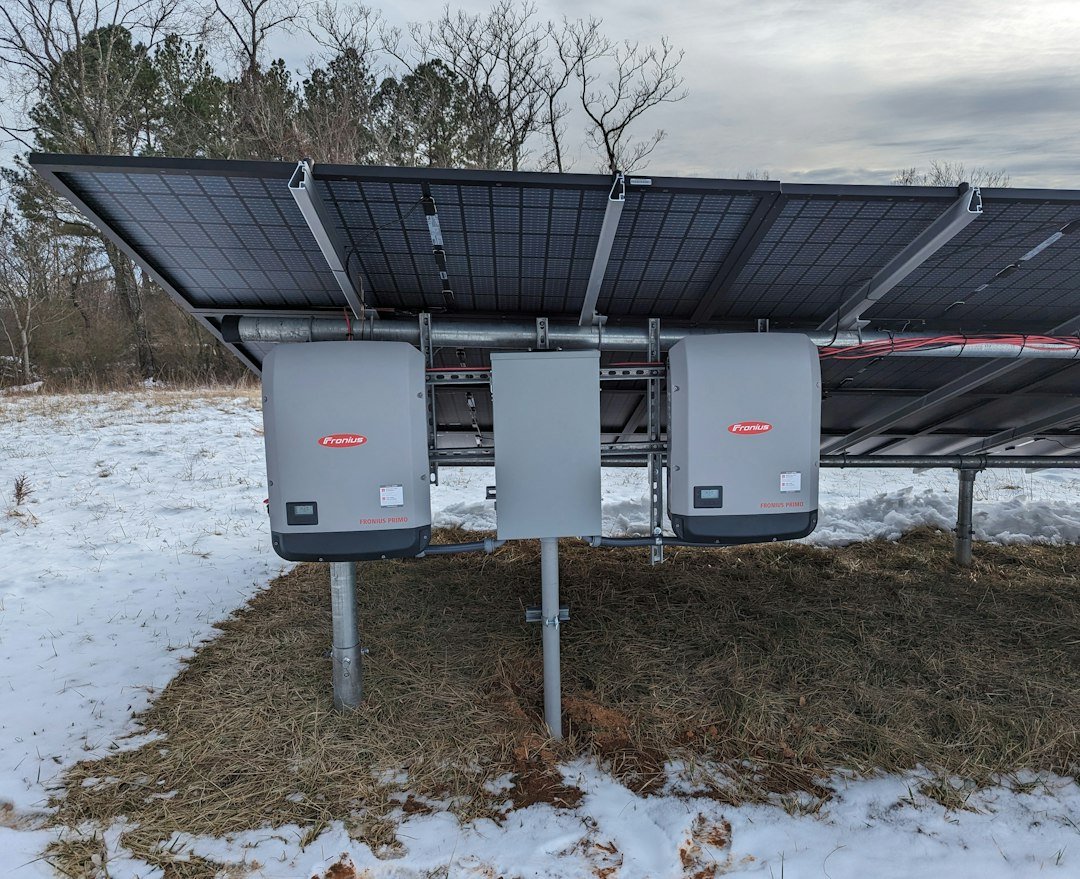
Editorial note: Prices are U.S. marketplace observations from the cited 2026 sources, not live product offers or guaranteed quotes. Cost examples explicitly labeled illustrative are calculations, not market observations. This article is educational, not financial, tax, or electrical-installation advice. Featured photograph: Virtue Solar / Unsplash; illustrative solar installation photograph, not a depiction of any named battery product.