Why do solar panels need an inverter? Solar photovoltaic (PV) panels generate direct-current (DC) electricity, but the U.S. electrical grid and most household electrical circuits use alternating-current (AC) electricity. A solar inverter converts the panels’ DC output into usable AC power. It also helps control how the solar system interacts with your home’s electrical equipment and, for a grid-connected installation, the utility network. Without suitable conversion equipment, ordinary rooftop solar panels cannot simply supply a home’s AC circuits.
An inverter does more than change the name of the electricity. Depending on its design, it may track the panels’ best operating point, synchronize with grid voltage and frequency, monitor system performance, detect faults, and disconnect when unsafe grid conditions occur. The U.S. Department of Energy’s guide to solar inverters explains these core functions. Below, we’ll cover why conversion is necessary, how the equipment works, when an inverter is optional for a DC-only application, and what homeowners should know before choosing one.
The Main Reason: Solar Panels Make DC, While Homes Use AC
Electricity from a PV module flows in a particular direction: that is direct current. Household alternating current changes direction periodically. In a conventional U.S. home, the AC system is designed around a nominal 120/240-volt split-phase service at 60 hertz. Other countries and specialized installations use different voltages or frequencies, so an inverter must be designed for the actual electrical system rather than chosen by panel wattage alone.
Most plug-in household appliances expect the correct AC voltage and frequency. Solar panels, by themselves, do not provide that. They produce variable DC voltage and current as sunlight, cell temperature, and electrical load change. The inverter takes suitable DC input and produces controlled AC output that can be used by compatible household equipment. A qualified installer integrates the inverter with the home’s electrical protection and the utility interconnection.
Think of the inverter as the interface between two different electrical systems. The panels collect solar energy as DC. The home and utility need AC with defined characteristics. The inverter bridges that difference. This is why an ordinary grid-connected rooftop system cannot be built safely by connecting panel leads directly to a household outlet or breaker.
How a Solar Inverter Works, Step by Step
1. Solar cells generate direct current
When sunlight reaches the photovoltaic cells, the cells produce electrical energy. A panel’s output depends on the amount of light, temperature, module characteristics, and connected electrical load. Several panels may be combined into a string or array according to an engineered design. For an introduction to the full process, see our guide to how solar panels work.
2. Power electronics convert DC into AC
Modern inverters use electronic switching devices to rapidly control the flow of electrical energy. Their circuitry shapes the output into an AC waveform appropriate for the intended equipment. The process is not perfectly lossless: some energy becomes heat, which is why inverter efficiency and cooling conditions matter. A correctly sized inverter is selected for the panel array, operating conditions, and expected AC output.
3. Controls match the electrical system
A grid-tied inverter monitors the utility connection and produces AC synchronized to the grid’s voltage and frequency within the equipment’s approved operating limits. This allows the solar system to supply household loads and, when permitted, export surplus electricity. A stand-alone inverter has a different job: it must establish suitable AC power for an isolated electrical system rather than simply follow an existing grid signal.
4. Monitoring and protection operate continuously
Many inverters track power production, operating conditions, and fault messages. Depending on the model, the system may include communication with a monitoring app, grid-support features, rapid-shutdown interfaces, or other protective functions. These features are model-specific. Do not assume every inverter provides battery backup, panel-level monitoring, or the same grid services.
What Happens If You Don’t Use an Inverter?
In a conventional home solar installation, omitting the inverter means the panel output is still DC and is not suitable for directly powering normal AC household circuits. A refrigerator, washing machine, standard wall receptacle, and utility connection generally cannot accept raw panel output. Attempting to connect panels directly to those circuits is dangerous and can damage equipment.
There are important exceptions to the phrase ‘every solar panel needs an inverter.’ Some small off-grid devices are designed to operate on DC, such as certain DC lights, pumps, or battery-charging systems. Those applications may use a charge controller or DC-DC converter without producing AC. The device must still receive voltage and current within its rated range, and batteries require an appropriate charging system. An inverter is specifically needed when the system must produce AC.
This distinction helps avoid two common misunderstandings: an inverter is not what makes the panel generate sunlight-derived electricity, and a battery is not automatically required just because an inverter is present. Panels can produce DC without either one. The remaining equipment depends on what you want to power and when.
Why the Inverter Matters for Grid-Tied Solar
A grid-connected home uses electricity from several possible sources. During a sunny period, solar production may supply some or all of the home’s current electrical demand. If production is lower than demand, the utility provides the remainder. If production is higher, the excess may be exported according to local interconnection and billing rules. The inverter is the controlled connection that makes this interaction possible.
The inverter must also respond to abnormal grid conditions. Ordinary grid-following solar inverters are designed to stop energizing the utility connection when the grid is down, rather than continuing to send electricity into lines that workers may be repairing. The Department of Energy’s solar resilience guide explains why standard grid-tied systems generally shut down during outages.
That means having solar panels and a functioning inverter does not necessarily provide backup power during a blackout. For outage operation, the installation needs equipment specifically approved to isolate from the grid and form a stable local electrical supply. Solar-plus-storage systems often use a backup-capable or hybrid inverter, but the design must be checked as a whole.
Types of Solar Inverters: String, Microinverter, and Hybrid
String inverter
A string inverter accepts DC power from one or more connected panel strings and converts it to AC at a central location. It can be an efficient and straightforward choice for a roof with relatively uniform exposure. Shading or mismatch within a string can affect performance, although the actual effect depends on the array layout, inverter MPPT inputs, and any additional module electronics.
Microinverters
A microinverter is installed at an individual solar module and converts that module’s DC output to AC. This allows panels to operate more independently, which can be useful on roofs with multiple orientations or uneven shading. Microinverter systems can have different installation, monitoring, and servicing considerations from central string systems. They are not automatically the best option for every roof.
Hybrid and battery-capable inverters
A hybrid inverter is designed to coordinate solar generation with compatible energy storage and other electrical equipment, according to its capabilities. Some systems can supply selected home circuits during an outage if they include the necessary battery, isolation hardware, and controls. ‘Hybrid’ on a product label does not guarantee whole-home backup, unrestricted battery compatibility, or the ability to run without storage.
Power optimizers are not the same as inverters
A DC power optimizer conditions a module’s DC output and can provide module-level tracking or monitoring in certain systems. It generally does not replace the central DC-to-AC inverter. This distinction matters when comparing a string inverter with optimizers against microinverters. The DOE solar system design overview describes the different arrangements.
| System type | Where DC becomes AC | Common consideration |
|---|---|---|
| String inverter | Central inverter | Array layout and string compatibility |
| Microinverters | At each module | Panel-level operation and roof complexity |
| String inverter plus optimizers | Central inverter | DC module electronics plus central conversion |
| Hybrid inverter | Hybrid power-conversion equipment | Battery compatibility and backup functions |
Do Solar Panels Need an Inverter If They Have a Battery?
If you want to power standard AC appliances from a solar battery, you still need suitable DC-to-AC conversion equipment. The battery stores energy as DC, and the home’s AC circuits need an inverter to use it. Some battery systems have the necessary inverter integrated into the equipment; others use a separate inverter. The exact layout can be DC-coupled or AC-coupled.
In a DC-coupled arrangement, solar power may be used to charge a battery on the DC side of a compatible hybrid system. In an AC-coupled arrangement, the solar array’s output is converted to AC and battery equipment manages charging and discharging through its own power electronics. These architectures can have different retrofit and backup implications, so they should not be treated as interchangeable.
If the battery is only charging DC devices, an AC inverter might not be needed for that particular load. However, a suitable solar charge controller and battery-management protections are still essential. For the separate question of whether you need storage at all, see do solar panels need batteries?.
Can Solar Panels Work During a Power Outage Without an Inverter?
A normal AC-powered home cannot obtain usable AC backup from raw solar panel output. Even a standard grid-tied inverter typically stops operating when the utility grid fails. Certain specially designed solar systems can provide limited daytime backup without a conventional battery, but they require approved equipment capable of supplying and controlling a safe local AC circuit. These are specialized capabilities, not a feature of all inverters.
For dependable backup, the system must balance changing solar production with changing appliance loads. A battery often helps maintain power when clouds pass or the load suddenly increases. An approved transfer or isolation arrangement is also essential so the system does not energize utility lines during an outage. Do not try to create backup by plugging an inverter into a wall outlet.
For a broader plan that covers panel sizing, utility approval, batteries, and emergency power, read how to power your home with solar panels. A qualified installer should explain exactly which circuits will operate in a blackout and for how long.
Does an Inverter Make Solar Panels More Efficient?
An inverter cannot increase the amount of sunlight reaching a panel or eliminate conversion losses. Its main function is to make the electrical output useful for the intended system. Many solar inverters also use maximum power point tracking (MPPT) to operate the array near a favorable combination of voltage and current under changing conditions. That can improve energy harvesting compared with an unsuitable fixed operating point.
Inverter efficiency describes how much incoming electrical energy becomes usable output under specified conditions. Actual efficiency varies with model, power level, temperature, and operating conditions. An advertised peak efficiency is not the same as all-day real-world system efficiency. Review independently documented test methods and the manufacturer’s published efficiency curve where available.
It is also important to distinguish DC panel rating from AC inverter rating. A solar array advertised as 8 kW DC does not mean the inverter will always deliver 8 kW AC. Solar irradiance, temperature, inverter capacity, and system losses affect output. An inverter may temporarily limit or ‘clip’ output when the available DC power exceeds its AC capability. Clipping can be part of an intentional design, but it must be evaluated against expected annual production.
How to Choose the Right Solar Inverter for a House
The best inverter is one that fits the entire installation. Start with the proposed panel array, roof orientation, shading pattern, electrical service, utility requirements, and plans for storage. Compare the equipment’s supported DC voltage range, maximum input current, MPPT configuration, AC output rating, grid-certification requirements, environmental rating, and warranty terms.
A home with several shaded roof sections may benefit from module-level power electronics. A simple unshaded roof may work well with a properly sized string inverter. A homeowner planning battery backup should verify that the proposed inverter, battery, and transfer equipment are actually compatible. No single inverter type is automatically the most economical or reliable for every home.
Ask for a written design explaining estimated annual AC production, expected clipping, monitoring features, replacement and service arrangements, and how the system behaves during a grid outage. Do not assume that a lower inverter price automatically makes the full installed system cheaper over its useful life. Wiring, labor, roof access, and future servicing can change the comparison.
How Long Do Solar Inverters Last?
Inverters and solar panels do not necessarily have identical service lives. The DOE’s guide for homebuyers with solar notes that string inverters often have shorter expected service lives than the panels and may need replacement while the array is still operating. Microinverter designs and warranties can differ. The right expectation depends on the model, installation environment, ventilation, workload, and maintenance history.
When evaluating a system, check the manufacturer’s product warranty, covered parts, labor provisions, and service process. A long warranty does not guarantee the equipment cannot fail earlier, and a shorter warranty does not establish a fixed failure date. Keep records of installation, inverter serial numbers, firmware changes, and any monitoring alerts.
Common Solar Inverter Problems and Warning Signs
A monitoring portal that suddenly shows no production during daylight can indicate an inverter problem, but it can also reflect a communication outage, utility disconnection, shading, or another system fault. Check the user-facing status information and compare it with the inverter manual. Do not open an inverter enclosure or touch DC connections to troubleshoot a live system.
Other reasons to request service include repeated fault codes, unexplained shutdowns, overheating warnings, or production consistently below the expected range after allowing for weather and seasonal changes. Some protective shutdowns are appropriate responses to unsafe conditions rather than evidence that the inverter is defective. An installer can use system logs and electrical tests to determine the cause.
Keep ventilation paths clear according to the manufacturer’s instructions and avoid placing stored items around equipment that requires airflow. Solar inverters contain electrical components and may retain dangerous voltage after shutdown. Follow the specified shutdown and service procedures; high-voltage DC work should be performed by qualified professionals.
Solar Inverter vs Charge Controller: What’s the Difference?
An inverter converts DC to AC. A solar charge controller regulates energy delivered from solar panels to a battery according to the battery and controller’s requirements. Some hybrid equipment combines both functions, while other systems use separate devices. The terms should not be confused when shopping for an off-grid kit or planning a battery retrofit.
A controller’s MPPT rating, battery charging current, and PV input voltage are different specifications from an inverter’s AC output wattage. A product that can charge a 12-volt battery is not automatically capable of powering a 120-volt AC appliance. Likewise, an inverter rated for a particular AC output may not have any built-in solar charging input.
Frequently Asked Questions
Do all solar panels require an inverter?
No. Solar panels can generate DC electricity without an inverter. A compatible inverter is required when that electricity must be converted into AC for standard household circuits or a grid connection. Some specially designed DC-only systems use other power electronics instead.
Can solar panels power a house without an inverter?
Not an ordinary AC-wired house directly. A typical home solar installation needs approved DC-to-AC conversion equipment and proper electrical integration. A custom DC-only building would be a different electrical design and would not be equivalent to plugging standard appliances into raw solar panels.
Why do solar panels produce DC instead of AC?
Photovoltaic cells use semiconductor materials that create an electrical potential and direct current when illuminated. The cells do not naturally produce the alternating voltage waveform required by a conventional AC utility system. Power electronics perform that conversion.
Is a solar inverter the same as a battery?
No. A battery stores electrical energy; an inverter converts electricity between forms as required by the system. A battery may have an integrated inverter, but the two functions remain different. A grid-tied solar system can have an inverter without any battery.
Can one inverter handle all my solar panels?
Sometimes. A suitably sized string inverter can handle multiple panel strings within its input and output ratings. Other designs use microinverters at each panel. The number of panels alone is not enough to determine compatibility; voltage, current, shading, and inverter MPPT specifications matter.
Will solar panels work if the inverter fails?
The panels may still generate DC when illuminated, but a conventional AC-connected system generally cannot supply usable household AC power if its necessary inverter is not functioning. Stop using a faulty system and have the equipment assessed by a qualified technician.
Do solar panels need an inverter at night?
Panels do not generate useful electricity in darkness, so there is no nighttime panel output to convert. If you use a battery to power AC loads at night, an inverter or integrated conversion equipment is still needed to supply those loads.
Does a solar inverter store electricity?
An ordinary solar inverter does not provide meaningful energy storage. It converts and manages power. Batteries or other storage technologies are needed to save substantial energy for later use. Some products combine an inverter and a battery in one enclosure, but that does not make conversion and storage the same function.
Final Verdict: Why Solar Panels Need an Inverter
Solar panels need an inverter in a typical home because panels produce DC electricity while the home’s standard circuits and the utility grid use AC electricity. The inverter performs the conversion, helps control the power, and supports safe integration with the grid. The correct type also depends on shading, battery plans, and outage-backup needs.
If you are building a conventional grid-connected solar installation, plan for a properly rated and approved inverter. If you are powering only DC devices, another suitable form of power control may be enough. In either case, match the equipment to the complete electrical design and use qualified professionals for household electrical connections.
Sources and Editorial Note
- U.S. Department of Energy: Solar Integration — Inverters and Grid Services Basics
- U.S. Department of Energy: Solar Photovoltaic System Design Basics
- U.S. Department of Energy: Solar and Resilience Basics
- U.S. Department of Energy: Consumer Guide to Buying a House with Solar Panels
- U.S. Department of Energy: Solar Photovoltaic Technology Basics
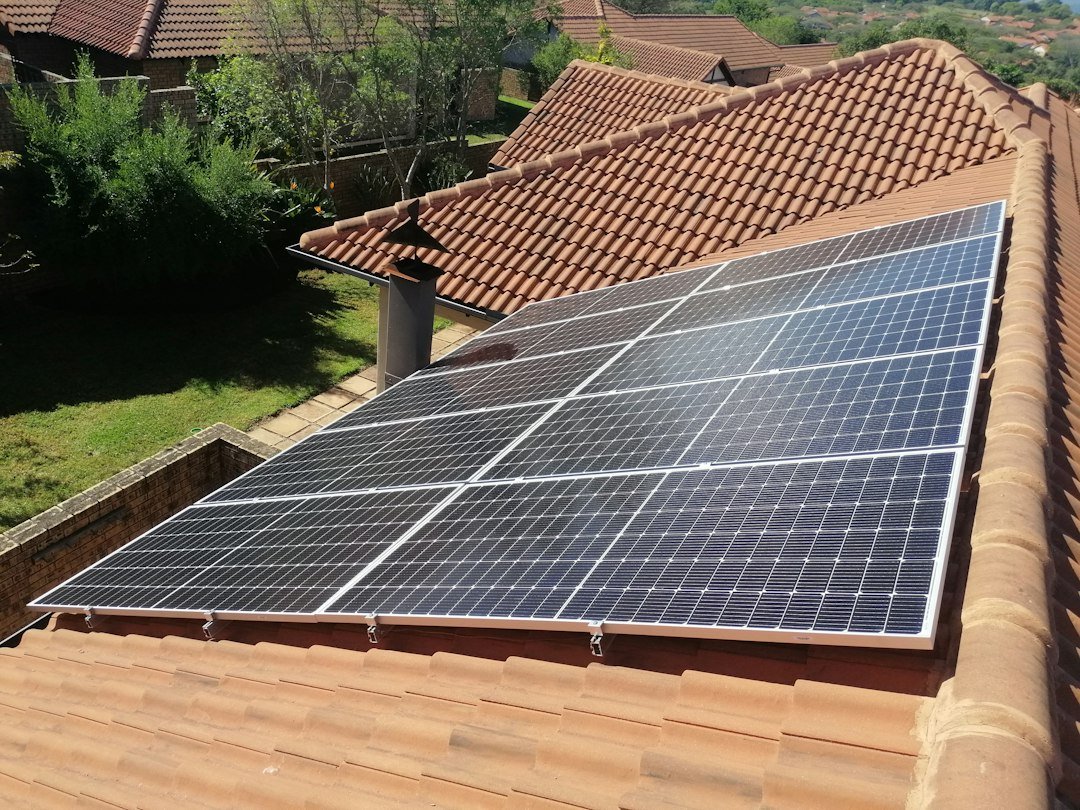
Editorial note: This is general educational information for U.S. homeowners, not a site-specific electrical design. Featured photograph: Sergio Martins / Unsplash; illustrative solar equipment photography, not a claim that the image shows a particular inverter model.