
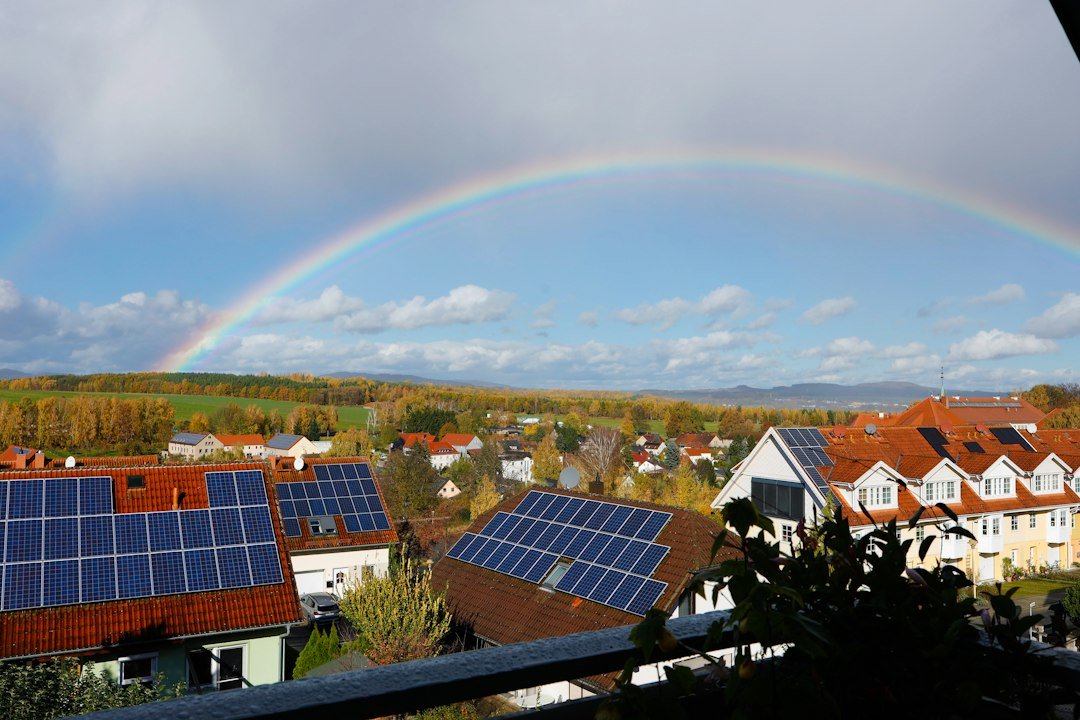
Yes, solar panels cost money to purchase and install, but the total depends on the system size, equipment, roof, local labor, and how you pay. For a useful U.S. reference, the Department of Energy reported residential solar pricing across modeled and reported methods of $3.20 to $4.20 per watt of direct-current capacity in the first half of 2025. That is historical context, not a guaranteed 2026 quote.
At those illustrative rates, a 6-kilowatt system would correspond to about $19,200–$25,200 before any applicable incentives; an 8-kilowatt system would correspond to about $25,600–$33,600. Your actual proposal can be outside that range. A battery, roof repairs, electrical upgrades, financing charges, and local rules may change the total. Ask installers exactly what is included before comparing prices.
2026 federal tax-credit update: The IRS says the individual Residential Clean Energy Credit under Section 25D is not available for property placed in service after December 31, 2025. Do not subtract the former 30% homeowner credit automatically from a new 2026 installation quote. Other programs or arrangements may have different rules; confirm current eligibility with the program administrator and a qualified tax professional.
How much do home solar panels cost in 2026? Current U.S. quote data
For a home solar installation in the United States, the cost of the panels alone is not the cost of a working rooftop system. An installed proposal normally covers modules, an inverter, racking, wiring, installation labor, design, permitting and utility interconnection. Optional batteries, roof repairs and major electrical upgrades can change the price substantially. The figures below are market reference points before incentives, not quotes for a particular address.
2026 marketplace example: EnergySage’s June 30, 2026 U.S. pricing guide reports an average of approximately $2.60 per watt on its marketplace, with a typical 12-kW installation averaging $31,135 before incentives. The precise total is based on its underlying marketplace data, so multiplying the rounded per-watt figure by 12,000 watts will not reproduce the reported average exactly. Its sample reflects shoppers and installers using that platform; it is not a universal national quote.
A different September 2026 Solar.com price guide cites a $3.36-per-watt national benchmark based on SEIA and Wood Mackenzie reporting. That would be $20,160 for 6 kW or $26,880 for 8 kW using straightforward multiplication. These sources have different datasets and methodologies; their numbers should not be averaged or presented as a single official U.S. price. The DOE’s earlier modeled costs elsewhere in this article are yet another distinct benchmark.
| Solar-only system size | Illustration at $2.60/W | Illustration at $3.36/W |
|---|---|---|
| 5 kW | $13,000 | $16,800 |
| 6 kW | $15,600 | $20,160 |
| 8 kW | $20,800 | $26,880 |
| 10 kW | $26,000 | $33,600 |
| 12 kW | $31,200 | $40,320 |
How to read this table: each number is system watts multiplied by a published reference rate, not a price prediction or a low-to-high market range. It assumes comparable solar-only installed scope; storage, unusual roof work, financing and taxes may be treated differently by individual quotes. The correct system size depends on annual household electricity use, shading, available roof area and the local utility tariff. Compare written bids for the same equipment capacity and scope.
How Much Do Roof Solar Panels Cost? Roof-Specific Prices for 2026
When homeowners ask how much roof solar panels cost, they usually mean the complete installed rooftop system, not a box of individual photovoltaic modules. A functional residential system requires panels, inverters, roof mounting and waterproofing details, wiring, electrical protection, permits, labor and utility interconnection. Batteries and roof repairs are additional items unless expressly included in the contract.
Two useful U.S. price references illustrate why there is no universal answer. EnergySage’s 2026 marketplace guide reports an average of approximately $2.60 per watt and a typical 12-kW project averaging $31,135 before incentives. Its state-level data were updated October 23, 2026. A separate September 2026 Solar.com report cites a $3.36-per-watt national benchmark attributed to SEIA and Wood Mackenzie. The sources use different methods and should not be combined into a supposedly exact national price.
At $2.60 per watt, a hypothetical 6-kW rooftop system costs $15,600; at $3.36 per watt, the same nameplate size calculates to $20,160. For 8 kW, the corresponding calculations are $20,800 and $26,880. These are simple arithmetic illustrations using published reference rates, not binding contractor quotes or a guaranteed market range. The actual amount depends on the property, location, installer, equipment, and excluded work.
Does the Type of Roof Change Solar Panel Installation Costs?
Yes, it can affect the amount of labor and mounting hardware required. A simple roof with good access and a large unshaded area can be easier to work on than a steep, complicated roof with several faces, dormers, or obstructions. Asphalt-shingle, standing-seam metal, and tile roofs may need different attachment techniques and waterproofing methods. Roof condition and structural suitability also matter. An installer should assess the site rather than promise that every roof can be priced from square footage alone.
Should You Replace Your Roof Before Installing Solar?
If the roof is nearing the end of its useful life, ask a qualified roofer to inspect it before installation. Replacing an aging roof first may avoid the later expense of removing and reinstalling the solar equipment for roofing work. However, a conventional roof replacement is not automatically included in the cost of a solar installation. Request separate written prices for roof work, structural improvements, and any future panel removal or reinstallation. Ask which contractor is responsible for the roof penetration warranty.
What Does One Rooftop Solar Panel Cost Compared With a Complete System?
The panel-only price does not capture most of the installed project. In EnergySage’s published breakdown of a typical 12-kW installation, solar modules account for about 12% of the total quoted cost; the rest includes other equipment, installation work, business costs and permitting. That is a marketplace example, not a fixed percentage for every quote. Comparing only the module price can make an installed system look much cheaper than it really is.
Can Homeowners Deduct 30% From a New 2026 Roof Solar Quote?
No, not under the former federal homeowner Section 25D credit for a newly completed 2026 installation. The IRS confirms the credit ended for expenditures after December 31, 2025, and says paying in 2025 does not qualify a system completed after that date. State and utility incentives may differ by address, ownership structure, and current program rules. Ask for written eligibility details rather than assuming an advertised incentive applies.
How to Compare Roof Solar Quotes Fairly
Ask each installer for the cash price, solar array DC rating, panel and inverter models, estimated annual kilowatt-hours, roof attachment method, labor and permit scope, monitoring, warranty coverage, and any exclusions. Compare cash and financed totals separately. Confirm whether a battery, main electrical panel upgrade, roof repairs, or future removal for reroofing is included. For background, read how home solar panels work and how many panels a home may need.
What would a home solar quote include beyond the panels?
Ask whether the cash price includes the solar modules, inverter or microinverters, mounting hardware, wiring, electrical disconnects, design, engineering, permit applications, inspection fees, utility interconnection and commissioning. Also ask what is excluded: roof repairs, an electrical-service upgrade, backup battery, monitoring subscription, financing fees or extra work identified during the site survey. A low advertised module price cannot be compared fairly with a complete installed quote.
How to estimate your home’s installed price
Start with your last 12 months of utility bills and identify total electricity use in kilowatt-hours. Ask local installers for a production estimate that accounts for roof orientation, shade and weather. Then compare the proposed system’s DC wattage, annual output, installed cash price and warranties. To calculate a comparable price per watt, divide the solar-only cash price by the array’s DC watts; a $24,000 proposal for 8,000 watts is $3.00/W. If a second proposal includes storage or a roof replacement, separate those charges before comparing the per-watt figure.
For the separate question of system sizing, see how many solar panels a house needs. For the financial return rather than the installation price, read whether solar panels save money. Costs and utility savings should be evaluated separately; a quoted purchase price alone does not establish payback.
How much do solar panels cost in 2026?
There is no reliable single price for every U.S. home. The most useful starting point is the installed cost of the whole system, not the price of one panel. A complete proposal may include solar modules, inverters, mounting equipment, electrical work, labor, permitting, inspection, and interconnection. Some quotes exclude items such as a service-panel upgrade or roof work, so two printed totals can represent very different projects.
The DOE’s solar industry update reported a $3.20–$4.20 per watt range across residential pricing methods for the first half of 2025. It reflects the methods and period described in that report. It should not be described as a current quote, a minimum price, or a guarantee that every installer includes the same extras. Obtain current local proposals before making a decision.
For a second perspective, DOE’s first-quarter 2025 benchmark modeled an 8-kW residential PV-only system at $2.95 per watt for its market-price benchmark, expressed in 2024 dollars. That produces approximately $23,600 for the modeled 8-kW system. The benchmark excludes subsidies payable to the owner and uses defined assumptions; it is not the same measure as every retail quote or the range above.
Example costs by system size
The examples below multiply capacity by the DOE’s historical $3.20–$4.20-per-watt range. They show arithmetic using a 2025 reference, not 2026 national averages or guaranteed prices. One kilowatt equals 1,000 watts. Confirm whether your quote measures the solar array in DC kilowatts and whether a battery is included.
| System capacity | Calculation | Illustrative installed cost |
|---|---|---|
| 4 kW | 4,000 W × $3.20–$4.20 | $12,800–$16,800 |
| 6 kW | 6,000 W × $3.20–$4.20 | $19,200–$25,200 |
| 8 kW | 8,000 W × $3.20–$4.20 | $25,600–$33,600 |
| 10 kW | 10,000 W × $3.20–$4.20 | $32,000–$42,000 |
| 12 kW | 12,000 W × $3.20–$4.20 | $38,400–$50,400 |
These figures do not determine the right system size. A larger array generally costs more in total, but its annual production depends on location, roof direction, shading, and design. Start with your electricity use and the installer’s production estimate. Our guide to how many solar panels a house needs explains the sizing questions separately.
How much of the quote is installation work?
Ask the contractor for a breakdown of field labor and the other expenses needed to complete the project. Installation is more than the hours spent fastening panels to a roof. Design, permitting, inspection coordination, electrical labor, utility interconnection, equipment delivery, and the installer’s overhead may all be included in the finished price. The DOE’s cost benchmark separates fieldwork from several other cost categories, which helps explain why labor alone is not the full installed price.
Contractors do not necessarily itemize these categories the same way. One may list a single project price; another may separate permitting, electrical work, and equipment. Ask for a written scope and identify which costs are fixed, estimated allowances, or exclusions. Do not subtract a generic percentage from a national estimate and call the result your local labor charge. Obtain a quote for your actual roof, electrical service, and chosen equipment.
Example: comparing two installation proposals
Suppose two hypothetical installers propose the same 8-kW solar-only design. Proposal A is $24,000 but excludes a necessary $2,000 electrical upgrade. Proposal B is $25,500 and includes that upgrade. The comparable totals would be $26,000 for A and $25,500 for B, assuming all other work is identical. These amounts are invented to show how to compare scope; they are not 2026 market quotes. Check permits, roof repairs, interconnection, warranties, and financing with the same care before choosing.
Ask whether the quoted price includes inspection and permission to operate, how long the offer remains valid, and what happens if the site visit reveals a different electrical or roof condition. If a battery is optional, obtain a separate line item with the backup circuits and installation work it covers. A complete written comparison makes it easier to see whether the lower number actually buys the service your household needs.
What is included in an installed solar quote?
Panels and mounting: The proposal should identify the module manufacturer, model, wattage, number of panels, and total array capacity. It should also specify the mounting system and how roof penetrations will be handled. A lower module price alone does not reveal the finished system cost.
Inverters and electrical equipment: Panels produce direct-current electricity, while the home and grid generally use alternating current. The quote should identify the inverter arrangement, monitoring, disconnects, wiring, and required electrical work. Different equipment designs can have different costs and warranties, so compare the exact models rather than only the total wattage.
Project services: Labor, design, permits, inspections, utility interconnection, and project management can be important parts of the price. Ask who is responsible for each step and whether fees are included or estimates. DOE refers to many non-hardware expenses as solar “soft costs.”
Roof or panel upgrades: A new roof, structural repair, main-panel upgrade, trenching, or service change may be needed in some projects. These are property-specific. Ask the installer to inspect and list any known work, plus the conditions that could trigger a change order. Avoid comparing a solar-only quote to another that includes a roof replacement without separating those amounts.
What affects the final price?
System size is an obvious factor, but roof complexity matters too. A steep or multi-section roof, long wiring route, shading, or limited working access can alter the design and labor scope. Local permitting and utility requirements vary. Equipment availability, contractor pricing, and regional market conditions also change over time.
Efficiency and brand should be evaluated alongside warranty terms and the available roof area. A more efficient module may produce a given system capacity with fewer panels, but it does not automatically deliver the lowest total installed cost or the best value for every roof. Ask the installer to show the total capacity and projected annual production for each design.
Financing can make offers harder to compare. A low monthly payment may come with a long term, a financing fee included in the project price, or other charges. Request the cash price and the complete financed cost, including interest and fees, so the household can compare both options on the same basis.
Do solar panels still qualify for a 30% federal credit in 2026?
For a new homeowner-owned system placed in service in 2026, do not assume the former federal Section 25D Residential Clean Energy Credit applies. The IRS states that this individual credit is not available for property placed in service after December 31, 2025. The IRS also explains that paying in 2025 does not qualify an installation completed after that deadline.
A person with an eligible earlier installation may have a different filing or unused-credit carryforward situation. Tax rules are individual, and eligibility cannot be determined from a general article. Consult the IRS and a qualified tax professional for your circumstances. This article does not treat a credit for an earlier installation as a discount on a new 2026 system.
State, local, utility, and other programs may exist, but eligibility, funding, deadlines, and program design vary. Ask the relevant agency or utility for current written terms. A lease or power-purchase agreement involves a different ownership structure; do not assume that a homeowner receives a particular commercial tax benefit directly. Require the provider to explain any claimed incentive and its effect on the actual contract.
How much does solar cost with a battery?
A battery is a separate component with its own energy capacity, power rating, installation requirements, and warranty. It can increase project cost, but a quote should also describe what it is designed to power and for how long under the stated conditions. A solar array alone does not automatically supply the home during a grid outage; backup capability depends on the installed equipment and system design.
In DOE’s 2025 first-quarter modeled example, an 8-kW residential array paired with 13.5 kWh of storage had a market-price benchmark of $4.59 per watt, or approximately $36,720 for the defined system in 2024 dollars. The corresponding PV-only benchmark was $2.95 per watt, or $23,600. These are model benchmarks, not current battery quotations, and the difference is not a universal battery price. Your design, backup scope, local installation work, and quote date matter.
Ask the installer which circuits would have backup, whether the battery and inverter can start the intended appliances, and what happens when the battery is depleted. If resilience is the goal, compare the full installed configuration rather than only the battery’s advertised storage capacity. Our guide to solar energy storage covers the basic options.
Cash, solar loans, leases, and PPAs
Cash purchase: The homeowner generally owns the system and pays the agreed installed price without solar-loan interest. Ownership also brings responsibilities for the equipment and applicable warranties. Request a payment schedule, the final scope, and the conditions for any changes.
Loan: The homeowner typically finances an owned system. Review the annual percentage rate, loan term, origination or dealer fees, total repayment, prepayment terms, and any payment change. A loan with a lower displayed interest rate can still be expensive if substantial fees are included in the sale price. Compare total cost and cash price, not only the first monthly payment.
Lease: A third party generally owns the system while the homeowner pays under a lease agreement. Check the contract term, payment increases, maintenance obligations, insurance, transfer rules if you sell, and end-of-term options. A zero-down offer means the upfront payment may be low; it does not mean the system or its electricity is free over the contract term.
Power-purchase agreement: A PPA generally charges for the electricity produced under the agreement’s terms. Check the rate, escalation provisions, what happens if production differs from expectations, and the treatment of future home sales. Ownership and incentives differ from a purchased system. Obtain the full agreement and compare its estimated total payments with your alternative utility costs using transparent assumptions.
Will solar panels save money?
They can reduce electricity purchases, but savings depend on production, when electricity is used, utility rates, export compensation, fixed charges, financing, and changes over time. A system that produces a certain amount of electricity does not necessarily eliminate every utility charge. Net metering and other export-credit rules differ by utility and location; ask which tariff applies before using a salesperson’s savings forecast.
Here is a hypothetical simple-payback example. Assume an installed cash price of $24,000 and verified net annual savings of $1,500 after relevant recurring expenses. Dividing $24,000 by $1,500 gives 16 years. If annual net savings are $1,000, the same calculation gives 24 years. These numbers are examples, not a forecast for your home. A simple calculation excludes the timing of money, financing, future rate changes, replacements, and many other factors.
Request an annual production estimate and the assumptions behind it. Compare them with your historical electricity use and ask how the installer modeled shading, electricity rates, export credits, and equipment degradation. An estimate is not a guarantee. If the proposal forecasts savings for decades, ask which assumptions have the greatest effect and what changes if they are less favorable.
How to compare solar quotes fairly
Give each installer the same electricity-use information and explain whether you want bill savings, backup power, or both. Ask for an itemized proposal with the solar array’s DC capacity, equipment models, estimated annual generation, cash price, financing terms, applicable fees, permits, interconnection, warranties, and exclusions. Keep battery and roof work in separate lines where possible.
Calculate price per watt only for comparable scopes: divide the solar-only installed price by the system’s DC watts. For example, a hypothetical $25,000 solar-only quote for 8,000 watts equals $3.125 per watt. If another quote includes a battery or electrical upgrade, that simple ratio is not an apples-to-apples comparison until the differing costs are separated.
Review warranties for both equipment and workmanship. Ask who handles a claim if the installer closes, how roof leaks are addressed, and whether monitoring or service visits carry an extra charge. Confirm the project schedule, cancellation terms, change-order process, and whether a property lien or financing filing may apply. Keep all promises in the written contract. Also ask what routine maintenance is included; our solar panel cleaning guide explains when surface buildup may need attention.
Questions to ask before signing
- What exact panel and inverter models are included, and what is the array’s DC capacity?
- What annual production is estimated, and how were shade and roof orientation modeled?
- Are permits, inspections, interconnection fees, taxes, monitoring, and labor included?
- Does the price include any roof repair, electrical upgrade, battery, or backup equipment?
- What is the cash price, and what are all financing charges and total payments?
- Which local incentives are currently open, who receives them, and what conditions apply?
- What happens if the project scope changes, the installer goes out of business, or I sell the home?
Frequently asked questions
Are solar panels free?
No. A no-money-down loan, lease, or PPA can reduce the amount paid upfront, but the agreement may still require substantial payments. Read the ownership, rate, fee, and term details before signing.
Is the quoted panel price the same as the installed cost?
No. The full project can include inverters, mounting, labor, permits, electrical work, and other services. Always compare installed scope rather than a module-only price.
Does every solar system include a battery?
No. Storage is optional in many designs and should be identified separately in the proposal. Ask whether the system is designed to provide backup during an outage.
How long does it take solar panels to pay for themselves?
There is no universal answer. Cost, production, electricity rates, export credits, financing, maintenance, and local conditions all matter. Use actual quotes and utility information to build an estimate for your home.
Can I claim the old 30% homeowner credit for a new 2026 installation?
The IRS states that the individual Section 25D credit is unavailable for property placed in service after December 31, 2025. Earlier eligible projects and any unused carryforward require separate review; consult a tax professional about your circumstances.
Featured photo: Lara John / Unsplash. Photograph illustrates rooftop solar and does not depict a quoted project.
Sources: U.S. Department of Energy: Quarterly Solar Industry Update; DOE: PV System Cost Benchmarks; IRS: Residential Clean Energy Credit; IRS: Section 25D deadline FAQ.
4 thoughts on “How Much Do Solar Panels Cost? A 2026 US Guide”
Comments are closed.