
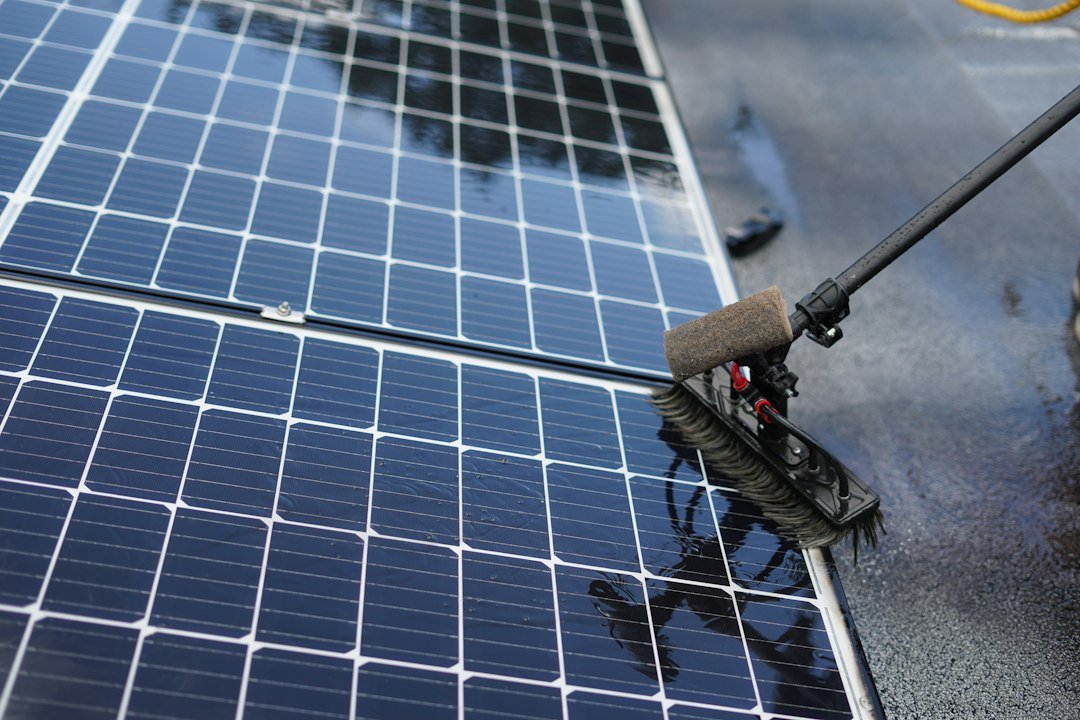
Solar panels are not always clean, even if rain regularly reaches them. Dust, pollen, bird droppings, leaves, and air pollution can collect on the glass and block some sunlight. Whether that buildup needs attention depends on your location, the amount of dirt, the system’s performance, and the panel manufacturer’s instructions.
The short answer: inspect panels from a safe location and review your system’s production. If there is heavy buildup, damaged equipment, or no safe way to reach the panels, contact your installer or a qualified solar maintenance professional. Do not climb onto a roof or handle solar wiring to investigate a dirty panel.
This guide focuses on whether installed panels stay clean and when they may need cleaning. If you mean whether solar is a clean energy source, the short answer is that panels generate electricity without onsite air emissions, although manufacturing, transportation, and disposal have environmental impacts.
Do I Need to Clean Solar Panels? A Practical Homeowner Decision Guide
Do I need to clean solar panels? Not automatically. Many rooftop solar arrays operate without routine hands-on washing, especially where rainfall removes ordinary dust and there is no persistent contamination. Cleaning becomes more worth considering when you can see substantial bird droppings, pollen, soot, dust buildup, or other residue and the evidence suggests it is affecting solar production. The right answer depends on your climate, roof access, the module manufacturer’s instructions, and whether a safe cleaning method is available.
For most homeowners, the best first step is not to climb onto the roof. Instead, compare the solar monitoring app’s recent energy production with similar weather and seasonal conditions, look for visible deposits from a safe location, and check whether the inverter reports any faults. Low output is not proof of dirty glass: shading, high temperatures, weather, equipment problems, and seasonal daylight changes can also explain it.
When cleaning may be worthwhile
- Persistent bird droppings or sticky residue: isolated deposits may remain after rain and cause localized shading.
- Dusty, dry or agricultural areas: prolonged periods without rain can allow particles to accumulate on the glass.
- Nearby construction or heavy airborne particles: recurring contamination may justify more frequent visual checks.
- Low-slope panels: water and debris may not drain as readily as on a steeper installation.
- A sustained, unexplained production drop: once weather, shade, monitoring, and equipment faults have been considered, cleaning may be one reasonable diagnostic step.
When you probably do not need to clean them
If the panels appear mostly clear, rainfall is reasonably frequent, and energy production is consistent with the season and local conditions, there may be little benefit from paying for a cleaning visit. Avoid scheduling cleaning solely because someone claims that all panels must be washed every month. There is no universal calendar that applies to every roof, location, and module design. A cleaning service’s promised percentage increase should not be treated as a guaranteed result for your home.
Simple decision table
| What you notice | Best next step | Is immediate cleaning necessary? |
|---|---|---|
| Light dust, normal solar production | Monitor performance and follow manufacturer guidance | Usually not |
| Visible bird droppings or heavy deposits | Ask about an approved, safe cleaning method | May be helpful |
| Sudden drop in output, no visible dirt | Check inverter alerts and contact installer | Not until the cause is identified |
| Panels on a steep or high roof | Use a qualified professional if cleaning is warranted | Never worth unsafe roof access |
| Cracked glass, damaged cable or exposed electrical parts | Stop; arrange professional inspection | Do not attempt cleaning |
How often should you check?
Start with the maintenance schedule in your module and inverter manuals, then adjust visual checks to your site’s conditions. An occasional ground-level inspection and periodic review of production data can be more useful than an arbitrary washing schedule. If a storm leaves debris or a long dry spell creates obvious deposits, inspect from a safe position and consult your installer about whether cleaning is appropriate. For broader context on how solar output changes with weather and temperature, see when solar panels are most efficient.
What is the safest way to clean solar panels?
Follow the exact manufacturer’s cleaning and electrical safety instructions. Avoid standing on modules, using abrasive pads, applying harsh chemicals, or directing high-pressure water at connectors and seals unless the manufacturer explicitly permits a method. Hot glass and cold water may create thermal-stress concerns; cleaning conditions and permitted water temperature are product-specific. Never disconnect PV wiring or open electrical enclosures as part of routine cleaning. Roof work carries fall risks, and illuminated panels can produce hazardous DC voltage. If the panels cannot be reached safely from an approved location, hire a qualified service provider rather than attempting to improvise.
Will cleaning increase your electricity production?
It can when soiling is materially blocking sunlight, but the gain is site-specific and may be small if the modules were already fairly clean. To judge the effect, compare production over similar solar conditions rather than comparing a cloudy day before cleaning with a sunny day afterward. The National Renewable Energy Laboratory’s research on photovoltaic soiling discusses why dust and environmental conditions affect energy losses and why results differ by site. Use this research as context, not as a promise of a particular percentage improvement.
Bottom line: clean solar panels when there is a good reason, a manufacturer-approved method, and a safe way to do the work. If output looks normal and deposits are minor, monitoring may be all you need. If output is unexpectedly low, troubleshoot the whole solar system before assuming dirt is responsible.
How Much Does It Cost to Clean Solar Panels in 2026?
How much does it cost to clean solar panels? In the United States, professional residential solar panel cleaning commonly costs around $150 to $500 per visit, or roughly $10 to $20 per panel, according to HomeGuide’s published cost data. Thumbtack’s March 2026 analysis reports a different national average of about $209 per job, with a typical range of $142 to $310. Angi’s October 2026 maintenance guide lists cleaning at about $200 to $500. These figures come from different datasets and scopes; they are useful reference points, not a single guaranteed price for your property.
The actual cleaning bill depends on panel count, roof height and slope, how dirty the modules are, local labor rates, and whether the contractor includes an inspection. Some cleaners charge a minimum service fee even for a small array. If your panels are mounted high on a steep roof, professional access and fall-protection requirements can make the work more expensive. Do not choose a cheaper DIY approach if it requires climbing onto a roof or touching solar electrical equipment.
Solar panel cleaning cost by number of panels
HomeGuide publishes the following approximate ranges for residential cleaning jobs. They are reported guide estimates, not custom quotations; actual minimum call-out charges and site complexity can move a quote outside these ranges.
| Number of panels | Published cleaning cost range |
|---|---|
| 5–10 panels | $50–$200 |
| 10–15 panels | $100–$300 |
| 15–25 panels | $150–$500 |
| 25–35 panels | $250–$700 |
| 35–45+ panels | $350–$900+ |
Source: HomeGuide’s solar panel cleaning cost guide. A per-panel estimate can be useful for planning, but a company may quote a flat fee for the entire system or a minimum visit charge. Ask whether the total includes travel, water treatment, labor, taxes, and a basic visual inspection.
What changes the price of solar panel cleaning?
Panel count and arrangement: Cleaning more modules generally takes more time, but the per-panel price may be lower on larger, easy-to-access arrays. Panels distributed across several roof faces can require additional setup. Roof access: A steep roof, multiple stories, fragile roofing, or limited access can increase safety requirements and cost. Contamination: Loose dust may be easier to address than stubborn bird droppings, pollen, soot, or mineral residue. Local conditions: Labor rates, travel distance, and availability of specialist contractors vary. Service scope: A cleaning-only appointment is different from an inspection, electrical testing, repair, or bird-proofing service.
Is professional cleaning worth paying for?
Not every solar array needs regular manual washing. Rain and panel tilt may remove ordinary loose dust, while persistent deposits can justify closer attention. First, check the solar monitoring app and look for sustained underperformance compared with similar weather and sunlight conditions. A drop in generation can also come from clouds, shading, inverter problems, or seasonal changes, so dirt should not automatically be blamed.
To judge whether cleaning is financially worthwhile, estimate the extra electricity it might recover rather than assuming a fixed efficiency gain. As a simple hypothetical example, if cleaning recovered 100 kilowatt-hours (kWh) over a year and each kWh offset electricity worth $0.20, the electricity value would be $20. Paying $250 for that visit would not make sense on energy savings alone. But these are illustrative numbers, not a prediction of actual soiling losses or savings. For stubborn localized contamination, warranty or maintenance reasons may also matter.
How often should you pay to have solar panels cleaned?
There is no one-size-fits-all cleaning schedule. A home in a rainy area with normal output may need little or no routine washing. A home near construction, frequent dust, heavy pollen, or bird activity may need more frequent assessment. Some service providers suggest annual or twice-yearly visits, but the right frequency depends on measured performance and the manufacturer’s maintenance instructions. Avoid paying for an automatic cleaning subscription without evidence that it benefits your array.
DIY cleaning vs hiring a professional
Angi’s October 2026 guide estimates roughly $30–$250 for DIY supplies and safety equipment, compared with $200–$500 for professional cleaning. The DIY figure does not account for the value of your time or the consequences of a fall, damaged panel, or warranty problem. DIY cleaning should only be considered where the panels are safely accessible without climbing and the manufacturer explicitly permits the method. Never walk on modules, use abrasive scrapers, spray electrical connections, or attempt to repair wiring. Roof-mounted arrays are generally best left to trained professionals when manual cleaning is actually necessary.
What should a solar panel cleaning quote include?
- The total price, number of panels covered, and any minimum visit charge.
- The proposed cleaning method and confirmation it follows the module manufacturer’s instructions.
- How workers will access the roof and manage fall and electrical hazards.
- Whether a visual inspection is included and what counts as a separate paid inspection.
- Extra charges for difficult access, stubborn deposits, travel, or repeat visits.
- Evidence of appropriate insurance and experience with solar arrays.
Ask for at least two written quotes with the same scope if professional cleaning is warranted. A contractor who promises a specific production boost without inspecting the array or reviewing generation data may be overstating the likely benefit. For the decision on whether washing is necessary at all, use the guidance in this article and review when solar panels are most efficient to distinguish normal sunlight changes from a maintenance issue.
Frequently asked cleaning cost questions
How much does it cost to clean 20 solar panels? HomeGuide’s published range for 15–25 panels is $150–$500 per visit. Your actual 20-panel quote depends on roof access, contamination, and local minimum fees.
Is solar panel cleaning included in the installation warranty? Not automatically. Some installers offer maintenance plans, but standard product warranties may not include cleaning. Check the written contract and the panel manufacturer’s instructions.
Can rain clean solar panels for free? Rain can remove some loose dust, but it may not remove stubborn droppings or other deposits. Monitor output and inspect from a safe location before spending money.
Is the cheapest cleaning quote the best? Not necessarily. The cleaning method, worker safety, insurance, and warranty compatibility matter more than a small difference in price.
Bottom line: budget around $150–$500 for a typical professional U.S. residential cleaning visit as a broad planning range, but first confirm that cleaning is needed. Compare local written quotes and prioritize safe, manufacturer-approved methods.
Cost sources: HomeGuide; Thumbtack, March 31, 2026; Angi, updated October 29, 2026. The sources report different samples and scopes; all prices are estimates, not guaranteed local offers.
Do solar panels clean themselves?
Rain can wash away some loose dirt, and the tilt of a panel can help water run off. But a rain shower does not guarantee a clean surface. Bird droppings can stick to the glass, dust can settle again after the rain, and debris can collect along the lower edge. Panels beneath trees or near agricultural work, roads, construction, or industrial activity may have different maintenance needs from panels in a less dusty location.
Even the appearance of the glass is only part of the picture. The U.S. Department of Energy’s Pacific Northwest National Laboratory notes that soiling is not always easy to detect visually. Follow the cleaning schedule and method provided by your installer, and use production data as an additional clue. A light film does not automatically mean you need to pay for a cleaning visit, and a shiny-looking panel does not guarantee that the whole system is performing normally.
Roof pitch, the frequency of rain, windblown material, the type of dirt, and the layout of the array all affect what remains on the panel. There is no single cleaning interval that reliably fits every U.S. home. If you have moved into a property with an existing system, request its installation records and panel model numbers before deciding what care it needs. Local sunlight and weather also affect output; learn more about how location affects solar efficiency.
What makes solar panels dirty?
Different kinds of buildup call for different responses. A loose layer of dust may be less stubborn than bird droppings or tree sap. Leaves may block part of a panel while also collecting around the mounting structure. In dry areas, a long stretch without rain may allow dust to accumulate; near farms, seasonal agricultural work can add airborne material. Homes close to construction or busy roads can also see changing levels of dust.
Pollen is often seasonal, while bird activity can create persistent spots. Coastal properties may face salt residue. The correct response still depends on the exact product instructions: a cleaner or tool that sounds reasonable for ordinary glass may be unsuitable for a panel coating, frame, seal, or warranty. Before hiring someone, give them the module brand and model and ask how they will follow its instructions.
Do not touch or wash a panel that appears cracked, has exposed wiring, or shows burn marks. Photograph the issue from a safe location and contact your installer or an appropriately qualified service provider. A dirty panel and an electrically damaged panel are different problems; washing is not a repair.
How dirt can affect solar production
Solar panels need sunlight to reach their cells. Material on the surface can reduce the light reaching them, so dirt may reduce energy output. The size of the loss varies with the amount and distribution of soiling, weather, equipment, and other conditions. It would be misleading to promise that cleaning every array will recover a particular percentage of production.
Localized shading can matter as well. A single patch of bird droppings is not the same as a uniform light film across a whole array, and different system designs respond differently to uneven obstruction. If one module appears heavily covered, document the location and ask the installer whether it warrants service. Do not assume you can identify the electrical effect simply by looking at one spot.
Production changes for many other reasons, including cloud cover, shade from new tree growth, seasonal sun angle, inverter alerts, and equipment problems. Our guide to how solar panels work on cloudy days explains why a cloudy day alone makes a poor cleaning test. Cleaning will not fix a disconnected system, an inverter fault, or a tree that has grown into the sun’s path.
How to tell whether your panels need cleaning
Start with an inspection from the ground or another location the installer has confirmed is safe. Look for obvious patches of dirt, bird droppings, leaves, or uneven buildup. Use your system’s monitoring app or records to check for alerts and broad changes in production. Save a photo and the date when you notice something unusual so you can explain it to the installer without going on the roof.
Compare production carefully. A week in December should not be compared directly with a sunny week in June and treated as proof of dirty glass. Look for similar seasons, times, and weather conditions where your monitoring system permits it. Even then, differences in temperature, shade, equipment operation, or weather can affect the comparison. If the system shows an error or a substantial unexpected drop, contact the installer rather than assuming cleaning is the answer.
A useful maintenance note includes:
- The panel and inverter model numbers, if known.
- The date of the observation and a photo taken from a safe location.
- Whether the buildup is loose dust, bird droppings, leaves, or another visible material.
- Any monitoring alert or change in production, with the dates being compared.
- The installer’s instructions and the date of the last professional inspection or cleaning.
This record gives a professional a starting point. It is not a substitute for an onsite diagnosis, and it does not require the homeowner to touch equipment or enter a restricted area.
How often should solar panels be cleaned?
There is no universal schedule. Start with your panel manufacturer’s instructions and any maintenance plan supplied by the installer. Then consider your local conditions. A system exposed to recurring bird droppings, construction dust, or heavy agricultural dust may need attention sooner than a system that stays relatively clear. Check whether a service agreement specifies inspections or cleaning and what it actually includes.
Instead of assuming “twice a year” is always correct, use an observation-based plan. For example, a homeowner might review the monitoring dashboard periodically, check the array from the ground after a dusty season, and contact the installer when visible buildup or an unexplained production change appears. The timing in that example is a planning approach, not a manufacturer recommendation for your equipment.
If your contract promises a cleaning frequency, ask how the provider handles a roof that does not need cleaning, stubborn deposits, access, and damage discovered during the visit. Some companies charge separately for inspection, bird-proofing, or travel. Get the scope in writing and compare it with the requirements in your own panel documentation.
Can rain keep panels clean enough?
Sometimes rain removes enough loose dust that additional cleaning offers little practical benefit. In other circumstances, residue remains or returns quickly. Rainfall amount, dust type, roof angle, and nearby vegetation all influence the result. A storm may also leave debris elsewhere on the roof, creating a separate maintenance concern.
Use rain as one factor, not as a guarantee. If panels are visibly affected by persistent material or production remains unexpectedly low after weather improves, record the issue and ask your installer for guidance. Equally, avoid paying for repeated cleaning solely because a calendar reminder appears when your system has no observed problem and the manufacturer does not call for it.
Solar panel cleaning safety: what homeowners should know
Rooftop solar combines fall hazards with electrical equipment that may remain energized when exposed to daylight. Do not assume a switch makes every part of an array safe to touch, and do not disconnect wiring, open electrical boxes, or work on damaged equipment. Pacific Northwest National Laboratory recommends that electrical connections be handled by trained, authorized providers using appropriate safety equipment.
Do not climb onto a roof to clean an array, stand on panels, use a ladder next to electrical equipment, or spray water into electrical components. If the only way to reach the panels requires roof access or working at height, hire a qualified, insured professional. Keep people and pets away from any damaged equipment and follow your installer’s advice.
Manufacturer rules differ. For example, one manufacturer may allow a particular type of water or tool while another imposes different restrictions. Do not use abrasive pads, harsh chemicals, scraping tools, high-pressure equipment, or a cleaning solution unless the exact panel manufacturer specifically permits the method. A general internet guide cannot approve a product for every panel or confirm that its use preserves your warranty.
If your panels are safely accessible without climbing and you are considering any homeowner maintenance, first check the exact written instructions and ask the installer what is permitted. If anything about access, water, equipment condition, or the procedure is unclear, use a professional. LG’s published guidance specifically cautions about roof work and the proximity of water to live electrical equipment.
How to clean solar panels on a roof: a safe step-by-step plan
For most homeowners, the safest answer to “how do I clean solar panels on my roof?” is to assess the need from the ground and arrange a qualified professional when cleaning is justified. Rooftop work combines fall exposure, potentially fragile roofing and electrical equipment that can remain energized in daylight. The steps below explain what an owner can do without accessing the roof and what to agree with a professional before any washing begins. They are not instructions to climb onto the roof or work on live equipment.
Step 1: Decide whether cleaning is actually necessary
From a safe ground-level viewpoint, note visible bird droppings, heavy dust, leaves or persistent patches. Check the monitoring portal for alerts and compare energy production with a similar period, accounting for cloud cover, seasonal sunlight and shade. A single low-output day is not proof that dirt is responsible. Rain may clear loose material, but it cannot be relied on to remove every deposit. If there is no substantial buildup and performance looks normal, ask your installer whether any intervention is warranted before paying for a visit.
Step 2: Identify the exact modules and their care instructions
Find the installation paperwork, panel manufacturer, model number, warranty and the installer’s maintenance guidance. Send these to the cleaning provider before the visit. Do not substitute advice for a different brand or module generation. For example, LG’s published solar-module guidance discourages homeowners from cleaning their own rooftop arrays and discusses de-ionized water and non-abrasive equipment for its context. That does not mean every panel maker approves the same brush, water source, detergent or cleaning frequency. The module-specific instructions and installer’s recommendations control the method.
Step 3: Check access, roof condition and electrical red flags
Tell the professional about the roof height and pitch, skylights, fragile surfaces, restricted access, gutters and any visible roof damage. Mention cracked glass, loose-looking cables, scorch marks, standing water near electrical equipment or inverter warnings. Do not approach, touch or rinse damaged equipment. A cleaner should be able to explain how trained personnel will assess fall protection and electrical hazards, and when the job will be stopped for inspection or repair. Turning a system off does not necessarily make sunlight-exposed modules electrically safe; do not attempt disconnects yourself.
Step 4: Agree on a manufacturer-approved cleaning method
Ask the provider to describe the proposed water, tools, technique and treatment of stubborn deposits. Do not assume household glass cleaner, a pressure washer, a metal scraper or an abrasive brush is acceptable. Some maintenance guidance discusses water-fed equipment or gentle washing in certain conditions, but the specific module’s requirements may be more restrictive. Pacific Northwest National Laboratory’s photovoltaic maintenance guidance says cleaning methods and frequency should follow the site installer’s instructions and local conditions. The provider—not an untrained homeowner—should handle roof access and cleaning operations.
Step 5: Request documentation rather than a guaranteed output boost
Before the visit, save your recent production readings and a ground-level photo if possible. Ask the contractor for before-and-after images taken safely, the method used, any defects found and a dated service record. Confirm that they will report concerns about mounts, roof penetrations, cables or animal activity instead of treating washing as an electrical repair. A clean-looking panel does not prove that the inverter or every circuit is working properly. Keep the service report with your warranty documents.
Step 6: Review the result over comparable conditions
After service, review the monitoring portal and check for alerts. Compare suitable days or periods rather than treating an immediate increase as proof of a fixed cleaning benefit. Temperature, clouds, sun angle and shading can change production independently of soiling. If output remains unexpectedly low, ask the installer to diagnose the system. For background on variable sunlight, see our guide to solar production on cloudy days. For expected household capacity rather than maintenance, read whether solar panels can power a house.
What about a hose or a long brush from the ground?
A ground-level position does not automatically make spraying or extending a pole toward a rooftop array safe. Water can reach electrical components, a tool can contact overhead hazards, and debris or water can fall toward people below. Do not spray electrical boxes, cables or visibly damaged modules. Ask your installer whether the particular equipment, location and procedure permit any owner-performed care; if the answer is uncertain, hire a qualified professional. A generic recommendation to use a garden hose, soap or a telescopic brush is not an adequate substitute for the manufacturer’s instructions.
When should you postpone cleaning?
Postpone and seek professional advice if the array or wiring appears damaged, the roof is unsafe, weather conditions create additional risk, or the provider cannot explain a suitable access and equipment-safety plan. If the issue is mainly snow, ice or a suspected roof leak, do not scrape the panels or treat it as ordinary dirt. Ask the installer to assess the condition. The goal is a safe, functioning system—not simply a spotless photograph.
Professional cleaning: what to ask before booking
A good quote should identify the site, the approximate number and location of panels, the access method, and what the cleaner will do if the roof or equipment is unsafe. Ask whether the provider carries appropriate insurance, follows the panel maker’s written instructions, and will notify you about visible defects. Confirm whether the visit includes a visual inspection or only surface cleaning.
Ask how the company will handle stubborn deposits and what water, tools, or products it plans to use. A reputable provider should be willing to review the exact model’s instructions instead of offering one universal method. Ask whether before-and-after photos are included and whether the company will provide a written description of any damage or unresolved issue.
Compare prices for the same scope, but avoid assuming cleaning will generate a guaranteed return. An illustrative calculation can help: if a cleaning visit costs $180 and the verified additional value of the recovered electricity is $30 per year, the simple payback would be six years. Those figures are hypothetical, not a current market quote or expected result. Actual recovered output may be smaller, larger, or difficult to isolate, and roof access or damage concerns can justify a service decision independently of that calculation.
What if production is still low after cleaning?
First check whether the comparison used similar weather and time periods. A cleaner surface does not make a cloudy afternoon equivalent to a clear one. Next review the monitoring system for alarms, an inverter that has stopped reporting, or an unusually different module or string where that detail is available. Record the evidence and contact the installer or service provider for diagnosis.
Possible causes include shade, equipment issues, a changed utility connection, weather, or a monitoring problem. Do not reset electrical equipment or manipulate connectors unless the manufacturer’s instructions and your installer explicitly authorize the action. The owner’s role is to provide observations and records, not to perform electrical troubleshooting on live solar equipment.
If you are considering a larger solar system because output seems insufficient, first establish whether the current system is operating as expected. Our guide to how many solar panels a house needs explains the separate sizing question. More panels do not automatically resolve an existing fault or persistent shading.
Are solar panels clean energy?
This is a different meaning of “clean.” Solar panels generate electricity without producing onsite air emissions during normal operation, according to the U.S. Environmental Protection Agency. However, making, transporting, and eventually managing the panels requires materials and energy. The full environmental assessment includes those lifecycle stages as well as the electricity produced over time.
End-of-life handling also matters. The EPA explains that some discarded panels can be regulated as hazardous waste, depending on their characteristics and applicable rules. Do not assume every panel can go in ordinary household trash or that every component will automatically be recycled. Ask your installer, local waste authority, or an appropriate recycler about options for your specific equipment and location. Surface cleanliness and environmental lifecycle impact are related to solar ownership but answer different questions.
Frequently asked questions
Do I need to clean solar panels after every rainstorm?
No. Rain often removes some loose dust, but whether more attention is useful depends on what remains, your system’s performance, and the manufacturer’s instructions. Inspect from a safe location and seek help when persistent buildup or damage is visible.
Can dirty solar panels still work?
They may continue producing electricity, but material blocking sunlight can reduce output. The effect depends on the amount and location of the material and on the system. Do not assume a fixed percentage loss for every home.
Can I use household glass cleaner?
Do not assume a household product is approved. Check the instructions for your exact panel and ask the manufacturer or installer before using any chemical or tool. An unsuitable cleaner can conflict with the equipment’s care requirements.
What should I do about bird droppings?
Record the location from a safe place and ask your installer or a qualified cleaning service to assess it. Avoid scraping the glass or going onto the roof. If birds are nesting around the array, ask about an appropriate professional solution without disturbing electrical equipment.
Are rooftop solar panels safe to clean myself?
Roof access and live electrical equipment create significant risks. If reaching the array requires a ladder or roof work, use a qualified professional. Even for accessible equipment, follow the exact product and installer instructions and never handle damaged wiring.
Will cleaning always lower my electric bill?
Not necessarily. The effect depends on how much output was lost to dirt, the value of electricity produced, your utility arrangement, and the cost of cleaning. Other causes of low production will remain after the glass is cleaned.
For most homeowners, the practical first step is to observe the system safely, keep the manufacturer’s guidance, and seek professional help when there is meaningful buildup, damage, or an unexplained performance issue. Solar maintenance works best when the response fits the actual array and conditions.
Featured photo: Florida Solar Fix / floridasolarfix.com, via Unsplash.
Sources: Pacific Northwest National Laboratory: Solar Photovoltaic O&M; LG USA: How to Clean Solar Modules; U.S. EPA: End-of-Life Solar Panels.
1 thought on “Are Solar Panels Clean? Signs, Cleaning and Safety”
Comments are closed.