
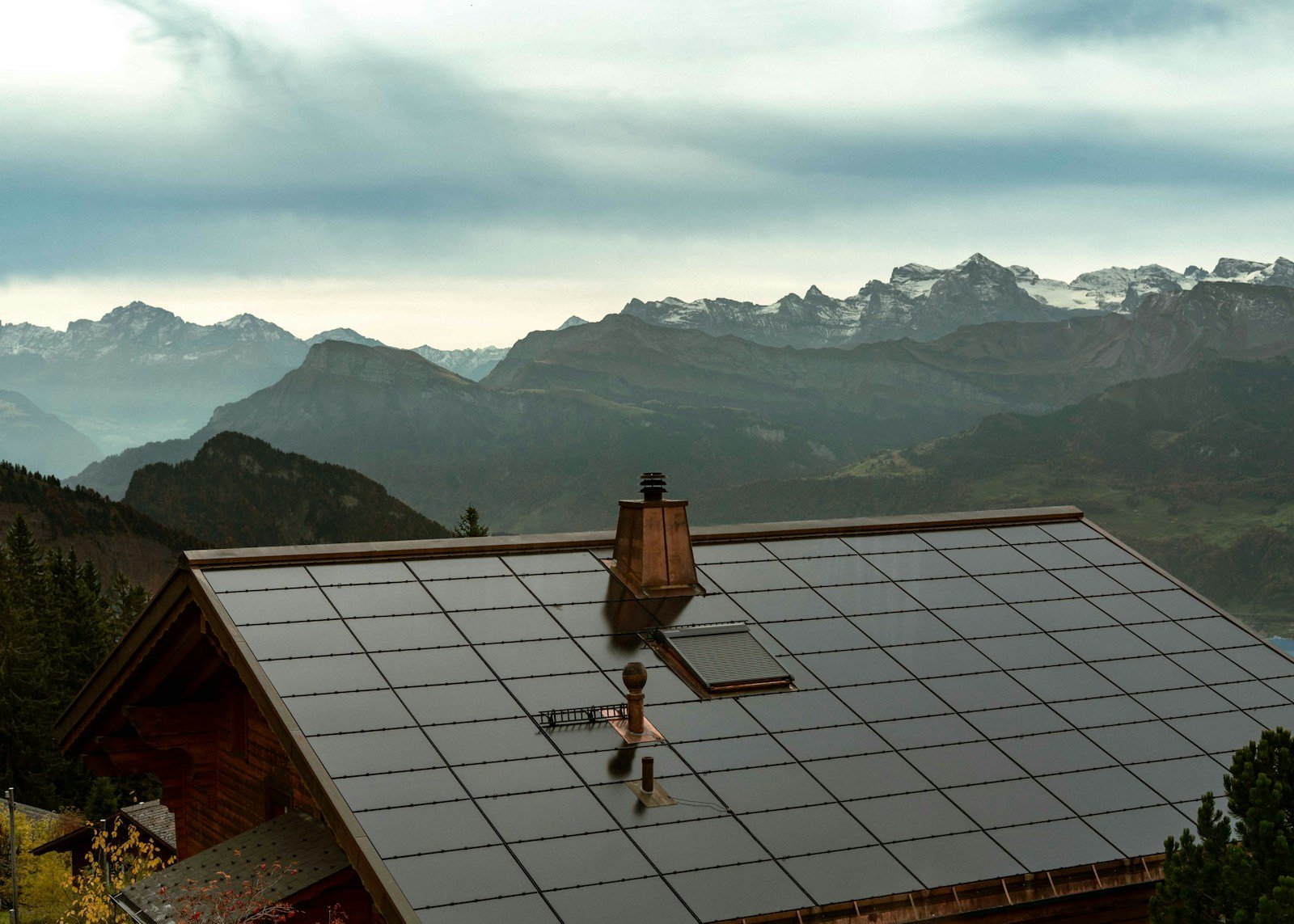
Yes, solar panels work on cloudy days. Photovoltaic (PV) cells can convert both direct sunlight and diffuse light—the sunlight scattered by clouds and the atmosphere—into electricity. The important limitation is output: a cloud-covered array normally produces less power than the same array under strong, direct sun, and the amount can change quickly as clouds move. There is no honest universal “cloudy-day percentage” because cloud thickness, season, location, roof geometry, shading, equipment, and the time interval being measured all matter.
This guide explains what actually happens in overcast weather, how to read your system data without mistaking normal variation for a fault, and how to plan household loads or battery use when the forecast is gray. It focuses on grid-tied and battery-backed rooftop PV systems in the United States, but the principles also apply to many portable solar setups.
Why panels can generate electricity without a clear sky
A PV cell contains semiconductor material that absorbs energy from light and creates electrical current. The cell does not require a visible disk of sun; it requires usable solar radiation reaching its surface. The U.S. Department of Energy explains that sunlight arriving at the ground has two relevant components: direct-beam radiation and diffuse radiation that has been scattered by air, water vapor, clouds, dust, and other particles. The combination is called global solar radiation.
On a cloudless day, direct radiation is usually the dominant resource for a well-oriented array. Under cloud cover, much of that direct beam is reduced or blocked, but diffuse light can still reach the modules from a broad area of the sky. Standard PV modules can convert that diffuse component. That is why the inverter may remain on and the monitoring app may show generation even when the roof is in shade from clouds.
This is different from nighttime. After sunset, there is not enough solar radiation for normal PV production, so a home uses grid electricity, a battery, or another source. Our guide to how solar energy works at night explains that separate situation. Cloudy daytime production should not be described as “nighttime solar,” and a battery does not make the panels themselves generate after dark.
How much power should you expect?
There is no single defensible answer such as “panels always make 10 percent” or “always make 80 percent” on a cloudy day. “Cloudy” covers very different conditions: a thin high layer, fast-moving broken clouds, a dark storm front, fog, rain, or a uniformly overcast sky. Each changes the direct and diffuse components differently. Output also varies with sun angle, season, array tilt and azimuth, temperature, dirt, snow, shade, inverter limits, and module technology.
The most useful comparison is not the panel’s nameplate rating. Nameplate watts are measured under standardized test conditions, not guaranteed at every roof and moment. Compare the day with a recent clear day at a similar time of year, or compare actual daily energy in kilowatt-hours with the installer’s production model for that month. A one-minute power value in kilowatts and an entire day’s energy in kilowatt-hours answer different questions.
Thin clouds and broken clouds
Thin clouds may reduce output modestly, while a dense cloud crossing the sun can cause a sharp drop. With broken clouds, a monitoring graph often looks jagged because irradiance changes quickly. At brief moments, reflected light around cloud edges can produce a short rise, but that is not a dependable energy strategy and should not be treated as evidence that cloudy weather improves annual production.
Uniform heavy overcast
A thick, dark cloud layer can remove most direct-beam radiation, leaving a smaller diffuse resource. Production can remain above zero but may be far below a bright-day peak. The DOE notes that atmospheric conditions can reduce direct-beam radiation completely during thick cloud, while its PV material also explains that PV uses the solar resource reaching the module. Those statements are consistent: losing the direct beam does not necessarily eliminate every diffuse photon.
Rain, fog, snow, and haze
Rain usually arrives with cloud cover, so lower irradiance—not the water itself—is the main immediate reason for lower output. Fog and haze scatter and absorb light. Snow is more complicated: airborne snow and cloud reduce light, while snow covering the module can block it physically. Never climb onto a wet, icy, or snow-covered roof to chase a small production gain. Follow the installer and module manufacturer’s cleaning and safety instructions.
Clouds can affect different systems differently
Two neighboring homes can show different graphs on the same day. Their roof planes may face different directions, trees or chimneys may shade different modules, and their equipment may handle partial irradiance differently. A string inverter generally operates strings of modules together, while module-level power electronics can report and manage modules individually. Neither architecture makes energy from absent light; design affects how available light and mismatch are handled.
Array wiring also matters for voltage, current, and controller input limits in off-grid or portable systems. Our practical explanation of solar panels in series versus parallel covers those electrical checks. Do not rewire a rooftop array to “fix” clouds. Rooftop DC work can present shock, arc, fall, and fire hazards and belongs with a qualified professional working to the equipment instructions and applicable code.
How to check whether low output is normal
- Record the conditions. Note the time, cloud type, rain or snow, and whether the entire array or only one roof plane is shaded. A screenshot of the monitoring graph is more useful than a remembered peak.
- Use comparable data. Compare daily kilowatt-hours with nearby days in the same season. Do not compare a cloudy winter afternoon with a clear summer noon.
- Check the monitoring time scale. Some portals update every few minutes, smooth readings, or display AC output after inverter losses. The utility meter may show net household flow rather than gross solar production.
- Look for system messages. An inverter offline alert, ground-fault warning, communications failure, or a whole-day flat line is different from a weather-shaped curve.
- Compare like roof sections. If module-level data is available, compare modules on the same plane. A single persistently weak module on many clear days deserves attention; a whole-array dip synchronized with a cloud usually does not.
- Check safe, obvious obstructions. From the ground, look for new tree shade, storm debris, or visible snow coverage. Do not open electrical equipment or access the roof unless you are trained and authorized.
- Escalate persistent anomalies. Contact the installer or manufacturer if output remains unexpectedly low after skies clear, alarms persist, breakers trip, equipment smells hot, or damage is visible.
A simple way to plan cloudy-day energy
For a household, energy planning works better than chasing the day’s highest watt number. Start with recent monitoring history. Find several days with weather similar to the forecast and note the total solar energy produced. Then list the loads that can be shifted: laundry, dishwasher cycles, water heating, vehicle charging, or charging a portable power station. Schedule flexible loads during the brighter part of the day, but keep essential loads within what the grid, battery, or generator can reliably support.
For an illustrative calculation, suppose a monitoring app shows 6 kWh of solar production on a previous overcast day and the home uses 4 kWh during daylight. The apparent 2 kWh surplus is not automatically usable battery energy. Inverter conversion, battery charging losses, battery reserve settings, simultaneous loads, export controls, and forecast error all reduce what is available. Use the battery or inverter app’s actual state of charge and limits, not a rough subtraction, when making operational decisions.
Storage can release energy when solar production falls and can smooth some variability, but it does not increase the sunlight reaching the modules. The DOE describes storage as a way to help integrate solar when production varies because of clouds, time of day, and other conditions. Whether a battery is worthwhile depends on outage goals, rates, incentives, load profile, usable capacity, power limits, and installation cost—not simply the number of cloudy days.
Location and annual production matter more than one gray afternoon
A solar decision should be based on an annual or long-term resource assessment, not a single weather event. The United States has usable solar resources across many climates, but local production depends on latitude, typical cloud cover, roof orientation, tilt, shading, and seasonal conditions. Read our guide to how location affects solar energy efficiency for the broader siting factors.
A reputable proposal should state its modeled annual energy, assumptions, equipment, shade analysis, and uncertainty. Ask whether the estimate uses local weather data and whether degradation, clipping, soiling, and shading are included. Avoid sales claims that treat panel wattage as guaranteed continuous output or promise the same result in every climate.
Ways to improve dependable production
- Reduce avoidable shade. A professional shade assessment can identify trees, vents, chimneys, or roof sections that affect the array. Do not remove trees or alter a roof solely on a guess.
- Use a sound design. Correct string sizing, inverter selection, module placement, tilt, and orientation matter throughout the year. Equipment must stay within manufacturer voltage, current, and temperature limits.
- Maintain safe airflow and condition. Damaged wiring, loose connectors, failed electronics, or debris should be handled by qualified personnel. Routine visual checks from a safe location can catch obvious changes.
- Keep monitoring connected. A communications outage can look like zero generation even when the inverter is producing. Check the inverter display or local indicators as directed by its manual before assuming a solar fault.
- Right-size expectations. Oversizing an array or adding storage may serve a legitimate load or resilience goal, but it should follow a site-specific design and cost analysis. More hardware is not a universal cure for cloudy weather.
Common monitoring mistakes
Mistaking net meter flow for PV output: A utility meter may show import or export after household consumption. If the home is using 3 kW and solar is producing 2 kW, the meter may show 1 kW imported; that does not mean the panels are producing zero.
Comparing peak watts with daily energy: A brief noon peak does not describe how many kilowatt-hours the system made. Cloudy conditions may create short ramps while still producing useful energy across the day.
Ignoring seasonal sun angle: Shorter days and lower winter sun can reduce production even when the sky appears bright. Compare with the model or historical data for the same part of the year.
Assuming every flat graph is weather: A perfectly flat zero line, missing data, or an inverter alarm can indicate communications or equipment trouble. Weather-driven output usually changes with daylight and cloud movement.
Frequently asked questions
Do solar panels work in complete overcast?
They can produce electricity from diffuse daylight, but dense overcast can reduce output substantially. “Complete overcast” is not a standardized output condition, so use actual monitoring and local production estimates rather than a universal percentage.
Can clouds ever make the monitoring number rise?
Short, localized increases can occur when light is reflected or concentrated around cloud edges, especially as conditions change quickly. Do not design a system or forecast daily energy around those brief events.
Do higher-efficiency panels solve cloudy weather?
Higher module efficiency means more rated power can fit in a given area under test conditions. It does not remove the fundamental dependence on available solar radiation. Compare complete-system energy estimates, warranties, dimensions, temperature behavior, and cost rather than one efficiency number.
Will a battery keep solar working during a grid outage?
Only if the system is specifically designed and configured for backup operation. Many ordinary grid-tied inverters shut down during an outage to protect utility workers. A backup-capable inverter, transfer equipment, controls, and compatible storage may be required. Follow the approved system design and never attempt to energize household wiring manually.
Should I clean panels after rain?
Not automatically. Light rain may leave dust or spots, but cleaning needs vary with location, roof angle, manufacturer guidance, and measurable performance. Avoid roof access and abrasive or unapproved chemicals. If soiling appears persistent and material, use a qualified service provider.
When should I call the installer?
Call when low output continues through clear conditions, one section stays abnormally weak, an inverter reports a fault, protective devices trip, wiring or modules appear damaged, or you notice heat, smoke, or burning odor. For an immediate electrical or fire hazard, keep away and contact emergency services or the appropriate qualified professional.
Bottom line
Solar panels do work on cloudy days because PV cells can use diffuse as well as direct solar radiation. Output is lower and more variable when clouds reduce the light reaching the array, but the size of that reduction is site- and weather-specific. Judge performance with comparable daily energy data, equipment alerts, and the system’s professional production model. Use storage or the grid for reliability, shift flexible loads when practical, and treat persistent clear-weather underperformance—not one gray afternoon—as the reason to investigate.
Official references
- U.S. Department of Energy: Solar Radiation Basics
- U.S. Department of Energy: Solar Photovoltaic Technology Basics
- U.S. Department of Energy: Solar Energy and Storage Basics
Featured image credit: Anna Stampfli via Unsplash. The image is illustrative and does not document a product test or this article’s example system.