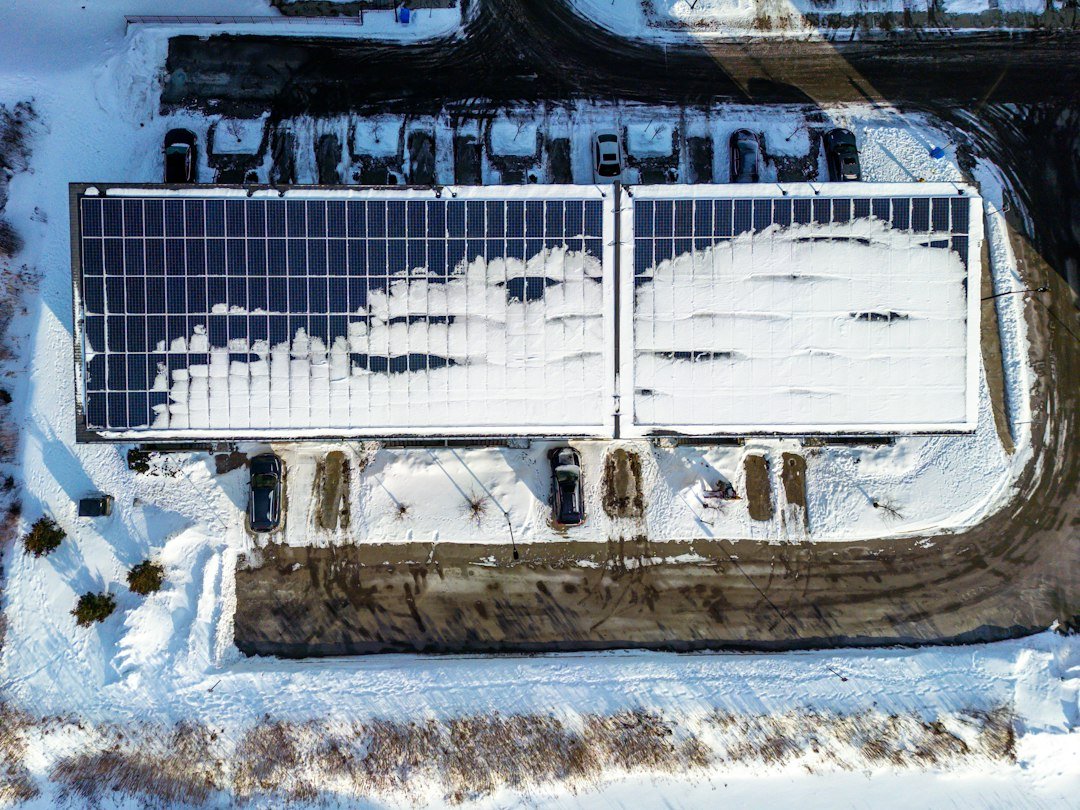
Do snow-covered solar panels work? Sometimes, but output depends on how much snow covers the glass and how much sunlight can reach the solar cells. A thin dusting may allow limited electricity generation, while a thick, opaque blanket of snow can reduce production to almost nothing. Snow on the ground is a different matter: once the panels are exposed, reflected winter sunlight can sometimes help them collect additional light.
For most homeowners, the key distinction is snow covering the panels versus snow surrounding the panels. Solar panels can generate electricity in cold weather and during winter, but they still need sunlight. The U.S. Department of Energy notes that snow often melts or blows off photovoltaic (PV) modules, while heavy accumulation and ice can cause production losses and structural concerns. This guide explains what happens during snowfall, when output returns, how to check your system, and why aggressive rooftop snow removal is usually a bad idea.
The Short Answer: Thin Snow, Heavy Snow, and Clear Panels
| Winter condition | Can panels generate electricity? | What to expect |
|---|---|---|
| Light dusting of snow | Sometimes | Some sunlight may pass through; output may be reduced |
| Thick snow covering the glass | Little or none | Sunlight is strongly blocked until snow moves or melts |
| Partially exposed modules | Often yes | Production may recover unevenly as exposed sections increase |
| Clear panels with snow on the ground | Yes, with sunlight | Cold temperatures and reflected light can sometimes help |
| Cloudy winter day without snow cover | Usually yes | Lower light levels generally reduce production |
| Dark winter night | No useful PV output | Panels require sunlight, regardless of temperature |
The precise loss cannot be predicted from snow depth alone. Snow density, wetness, ice crust, sunlight, array tilt, panel orientation, bypass-diode design, and inverter behavior all affect what the monitoring app displays. Tesla’s explanation of winter system performance similarly distinguishes light snow, which may permit a small amount of generation, from heavier buildup that can stop output.
Why Snow Cover Reduces Solar Panel Electricity
Solar photovoltaic cells convert incoming light into electrical energy. Snow blocks, scatters, or reflects part of that incoming light before it reaches the cell surface. When the layer is thick enough, very little useful light reaches the cells. The result is lower electrical current and lower power output. The system may show a small amount of generation under thin, translucent snow, but homeowners should not count on meaningful output through a deep blanket.
Partial snow coverage can also create mismatch within a panel or string. Cells or module sections receiving less light may constrain the current flowing through connected sections. Bypass diodes can reduce some mismatch effects, but they do not make a snow-covered array operate normally. The pattern of exposed and covered cells matters, not merely the percentage of visible glass.
Inverters add another consideration. Some systems need a minimum DC voltage or operating condition before they start exporting AC electricity. Panels might produce a tiny amount of DC under snow without the inverter recording useful household production. That does not mean the system is permanently broken. If it returns to normal after snow clears, the temporary shading was a likely explanation.
Can Solar Panels Work While It Is Snowing?
Yes, provided enough daylight reaches the panel surface. Snow falling through the air is not identical to a thick layer resting on the glass. Light snowfall may still permit generation, especially when some parts of the array remain clear. However, snowfall often arrives with clouds and lower solar irradiance, which further reduces production. A panel’s ability to generate on a snowy day should not be confused with the ability to deliver its rated peak output.
If your system is generating only a fraction of its usual midday power during a storm, that is not necessarily an equipment failure. The comparison must account for the shorter winter day, lower sun angle, cloud cover, and snow accumulation. For a related explanation, see do solar panels work on cloudy days?.
Do Solar Panels Work Better in Cold Weather?
Cold temperatures and snow cover have different effects. Solar cells can operate efficiently when they are relatively cool, and high cell temperatures generally reduce voltage and conversion efficiency. This means a clear, cold, sunny day can be favorable for a solar array. But if the glass is buried under snow, the lack of incoming light can overwhelm any benefit from cooler cells.
Winter also brings fewer daylight hours and a lower sun angle in much of the United States. These factors can reduce total daily production even when the modules are perfectly clean. It is therefore misleading to say either that solar panels always perform better in winter or that they cannot work in winter. The outcome depends on the complete weather and site conditions. Our guide to when solar panels are most efficient explains the distinction between peak conversion efficiency and daily energy production.
Does Snow on the Ground Help Solar Panels?
It can. Bright snow on the ground reflects sunlight, an effect known as albedo. When the reflected light reaches an exposed solar module, it can contribute additional energy. The potential benefit depends on the panel’s position, the direction of reflected light, and whether the system is designed to use light from the rear as well as the front.
Bifacial modules are specifically designed to collect light from both sides, so reflective ground surfaces can be especially relevant to their performance. Ordinary rooftop modules may still receive some reflected light, but a white yard does not compensate for thick snow sitting directly on the front glass. Reflected light is an opportunity only when it actually reaches active cells.
Will Snow Melt or Slide Off Solar Panels by Itself?
Often, but not always. Panels are commonly mounted at an angle, and their smooth glass can allow snow to slide downward when conditions change. Sunlight, wind, outdoor temperature, snow type, and roof geometry influence how quickly this happens. The U.S. Department of Energy’s winter-weather guidance reports that much snow melts or blows off PV systems, while heavy snow and ice can remain hazardous.
A steeply tilted array may shed snow more readily than a low-slope installation, but no specific tilt guarantees a snow-free system. Frames, module edges, mounting rails, roof obstructions, and frozen layers can trap snow. Snow may also accumulate at the lower edge of an array after sliding, which can delay further shedding or create a safety hazard below.
Do not assume that every roof will clear in one day. A shaded north-facing roof section, persistent freezing weather, repeated storms, or a nearly flat array can retain snow much longer. If snow remains after conditions improve, monitor the system and consult the installer about whether inspection is warranted.
How Much Electricity Can You Lose to Snow?
The loss can range from negligible during a brief dusting to nearly all output while modules are fully buried. Annual losses are much harder to generalize because they depend on local snowfall, storm duration, array geometry, and how quickly the panels clear. Sandia National Laboratories’ snow-performance research discusses substantial variation in snow-related energy losses by location and weather.
For perspective, a National Renewable Energy Laboratory operations-and-maintenance report cites example annual-average snow losses of about 0–2% in some southern states, 2–4% in certain arid locations such as Colorado, and 10–16% in some heavy-snow regions such as Michigan, Wisconsin, and Maine. Those are research-based examples from specific conditions, not guaranteed estimates for your home or every installation in those states.
The relevant measure for a homeowner is often annual kilowatt-hours rather than a dramatic-looking day of zero production. One snow-covered afternoon can produce little energy, but annual results also include months of normal operation. Conversely, repeated storms that leave a low-tilt array buried for long periods may have a meaningful financial effect. An installer can model the expected site-specific losses.
Example: What Happens to a 6 kW Solar System After Snow?
Imagine a hypothetical 6 kW DC rooftop array. On a particular clear winter day without snow, suppose it would have produced 18 kWh of electricity. A storm then leaves the modules fully covered and the monitoring system records almost no production for a day. That day might lose nearly all of the 18 kWh that would otherwise have been generated under the assumed weather conditions.
But the calculation is only illustrative. A snowy storm day would likely have less sunlight than the hypothetical clear day even without snow on the glass. It would be incorrect to attribute the entire difference between a sunny day and a storm day solely to snow accumulation. Compare against modeled irradiance or similar weather conditions when assessing losses.
If the panels clear and normal generation resumes, the temporary loss does not mean the solar cells were damaged. If output remains unusually low after the array is clear and weather is comparable, investigate inverter messages, electrical faults, new shading, or physical damage. Learn more about system planning in our home solar power guide.
Should You Remove Snow From Solar Panels?
Usually, no. Waiting for snow to melt or slide off naturally is often safer than attempting to remove it from a roof. The Department of Energy cautions that manual removal can damage panels and should be approached with extreme care. NREL’s operations-and-maintenance guidance likewise says snow removal is generally not recommended because it can damage modules, although exceptional structural or access concerns may require professional intervention.
The hazards are not limited to scratched glass. Roofs can be slippery, snow may slide suddenly, and the panel surface may be energized in daylight. Hard tools can damage glass, frames, wiring, or seals. A homeowner should never walk on the panels, climb onto an icy roof to sweep them, chip ice with metal tools, or direct hot water at frozen modules.
If snow is unusually heavy, there is a suspected roof-load issue, or a storm has damaged equipment, contact a qualified solar installer and, where appropriate, a roofing or structural professional. Follow the specific module manufacturer’s maintenance instructions. The priority is personal safety and the integrity of the roof and electrical system, not recovering a few hours of winter output.
How to Clean Snow Off Solar Panels Safely: A Homeowner Checklist
How do you clean snow off solar panels? For most rooftop systems, the safest answer is to let the snow melt or slide away naturally. The U.S. Department of Energy’s winter-weather guidance generally advises against manual snow and ice removal because the process can damage modules or put people at risk. If the accumulation is unusually heavy or a professional identifies a structural concern, removal may be justified, but it should follow the exact module manufacturer’s instructions and a safe access plan. The steps below focus on making that decision—not encouraging homeowners to climb onto an icy roof.
Step 1: Check whether snow removal is really necessary
Look at the array from a safe location on the ground and check your solar monitoring app. Temporary low generation while the modules are covered is expected. The Department of Energy explains that much of the snow on photovoltaic arrays eventually melts or is blown away, and the time depends on conditions such as sunshine, temperature, roof pitch, and accumulation. If the roof and modules appear intact and there is no immediate hazard, waiting is often more sensible than trying to recover a small amount of electricity during a storm.
Contact a professional promptly if you suspect excessive roof loading, detached mounts, broken glass, sagging roof structures, exposed wires, or dangerous ice buildup above walkways. Those are safety or structural issues rather than routine cleaning jobs. Do not stand beneath snow that may suddenly slide from the array.
Step 2: Read the panel manufacturer’s winter maintenance instructions
Before considering any contact with the glass, find the module’s actual installation and maintenance manual. A method allowed for one brand or model may not be approved for another. Ask the installer whether a professional service visit is recommended, what cleaning materials are permitted, and whether any special shutdown or isolation procedure applies. Solar modules can remain electrically energized in daylight even when other parts of the system have been switched off.
Step 3: Choose a safe access method, or hire a qualified professional
Never climb onto a snowy or icy roof simply to clear the panels. Do not stand or kneel on the modules, reach across roof edges, work from an unstable ladder, or pull at cables. For rooftop arrays that cannot be reached from an approved safe work position, a trained solar-maintenance professional is the appropriate choice. The contractor should evaluate fall protection, falling snow, electrical hazards, roof condition, and the risk of scratching the glass.
Even ground-level tools can be risky if they are too long to control, contact electrical components, or cause snow to fall onto people. Do not assume that a product labeled a “solar panel snow rake” is automatically suitable for your installation. Verify its compatibility and the proposed method with the panel manufacturer or installer.
Step 4: Avoid tools and techniques that can damage the array
- Do not use metal shovels, scrapers, or ice picks. Hard edges can scratch glass, damage frames, or break seals.
- Do not chip away bonded ice. Ice may be attached to the module surface or frame, and forcing it loose can damage equipment.
- Do not pour hot water onto frozen panels. Sudden temperature changes may create thermal stress, and the water can refreeze on nearby surfaces.
- Do not use high-pressure washers, de-icing salts, or unapproved chemicals. These can damage surfaces, seals, or nearby equipment.
- Do not touch connectors or exposed wiring. Cleaning is not an electrical repair procedure.
DOE guidance notes that when unusually heavy accumulation requires intervention, softer tools may be considered with extreme care; that is not a universal instruction to brush every array. NREL’s photovoltaic maintenance guidance generally discourages snow removal because it can damage modules. A qualified service provider should decide which approved technique, if any, is suitable for your site.
Step 5: Let remaining ice clear naturally and check the results
If a professional has safely addressed an exceptional buildup, avoid trying to make every panel perfectly spotless. Ice bonded to the glass may need time to melt. After conditions improve, review the monitoring app and compare production with similar sunlight and temperatures. A quick increase in output as snow clears is normal. If production remains unexpectedly low after the array is exposed, check for inverter alerts and contact the installer rather than attempting to disconnect or test solar wiring.
Do you need a solar panel snow rake?
Not necessarily. A snow rake is sometimes discussed for accessible arrays, but it is not an essential purchase for every solar homeowner. The decision should depend on the array’s mounting height, panel instructions, weather conditions, roof access, and professional assessment. On a steep rooftop, even a long-handled tool used from the ground can dislodge heavy snow toward the operator. Never use an unapproved rake to scrape the module surface or pull at the frame.
When should you call a professional instead of waiting?
Seek qualified help when snow or ice creates a credible structural-load concern, when modules or mounting hardware appear damaged, or when the array remains nonfunctional after clearing and ordinary weather-related explanations no longer fit. If the problem is simply a short-lived production dip during a normal snowfall, monitoring and patience are usually sufficient. See our solar panel cleaning and safety guide for other kinds of contamination, and our cloudy-day solar output guide for additional troubleshooting context.
Bottom line: the best way to deal with snow on solar panels is usually not to clean it yourself. Let ordinary accumulation shed naturally; involve a qualified installer for unusually heavy snow, damage, or a genuine safety concern. Protecting people, the roof, and the electrical system is more important than recovering a few hours of winter generation.
Safer Alternatives to Clearing Snow Yourself
First, inspect the system from the ground or through the monitoring app rather than climbing. Look for obvious snow coverage, visible broken glass, detached frames, or fallen cables from a safe distance. Do not touch damaged electrical equipment. If the panels are covered but otherwise appear intact, allow natural clearing unless a qualified professional identifies a reason to intervene.
If professional snow removal is necessary, ask the installer to explain the manufacturer-approved method, roof-access precautions, electrical isolation procedures, and how they will protect the module surfaces. Tools or techniques acceptable for one product may be prohibited for another. A soft brush is not a universal safety guarantee, particularly when used from a ladder or near exposed electrical components.
Before a severe winter storm, review the solar provider’s instructions for monitoring, shutdown, and post-storm inspection. Homeowners should not attempt improvised electrical shutdown procedures or disconnect live PV connectors. The DOE’s weather-hardening guidance prioritizes system survival over production during extreme storms.
Can Heavy Snow Damage Solar Panels?
Yes. Solar modules and mounting systems have design limits for mechanical loads, including snow and wind. Heavy accumulation, ice, drifting snow, and uneven loading can strain module glass, frames, roof attachments, and the underlying roof structure. A panel designed for snowy climates still has finite load ratings; those ratings must be considered during system design.
The DOE’s winter-resilience guidance describes possible module deformation, broken glass, and frame problems under severe snow and ice loads. The correct response to suspected damage is a professional inspection, not an attempt to brush away the snow and restart the system. The module and mounting system specifications should be checked against local building requirements.
After a severe event, report cracked glass, loose equipment, sagging mounts, exposed wires, or persistent faults to the installer. Avoid standing below areas where large sheets of snow or ice may slide off the array. Where snow routinely accumulates, snow guards and roof details may need to be considered in the overall building design.
How to Check Solar Production After a Snowstorm
Open your inverter or solar monitoring app and check whether the system is online, whether any fault messages are present, and whether production increases as sunlight returns and snow clears. A temporary low-output day during snow cover is expected; a persistent alert or abnormal output after clearing deserves investigation.
Compare the same time of day and similar sunlight conditions, not just consecutive calendar days. Consider whether a new shadow from a nearby tree or building is affecting the array. If you have module-level monitoring, uneven recovery between panels may help identify persistent snow patches, but it is not a definitive diagnosis of hardware condition.
A system that is physically clear yet still reporting zero power in strong daylight may have an inverter, wiring, grid, or protection-related issue. Follow the manufacturer’s user-level troubleshooting instructions and call a qualified professional for electrical diagnosis. Never open equipment covers or disconnect solar cables to test a live array.
Do Batteries Help When Solar Panels Are Covered in Snow?
Batteries can supply previously stored electricity when panels are not generating enough, provided the system is properly designed and configured for the intended loads. They do not make snow-covered panels produce additional sunlight-derived energy. If a storm lasts longer than the stored energy can support your appliances, the battery may eventually run low.
A grid-connected home without a battery may draw utility electricity during snowy periods. A home with a battery may use stored energy, utility power, or a combination depending on its controls and tariff. An off-grid home needs enough storage and potentially another backup source to cope with prolonged low solar production.
For a detailed comparison, see do solar panels need batteries? and how to store solar energy. The appropriate backup plan should consider several consecutive winter days rather than assuming panels will clear after every snowfall.
Planning a Solar Installation in a Snowy Climate
If you are considering solar in an area with regular winter storms, ask the installer to include snow effects in the energy-production estimate. Roof orientation, tilt, shading, module placement, and clearance from roof obstructions all influence how snow behaves. A design that looks ideal for summer sunlight may retain snow differently during winter.
Ask about the module’s mechanical load rating, the mounting system, roof structure, local code, access for inspection, and the consequences of snow sliding onto walkways or entrances. A steeper tilt may help shedding, but tilt is only one part of a safe and productive design. A qualified designer should weigh winter production, structural loads, and year-round energy output together.
Ground-mounted systems offer different access and clearance options but can also be affected by drifting snow or snowplows. The DOE recommends clear markings where snow could hide array boundaries. Proper planning can reduce accidental equipment damage during winter property maintenance.
Frequently Asked Questions
Do solar panels work when completely covered in snow?
They may generate negligible electricity if almost no light penetrates the snow. A fully covered array can show little or no usable AC production until the glass becomes exposed. The exact result depends on snow thickness, light transmission, and the electrical system.
Will a thin layer of snow stop solar panels?
Not always. A light dusting may let some light through and permit reduced output, especially when the sun appears. As the layer thickens or freezes, production can drop further. Do not assume any particular percentage of normal output without monitoring data.
How long does snow stay on rooftop solar panels?
There is no reliable universal time. Wind, sunshine, outdoor temperature, roof angle, module framing, and snow type all matter. Some arrays clear quickly; others retain snow through prolonged freezing conditions or repeated storms.
Do solar panels melt snow themselves?
Panels may absorb sunlight and warm enough to help snow melt or slide, but they are not normally electric snow-melting heaters. When the glass is deeply covered and sunlight is blocked, natural clearing may take longer. Do not assume that every array has an automatic snow-removal feature.
Are solar panels less efficient in winter?
Not necessarily at the cell level. Cooler cells can convert sunlight efficiently, but winter often brings shorter days, a lower sun angle, cloudier weather, and snow shading. Total winter energy production may therefore be lower even when the modules themselves operate efficiently.
Can snow reflection increase solar power?
Yes, when reflected sunlight reaches uncovered active surfaces. Bright snow can increase the available reflected light, particularly for suitable bifacial installations. Snow covering the front glass still blocks light and usually reduces production.
Should I use a snow rake on rooftop solar panels?
Do not use one unless the panel manufacturer and qualified installer explicitly approve the method and it can be performed safely. Rooftop snow removal can create fall, electrical, and equipment-damage risks. In most ordinary situations, waiting for natural shedding is preferable.
Can a solar battery keep my house powered during a snowstorm?
A properly configured battery-backed system can power supported loads while stored energy lasts. Runtime depends on usable battery capacity and the appliances being used. A battery is not a guarantee of uninterrupted whole-home electricity during a prolonged storm.
What if my panels stay at zero after the snow melts?
Check the monitoring system for alerts and confirm that the utility connection is normal. If the panels are visibly clear and sunlight is adequate but production remains unexpectedly low, contact the installer for diagnosis. Do not handle live solar wiring yourself.
Final Verdict: Do Snow-Covered Solar Panels Work?
Snow-covered solar panels can sometimes produce electricity through a light dusting, but thick snow can reduce output to almost zero. Once the modules are clear, they can work well on cold, sunny winter days. The most sensible homeowner response is usually to monitor performance and let snow shed naturally rather than risk damaging the system or getting injured while clearing it.
For homes in snowy climates, a sound solar design accounts for winter sunlight, snow retention, structural loads, and backup electricity needs. If you see visible damage or a persistent fault after a storm, use a qualified solar professional rather than attempting repairs yourself.
Sources and Editorial Note
- U.S. Department of Energy: Solar Photovoltaic Hardening for Resilience — Winter Weather
- Sandia National Laboratories: The Impact of Snow on PV Performance
- NREL: Best Practices for Operation and Maintenance of Photovoltaic and Energy Storage Systems
- Tesla Support: Understanding System Performance
Editorial note: This guide is educational and does not replace manufacturer instructions, structural engineering, or electrical safety guidance. Featured photograph: LEDC / Unsplash, showing rooftop solar panels partially covered by snow.