
What Do Tesla Solar Panels Cost in 2026?
Tesla solar panels cost about $2.81 per watt installed on average in the EnergySage marketplace sample updated June 3, 2026. At that reference rate, a 6-kW system works out to about $16,860, an 8-kW system about $22,480, and a 10-kW system about $28,100 before applicable incentives and optional extras. These figures are calculations from an observed marketplace average, not a current personalized Tesla offer. Tesla does not publish one fixed installed price for every U.S. property.
The price depends on your roof, electricity consumption, local installation conditions, selected equipment, and whether you add a home battery. Tesla’s own published cost explainer uses a broader residential solar benchmark of $2.74 to $3.30 per watt, not a guaranteed Tesla-specific quote. Its illustrative 8-kW residential system costs about $21,900 to $26,400 under that benchmark. Tesla says the final system price is determined by the design and project details. For a binding number, request a location-specific written proposal.
This guide separates Tesla-branded photovoltaic panels from the different Solar Roof concept, explains what is included in an installation, illustrates how panel counts affect system size, and shows how to evaluate cash, loan, and lease proposals in 2026. It also explains why you should not subtract an expired federal homeowner tax credit from a new installation.
Tesla Solar Panel Cost by System Size
The following examples multiply system size in watts by the $2.81-per-watt average reported in EnergySage’s June 2026 Tesla solar panel review. The figures are before incentives and do not include a separately priced battery, unusual electrical work, roof replacement, or financing charges. Actual quotes can fall above or below the example.
| Example solar array | Arithmetic at $2.81/W | Illustrative installed cost |
|---|---|---|
| 4 kW | 4,000 × $2.81 | $11,240 |
| 6 kW | 6,000 × $2.81 | $16,860 |
| 8 kW | 8,000 × $2.81 | $22,480 |
| 10 kW | 10,000 × $2.81 | $28,100 |
| 12 kW | 12,000 × $2.81 | $33,720 |
A 4-kW system is not automatically sufficient for a small home, and a 12-kW system is not necessarily right for a large one. Electricity use, shade, roof direction, local sunshine, and utility rules all matter. Use the table as a budgeting framework, then ask an installer for a production estimate in annual kilowatt-hours. A system with the same rated capacity can produce different amounts of energy at two addresses.
How Much Does a Single Tesla Solar Panel Cost?
Tesla’s current U.S. solar panel specifications list a 420-watt module. A panel’s wattage tells you its rated power output under standardized test conditions, not the number of kilowatt-hours it will deliver every day. To estimate the number of modules in an array, divide the target array wattage by 420. For example, 8,400 watts divided by 420 watts equals 20 panels, giving an 8.4-kW nameplate array if the design uses that module.
Multiplying 420 watts by $2.81 produces $1,180.20. That is not the retail price of one loose panel. It is the equivalent share of a complete installed system at the example per-watt rate. The installed cost also pays for mounting hardware, electrical equipment, design, labor, permitting, and other project expenses. Consumers should not use the per-panel equivalent as a component-only shopping price.
Tesla’s panel page describes low-profile mounting, a black finish, and a 25-year product and performance guarantee. Check the written warranty terms, exclusions, installation workmanship coverage, and which company will provide local service. A long panel warranty is not the same as a guarantee that every other component will last the same length of time.
What Is Included in a Tesla Solar Installation Quote?
A working home solar installation is more than the rooftop modules. The full scope normally involves design, mounting and roof attachments, electrical wiring, inverter equipment, safety disconnects, labor, inspection, permitting, and coordination with the utility. Tesla’s solar panel cost breakdown explains that these non-panel expenses make up a substantial share of an installed residential system. A panel-only advertisement therefore cannot be compared directly with an installed Tesla proposal.
Solar modules and mounting equipment
The modules generate direct-current electricity from sunlight. Mounting hardware attaches them to a roof using methods appropriate for the roof material and structure. An installer should explain how penetrations are sealed, how the layout avoids obstructions, and whether roof repairs are required before work begins. A roof with steep slopes, multiple sections, difficult access, or fragile surfaces can be more complicated to install on than a simple unobstructed roof.
Inverters, wiring, and electrical upgrades
The inverter makes solar electricity usable by household AC circuits and manages electrical functions required by the system. Electrical work may also include dedicated protection, utility-approved connection equipment, and upgrades to the home’s main electrical service. Do not assume the initial online estimate includes every unexpected panel upgrade, trenching task, or structural correction. Ask whether those are allowances, exclusions, or fixed-price items.
Permits, inspections, and utility approval
A system usually cannot be turned on for normal grid-connected operation merely because the panels are physically attached. Permits, inspection, and permission to operate may be needed. Tesla explains that the order-to-power-on process includes design, permitting, utility approval, and installation. The timeline and costs can vary with the authority having jurisdiction and the utility.
Tesla Solar Panels Versus Tesla Solar Roof: Why the Prices Differ
Tesla Solar Panels are conventional photovoltaic modules mounted over an existing suitable roof. Tesla Solar Roof refers to an integrated roofing product using solar and non-solar tiles. They are not interchangeable quotes. A homeowner who only needs electricity generation on a serviceable roof should not compare the panel price with a full roof replacement as though the two projects had identical scope.
The Solar Roof concept involves roofing materials and roof installation in addition to electrical generation, so roof area, complexity, tile coverage, and replacement work can dominate the budget. Product availability and installation channels may change, and homeowners should confirm current availability directly with Tesla rather than assume a Solar Roof quote is offered in their ZIP code. This article’s $2.81-per-watt examples apply to Tesla solar panels, not Solar Roof tiles.
Does Adding a Tesla Powerwall Increase Solar Panel Cost?
Yes. A Powerwall is a separate home energy storage system that adds battery equipment, installation work, controls, and potentially electrical upgrades. Its cost should appear as a separate line item or be clearly identified in the package total. Tesla says Powerwall can store solar electricity for use when solar output is low and can support appropriately configured backup functions. A standard grid-tied solar array alone should not be assumed to power a home during an outage.
A battery is not mandatory for every homeowner. If the primary goal is to offset daytime electricity purchases, a solar-only system may be sufficient depending on the utility rate and export rules. Storage may make more sense when backup power, evening peak rates, or time-shifting solar energy is important. Compare a solar-only quote and a solar-plus-storage quote using the same solar array size and clearly defined backup scope.
When evaluating a battery proposal, ask how many circuits can be backed up, how much usable energy is available, the continuous power limit, whether air conditioning or other high-demand loads are supported, and whether the battery can recharge from the panels during an outage. A larger price does not necessarily mean more practical backup unless the system is designed for your actual loads.
Can You Lease or Finance Tesla Solar Panels?
Tesla advertises cash purchase, financing, and lease options, subject to eligibility and location. Under a cash purchase, the homeowner owns the installed system and pays the purchase price under the agreed schedule. With financing, the homeowner typically owns the system but repays a loan; the interest rate, term, fees, and any progress payments affect the true total. A low monthly payment is not the same as the lowest lifetime cost.
With a lease, the provider generally owns the system and the homeowner pays for use under a contract. Tesla’s purchasing and financing guidance describes the options, including ownership differences. Before signing, ask about annual payment increases, maintenance responsibilities, insurance, early termination, purchase options, and what happens if you sell the house. Some options may not be available at every address.
Compare each proposal on three separate numbers: the cash installed price, the amount paid over the full financing or lease term, and the estimated annual electricity savings under your utility tariff. If a seller shows only monthly payments, request a complete payment schedule and a clear explanation of fees. Review whether the savings estimate accounts for future electric rate changes or makes optimistic assumptions that cannot be guaranteed.
Does Tesla Solar Qualify for a Federal Tax Credit in 2026?
For a newly completed homeowner-owned residential solar installation in 2026, do not assume the former 30% federal Residential Clean Energy Credit is available. The individual Section 25D credit ended for qualifying expenditures after December 31, 2025. Tesla’s own 2026 payback guide acknowledges that the federal residential solar credit expired in 2025. Some older Tesla pages still discuss federal incentives in general terms; those statements should not be interpreted as confirmation that the former homeowner credit applies to a new 2026 project.
Earlier installations, unused carryforwards, business-owned systems, leases, and state or utility programs can involve different rules. Review the IRS Residential Clean Energy Credit guidance and consult a qualified tax adviser for your circumstances. A salesperson’s claimed incentive should be documented in writing with eligibility requirements and timing. Avoid treating an unverified rebate as a guaranteed discount from the quoted cash price.
How Much Can Tesla Solar Panels Save on Electricity Bills?
Savings depend more on the home’s electricity profile and utility tariff than on the Tesla name alone. Solar electricity used directly by the household can reduce purchases from the grid. Excess generation may receive credits, but the value of exported electricity varies by utility and tariff. In some areas, exporting a kilowatt-hour is worth less than avoiding a kilowatt-hour of retail consumption. That distinction can materially change the financial result.
Tesla’s 2026 solar payback guide presents estimated savings and regional payback examples, but those are not guarantees for an individual address. A proposal should show estimated annual kilowatt-hours, expected self-consumption, exports, grid imports, utility charges that remain, and any rate escalation assumptions. Ask how the installer modeled shade and roof orientation, and whether the numbers account for the specific utility’s export compensation.
A simple illustrative payback calculation
Suppose a homeowner pays $22,480 cash for an 8-kW system, based on the $2.81-per-watt illustration above. If the system reduces annual electricity costs by $1,600 under the actual tariff, a simple undiscounted payback calculation is $22,480 divided by $1,600, or approximately 14 years. If annual savings are $2,400, the same calculation gives about 9.4 years. These are hypothetical examples, not forecasts. Maintenance, inverter replacement, financing, changes in rates, and the time value of money can change the economic outcome.
A better comparison uses lifetime cash flow rather than a single payback number. Include the net installed price, all financing costs, any battery replacement assumptions, possible service expenses, and realistic electricity savings. The installation may still offer non-financial benefits such as reduced exposure to some utility price increases, but those should not be confused with guaranteed financial returns.
Are Tesla Solar Panels Worth the Cost Compared With Other Brands?
Tesla’s main differentiators include its visual design, integration with Powerwall and EV charging, and a single-app energy ecosystem. Those features may be valuable if you already use Tesla products or want unified energy monitoring. However, a higher quoted price should be justified by the actual equipment, warranty support, projected generation, and installation quality rather than branding alone.
EnergySage’s June 2026 review compares Tesla’s 420-watt panel with several alternatives and reports a $2.81-per-watt Tesla average in its marketplace. It also identifies competing products with different efficiency and pricing characteristics. Those comparisons reflect that marketplace sample and particular product models, not every installer or every region. Request at least two or three comparable local quotes before deciding.
Ask each installer for the same target system size and annual energy-production estimate. If one quote uses a different array size, normalize the installed cash price by DC watts and compare estimated kilowatt-hours over time. Check roof layout, shading assumptions, inverter design, workmanship coverage, service response, and any expected roof work. The cheapest price per watt may not be the best value if the project has exclusions or a weak installation warranty.
How to Get an Accurate Tesla Solar Panel Quote
Start with your home’s address and recent electric bills. Tesla’s official Solar Panels page links to its order and consultation process. Tesla or a certified installer uses the property and energy-use information to propose a system. The initial online estimate is a starting point; the design process may identify roof, structural, electrical, or permitting requirements that affect the final number.
- Gather twelve months of electricity usage. Note seasonal demand, planned EV charging, and major future loads.
- Request a system design. Confirm roof faces, shade, array size, inverter details, and expected annual production.
- Ask for an itemized cash quote. Identify solar-only cost, battery cost, permitting, roof work, and electrical upgrades separately.
- Compare financing carefully. Request the annual percentage rate, fees, total repayment, lease escalators, and transfer terms.
- Verify incentives. Use current official program rules rather than outdated federal tax-credit assumptions.
- Review installation and service terms. Confirm who performs the work and who handles future warranty claims.
For a broader view of non-Tesla pricing, read our 2026 U.S. solar panel cost guide. If you are considering EV charging, our guide to charging a Tesla with solar panels explains how the home electrical system delivers solar energy to a vehicle. For the basic equipment layout, see how home solar panels work.
Frequently Asked Questions About Tesla Solar Panel Prices
What is the average cost of Tesla solar panels in 2026?
EnergySage’s June 2026 marketplace review reports approximately $2.81 per installed watt for Tesla solar panels. That is an observed sample average, not a national guaranteed Tesla offer. A specific installation may cost more or less based on system size, roof, location, and project requirements.
How much does an 8-kW Tesla solar system cost?
At $2.81 per watt, an 8-kW example calculates to $22,480 before optional extras or applicable incentives. Tesla’s broader published residential benchmark of $2.74 to $3.30 per watt implies $21,920 to $26,400 for an 8-kW system, but it is not a Tesla-only price quote. Request a personalized estimate for your property.
Are Tesla solar panels cheaper than Tesla Solar Roof?
Conventional mounted solar panels and integrated solar roofing are different projects. The Solar Roof concept includes roofing materials and replacement work, so direct price comparisons require careful matching of scope. Availability and product offerings should be checked directly with Tesla.
Does the Tesla Powerwall come with solar panels?
Do not assume so. Tesla solar panels can be paired with Powerwall, but storage is an additional system component. Request separate prices for solar-only and solar-plus-storage configurations so you know what you are paying for.
Can I buy just one Tesla solar panel?
Tesla’s consumer solar offering focuses on designed home systems, not a universal posted retail price for a single loose module. The per-panel cost implied by an installed per-watt average includes more than the physical panel itself and should not be used as a parts-store price.
Can I still get the federal 30% tax credit on Tesla solar in 2026?
The former individual Section 25D homeowner credit is unavailable for newly completed 2026 installations under the current IRS rules. Check whether any other state, local, utility, or differently structured program applies to your situation.
Will Tesla solar panels eliminate my electric bill?
Not necessarily. Your home may continue to pay fixed utility charges and buy electricity at night or when demand exceeds solar output. Export credits, batteries, local rates, and system size affect the bill. Require a location-specific savings model rather than a zero-bill promise.
Bottom Line: What Should You Budget?
For initial planning, the $2.81-per-watt Tesla marketplace average suggests roughly $16,860 for 6 kW, $22,480 for 8 kW, or $28,100 for 10 kW before optional extras. Those are illustrative calculations, not fixed Tesla prices. Roof condition, location, equipment, battery selection, financing, and installation details can change the final amount substantially.
The most reliable next step is a detailed cash-price quote based on your actual roof and electric usage, followed by a comparison with other local installers. Separate solar panels from batteries and roof replacement, confirm what incentives genuinely apply in 2026, and review the total long-term cost rather than only the advertised monthly payment.
Sources and Further Reading
- Tesla: Solar Panels and specifications
- Tesla: Solar Panel Cost Breakdown
- Tesla: Cash, Lease and Financing
- Tesla: Solar Panel Payback Period
- EnergySage: Tesla Solar Panels Review, June 2026
- IRS: Residential Clean Energy Credit
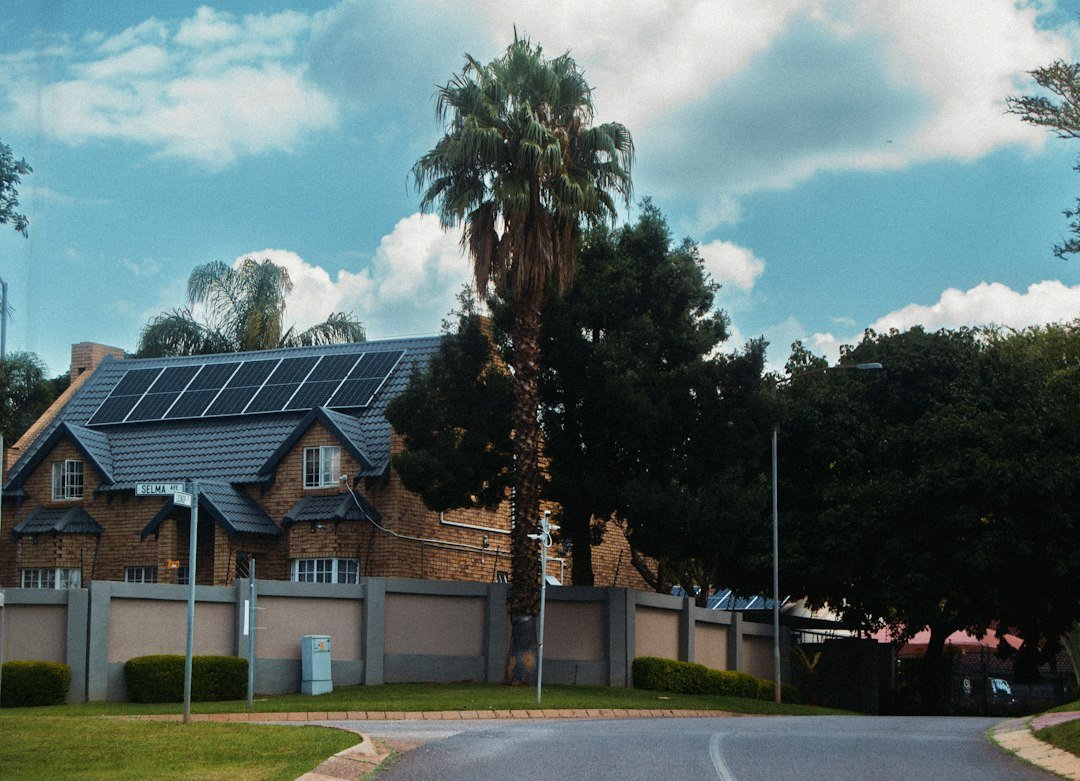
Editorial note: All listed prices are U.S. dollar examples based on published reference figures, not personalized Tesla offers. Photo attribution: Wiseman Mabasa / Unsplash; the image illustrates a residential solar installation and is not presented as a verified Tesla installation.