Yes, plug-in solar panels work. A compatible solar panel and inverter can produce electricity for a home through an approved plug-in system, helping reduce the electricity purchased from the grid. However, whether you can legally and safely use one depends on your location, electrical circuit, utility requirements and the product’s certification. Plug-in solar is not a universal substitute for a professionally installed rooftop array, and a typical grid-connected plug-in kit does not provide power during an outage.
Often called balcony solar, plug-and-play solar or portable plug-in photovoltaics, these small systems have become popular in parts of Europe and are increasingly discussed in the United States. This guide explains what they can realistically power, how much electricity they may produce, the safety issues that matter, and what U.S. homeowners and renters should check in 2026 before buying anything.
What are plug-in solar panels?
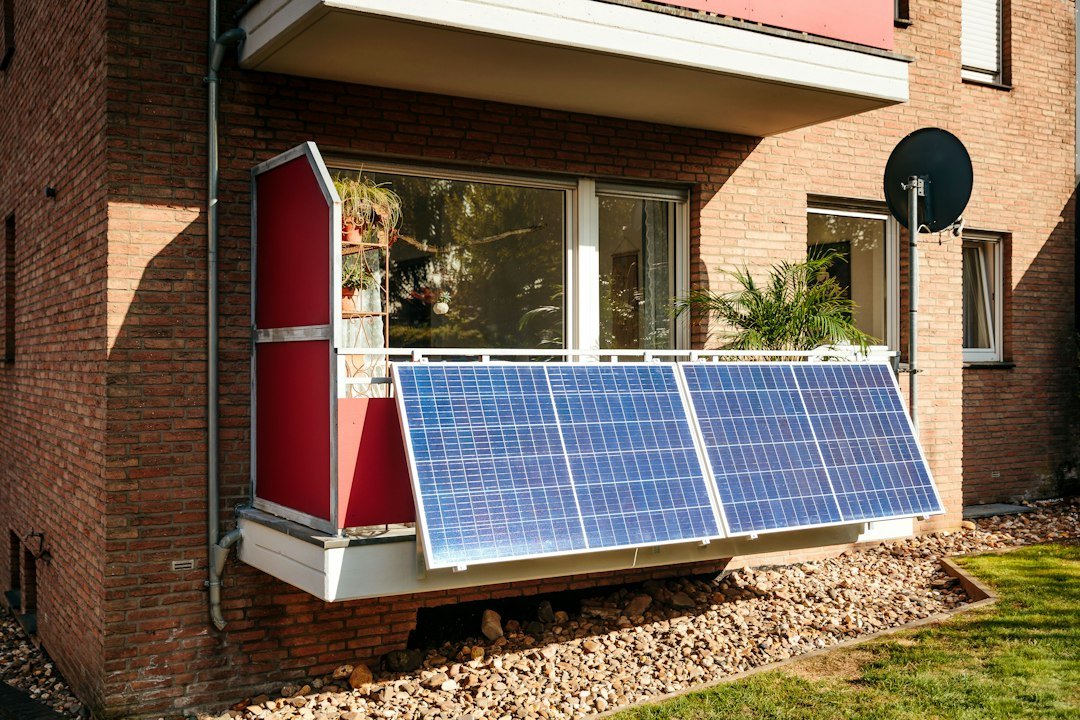
A plug-in solar system is a compact solar electricity generator intended to supply some of a building’s daytime electrical demand. A typical arrangement includes one or more photovoltaic modules, a compatible microinverter that converts direct-current electricity into alternating-current electricity, suitable mounting hardware and an approved means of connection. Some products are designed for balconies, patios or ground-level locations rather than permanent rooftop mounting.
Do not confuse this with a portable solar panel connected to a power station. A solar power station stores energy in a battery and supplies appliances through its own outlets. A grid-connected plug-in solar kit instead sends generated AC power into a building circuit, subject to local rules and the system’s safety design. The two products have different electrical, regulatory and backup capabilities.
The Clean Energy States Alliance describes plug-in systems as small solar generators that supply electricity to a home through an outlet rather than drawing electricity from it. This simple concept does not remove the need to verify the equipment and the rules that apply at your address.
How do plug-in solar panels work?
Solar cells generate DC electricity when sunlight reaches them. The system’s compatible inverter converts that energy into AC power synchronized with the building’s electrical supply. When the system is operating under permitted conditions, the home can use some of the generated power, reducing the amount it needs to purchase from the utility at that moment. Output rises and falls with sunlight, temperature, shade and the equipment’s limits.
For example, suppose your home is using 600 watts and an approved plug-in system is supplying 250 watts at that moment. Ignoring losses and other details, the utility might need to supply roughly 350 watts. That is an instantaneous illustration, not a promise about an electric bill. If the system produces more than the home is using, what happens to excess electricity depends on the product design, meter, tariff and local interconnection rules.
Solar panel wattage is a laboratory rating, not a constant level of real-world production. A 400-watt module will often produce less than 400 watts, and an inverter can limit AC output. A system also produces little or no electricity at night. Learn more in our explanation of how solar panels work.
Do plug-in solar panels actually lower electricity bills?
They can, particularly when a household uses electricity during sunny hours. Refrigerators, routers, computers and other background loads may consume energy while the panels are generating it. The value of the energy produced depends on how much is used on-site and the price you would otherwise pay for electricity. The financial benefit is usually smaller than that of a much larger, properly designed rooftop array, but the initial investment may also be lower.
Consider a hypothetical system delivering an average of 1.5 kilowatt-hours of useful electricity each day. Over 30 days that would be 45 kWh. At an illustrative electricity price of $0.20 per kWh, using all of that energy to avoid purchases would be worth about $9 per month. If the rate were $0.30, the same energy would be worth $13.50. These are arithmetic examples, not typical savings guarantees. Actual generation and self-consumption can be higher or lower.
To estimate your own potential savings, review your daytime consumption, the proposed system’s realistic annual production and your utility tariff. Do not assume that all energy exported to the grid earns the same price as energy purchased. Some tariffs pay less for exports, and some small plug-in systems are not eligible for net metering at all.
How much power can a plug-in solar system produce?
Many small plug-in systems are discussed in the approximate 200–800-watt range, although legal limits and product configurations vary. The wattage of the panels and the AC output limit of the inverter are different specifications. A 400-watt panel connected to a 350-watt AC inverter, for example, cannot continuously deliver more than the inverter’s rated AC output under its normal operating limits.
| Illustrative AC output | At 2 equivalent full-output hours | At 4 equivalent full-output hours |
|---|---|---|
| 200 W | 0.4 kWh/day | 0.8 kWh/day |
| 400 W | 0.8 kWh/day | 1.6 kWh/day |
| 600 W | 1.2 kWh/day | 2.4 kWh/day |
| 800 W | 1.6 kWh/day | 3.2 kWh/day |
These are simple output-times-hours illustrations, not measured daily production or a solar-resource forecast. They do not account for all system losses, weather or clipping. Your location, orientation, shade, seasonal daylight and inverter behavior will determine real production. A south-facing, unobstructed installation in one region may behave differently from a shaded east-facing apartment balcony in another.
A small system may help offset continuous household loads but is not designed to operate a whole house independently. Heating, air conditioning, electric cooking and other high-demand equipment can use far more electricity than a small plug-in array produces at a given moment.
Are plug-in solar panels legal in the United States in 2026?
Rules vary by state, utility and installation. The U.S. has no single blanket rule that makes every plug-in solar product legal on every household outlet. Some states have enacted special rules for qualifying portable solar devices, while utilities elsewhere may require a standard interconnection process. Building, electrical, landlord and homeowner-association requirements may also apply. Check current local requirements before purchasing or connecting a kit.
Utah enacted a plug-in solar framework in 2025. Its law provides an interconnection exemption for qualifying portable solar generation devices, with safety and other requirements. Utah Code Title 54, Chapter 15, Part 6 requires a feature that prevents the device from energizing the building during an outage. A device that does not meet the law’s definition and safety conditions does not automatically qualify.
Other jurisdictions take different approaches. For example, Omaha Public Power District explains that plug-in solar is permitted for its customers only through the utility’s standard interconnection process. Maryland’s Public Service Commission describes a state framework for qualifying portable solar systems with specified power and certification limits. Those examples demonstrate why a social media claim that a kit is “legal everywhere” should not be trusted.
State legislation and implementation can change quickly. Confirm the current law, effective date, electrical code, utility rules, meter arrangements and any rental-property restrictions with authoritative local sources. Do not rely only on a seller’s product page or on rules from a neighboring state.
Are plug-in solar panels safe to use in a wall outlet?
Safety depends on the entire system, not merely the presence of a solar panel or a familiar plug. Supplying power through an electrical circuit raises issues involving wiring capacity, circuit protection, connectors, inverter behavior and how the system responds when utility power fails. A normal household outlet was originally designed to supply appliances; a plug-in generator can introduce a different electrical condition.
Look for certification appropriate to the complete product and the jurisdiction. The Utah Energy Hub discusses UL 1741 inverter certification and the development of UL 3700 for plug-in solar systems. Certification of individual parts should not be assumed to mean that an assembled kit has passed every applicable complete-system requirement. Verify the actual model and its current listing with the certifying organization and the local authority.
Never improvise a backfeed connection. Do not connect loose solar modules, an ordinary grid-tie inverter, an extension cord or a homemade adapter to a household receptacle and assume it is safe. Do not bypass circuit protection, modify plugs or use an unapproved device merely because it physically fits an outlet. A qualified electrician can evaluate the circuit and explain applicable requirements.
Mounting matters as well. A balcony panel must be secured against wind and falling-object hazards using equipment approved for the setting. Renters may need written permission from the property owner, and building or fire-access rules may limit where panels can be placed. A system that is electrically compatible can still be unsuitable for a particular balcony.
Do plug-in solar panels work during a power outage?
Generally, a conventional grid-connected plug-in solar kit stops supplying the building when utility power is lost. Anti-islanding protection is intended to prevent a small generator from energizing wiring that should be de-energized during an outage. This is an essential safety function, not a defect. The fact that sunlight is still reaching the panels does not mean a normal grid-connected kit can run appliances when the grid is down.
If emergency power is your goal, compare products designed and certified for backup operation, such as an appropriate portable power station with its own supported outputs or a professionally installed backup-capable solar and battery system. The equipment must be used according to its instructions and local electrical rules. Do not assume that adding a battery to a plug-in kit automatically makes it a legal or safe home backup system.
Our guide to whether solar panels can power a house explains the difference between offsetting annual consumption and supplying loads during an outage.
Do plug-in solar panels need batteries?
No. A basic grid-connected plug-in kit can produce power for immediate use without a battery. A battery can store some solar energy for later use in systems specifically designed for that purpose, but storage adds cost, conversion losses, controls and another set of safety requirements. Whether a battery can supply appliances during an outage depends on the product architecture and approved connections.
Ask whether a proposed product includes storage, how much usable energy it can hold, what loads it can support and which outputs are available if the grid fails. The advertised solar panel rating, battery capacity in watt-hours and inverter output in watts measure different things. They should not be treated as interchangeable.
Plug-in solar versus rooftop solar: which is better?
| Feature | Plug-in balcony solar | Conventional rooftop solar |
|---|---|---|
| Typical scale | Small, intended to offset part of daytime use | Often several kilowatts, sized to household demand |
| Installation | Product and location dependent; may have simplified rules | Professional design, roof and electrical work |
| Approvals | Varies greatly by state and utility | Usually permits, inspections and utility interconnection |
| Renter suitability | Potentially suitable with permission and compliant mounting | Usually requires property-owner control |
| Outage backup | Not with a conventional grid-dependent kit | Only with compatible backup equipment |
| Potential bill offset | Modest due to small capacity | Potentially much larger, depending on system design |
Plug-in solar may make sense for a renter or homeowner who wants a smaller project and has a suitable sunny location, compliant equipment and permission to use it. Rooftop solar may be more appropriate when the goal is to offset a substantial share of household electricity. The best choice depends on cost, ownership, space, local rules and the household’s actual daytime loads.
How much do plug-in solar panels cost?
Prices depend on module capacity, inverter design, mounting hardware, certification and whether storage is included. An inexpensive listing may be for panels alone rather than a complete, compliant plug-in system. EnergySage’s October 2026 guide describes illustrative U.S. pricing for some 400–800-watt balcony systems at roughly $500–$1,500. That is a published market illustration, not a guaranteed current offer or a price for every certified product.
Include any professional electrical assessment, compliant mounting equipment, permit or interconnection expense, shipping and applicable taxes in your comparison. If a kit requires changes to the home’s electrical system, the true installed cost can be higher than the advertised box price. Check the warranty and service arrangements as well as the initial price.
How long does a plug-in solar system take to pay for itself?
Simple payback divides the complete upfront cost by estimated annual net savings. Suppose a hypothetical compliant system costs $900 in total and saves $90 per year. Simple payback would be 10 years. If it saves $150 per year, the same arithmetic gives six years. Neither example accounts for equipment replacement, financing, future utility rates, lost production, time value of money or possible export restrictions.
Ask the vendor for a realistic annual generation estimate for your location and mounting orientation. Multiply the energy you expect to use directly by the appropriate retail electricity rate, and treat exported energy separately under the actual utility tariff. Compare that estimate with the full system cost. Be skeptical of savings claims that assume every sunny hour produces maximum rated power or that all electricity is valued at the highest utility rate.
What should you check before buying a plug-in solar kit?
- Local permission: Is the product permitted under current state law, electrical code and utility rules at your address?
- Product certification: Is the exact complete system, not just selected components, appropriately certified for its intended use?
- Electrical compatibility: Has a qualified professional confirmed that the relevant circuit and connection arrangement are suitable where required?
- Safe placement: Can panels be mounted securely without creating falling-object, wind, access or fire hazards?
- Output specifications: What are the panel DC rating, inverter AC limit and realistic annual production?
- Outage behavior: Does the device shut down during a utility outage, and is any claimed backup feature independently documented?
- Financial assumptions: What is the full installed cost, what daytime energy will you use and how does your utility handle exports?
- Warranty: Who provides service, what is covered and what happens if the system must be removed from a rental property?
For a conventional roof installation, our home solar installation guide explains the different design and approval process. Do not treat the instructions for one type of system as instructions for the other.
Frequently asked questions
Can you plug a solar panel directly into a wall socket?
No. A bare solar panel produces DC electricity and is not a household AC appliance. Only a complete system specifically designed, certified and legally permitted for the intended connection should be considered. Never connect a bare panel or an improvised inverter arrangement to a household outlet.
Do plug-in solar panels work on cloudy days?
They can produce electricity in diffuse sunlight, but output is generally lower than under strong, direct sunshine. The actual amount depends on weather, panel orientation, shading and the inverter. See our guide to solar panels on cloudy days.
Can plug-in solar run an air conditioner?
A small plug-in system is usually designed to offset some household electricity consumption, not to power a large appliance independently. An air conditioner may use more power than the system produces. A grid-connected kit can reduce purchased electricity while the grid supplies the remainder, subject to local rules.
Are plug-in solar panels good for apartments?
They may be useful where there is sufficient sunlight, safe mounting, property-owner permission and a legal, certified electrical arrangement. Many balconies have shade or wind exposure that makes a particular kit unsuitable. Check the lease, building rules and utility requirements first.
Will a plug-in solar kit charge a battery?
Only if the product includes or supports an approved compatible battery system. Basic grid-connected kits are intended to supply household demand, not automatically store electricity. Portable power stations are a different product category.
Are plug-in solar panels worth it?
They can be worthwhile for some households with steady daytime electricity use, a sunny permitted location and a competitively priced compliant system. They are less attractive where shade is severe, the full installed cost is high or local rules make the proposed connection impractical. Calculate expected savings with realistic assumptions before buying.
Bottom line
Plug-in solar panels can generate useful electricity and reduce a portion of household grid consumption. Their biggest appeal is small scale and potentially lower cost, but their biggest limitations are modest output, location-specific legality and electrical safety requirements. In 2026, the right first step is not plugging in a kit: it is confirming that the exact product and connection are permitted, certified and appropriate for the property. If those conditions are met, compare realistic energy production and total cost to decide whether the investment fits your needs.
Featured photo: Yuma Solar / Unsplash. Photograph illustrates a balcony solar setup; it does not certify any product or installation.
Sources: Clean Energy States Alliance: What States Need to Know About Plug-In Solar; Utah Code, Portable Solar Generation Device; OPPD: Plug-In Solar FAQ; Maryland PSC: Balcony Solar; Utah Energy Hub: Plug-In Solar; EnergySage: Plug-In and Balcony Solar Panels.