

Are you looking to understand Huffman Trees and how to generate them step by step? You’ve come to the right place.
This guide will break down the complexities of Huffman Trees into simple, manageable parts. By the end of this article, you’ll not only grasp the concept but also be able to create your own Huffman Tree with ease. Whether you’re a student, a programmer, or simply curious, this step-by-step approach is designed for you.
Let’s dive in and unlock the secrets of efficient data compression together!
Huffman Tree Basics
Understanding Huffman Trees is essential for anyone interested in data compression. These trees play a critical role in efficiently encoding information. Let’s break down the fundamentals of Huffman encoding and highlight the key features of Huffman Trees.
What Is Huffman Encoding?
Huffman encoding is a compression algorithm used to reduce the size of data. It works by assigning shorter codes to frequently occurring characters and longer codes to less frequent ones. This method minimizes the overall size of the data you need to store or transmit.
Have you ever wondered why some files are so much smaller than others? Huffman encoding is often the reason behind this efficiency. By using variable-length codes, it optimizes storage and bandwidth use.
Key Features Of Huffman Trees
- Efficiency:Huffman Trees provide optimal prefix codes, ensuring no code is a prefix of another. This property makes decoding straightforward.
- Dynamic Adaptability:These trees can adapt to changing data distributions. If the frequency of characters changes, the tree can be rebuilt to maintain efficiency.
- Binary Structure:Huffman Trees are binary trees, meaning each node has at most two children. This structure is crucial for the encoding and decoding processes.
- Clear Representation:Each character is represented by a unique path from the root of the tree to the leaves. This makes it easy to understand how each character is encoded.
Have you thought about how these features impact your everyday use of technology? From file storage to online communication, Huffman Trees enhance performance and save resources.
Understanding these basics sets the stage for mastering more complex concepts related to Huffman Trees. You’ll find that once you grasp these principles, applying them becomes a straightforward task.
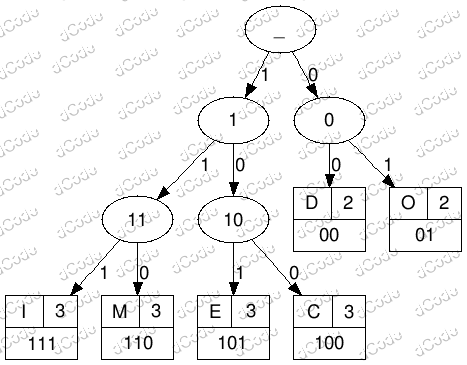
Credit: www.dcode.fr
Building Blocks Of Huffman Trees
Creating a Huffman tree involves several important steps. Each step is crucial. They help in building an efficient tree for data compression. Understanding these building blocks makes the process clearer. Let’s dive into the main components.
Frequency Analysis Of Characters
The first step is to analyze character frequency. Count how often each character appears in the text. This count will guide the tree’s structure. Characters that appear more often get shorter codes. Less frequent characters get longer codes. This helps to reduce overall file size.
Use a frequency table for this task. Each character will have a corresponding count. This table is the foundation of the Huffman tree. A clear frequency analysis leads to better compression.
Priority Queue And Min-heap Usage
A priority queue is the next step. It helps to organize characters based on frequency. Characters with lower frequencies have higher priority in the queue. This organization is key to building the tree.
A min-heap is often used for this purpose. It allows quick access to the lowest frequency characters. This efficiency speeds up the process of tree creation. By combining the two lowest frequency nodes, you create a new node. Repeat this until only one node remains. This final node is the root of the Huffman tree.
Step-by-step Construction Process
Building a Huffman Tree involves a clear process. Each step helps create an efficient coding system. Let’s break it down into three simple parts.
Sorting Characters By Frequency
The first step is to count how often each character appears. You can use a frequency table for this. Each character gets a score based on its frequency.
Next, sort the characters by their frequency. The characters with the lowest frequency come first. This sorting is key for building the tree later.
Creating Initial Nodes
After sorting, create a node for each character. Each node holds the character and its frequency. These nodes will form the basis of the Huffman Tree.
Place all nodes into a priority queue. This queue helps manage the nodes based on frequency. The node with the lowest frequency will be processed first.
Merging Nodes Into A Tree
The final step is to merge the nodes into a tree. Take the two nodes with the lowest frequencies. Combine them into a new node. This new node’s frequency is the sum of the two.
Repeat this process until only one node remains. This final node is the root of your Huffman Tree. It represents the complete coding system.
Generating Huffman Codes
Creating Huffman codes involves a clear process using a Huffman tree. This step-by-step guide shows how to build the tree, assign codes, and compress data efficiently. Understanding this method can help simplify data encoding tasks.
Generating Huffman Codes is a crucial step in the compression process. This method creates efficient binary representations for characters based on their frequencies. You’ll see how assigning shorter codes to more frequent characters can dramatically reduce the amount of space needed to store data.Assigning Binary Codes To Characters
Each character in your data is assigned a binary code based on its frequency. The more frequent a character, the shorter its code. 1. Create a Priority Queue: Start by placing all characters and their frequencies into a priority queue. Characters with lower frequencies will be higher up in the queue. 2. Build the Tree: Combine the two characters with the lowest frequencies to create a new node. The frequency of this node is the sum of the two characters. Repeat this process until only one node remains. 3. Generate Codes: Traverse the tree to assign binary codes. For every left traversal, add a ‘0’ to the code, and for every right traversal, add a ‘1’. This method ensures that the most common characters have the shortest codes. You may find that the efficiency gained is quite significant.Traversal Techniques For Code Generation
Traversal techniques are essential for generating Huffman codes effectively. – Pre-order Traversal: This method processes the root node first, allowing you to assign codes as you go down the tree. You’ll find that each time you reach a leaf, you’ve created a complete code for that character. – Depth-First Search (DFS): This technique allows you to explore as far as possible down one branch before backtracking. It’s a systematic way to ensure that every character gets its unique code. – Breadth-First Search (BFS): While less common for code generation, this approach processes all nodes at the present depth prior to moving on to nodes at the next depth level. Using these traversal techniques helps you visualize the process. Have you ever thought about how much space you could save just by assigning the right codes? It’s a fascinating way to optimize data storage that pays off in efficiency!Compressing Data Using Huffman Codes
Creating a Huffman tree helps compress data efficiently. This process reduces the size of files by using shorter codes for more frequent characters. Follow these simple steps to generate a Huffman tree and understand how data compression works.
Compressing data efficiently is crucial in today’s digital world. Huffman coding stands out as a powerful method for reducing file sizes without losing information. By assigning shorter codes to more frequently used characters, it optimizes storage and transmission. Let’s break down how this process works.Encoding Input Data
To start encoding, you first need to analyze your data. Count how often each character appears. This frequency count allows you to build a priority queue.- Each unique character becomes a node.
- Characters with higher frequencies get higher priority.
Decoding Compressed Data
Decoding follows the opposite process. You start with the compressed data and use the Huffman tree created during encoding. Reading the compressed data involves traversing the tree. Each ‘0’ indicates a left move and each ‘1’ indicates a right move. When you reach a leaf node, you identify the character it represents. Then, you return to the root and continue until you’ve processed the entire compressed string. This method ensures that decoding is efficient and accurate. You retrieve the original data without any loss. Have you ever wondered how much space you could save by using Huffman codes in your own projects? You might be surprised at the difference it can make!Advantages Of Huffman Compression
Huffman compression offers many benefits. It helps reduce file sizes effectively. This can save storage space. It also speeds up data transmission. Understanding its advantages can help you see its value.
Space Efficiency Benefits
One main advantage is space efficiency. Huffman coding uses fewer bits for common data. This means smaller file sizes. Less space means more files can fit in storage. It is ideal for images, text, and audio files.
By minimizing the amount of data needed, you save resources. Smaller files load faster on websites. This improves user experience. Efficient use of space can lead to cost savings. You spend less on storage and bandwidth.
Error Handling In Huffman Encoding
Error handling is another key benefit. Huffman encoding can detect errors easily. When data is compressed, it becomes simpler to check for mistakes. This helps ensure data integrity.
If an error occurs during transmission, it can be identified quickly. This allows for faster corrections. Reliable data transfer is crucial in many applications. Huffman compression supports this need effectively.
Applications In Real-world Scenarios
Huffman trees are useful in many real-world situations. They help compress data, making it easier to store and send. Here are two main areas where Huffman trees are applied.
Multimedia Compression
Multimedia files can be large. They include images, audio, and video. Huffman coding helps reduce their size.
For example, JPEG uses Huffman coding for images. It compresses images without losing quality. This makes images easier to share online.
Similarly, MP3 files use Huffman coding for audio. It removes unnecessary data. This makes songs smaller and quicker to download.
Network Data Transmission
Data travels through networks every day. Huffman trees help send this data efficiently. They reduce the amount of data sent over the network.
For instance, web browsers use Huffman coding for text files. Smaller files load faster on websites. This improves user experience.
In addition, email services use Huffman coding. It helps compress attachments. This makes it easier to send large files quickly.
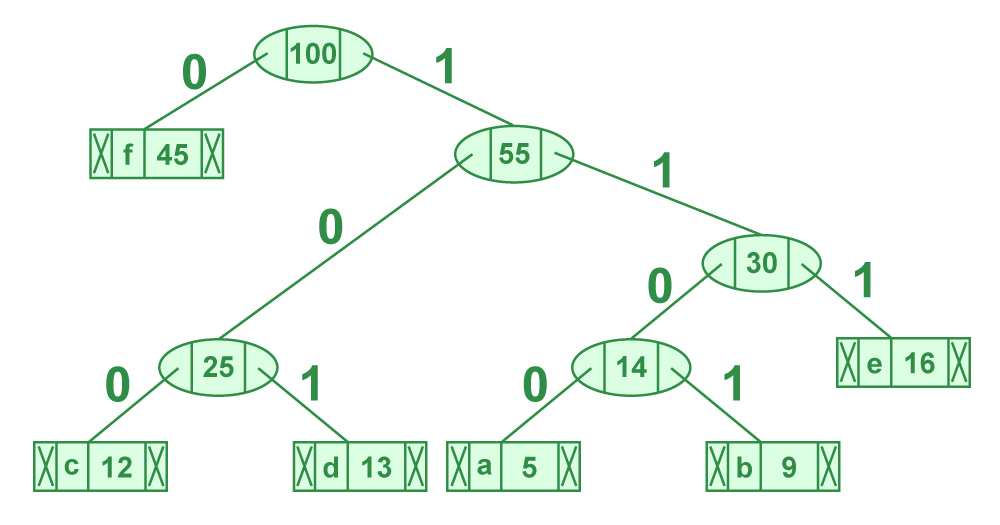
Credit: www.geeksforgeeks.org

Credit: en.wikipedia.org
Frequently Asked Questions
What Is A Huffman Tree?
A Huffman Tree is a binary tree used for lossless data compression. It assigns variable-length codes to input characters based on their frequencies. Characters with higher frequencies receive shorter codes, which minimizes the overall size of the encoded data. This method is widely used in file compression formats.
How Do You Create A Huffman Tree?
To create a Huffman Tree, follow these steps: First, calculate the frequency of each character. Then, build a priority queue with these characters. Next, repeatedly combine the two nodes with the smallest frequencies into a new node. Continue this process until only one node remains, which becomes the root.
What Are The Benefits Of Using A Huffman Tree?
Huffman Trees provide efficient data compression, reducing file sizes significantly. They are optimal for encoding characters based on frequency. This method is also easy to implement and widely supported in various applications. Additionally, it ensures that no code is a prefix of another, enabling unambiguous decoding.
Where Is Huffman Coding Used?
Huffman coding is used in various applications, including file compression formats like ZIP and JPEG. It is also utilized in data transmission protocols and digital communication systems. This technique helps optimize storage and bandwidth, making it essential in computer science and information theory.
Conclusion
Building a Huffman tree is a useful skill. It helps in data compression. You now understand the steps clearly. Start with the frequency of each character. Combine them step by step. The final tree shows how to compress data efficiently.
Practice will make you better at it. Use this knowledge in your projects. Understanding Huffman trees can simplify complex tasks. Keep exploring more about algorithms to enhance your skills. Enjoy your journey in learning!