
Build a simple atmospheric water generator using condensation, a fan, cooling coil, and filtration.
I’ve built and tested several small atmospheric water generators, and this guide shows practical, safe steps for how to make a atmospheric water generator you can operate at home. I’ll explain the science, list parts, walk you through a clear build, and share tips from real tests so you can make reliable water from air.
How atmospheric water generators work
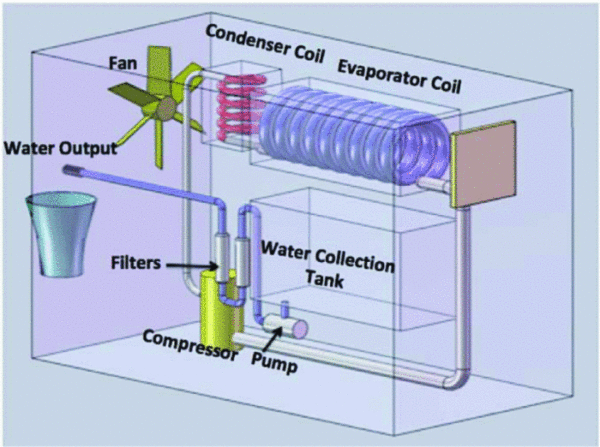
An atmospheric water generator pulls moisture from air and turns it into liquid by cooling or desiccation. The two common methods are condensation (cool a surface below dew point) and desiccant capture (use materials that absorb water and then release it with heat). Knowing the local humidity and dew point helps you design a unit that produces useful water.
how to make a atmospheric water generator requires choosing the right method and matching parts to local climate. In hot, humid places, condensers with fans work well. In dry climates, desiccant systems or hybrid setups perform better.
Key components and materials
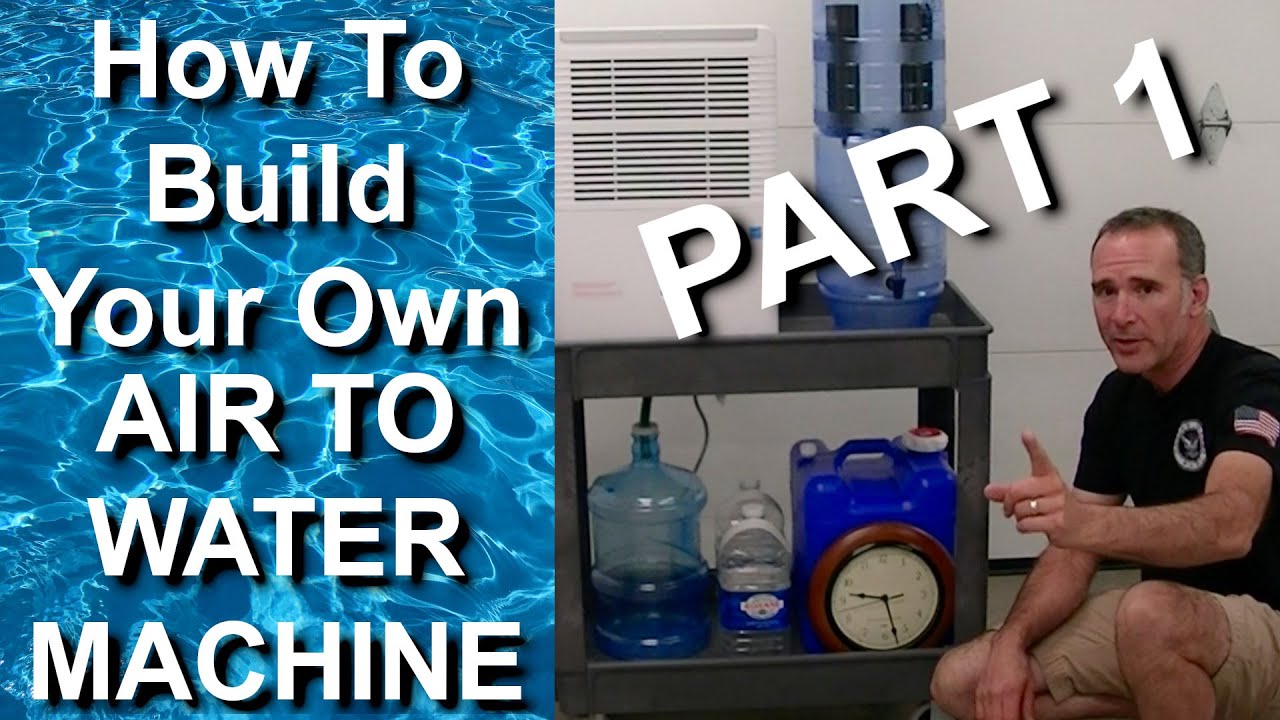
Below are the core parts you need. Each item is described in simple terms so you can source parts safely.
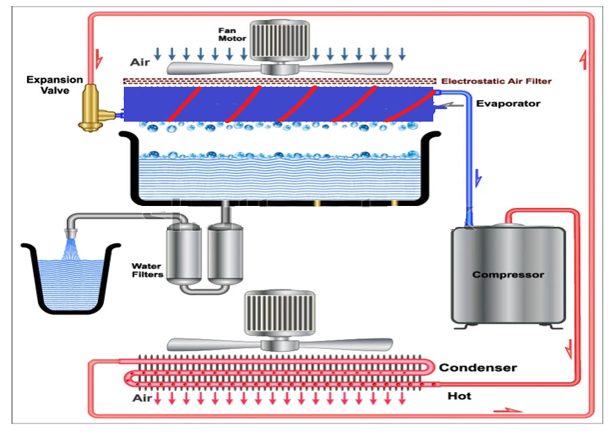
- Fan: Moves warm, moist air across the cooling surface. Choose a durable DC or AC fan with steady airflow.
- Cooling coil or radiator: Acts like the cold surface where moisture condenses. You can use a small refrigeration evaporator or a copper coil cooled by a Peltier module.
- Compressor or Peltier module: Low-temperature refrigeration compresses refrigerant for efficient condensation. Peltier modules are simpler but less efficient.
- Condensate tray and drain: Collects the water that forms and directs it to a container.
- Pre-filter and post-filter: A pre-filter removes dust from incoming air. A post-filter (activated carbon and fine membrane) improves taste and removes impurities.
- Water storage and UV or ozone sanitization: A sealed tank plus UV lamp or ozone generator keeps water safe.
- Sensors and controls: Hygrometer, temperature sensors, pressure switch, and a small controller help optimize operation.
- Housing: A weatherproof case with intake and exhaust ducting.
Choosing the right parts is essential when figuring out how to make a atmospheric water generator that runs reliably and safely.

Tools and safety gear
Use basic tools and safety gear for the build.
- Tools: Screwdrivers, drill, pliers, tubing cutter, soldering iron, multimeter.
- Safety gear: Gloves, eye protection, respiratory mask when handling refrigerant or cutting materials.
- Electrical safety: Use proper fuses, grounded outlets, and follow local electrical codes.

Step-by-step build instructions
This step-by-step list covers a straightforward condensation-style build. Follow safety rules and local codes.
- Plan and size your unit
- Estimate water output based on humidity and airflow. A rough rule: at 70% RH and 80°F, you may collect several liters per day with a well-sized coil.
- Decide whether to use compressor refrigeration or Peltier cooling.
- Assemble the cooling and airflow system
- Mount the cooling coil or evaporator in the housing.
- Install the fan to push air over the coil for even condensation.
- Ensure clear airflow pathways in the housing to avoid recirculating wet air.
- Install condensate collection
- Fit a shallow tray beneath the coil to capture droplets.
- Add a drain line to move water to the storage tank. Use food-grade tubing.
- Set up filtration and sanitization
- Place a washable pre-filter at intake.
- Connect a small carbon filter and a 0.2–1.0 µm membrane after the tank for quality.
- Add UV-C lamp or an in-line ozone sanitizing step if desired.
- Wire controls and sensors
- Add a hygrometer and temperature sensor to monitor dew point.
- Use a relay or controller to run the compressor or Peltier modules based on need.
- Install an automatic shutoff float in the storage tank to prevent overflow.
- Test and tune
- Power on the system and measure water production over 24 hours.
- Adjust airflow and coil temperature to improve performance.
- Check filters and seals for leaks.
Repeat steps and refine your design as you learn. Practical iteration is a key part of how to make a atmospheric water generator that meets your needs.

Operation, maintenance, and troubleshooting
Routine care keeps the unit safe and productive.
- Daily or weekly checks: Clean pre-filters and inspect condensate tray for biofilm.
- Monthly tasks: Replace carbon filters and clean coils gently to maintain heat transfer.
- Yearly: Service compressor systems and test sanitization units.
- Common issues and fixes:
- Low output: Check humidity, airflow, and coil temperature. Increase fan speed or insulation.
- Bad taste or odor: Replace carbon filter and sanitize tank with UV or mild bleach rinse per guidelines.
- Freezing or icing: Improve airflow or reduce cooling power to avoid ice build-up on coils.
Knowing these maintenance steps helps you operate how to make a atmospheric water generator safely and prolong its life.
Design variations and efficiency tips
There are several ways to build an atmospheric water generator. Choose what fits your budget and climate.
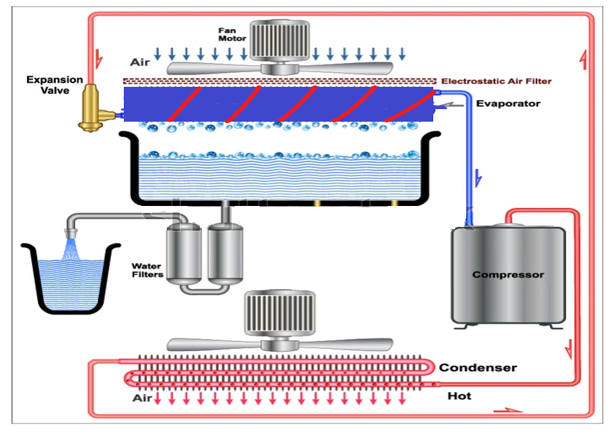
- Compressor-based condensers: Most efficient for high output. Best in humid climates. Use refrigerant systems for steady production.
- Peltier-based units: Simpler and quieter. Good for small, portable units but less efficient for bulk water.
- Desiccant-based systems: Use silica gel or other materials to capture moisture, then release it with heat. Great in semi-arid conditions.
- Hybrid systems: Combine desiccant capture with condensation to expand operating range.
Efficiency tips:
- Insulate the cold parts to reduce energy loss.
- Use variable-speed fans to match airflow to humidity.
- Recover waste heat from compressors to drive desiccant regeneration.
These choices will change how to make a atmospheric water generator that balances cost, complexity, and production.

Safety, legal, and water quality considerations
Safety and compliance are critical when producing drinking water.
- Water quality: Test produced water periodically for bacteria, heavy metals, and VOCs. Use certified filters when producing potable water.
- Electrical codes: Follow local wiring and appliance rules. Use certified components when possible.
- Refrigerants and chemicals: Handle refrigerants only with proper training and certification. Dispose of used chemicals responsibly.
- Regulations: Some regions require permits for devices that supply drinking water. Check local health department rules.
Be transparent about limits. Homemade units can provide safe water when built and maintained correctly, but testing matters. When planning how to make a atmospheric water generator, prioritize testing and compliance.

My experience, tips, and common mistakes
I built a small compressor-based AWG to supply water for a backyard garden and later scaled a Peltier prototype for camping tests. I learned a few key lessons.
- Lesson 1: Airflow matters more than coil size for small units. A steady stream of humid air makes the difference.
- Lesson 2: Sanitation is often overlooked. I once got biofilm because I skipped a UV step; that taught me to plan sanitization from day one.
- Mistakes to avoid:
- Skipping proper insulation around the cold coil.
- Using non-food-grade tubing that imparts taste.
- Ignoring local regulations for potable water systems.
These real-world tips improve success when you explore how to make a atmospheric water generator yourself.

Frequently Asked Questions of how to make a atmospheric water generator
How much water can a small DIY atmospheric water generator produce?
A small DIY unit in humid conditions can produce 1–5 liters per day. Output falls sharply with lower humidity and temperature.
Is the water from an atmospheric water generator safe to drink?
Water can be safe if the unit has proper filtration and sanitization and if you test water regularly. Always use filters and UV or chemical sanitizers for drinking water.
Which method is best: compressor or Peltier?
Compressor systems are more energy efficient for larger output. Peltier modules are fine for small, portable units and low-budget builds.
Can I use an atmospheric water generator in dry climates?
Desiccant-based or hybrid systems work better in dry climates than pure condensation units. Efficiency depends on relative humidity and temperature cycles.
Do I need a permit to install an atmospheric water generator?
Regulations vary by location. Check local health and building codes before installing a potable water system.
How do I prevent mold and bacteria buildup?
Clean filters, sanitize the storage tank with UV or approved chemical cycles, and maintain airflow to keep surfaces dry. Regular maintenance prevents contamination.
Conclusion
You now have a clear path for how to make a atmospheric water generator, from the science to parts, steps, and maintenance. Start small, test your unit, and prioritize filtration and safety. Take one action today: sketch a simple parts list and check local humidity to choose a method. If you build your unit, share your results or questions below — I’d love to hear about your progress and help improve your design.