
Cool air to condense moisture using a condenser, filter, and a small pump—DIY AWG steps.
I build and test small atmospheric water generators and write guides that help hobbyists and professionals alike. This article explains how to make atmospheric water generator systems step by step. You will learn practical parts lists, clear assembly steps, water treatment, performance expectations, costs, and safety tips from real experience. Read on to get a reliable, safe, and efficient plan for making your own atmospheric water generator.
How atmospheric water generators work
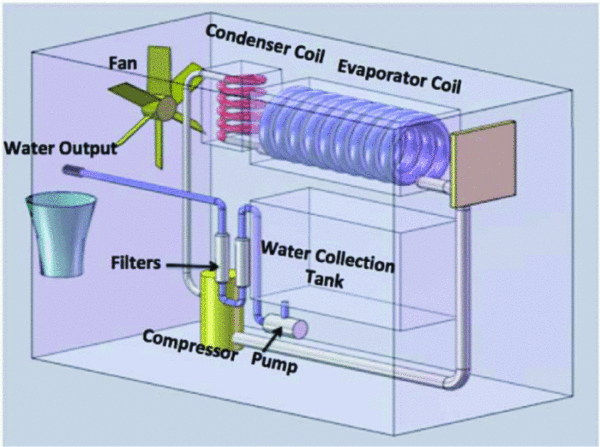
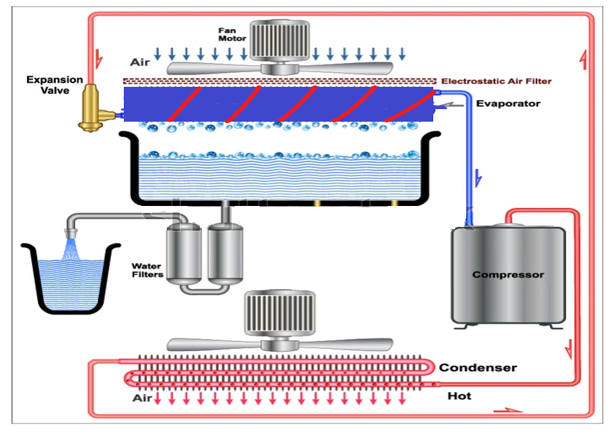
An atmospheric water generator pulls moisture from the air and turns it into liquid water. The usual method cools air below its dew point so vapor condenses on a cold surface. Another method uses desiccants that absorb moisture, then release it with heat. Knowing the basics helps you choose the right build for your climate.
Key components in most designs include a fan to move air, a cooling surface or desiccant, a condenser or coil, a collection tray, a filter, and a small pump or gravity feed. Control electronics and sensors help the device run efficiently and safely. Understanding thermodynamics and humidity behavior will make your build more effective.
Types of systems you can use when learning how to make atmospheric water generator
There are three common routes to make an atmospheric water generator. Choose one based on skill, budget, and local humidity.
- Passive desiccant systems that use hygroscopic materials and solar heat for regeneration.
- Active refrigeration systems that use a compressor or Peltier modules to cool coils.
- Hybrid systems that combine desiccants with modest cooling for better yield in dry climates.
Each type has trade-offs. Refrigeration gives faster yields but uses more power. Desiccants can be low-power with solar heat but need regeneration cycles and careful material selection.

Materials and tools needed to make atmospheric water generator
Below is a clear parts list for a small active refrigeration AWG you can build at home. If you want a desiccant model, swap the condenser and compressor for desiccant trays and a regeneration heater.
- Fan rated for low noise and 50–200 CFM depending on size.
- Copper or aluminum coil or finned heat exchanger.
- Small refrigeration unit or Peltier modules and heatsinks.
- Condensate tray and food-safe tubing.
- Activated carbon and sediment filters plus UV or micron filter for safety.
- Small DC pump or gravity-fed reservoir.
- Hygrometer and simple thermostat or a microcontroller for control.
- Basic hand tools, soldering iron, and silicone sealant.
You will also need safety gear like gloves and eye protection when handling refrigerants or power tools. Match component sizes to your desired daily water output.
Step-by-step DIY: how to make atmospheric water generator (active refrigeration)
This section gives a reliable, compact method to make an atmospheric water generator using a small refrigeration loop or Peltier option. Follow safety rules and local laws.
Design and planning
- Set a realistic target yield. For hobby builds, 0.5–3 liters per day is common.
- Check local humidity. Best yields happen above 50% relative humidity.
- Choose power source. Grid power is easiest; solar needs batteries sized to run fans and compressors.
Build the air path
- Mount the intake fan to pull air through the coil area.
- Position an inlet pre-filter to catch dust.
Install the cooling surface
- Secure the coil or Peltier heatsink inside a sealed housing.
- Ensure good thermal contact and airflow across the fins.
Condensate collection and drainage
- Angle the tray so droplets run to the outlet.
- Use food-grade tubing to route water to the storage tank.
Filtration and safety
- Add a sediment filter, then a carbon filter, and finally a 0.2–1 micron membrane.
- Optionally add a UV sterilizer before storage.
Controls and sensors
- Wire a hygrometer and thermostat to run the compressor or Peltier only when efficient.
- Add float switches to prevent pump dry run.
Testing and tuning
- Run the unit for a few days. Log yields and adjust fan speed, coil temperature, and cycle times.
- Check for leaks and unusual noises.
This plan keeps complexity manageable while showing how to make atmospheric water generator setups that reliably produce safe water.
Water treatment, safety, and testing after you make an atmospheric water generator
Condensed water is not automatically safe to drink. Air carries dust, microbes, and volatile compounds. Treat and test the water before drinking.
- Filter sequence: coarse sediment filter, activated carbon, micron membrane, then UV sterilizer.
- Test water for bacteria, total dissolved solids, and chemical contaminants after the first run.
- Clean coils and the collection tray regularly to avoid biofilm and mineral buildup.
I always treat the first liter from a new build and run weekly checks. Simple test kits can identify bacteria and TDS levels. If you see high TDS, add a reverse osmosis stage or investigate contaminant sources.

Performance, sizing, and efficiency expectations when planning how to make atmospheric water generator
Expect wide variation in yield based on humidity, temperature, and system efficiency. Use these rough guides:
- High humidity (70%+ at 25°C): 2–5 liters per day for a small active unit.
- Moderate humidity (50–60%): 0.5–2 liters per day.
- Low humidity (<40%): desiccant or hybrid systems are better, but yields drop sharply.
Energy use depends on method. Small compressor units might use 100–500 watts while Peltier systems often run less efficiently. Track watt-hours per liter to compare setups. Aim for 5–15 kWh per liter for small DIY units; commercial units can be more efficient.

Costs, limitations, and real-world considerations
Building an atmospheric water generator can be economical or costly, depending on goals. Key points:
- Initial build for a hobby unit typically costs $150–800.
- Running costs depend on power use and local electricity prices.
- Maintenance includes coil cleaning, filter replacement, and occasional parts swap.
Limits to expect:
- Inefficient in very dry, cold climates.
- May require permits if you handle refrigerants professionally.
- Water quality depends on local air quality and mechanical cleanliness.
Plan for realistic yields and include costs for filtration and testing.

My experience building an atmospheric water generator
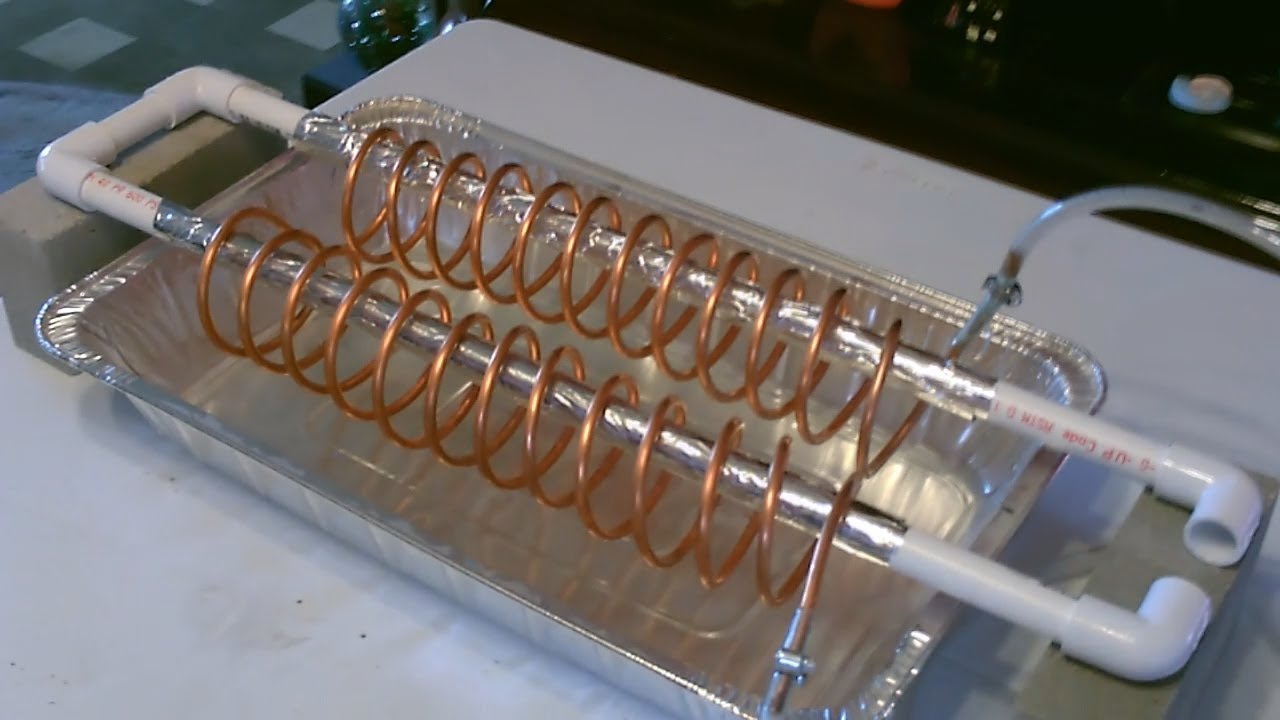
I built a tabletop AWG using a small compressor unit and a copper coil. The unit produced about 1.2 liters per day in summer at 60% humidity. My lessons:
- Sizing the coil and fan matters more than you think. Too little coil area chokes yield.
- Peltier modules are cheap but waste heat quickly and gave me half the yield of a small compressor.
- Keep the collection tray smooth and sloped. Drips stuck on rough surfaces and reduced collection.
A common mistake I made early was under-filtering the storage tank. After adding a UV lamp and micron filter, water taste and safety improved rapidly. If you build one, start small, test often, and document yield versus conditions.
Common PAA-style questions
What is the easiest way to make an atmospheric water generator?
A small refrigeration loop with a fan and coil is the easiest DIY route. It needs moderate tools and basic refrigeration or Peltier knowledge.
Will an atmospheric water generator work in dry climates?
They work poorly in very dry climates unless you use desiccants or larger systems. Desiccant-based systems can capture moisture at low humidity but need heat to regenerate.
How much water can I expect per day?
Small hobby builds typically yield 0.5–3 liters per day depending on humidity and size. Commercial units scale to hundreds of liters but cost much more.
Frequently Asked Questions of how to make atmospheric water generator
What parts do I need to make an atmospheric water generator at home?
You need a fan, a cooling surface (coil or Peltier), condensate tray, filters, a pump, and basic controls. Add a UV or membrane stage for safe drinking water.
Is it safe to drink water from an atmospheric water generator?
Condensed water needs filtration and disinfection before drinking. Use a sediment filter, carbon filter, micron membrane, and UV treatment for best safety.
How much does it cost to make an atmospheric water generator?
A basic DIY AWG can cost $150–$800 in parts. Costs rise with higher yield goals and commercial-grade components.
How much electricity does an atmospheric water generator use?
Power use varies. Small compressor systems often use 100–500 watts, while Peltier systems can be less efficient. Measure watt-hours per liter to evaluate efficiency.
Can I build a solar-powered atmospheric water generator?
Yes, but you must size solar panels and batteries to run fans and compressors during operation. Desiccant systems pair well with passive solar regeneration.
How often should I clean my AWG?
Clean coils and collection surfaces every 1–3 months depending on use and air quality. Replace filters as manufacturer guidelines suggest.
Do I need a permit to build an atmospheric water generator?
Most DIY builds for personal use do not need permits. Handling refrigerants professionally may require certification. Check local rules for clarity.
Conclusion
Making an atmospheric water generator is a practical project that combines simple physics, careful parts selection, and regular maintenance. You can build a low-cost AWG for personal use or scale up with better components for higher yield. Start with a clear plan, prioritize water safety with filtration and testing, and record how humidity and temperature affect your results. Try a small prototype, tune it, and then scale up if results meet your needs. Share your progress, ask questions, and subscribe or comment to learn more about improving your AWG design.