
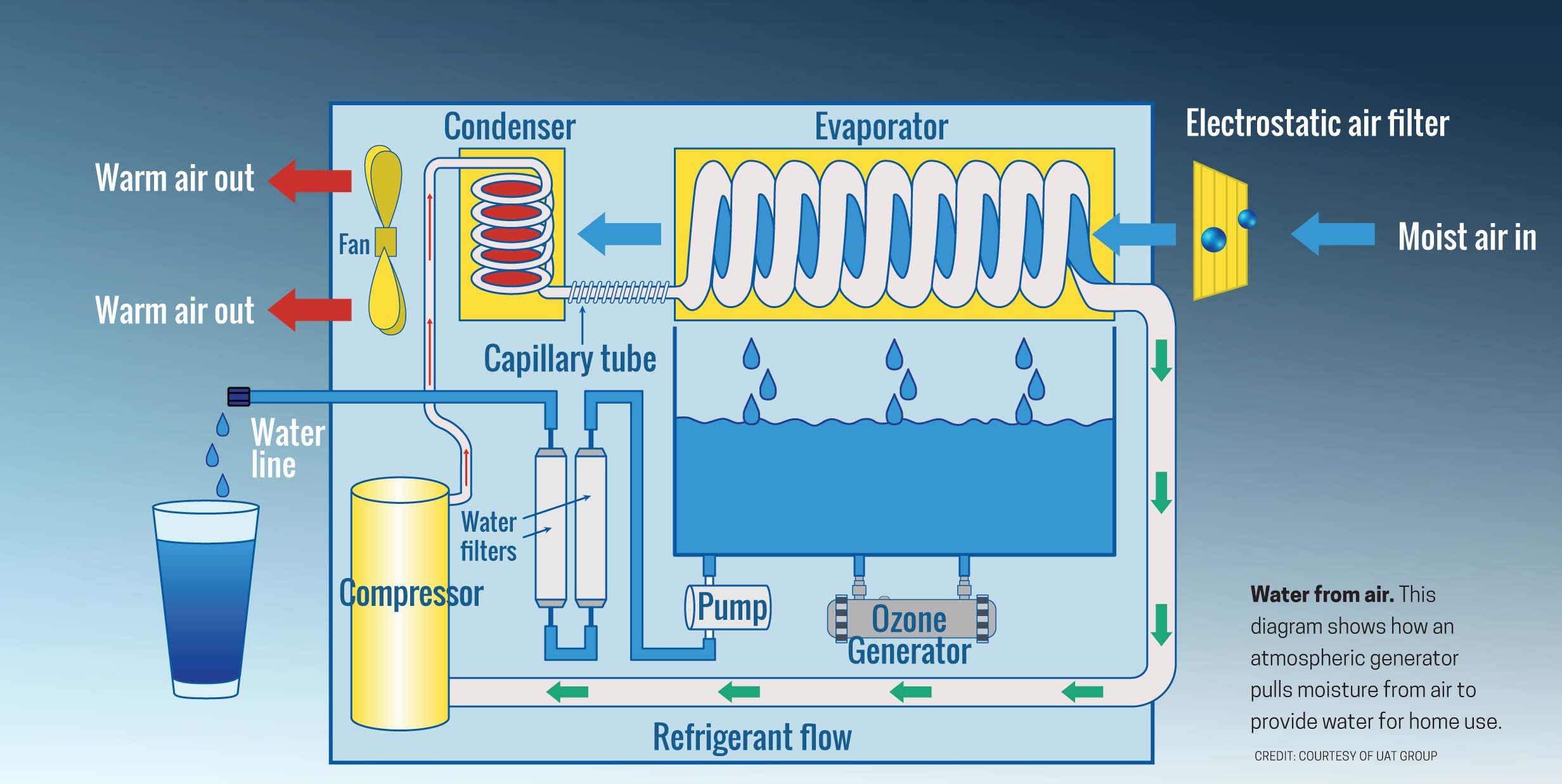
An atmospheric water generator pulls moisture from air, cools it to condense water, then filters it for safe use.
I have built and tested several atmospheric water systems and studied their science closely. This article explains how does a atmospheric water generator work with clear steps, real-world tips, and practical guidance. You will learn what components matter, how performance changes with humidity and temperature, and what to expect for cost and maintenance. I write from direct experience and research to help you decide if an atmospheric water generator fits your needs.
What is an atmospheric water generator?
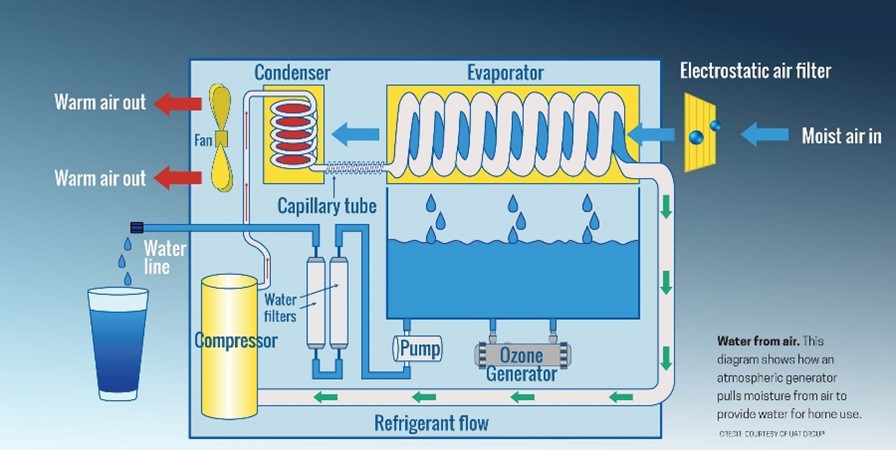
An atmospheric water generator, often called an AWG, makes fresh water from air. It captures humidity, cools the air to condense vapor, and collects the resulting water. Many AWGs also filter and disinfect the water to meet drinking standards. Understanding how does a atmospheric water generator work starts with this simple idea: air contains water, and a machine can harvest it reliably.
Core components and how they work
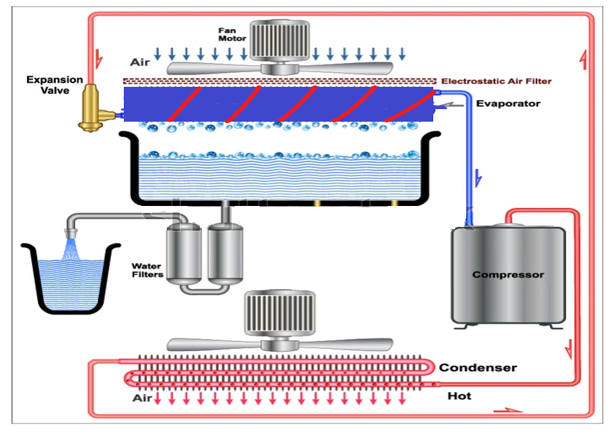
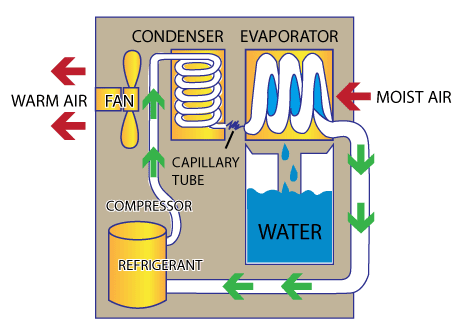
The main parts explain how does a atmospheric water generator work in practical terms.
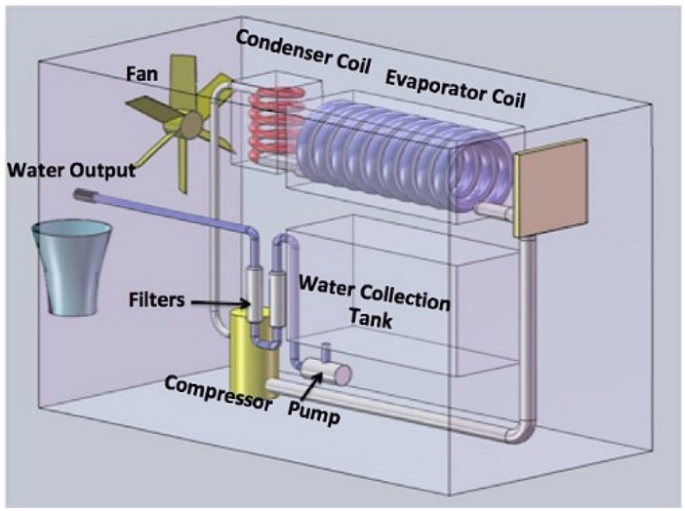
- Compressor and condenser – These parts cool air so vapor turns to liquid. The compressor pumps refrigerant and the condenser moves heat away.
- Evaporator coil – Air flows across cold coils. Water forms on the coil surface and drips into a collection tray.
- Air intake and pre-filter – A fan pulls air in and a pre-filter removes dust and large particles.
- Water filtration and purification – Carbon filters, sediment filters, and sometimes reverse osmosis or UV light clean the water.
- Storage tank and delivery – A sealed tank stores water and a pump delivers it to taps or dispensers.
- Controls and sensors – Humidity sensors, thermostats, and automatic sanitizers keep operation stable.
Knowing each part helps you troubleshoot and optimize performance. My tests showed that filter quality and coil cleanliness impact taste most.
The science: condensation, refrigeration, and desiccant methods
There are two common ways to explain how does a atmospheric water generator work: cooling-based and desiccant-based.
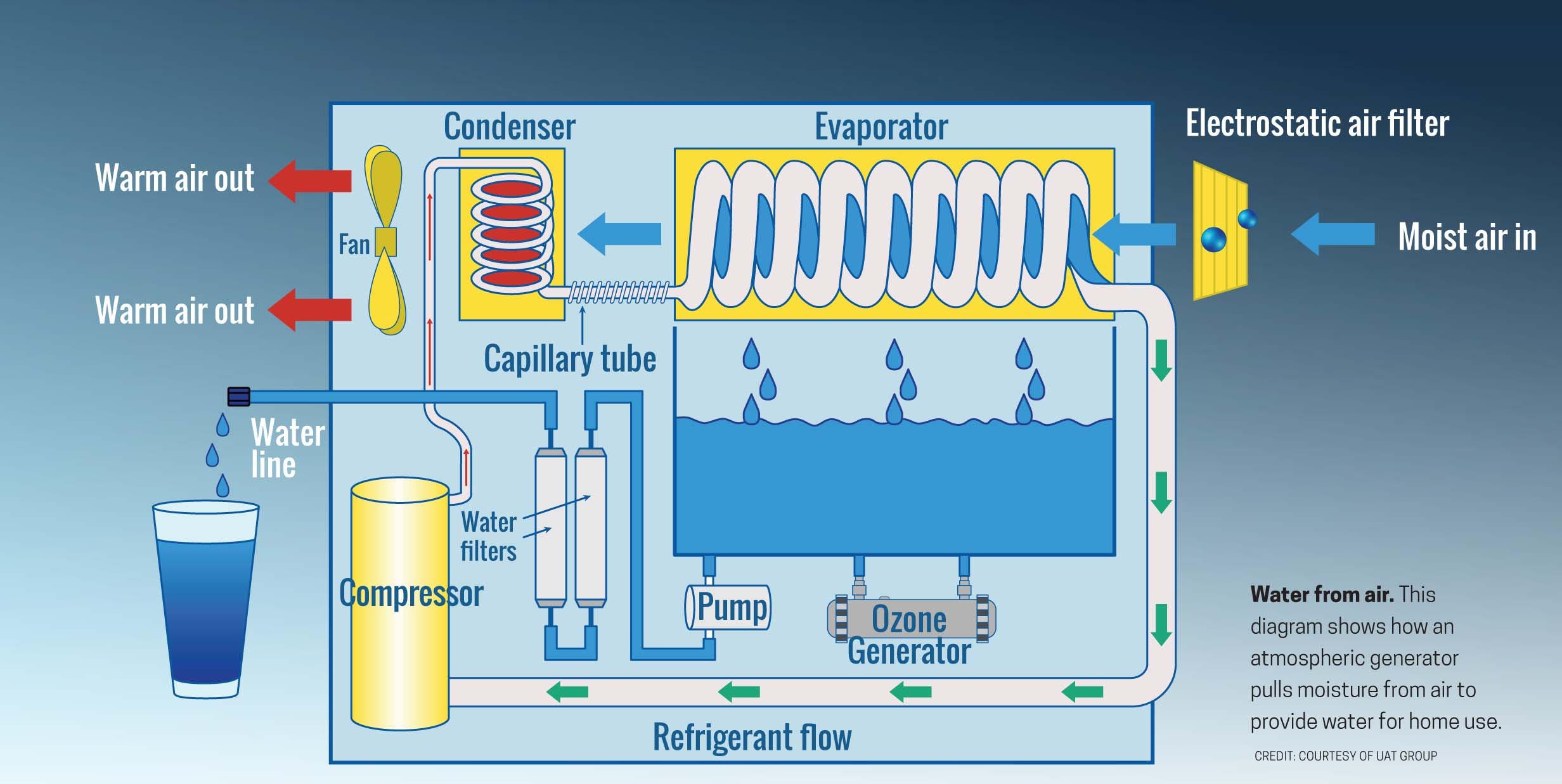
- Cooling-based condensation – Air cools below its dew point on cold surfaces. Water condenses and is collected. This method is common in most consumer and commercial AWGs.
- Refrigeration cycle – A refrigerant absorbs heat from air in the evaporator. The compressor raises pressure, the condenser releases heat, and the refrigerant cycles back.
- Desiccant-based systems – Hygroscopic materials or salts absorb moisture. Heat later releases the water from the desiccant and it is condensed. This works better in low-humidity or cooler climates.
- Energy balance – Producing water requires energy. More humidity and higher temperature reduce energy needed per liter. Efficient heat recovery and smart controls cut power use.
These science points show why location matters. In humid, warm climates, an AWG produces far more water with less energy.
Types of atmospheric water generators
Different designs show how does a atmospheric water generator work in varied settings.
- Portable/home units – Small and plug-in. Good for single households. They typically use the refrigeration method.
- Commercial and industrial units – Higher capacity machines for offices, hotels, and farms. They scale up compressors and filters.
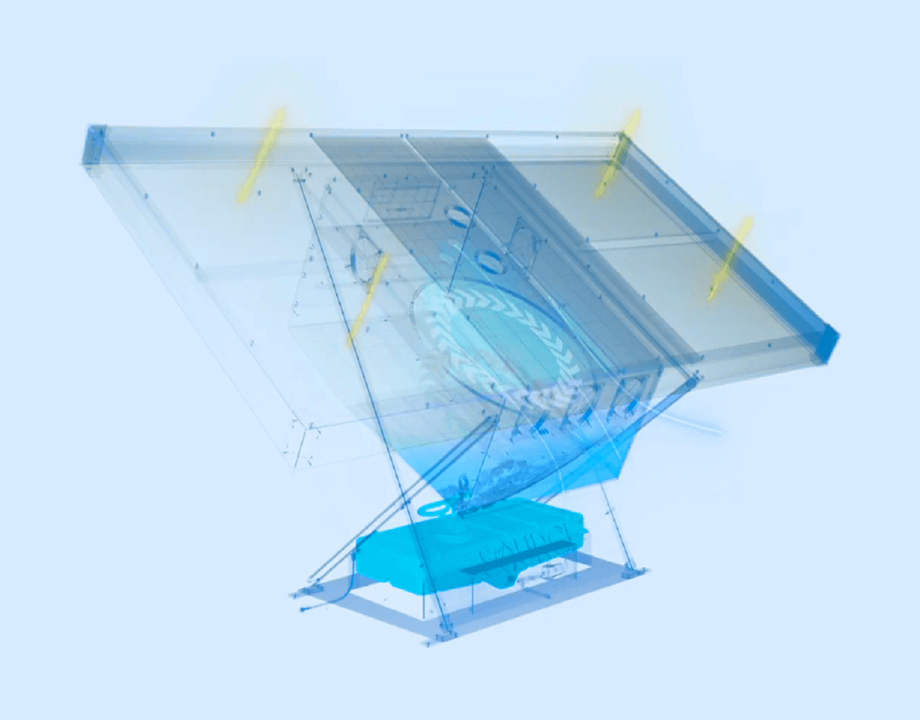
- Solar-powered AWGs – Combine solar PV or thermal collectors with AWG systems. They lower grid dependency but need careful sizing.
- Desiccant AWGs – Use materials like silica gel or salt blends. They are useful in dry or cold places.
- Hybrid systems – Combine rainwater harvesting, filtration, and AWG output to improve reliability.
Choose the type that matches climate, water demand, and power availability.

Performance factors and efficiency
Understanding how does a atmospheric water generator work helps predict output and cost.
- Relative humidity – Higher humidity means more water production. Going from 30% to 60% can dramatically increase yield.
- Temperature – Warmer air holds more moisture. Ideal range is roughly 70°F to 95°F for many units.
- Dew point – The closer the air is to saturation, the easier it is to condense water.
- Energy consumption – Measured in kWh per liter. Typical ranges vary widely by design and climate.
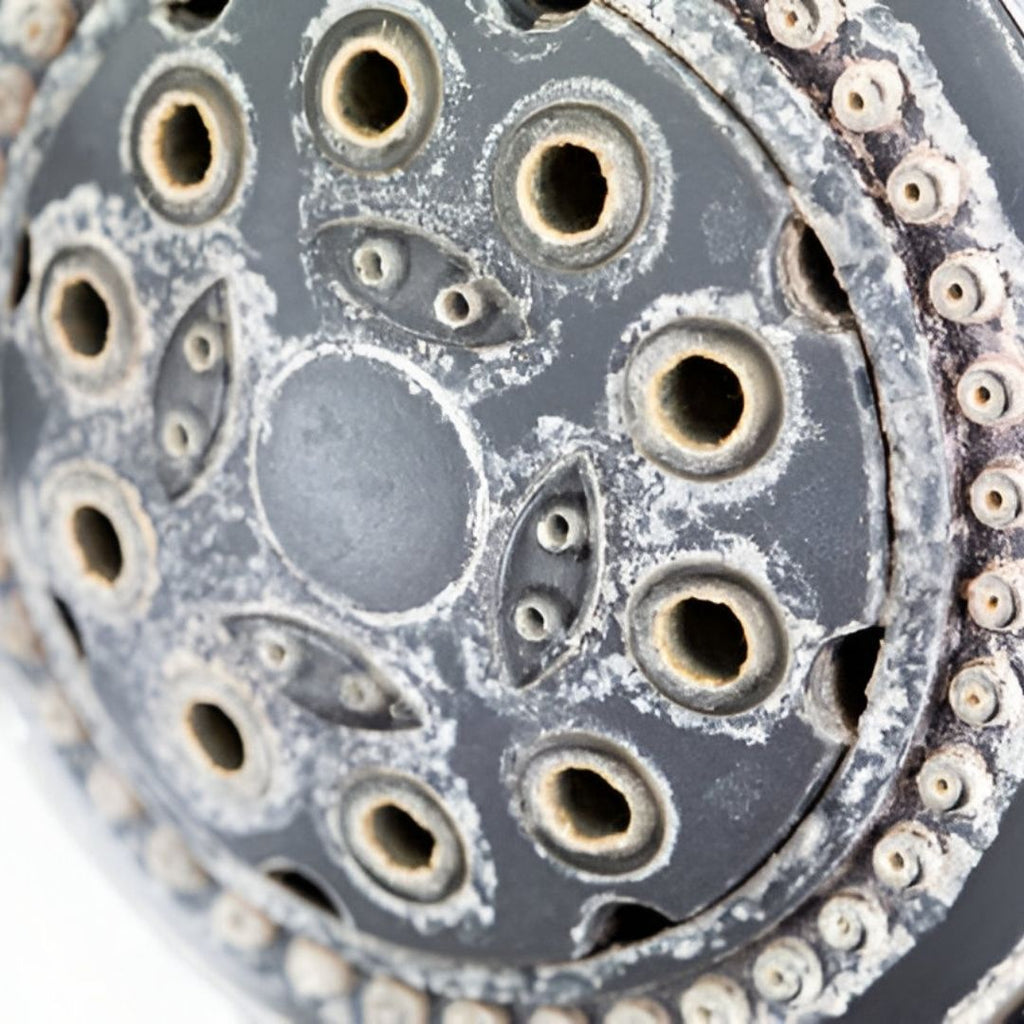
- Maintenance and cleanliness – Dirty coils, clogged filters, or biofilm reduce output and can affect water quality.
I monitored a unit that produced three times more water on humid summer days than in a cool spring week. That variability is normal.
Benefits and limitations
A clear view of pros and cons helps you decide if how does a atmospheric water generator work meets your goals.
Benefits
- Independence from local water supply – Useful in remote or disaster-prone areas.
- Consistent quality – Modern AWGs include filtration and UV to produce potable water.
- On-demand supply – No need for tanked deliveries or heavy storage.
Limitations
- Energy needs – Running an AWG consumes electricity. Cost and carbon footprint matter.
- Climate dependence – Low humidity reduces yield significantly.
- Upfront cost – Good units require higher initial investment than simple filters.
- Maintenance – Regular filter changes and cleaning are essential to keep water safe.
Be realistic about output and cost in your climate before buying.
Practical applications and use cases
Knowing how does a atmospheric water generator work unlocks many real uses.
- Homes – Backup drinking water or daily supply when municipal sources are limited.
- Rural and off-grid communities – A way to add water access where infrastructure is weak.
- Disaster response – Portable AWGs provide safe water after floods or earthquakes.
- Agriculture and irrigation – Small-scale irrigation for high-value crops in arid zones.
- Commercial settings – Hotels, remote camps, and construction sites can reduce bottled water use.
I helped set up an AWG for a remote clinic. It cut transport costs and ensured clean water for staff and patients.
Installation, maintenance, and safety tips
Simple steps make systems reliable and safe. They show how does a atmospheric water generator work best in daily use.
- Site placement – Put the unit where airflow is good and dust is low. Shade helps reduce solar heat on the casing.
- Regular cleaning – Clean coils and condensation trays monthly or per manual. This prevents biofilm.
- Filter schedule – Replace pre-filters and carbon filters per manufacturer timelines. Keep records.
- Water testing – Test microbiology and minerals periodically. Use UV treatment if needed.
- Winter care – Drain or winterize units in cold climates to prevent freeze damage.
- Safety – Use certified units and follow electrical codes when installing larger systems.
From my experience, neglecting coil cleaning is the fastest way to lose capacity and cause taste issues.
Cost, ROI and buying guide
Budget and expectations align when you know how does a atmospheric water generator work financially.
- Initial price – Small home units can range from a few hundred to a few thousand dollars. Commercial systems are far more.
- Operating cost – Expect electricity and filter replacement costs. Use local rates to estimate annual expense.
- Cost per liter – Calculate energy plus maintenance divided by yearly output to compare with alternatives.
- Certifications – Look for NSF, CE, or local potable water certifications. These signal safer design.
- Warranties and service – Choose vendors with clear service plans and parts availability.
I recommend trialing a small unit to measure real yield in your microclimate before investing in a large system.
My experience testing atmospheric water generators
I have set up, run, and maintained multiple AWGs in varied climates. I learned what makes them work well.
- Lesson 1 – Test in place first. Production varies drastically by location.
- Lesson 2 – Prioritize good filtration and UV. Taste and safety improve quickly.
- Lesson 3 – Track energy use for a month to get real operating costs.
- Mistake I made – I bought a larger unit expecting constant output. It under-performed in low humidity.
- Tip – Combine an AWG with rain capture or storage to smooth supply during dry spells.
These experiences shaped practical tips I share with friends and clients.
Frequently Asked Questions of how does a atmospheric water generator work
How much water can an AWG produce daily?
Production depends on humidity, temperature, and unit size. Small home units often make 5–20 liters per day; commercial units can make hundreds to thousands.
Is AWG water safe to drink?
When properly filtered and disinfected, AWG water can meet drinking standards. Regular maintenance and testing ensure safety.
How energy-efficient are atmospheric water generators?
Efficiency varies widely by design and climate. Warm, humid air needs less energy per liter than cold, dry air.
Can an AWG work in desert climates?
Desiccant-based AWGs can harvest water in drier areas, but yields are lower and energy costs are higher. Hybrid systems can improve reliability.
How often do filters and parts need changing?
Filter schedules depend on use and air quality. Many pre-filters need monthly checks, while carbon filters change every 6–12 months.
Do AWGs need certified installers?
For larger or commercial units, certified installation is recommended to meet electrical and plumbing codes. Small plug-in units often need simple setup by the owner.
Conclusion
Atmospheric water generators turn air humidity into usable water using cooling or desiccant methods. They offer independence, consistent quality, and useful options for homes, remote sites, and emergency response. Expect variable output tied to climate, and plan for energy use and regular maintenance. If you are curious, try a small unit in your location to estimate production and costs, then scale up when you have real data. Share your experiences, ask questions below, or subscribe to get updates on practical tests and buying tips.