
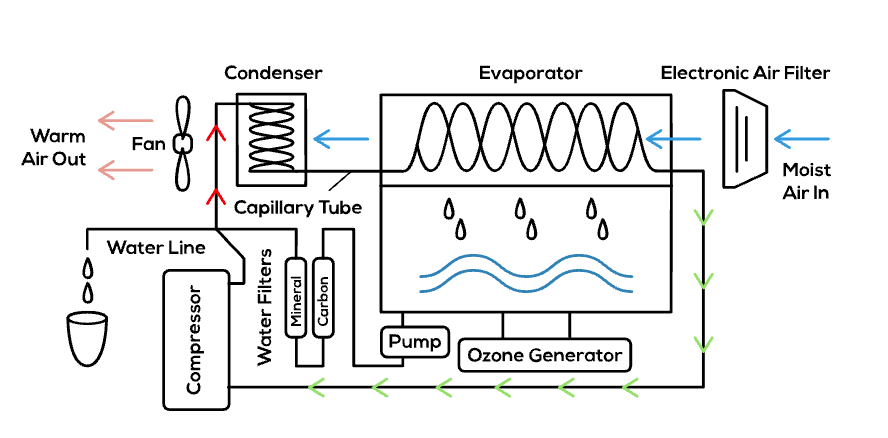
AWGs pull moisture from air, condense it, and purify it into safe drinking water.
I’ve spent years writing about water tech and testing home and commercial units. In this article I explain how does an atmospheric water generator work with drinking water, step by step. You’ll learn the main technologies, safety checks, real-world yields, costs, and practical tips from my hands-on experience. Read on to get a clear, actionable view of whether an AWG can meet your drinking water needs.

How does an atmospheric water generator work with drinking water?
An atmospheric water generator uses air as a raw source. It moves air across a cooled surface or a desiccant. Water vapor condenses into liquid. That liquid is captured and sent through filters and disinfection stages. Final steps add minerals or store the water in a sanitary tank. The whole chain turns humidity into potable water you can drink.
Core steps in plain terms
- Air intake: a fan draws humid air into the unit.
- Cooling or adsorption: the air is cooled or passed over a desiccant to extract moisture.
- Condensation: vapor becomes liquid on cold coils or through desiccant regeneration.
- Collection: droplets fall into a clean reservoir.
- Purification: filters, UV, or RO remove contaminants.
- Storage and delivery: water is kept in a sanitary tank and dispensed.
How does an atmospheric water generator work with drinking water in practice? Expect machines to combine mechanical and chemical steps. Good units mix condensation with multi-stage purification. Poor units may skip proper disinfection and need upgrades.
Key components and technologies
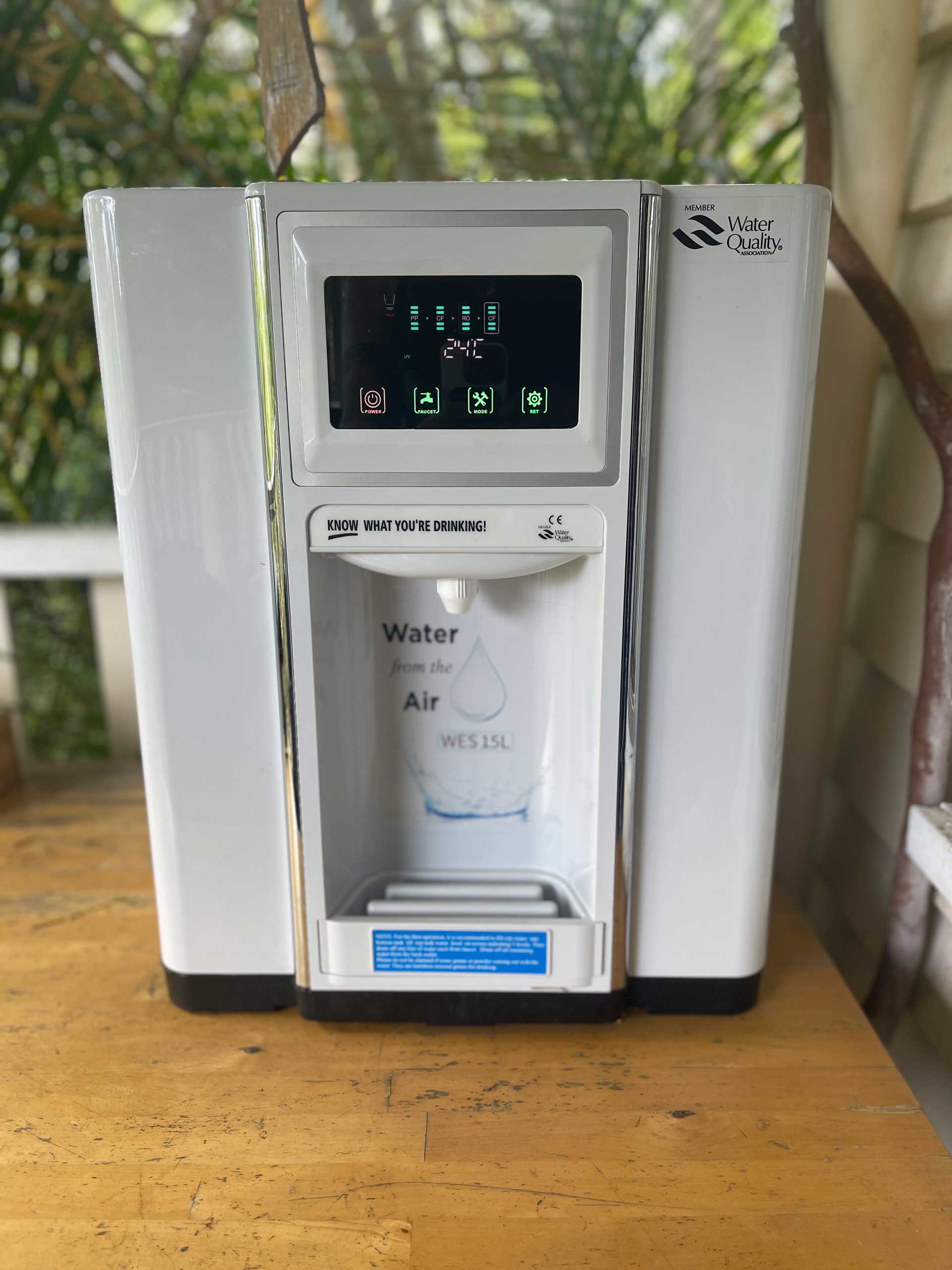
Modern AWGs use one of two main approaches. Each has common parts and trade-offs.
Cooling-based systems
- Compressor and condenser coils: like an air conditioner, they cool the air.
- Evaporator or cold plate: where vapor turns to liquid.
- Fan and air filters: keep dust out and move air.
- Drain and collection tank: gather condensed water.
Desiccant and hybrid systems
- Desiccant material or rotor: captures moisture even at lower temps.
- Regenerator heater: drives moisture off the desiccant into a condenser.
- Heat exchangers: improve efficiency.
Water treatment modules
- Sediment and carbon filters: remove particles and odors.
- UV-C lamps: inactivate bacteria and viruses.
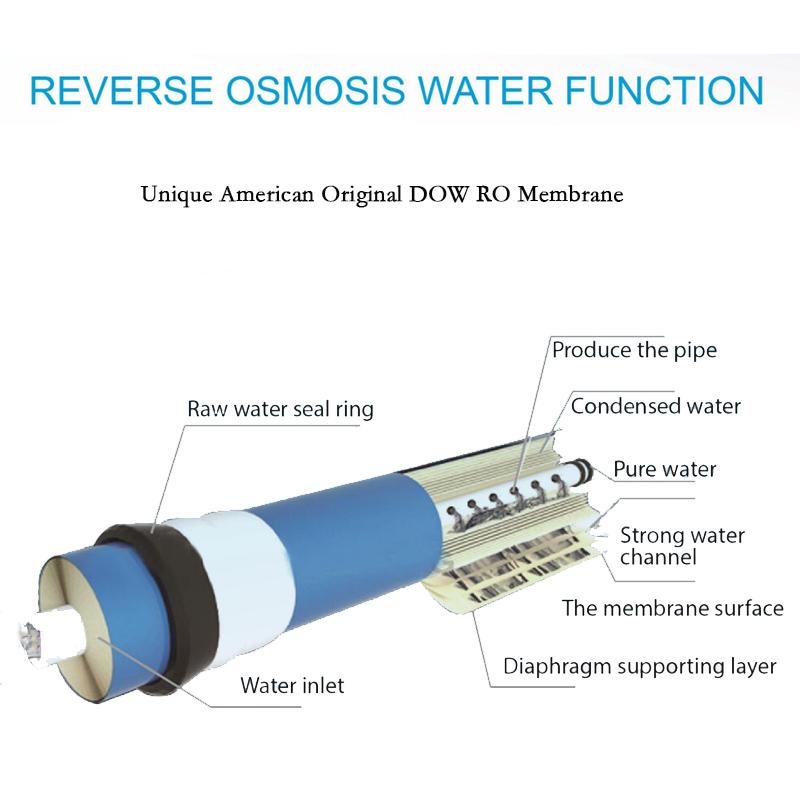
- Reverse osmosis (optional): removes dissolved solids.
- Remineralization cartridges: add healthy minerals and improve taste.
How does an atmospheric water generator work with drinking water when it comes to technology? The best units combine cooling or desiccant capture with a real purification line. Look for UV plus at least carbon filtration.

Water purification and safety for drinking water
Safety is the key approval test for any AWG. Condensed water can carry airborne particles, microbes, or volatile compounds. A strong treatment chain makes the water safe for drinking.
Common purification stages
- Pre-filtration: traps dust and large particles.
- Activated carbon: reduces VOCs and improves taste and odor.
- UV disinfection: kills bacteria and viruses.
- Final polishing: small-pore filters or RO for dissolved solids.
- Mineralization: restores balanced taste and electrolytes.
PAA-style questions
Does an AWG remove bacteria and viruses?
Most quality AWGs include UV disinfection or filtration that inactivates microbes. Confirm the unit’s microbial reduction claims and certifications.
Can AWG water contain chemicals from the air?
Yes, volatile organic compounds and gases can appear in condensate. Carbon filters help, and RO removes most dissolved contaminants.
Is mineral content sufficient for drinking?
Condensed water is very low in minerals. Many systems add a remineralization step to improve taste and health value.
My experience testing units showed that UV plus carbon produced water that tasted clean and met basic safety checks. I once found a unit with inadequate carbon filtration; adding a carbon stage fixed odor and reduced VOC taste.

Performance factors and efficiency
How much water an AWG makes depends on weather, design, and energy use.
Key factors
- Humidity: higher humidity yields more water. Most units need at least 40% relative humidity to be effective.
- Temperature: warmer air holds more moisture. Optimal range often 65–95°F.
- Airflow rate: faster airflow increases capture but raises power draw.
- Unit efficiency: compressor-based systems are more productive but use more energy than desiccant units in some climates.
- Maintenance: dirty coils or filters reduce output.
Typical yields and energy
- Small home AWG: 2–10 liters/day in average indoor conditions.
- Medium/commercial units: 50–1,000+ liters/day depending on size.
- Energy use: can range from 0.2 to 1.0 kWh per liter depending on humidity and system efficiency.
How does an atmospheric water generator work with drinking water while balancing energy? Expect trade-offs: higher yield tends to require more energy. Plan based on local humidity and daily water needs.
Benefits and limitations
Benefits
- Local water source: useful where ground water is scarce or contaminated.
- On-demand production: you can generate water near the point of use.
- Reduces plastic waste: fewer bottled water needs.
- Useful in emergencies: independent source when infrastructure fails.
Limitations
- Climate dependent: dry or cold climates reduce production.
- Energy cost: can be expensive per liter compared with piped water.
- Maintenance needs: filters, UV lamps, and coils need care.
- Water quality variability: depends on filters and unit design.
When thinking how does an atmospheric water generator work with drinking water, weigh benefits against local climate and energy cost. In humid regions, AWGs can be a strong supplement. In arid zones, they often struggle without high energy inputs.

Installation, maintenance, and real-world tips
Installation
- Place the unit in a well-ventilated area with good airflow.
- Keep it away from heavy pollution sources (kitchen exhaust, smoke).
- Ensure stable power supply and proper drainage for condensate.
Maintenance checklist
- Clean or replace air filters every 1–3 months.
- Sanitize collection tank quarterly or per manufacturer guidelines.
- Replace UV lamps annually or per hour rating.
- Inspect condenser coils and remove dust.
- Test water for microbes and chemicals every 3–6 months.
Practical tips from use
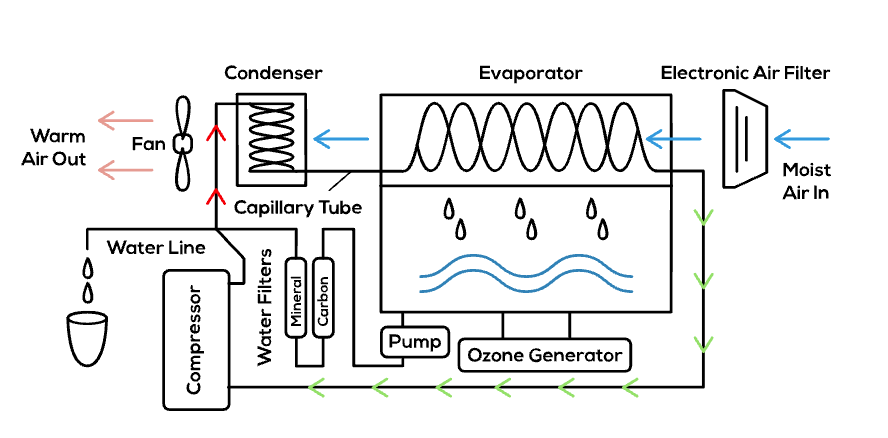
- I ran a countertop AWG for six months. Monthly filter checks kept taste consistent.
- If your unit tastes flat, add remineralization or use a mineral cartridge.
- Measure yield at different room spots to find the best placement.
Cost, ROI, and where AWG fits
Costs
- Small home units: $500–$5,000 upfront.
- Commercial systems: $5,000–$100,000+.
- Operating cost: electricity plus filter and lamp replacements.
Evaluating ROI
- Compare per-liter cost to current water bills or bottled water cost.
- Consider non-monetary value: independence, emergency resilience, and reduced plastic use.
- For remote sites or events, AWGs can be cost-effective despite higher per-liter energy use.
How does an atmospheric water generator work with drinking water in budget terms? Run numbers on local humidity, daily liters needed, and energy price. That gives a realistic payback estimate.
Frequently Asked Questions of how does an atmospheric water generator work with drinking water
How safe is water from an AWG?
Water safety depends on the unit’s purification chain. With proper filtration, UV, and sanitation, AWG water can meet drinking standards.
Do AWGs need a water source other than air?
No. AWGs extract moisture from air and do not need a mains water source, though some units use a water line for post-treatment cleaning.
How much water can a home AWG produce per day?
Most home AWGs produce 2–10 liters per day under typical indoor humidity. Output rises sharply with higher humidity and temperature.
What maintenance does an AWG require?
Regular tasks include filter changes, UV lamp replacement, tank cleaning, and coil cleaning. Skipping maintenance lowers output and water quality.
Are AWG-produced minerals healthy?
AWG water is very low in minerals naturally. Many systems add minerals to meet taste and basic dietary needs. Check the product spec for mineral content.
Conclusion
You now have a clear, practical view of how does an atmospheric water generator work with drinking water. AWGs condense air moisture, then clean and store it for safe drinking. They shine in humid areas and in roles where local water is scarce. If you consider one, check yields at your humidity, inspect the treatment chain, and plan for regular maintenance. Try a pilot or rental before large purchases, and share your results or questions below to help others decide.