
Cosmic-ray neutrons strike atmospheric nitrogen, converting it into carbon 14 through a nuclear reaction.
I have spent years researching and writing about atmospheric chemistry and radiocarbon science, so I will walk you through exactly how is carbon 14 generated in the atmosphere. This article explains the physics and chemistry, shows how 14C enters the carbon cycle, covers factors that change its production, and points out practical uses and limits—so you understand both the mechanism and why it matters.
How Carbon-14 Is Formed in the Atmosphere
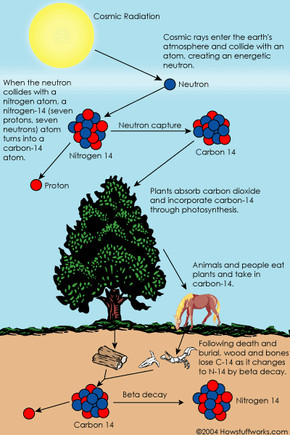
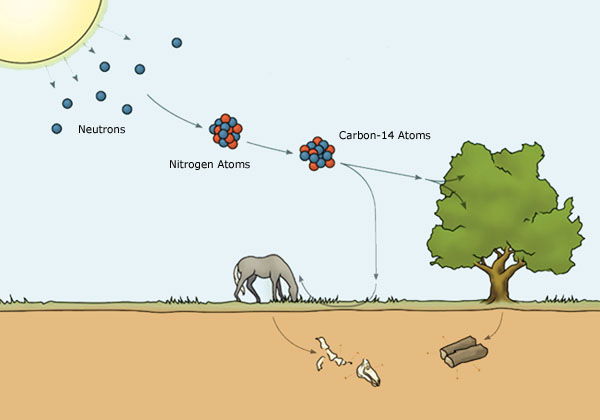
The basic answer to how is carbon 14 generated in the atmosphere starts with cosmic rays. High-energy particles from space hit air molecules and produce secondary particles, including neutrons. These free neutrons collide with nitrogen-14 nuclei and turn them into carbon 14 and a proton. The key reaction is simple and consistent: nitrogen-14 plus a neutron gives carbon 14 plus a proton.
This process shows why carbon 14 is naturally present in the air and why its production is linked to outside forces. Scientists describe this as cosmogenic production because cosmic rays drive it. Understanding how is carbon 14 generated in the atmosphere lets us use 14C as a clock for organic matter and as a tracer for carbon movement.
The Science Behind Production
Cosmic rays are mostly protons that reach Earth from space. When they enter the upper atmosphere, they collide with atoms and create showers of secondary particles. Among those particles are fast neutrons that slow down and become capable of being captured by nitrogen atoms.
The dominant reaction that explains how is carbon 14 generated in the atmosphere is:
- Nitrogen-14 (14N) + neutron → Carbon-14 (14C) + proton.
After formation, carbon 14 quickly forms carbon dioxide molecules and mixes with the atmosphere. Plants take up that CO2, and animals then eat the plants. That is how living things incorporate carbon 14 while alive.
Factors That Affect Carbon-14 Production
Several environmental and human factors change how is carbon 14 generated in the atmosphere:
- Solar activity
- Strong solar wind deflects cosmic rays, lowering neutrons and reducing 14C production.
- Earth's magnetic field
- A stronger geomagnetic field shields the atmosphere from cosmic rays and cuts production.
- Altitude and latitude
- Higher altitudes and polar regions receive more cosmic rays, so more 14C is made there.
- Human activities
- Nuclear bombs and reactors produced extra 14C spikes, which altered atmospheric levels for decades.
These factors mean that production is not constant. That variability is why calibration is needed for radiocarbon dating and why scientists study past solar and geomagnetic behavior using 14C records.
How Carbon-14 Enters the Carbon Cycle
Once formed, carbon 14 rapidly becomes part of atmospheric CO2. From there it moves into plants through photosynthesis. Animals and humans incorporate it by eating those plants. This continuous exchange keeps atmospheric 14C mixed with the biosphere and the surface ocean.
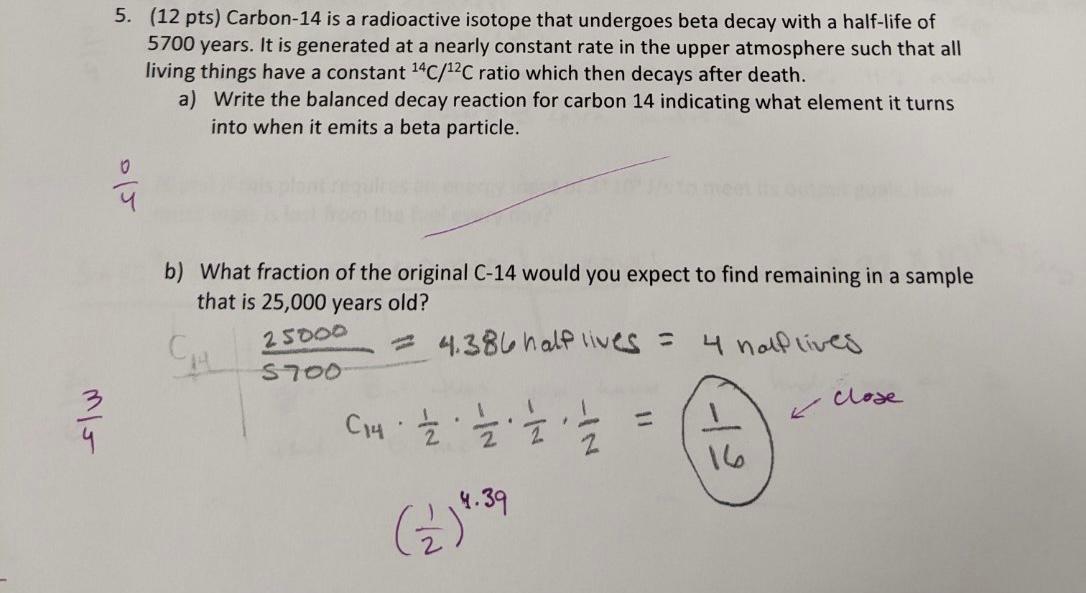
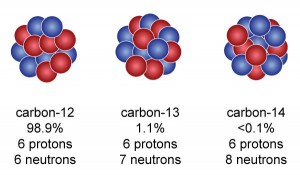
Over time, radioactive decay reduces 14C at a known rate (half-life ~5,730 years). That steady decay plus carbon exchange explains why scientists ask how is carbon 14 generated in the atmosphere when interpreting age and carbon flows. Reservoirs like deep ocean and sediments exchange more slowly, and that creates what we call reservoir effects in dating.
Applications, Limitations, and Why It Matters
Knowing how is carbon 14 generated in the atmosphere is essential for several applications:
- Radiocarbon dating
- Dating archaeological and geological samples relies on knowing initial 14C production.
- Climate and carbon cycle studies
- 14C helps trace carbon sources and sinks over decades to millennia.
- Forensics and ecology
- 14C can indicate time of death or when biological material stopped exchanging carbon.
Limitations and cautions:
- Production varies with solar and geomagnetic changes, so raw 14C dates need calibration.
- Nuclear testing in the 20th century boosted atmospheric 14C and complicates recent dating.
- Local reservoir effects can bias ages by hundreds of years in some contexts.
Personal Experience and Practical Tips
In my work explaining radiocarbon science to students and readers, I often see confusion about how is carbon 14 generated in the atmosphere versus how it is used. A few practical tips based on that experience:
- When reading radiocarbon results, always look for calibration details and lab methods.
- For archaeological samples, learn whether a marine or freshwater reservoir effect applies.
- If you measure modern samples, check whether bomb 14C (post-1950s) affects the baseline.
A mistake I made early in my career was assuming a single global 14C value for all samples. Local and temporal variation matters. Treat every dataset with careful context checks.
Quick Questions You Might Have (PAA-style)
Q: Does solar activity change how is carbon 14 generated in the atmosphere?
A: Yes. More solar activity reduces cosmic rays and lowers 14C production.
Q: Can humans create carbon 14?
A: Yes. Nuclear testing and reactors have produced extra 14C, altering atmospheric levels.
Q: How fast does newly made 14C join living organisms?
A: Very quickly. Newly formed 14C becomes CO2 and is incorporated into plants within growing seasons.

Frequently Asked Questions of how is carbon 14 generated in the atmosphere
How exactly do cosmic rays make carbon 14?
Cosmic rays produce secondary neutrons in the upper atmosphere. Those neutrons hit nitrogen-14 atoms, converting them into carbon 14 and a proton.
Is carbon 14 production steady over time?
No. Production varies with solar cycles, geomagnetic strength, and altitude or latitude differences.
Did nuclear testing change natural carbon 14 levels?
Yes. Above-ground nuclear tests in the mid-20th century significantly increased atmospheric 14C, creating a well-known "bomb curve."
Why does understanding how is carbon 14 generated in the atmosphere matter for dating?
Because production rates change, raw 14C ages must be calibrated to account for past variations and human influences.
Can we measure how much carbon 14 is produced each year?
Scientists estimate production rates from measurements and models, but rates are influenced by solar and geomagnetic changes, so estimates have ranges.
Does the ocean affect atmospheric carbon 14 levels?
Yes. The ocean absorbs and releases CO2, which exchanges 14C with the atmosphere and creates reservoir effects that impact dating.
Are there other isotopes produced by cosmic rays?
Yes. Cosmic rays make other cosmogenic isotopes like beryllium-10 and chlorine-36, which are useful for studying Earth processes.
Conclusion
Understanding how is carbon 14 generated in the atmosphere ties together cosmic physics, nuclear reactions, and the global carbon cycle. The process starts with cosmic rays and neutrons, proceeds through a clear nuclear reaction with nitrogen, and ends with 14C mixing into CO2 and living systems. Keep in mind that production fluctuates with solar and geomagnetic conditions and that human actions have altered recent levels. If you work with radiocarbon data, always check calibration and local reservoir effects. Explore further by reading calibrated datasets, trying a simple radiocarbon primer, or leaving a comment—I'd love to hear what you want to learn next.