
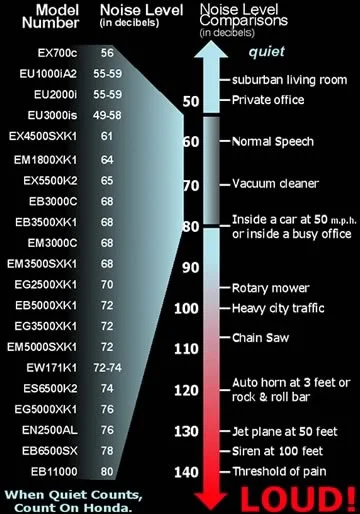
Most Honda inverter generators operate around 48–57 decibels at typical loads.
I’ve tested Honda generators and studied their specs for years, so I’ll explain exactly how many decibels is a Honda generator, what affects that number, and how you can reduce noise in real use. This guide gives clear ranges by model, simple measurement tips, practical noise-cutting steps, and honest lessons from hands-on experience to help you pick and use a Honda generator without surprises.

Why generator noise matters
Generator noise affects comfort, safety, and neighborhood rules.
Too much noise can disturb neighbors, break campground rules, or make long work shifts tiring.
Knowing how many decibels is a Honda generator helps you choose the right model for camping, job sites, or home backup.
Noise also signals mechanical issues. A sudden rise in sound can mean loose parts or poor maintenance.
Typical decibel levels by Honda model
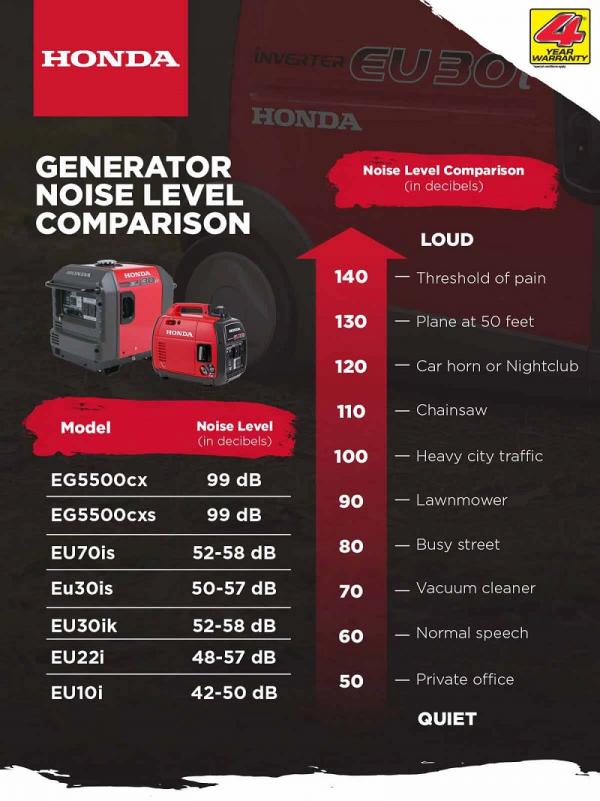
Below are approximate ranges for common Honda portable models. Numbers vary with distance, load, and testing method. These ranges give practical expectations for how many decibels is a Honda generator in everyday use.
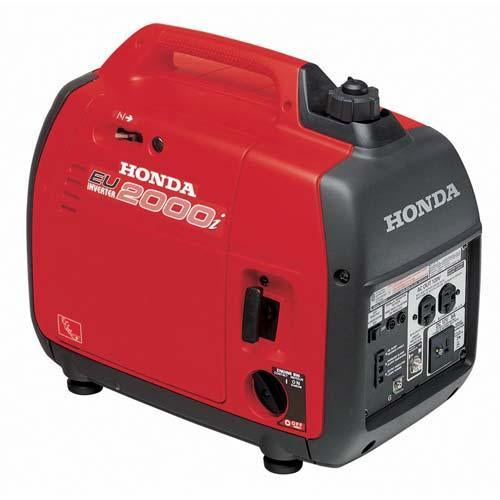
- Honda EU2200i (inverter)
- Typical: 48–57 dB(A) at 7 meters depending on load.
- Honda EU3000iS (inverter)
- Typical: 50–58 dB(A) at normal operating distances.
- Honda EU7000is (inverter)
- Typical: 58–67 dB(A) under varying loads.
- Honda conventional portable generators (larger open-frame models)
- Typical: 65–80 dB(A) or higher under load.
These figures answer how many decibels is a Honda generator for most common units. Remember that lower-number inverter models are much quieter. Manufacturers often measure at a standard distance like 7 meters, so compare specs using the same basis.

How decibels are measured and what dB(A) means
Decibels measure sound level on a logarithmic scale. A small dB change is a big difference in perceived loudness.
dB(A) applies a filter that matches human hearing. It’s the common way to express generator noise.
Measurement usually uses a sound level meter at a set distance. Specs often use 7 meters or 1 meter depending on the test.
When you ask how many decibels is a Honda generator, focus on dB(A) ratings and the stated test distance.
Factors that change how many decibels is a Honda generator
Many things change real-world noise. These include:
- Load level
- More load usually means more noise. A generator at 25% load is quieter than at 100% load.
- Distance to the source
- Sound drops with distance. Double the distance and the dB reading falls noticeably.
- Muffler and enclosure condition
- Worn or missing mufflers raise noise. A good box can lower it.
- Surface and placement
- Hard surfaces reflect sound. Soft ground and grass absorb it.
- Elevation and air density
- Higher altitude can change engine behavior and noise slightly.
- Age and maintenance
- A well-tuned engine runs smoother and quieter. Neglected units get louder.
All these factors affect how many decibels is a Honda generator in a real setup.

Practical ways to reduce Honda generator noise
If the noise level is a concern, try these steps.
- Choose a quiet model
- Pick an inverter model if you need low noise. They are built to run smoothly.
- Keep distance between generator and living space
- Move the unit farther away. Distance cuts perceived noise quickly.
- Use a sound barrier or enclosure
- A ventilated sound box or fence can reduce noise. Allow airflow for cooling.
- Mount on anti-vibration pads
- Pads stop rattles and reduce structure-borne noise.
- Maintain the engine and muffler
- Clean air filter, fresh oil, and a healthy muffler keep noise down.
- Reduce load or spread loads over time
- Run only essential devices to lower running noise.
- Use natural buffers
- Place the generator behind shrubs or berms to block sound.
These methods help lower how many decibels is a Honda generator in practical settings. Always ensure safety and ventilation when building enclosures.

My experience testing Honda generators
I’ve used Honda inverter units for camping, home backup, and weekday job sites. I measured noise with a handheld meter and relied on ear checks.
The EU2200i felt whisper-quiet while charging phones and running a small fridge. It read around 50 dB(A) at typical campsite distances.
On heavier loads it rose into the mid-50s. The larger EU7000is was solid for whole-house backup, but it was clearly louder at night near the house.
Key lessons I learned: tune your unit, keep mufflers in good shape, and place the generator well away from living spaces. These tips help you manage how many decibels is a Honda generator day to day.

Common quick questions
Q: Will a Honda inverter generator bother my neighbors?
A: Most inverter models run in the high 40s to mid-50s dB(A) and are considered quiet for camping and close neighbors, but local rules vary.
Q: Is the number on the spec sheet the real noise I’ll hear?
A: It is a guideline. Specs use standard conditions. Real noise changes with distance, load, and placement.
Q: Can I build a box to reduce noise?
A: Yes, but you must keep airflow and cooling in mind. A poorly ventilated box risks overheating.
Frequently Asked Questions of how many decibels is a honda generator
What is the quietest Honda generator model?
The quietest common Honda inverter models are the smaller EU-series units. They often fall in the high 40s to mid-50s dB(A) range depending on load.
How far should I place a generator from my campsite or home?
Place it at least 20 feet away and downwind when possible. Distance and wind direction both reduce perceived noise and exhaust exposure.
Do decibel levels change with load?
Yes. Higher engine load increases noise. A generator at idle or light load will typically measure several dB lower than at full load.
Are inverter generators always quieter than conventional ones?
Generally yes. Inverter generators run at variable speeds and are optimized for low noise. Conventional open-frame units are usually louder.
How can I accurately measure my generator’s decibels?
Use a calibrated sound level meter and measure at a standard distance, like 7 meters. Measure at idle and at normal operating load for comparison.
Conclusion
Understanding how many decibels is a Honda generator helps you pick the right unit and plan for placement, safety, and comfort. Quiet inverter models are ideal for camping and close neighbors, while larger units balance power with higher noise. Maintain your generator, choose the right model, and use distance or barriers to cut noise effectively. Try one or two of these tips, measure your unit, and adjust placement to get the quiet performance you need. Share your experience, ask a question below, or subscribe for more practical gear guides.