
Solar keeps a sailboat’s batteries charged without running the engine: fridge, autopilot, chartplotter, lights and phones all draw power at anchor. The challenge is space and shade. Booms, masts, rigging and the sails themselves cast moving shadows, and every square foot of deck has another use.
Sailors usually choose rigid panels on a stern arch or rail mount for the best output and durability, and flexible panels on biminis, dodgers or curved decks. Panels with shade-tolerant designs make a real difference under rigging. We picked marine-suitable panels buyers are choosing now; every model below had “bought in past month” sales on Amazon in November 2026 and 4.3 stars or higher.
Quick answer: The Renogy 200W ShadowFlux Flexible panel is the best solar panel for most sailboats: it bends to fit biminis and decks and is designed to keep producing when partly shaded by rigging. For an arch or rail mount, the Renogy 200W N-type rigid panel gives more durable, higher output, and the BougeRV Arch Pro 200W is a strong fiberglass flexible alternative.
Our Top 3 Picks for best solar panels for sailing
Black Friday Deals Live
Renogy 200 Watt ShadowFlux Flexible Solar Panel (N-Type)
Flexible N-type panel built to handle partial shading from rigging.
- ✓ Handles partial shade
- ✓ Flexible and light
- ✓ High efficiency

Renogy 200 Watt N-Type Rigid Solar Panel (16BB)
200W N-type panel for arches and rail mounts; 600+ bought last month.
- ✓ Durable
- ✓ High output
- ✓ Long lifespan

BougeRV Arch Pro 200W Anti-Shading N-Type Fiberglass Flexible Solar Panel
Anti-shading 200W flexible panel with fiberglass surface.
- ✓ Durable surface
- ✓ Anti-shading
- ✓ Strong rating
As an Amazon Associate, we earn from qualifying purchases. Prices and deals change often, so check Amazon for the latest price.
How we picked these products
- Checked Amazon US in November 2026 and kept only products with strong “bought in past month” sales.
- Compared ratings and review counts, and dropped listings with too little feedback.
- Matched every product to the exact need in this guide, not just the category.
- Read the top-ranking guides for this topic and added the details they miss or get wrong.
We do not hands-on test every product. Our picks are based on specs, sales, verified buyer feedback and manufacturer information. Last updated: November 2026.
Quick Comparison
| Product | Best for | Key specs | Price |
|---|---|---|---|
| Renogy 200 Watt ShadowFlux Flexible Solar Panel (N-Type) | Best overall solar panel for sailing | 200W · flexible · N-type cells · shade-tolerant design · lightweight | Check price |
| BougeRV Arch Pro 200W Anti-Shading N-Type Fiberglass Flexible Solar Panel | Best fiberglass flexible | 200W · fiberglass surface · anti-shading layout · flexible | Check price |
| Renogy 100 Watt Flexible Solar Panel (240° Bend) | Best small flexible panel | 100W · bends up to 240° · lightweight | Check price |
| Renogy 200 Watt N-Type Rigid Solar Panel (16BB) | Best rigid panel for arches | 200W · rigid aluminum frame · N-type · high efficiency | Check price |
| Renogy ShadowFlux 200 Watt Rigid Solar Panel (N-Type) | Best rigid for shaded spots | 200W · shade-tolerant · rigid frame | Check price |
| Renogy 100 Watt N-Type Rigid Solar Panel | Best small rigid panel | 100W · rigid · N-type | Check price |
| 50W 12V Solar Panel Kit (Battery Trickle Charger Maintainer) | Best for keeping batteries topped up at the mooring | 50W panel · charge controller · waterproof | Check price |
1. Renogy 200 Watt ShadowFlux Flexible Solar Panel (N-Type) — Best overall solar panel for sailing
ShadowFlux technology is designed to reduce power loss when part of the panel is shaded, a constant issue under booms and stays. The flexible format fits biminis and curved surfaces.
About 50 bought last month with 4.4 stars. Sailors like the output under partial shade; secure it with marine-grade fasteners or zippered bimini mounts.
Pros
- Handles partial shade
- Flexible and light
- High efficiency
Cons
- Flexible panels run hotter and age faster than rigid
2. BougeRV Arch Pro 200W Anti-Shading N-Type Fiberglass Flexible Solar Panel — Best fiberglass flexible
A tougher fiberglass surface and anti-shading layout make this a good choice for decks and coachroofs.
About 100 bought last month with 4.6 stars.
Pros
- Durable surface
- Anti-shading
- Strong rating
Cons
- Check walkability rating before stepping on it
3. Renogy 100 Watt Flexible Solar Panel (240° Bend) — Best small flexible panel

Ideal for small dodgers and biminis or as a second panel.
About 100 bought last month with 4.4 stars.
Pros
- Very light
- Fits small spaces
Cons
- Lower output
4. Renogy 200 Watt N-Type Rigid Solar Panel (16BB) — Best rigid panel for arches
On a stern arch or rail mount, rigid panels stay cooler, last longer and produce more than flexible panels.
About 600 bought last month with 4.6 stars from 7,000 reviews.
Pros
- Durable
- High output
- Long lifespan
Cons
- Needs a sturdy mount
- Heavier
5. Renogy ShadowFlux 200 Watt Rigid Solar Panel (N-Type) — Best rigid for shaded spots
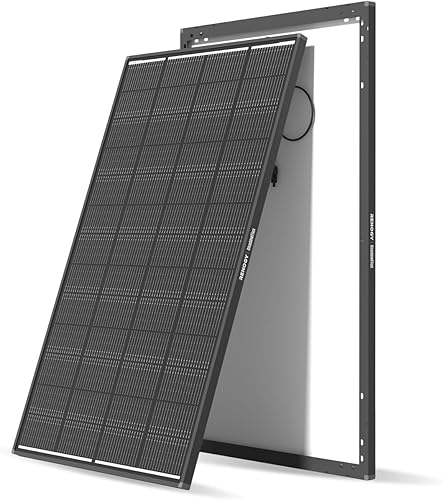
Rigid durability with shade tolerance, useful if your arch sits near the backstay or boom.
About 400 bought last month with 4.4 stars.
Pros
- Shade tolerant
- Rigid durability
Cons
- Heavier than flexible
6. Renogy 100 Watt N-Type Rigid Solar Panel — Best small rigid panel

A compact rigid panel for a stern rail mount on smaller boats.
About 600 bought last month with 4.6 stars.
Pros
- Compact
- Efficient
Cons
- Lower output
7. 50W 12V Solar Panel Kit (Battery Trickle Charger Maintainer) — Best for keeping batteries topped up at the mooring

A small panel keeps batteries charged while the boat sits on a mooring or in a marina.
About 200 bought last month with 4.5 stars.
Pros
- Affordable
- Simple maintenance charging
Cons
- Too small for cruising loads
How to Choose Solar Panels for a Sailboat
Rigid vs flexible
Rigid panels last longer and run cooler but need an arch or rail mount. Flexible panels are light and fit biminis and curved decks but heat up and degrade faster.
Shade matters on sailboats
Even a thin shadow from a stay can cut output dramatically. Shade-tolerant panels and separate charge controllers per panel help.
Charge controller
Use an MPPT controller, ideally one per panel or per panel group, for the best output under changing shade.
Daily energy needs
A cruising sailboat with fridge and autopilot may use 80 to 150Ah per day. That often requires 300 to 600W of panels.
Marine installation
Use tinned marine wire, waterproof connectors, and secure mounting that can handle wind loads.
Where to Mount Solar on a Sailboat
| Location | Best panel type | Our pick |
|---|---|---|
| Stern arch | Rigid | Renogy 200W N-type |
| Bimini or dodger | Flexible | Renogy ShadowFlux Flexible |
| Coachroof or deck | Flexible fiberglass | BougeRV Arch Pro |
| Stern rail (small boat) | Small rigid | Renogy 100W N-type |
| Mooring maintenance | Small kit | 50W trickle kit |
Install Tips
- Use one MPPT controller per panel if shading varies.
- Run wires through deck glands and seal them.
- Fuse the controller output near the battery.
- Clean salt off panels regularly.
Related guides
Frequently Asked Questions
How many watts of solar does a sailboat need?
Weekend sailors may manage with 100 to 200W. Cruisers with fridges and autopilots often need 300 to 600W.
Are flexible solar panels good for boats?
Yes for biminis and decks, but they usually have shorter lifespans than rigid panels.
Can I walk on flexible solar panels?
Only if the manufacturer rates them as walkable. Most should not be stepped on.
Do I need an MPPT controller on a boat?
It is strongly recommended. MPPT controllers capture more energy, especially under partial shade.
Final Verdict
For most sailboats, the Renogy 200W ShadowFlux Flexible panel is the best choice for biminis and decks. Use Renogy rigid N-type or ShadowFlux rigid panels on an arch for maximum output and longevity, and a 50W kit to maintain batteries at the mooring.
As an Amazon Associate, Energy of Supply earns from qualifying purchases. Product details and prices can change, so please check Amazon before you buy.