
Fish finders, chartplotters, VHF radios, bilge pumps and LED lights all run on 12 volts, and they work best with clean, steady power. Running them off the starting battery risks a dead engine at the ramp, while a separate lithium battery keeps electronics stable and saves a lot of weight.
The right size depends on your boat. A kayak fish finder needs only a small 10Ah to 20Ah pack, while a bass boat or center console with several screens benefits from a 100Ah house battery. We picked LiFePO4 batteries that buyers are choosing now; every model below had “bought in past month” sales on Amazon in November 2026 and a rating of 4.2 stars or higher.
Quick answer: For most boats with several electronics, the LiTime 12V 100Ah Group 27 LiFePO4 is the best house battery: it fits standard battery boxes and runs electronics all day. For kayaks and small boats, a 12V 20Ah LiFePO4 with built-in voltmeter is the best fish finder battery, and the IP67 12V 10Ah pack is the lightest waterproof option.
Our Top 3 Picks for best 12v lithium battery for boat electronics
Black Friday Deals Live
LiTime 12V 100Ah LiFePO4 Battery (Group 27)
100Ah LiFePO4 in a Group 27 case for full electronics setups.
- ✓ Powers several devices all day
- ✓ Standard Group 27 size
- ✓ Light for its capacity

12V 20Ah (22Ah) LiFePO4 Battery with 30A BMS and LCD Voltmeter
20Ah pack with LCD voltmeter; 600+ bought last month.
- ✓ Built-in charge display
- ✓ Good capacity
- ✓ Light

12V 10Ah LiFePO4 Battery (IP67 Waterproof, Lightweight)
Light IP67 waterproof 10Ah pack for small units.
- ✓ Very light
- ✓ Waterproof
- ✓ Fits small spaces
As an Amazon Associate, we earn from qualifying purchases. Prices and deals change often, so check Amazon for the latest price.
How we picked these products
- Checked Amazon US in November 2026 and kept only products with strong “bought in past month” sales.
- Compared ratings and review counts, and dropped listings with too little feedback.
- Matched every product to the exact need in this guide, not just the category.
- Read the top-ranking guides for this topic and added the details they miss or get wrong.
We do not hands-on test every product. Our picks are based on specs, sales, verified buyer feedback and manufacturer information. Last updated: November 2026.
Quick Comparison
| Product | Best for | Key specs | Price |
|---|---|---|---|
| LiTime 12V 100Ah LiFePO4 Battery (Group 27) | Best house battery for boat electronics | 12V 100Ah · Group 27 size · built-in BMS · about 1,280Wh | Check price |
| 12V 20Ah (22Ah) LiFePO4 Battery with 30A BMS and LCD Voltmeter | Best for fish finders | 12V 20Ah · LCD voltmeter · 30A BMS | Check price |
| GOLDENMATE 12V 20Ah LiFePO4 Battery (2 Pack, IP67 Waterproof) | Best waterproof 20Ah | 12V 20Ah · IP67 waterproof · 2 pack | Check price |
| 12V 10Ah LiFePO4 Battery (IP67 Waterproof, Lightweight) | Best for kayaks | 12V 10Ah · IP67 waterproof · lightweight | Check price |
| 12V 10Ah LiFePO4 Deep Cycle Battery with 10A BMS | Best budget small battery | 12V 10Ah · 10A BMS · lightweight | Check price |
| 12V 100Ah LiFePO4 Battery (Group 31) | Best large house battery | 12V 100Ah · Group 31 size · BMS | Check price |
| Renogy 12V 100Ah Deep Cycle AGM Battery | Best non-lithium alternative | 12V 100Ah · sealed AGM · deep cycle | Check price |
1. LiTime 12V 100Ah LiFePO4 Battery (Group 27) — Best house battery for boat electronics
A 100Ah house battery powers multiple screens, a radio, livewell pump and lights all day while keeping your starting battery fresh. The Group 27 footprint fits many existing battery boxes.
About 100 bought last month with 4.6 stars.
Pros
- Powers several devices all day
- Standard Group 27 size
- Light for its capacity
Cons
- Overkill for one small fish finder
2. 12V 20Ah (22Ah) LiFePO4 Battery with 30A BMS and LCD Voltmeter — Best for fish finders
A 20Ah battery runs most single fish finders for a long day. The built-in voltmeter shows remaining charge at a glance.
About 600 bought last month with 4.4 stars.
Pros
- Built-in charge display
- Good capacity
- Light
Cons
- Not waterproof; keep in a box
3. GOLDENMATE 12V 20Ah LiFePO4 Battery (2 Pack, IP67 Waterproof) — Best waterproof 20Ah

Two waterproof 20Ah batteries let you run electronics on one and keep a spare, or power two kayaks.
About 200 bought last month with 4.5 stars.
Pros
- IP67 waterproof
- Two batteries
- Compact
Cons
- Two-pack costs more upfront
4. 12V 10Ah LiFePO4 Battery (IP67 Waterproof, Lightweight) — Best for kayaks
For a kayak or canoe with a small fish finder, a 10Ah waterproof pack is light and tucks into a small hatch.
About 300 bought last month with 4.7 stars.
Pros
- Very light
- Waterproof
- Fits small spaces
Cons
- Small capacity
5. 12V 10Ah LiFePO4 Deep Cycle Battery with 10A BMS — Best budget small battery
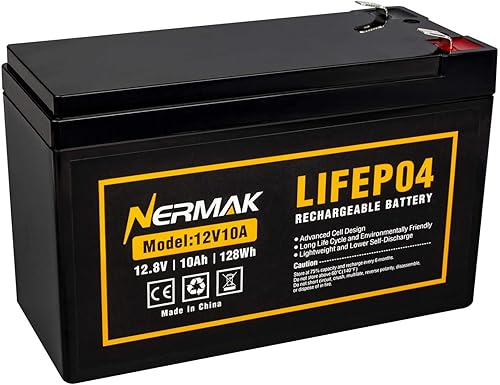
A popular low-cost 10Ah pack for fish finders and small 12V devices.
More than 1,000 bought last month with 4.3 stars.
Pros
- Low price
- Very popular
Cons
- Not waterproof
- 10A max current
6. 12V 100Ah LiFePO4 Battery (Group 31) — Best large house battery

A Group 31 case suits larger boats with bigger battery boxes and heavier electronics loads.
About 400 bought last month with 4.4 stars.
Pros
- High capacity
- Group 31 fit
- Strong sales
Cons
- Lesser-known brand
7. Renogy 12V 100Ah Deep Cycle AGM Battery — Best non-lithium alternative

If you prefer AGM for cold-weather charging or existing lead-acid chargers, Renogy’s 100Ah AGM is a solid choice. It is much heavier than lithium.
About 600 bought last month with 4.4 stars.
Pros
- Works with lead-acid chargers
- Charges in cold weather
- Sealed
Cons
- Heavy
- Only about half the capacity is usable
How to Choose a 12V Lithium Battery for Boat Electronics
Size by current draw
Check each device’s amp draw. A fish finder may use about 1 amp, a chartplotter 1 to 3 amps, LED lights 1 to 2 amps. Multiply total amps by hours of use and add 20 to 30% margin.
Separate from the starting battery
Running electronics from a dedicated battery prevents voltage dips during engine starts and avoids a dead starting battery.
Waterproofing
IP67 batteries tolerate splashes and brief submersion, ideal for kayaks. Larger batteries should sit in a secured, ventilated battery box.
Charging
Use a charger with a lithium profile. If your boat has a lead-acid onboard charger, check compatibility or add a DC-DC charger.
Fusing
Always install an inline fuse close to the battery positive terminal, sized for your wiring.
Quick Sizing Guide
| Setup | Typical draw | Recommended battery |
|---|---|---|
| Kayak fish finder | ~0.5–1 A | 12V 10Ah |
| Small boat: fish finder + lights | ~2–3 A | 12V 20Ah |
| Bass boat: 2 screens + livewell | ~5–10 A | 12V 50–100Ah |
| Center console: plotter, radio, lights, pumps | ~10–15 A | 12V 100Ah+ |
Install Tips
- Mount the battery in a secured, ventilated box.
- Add an inline fuse within 7 inches of the positive terminal.
- Use marine-grade tinned wire and heat-shrink connectors.
- Store lithium at 50 to 60% charge over winter.
Related guides
Frequently Asked Questions
What size battery do I need for a fish finder?
Most single fish finders run all day on a 10Ah to 20Ah lithium battery.
Can I run electronics from my starting battery?
You can, but a separate battery is safer and gives cleaner power. Many boats use a battery switch or isolator to keep them separate.
Is lithium safe on a boat?
LiFePO4 is the most stable lithium chemistry and includes a BMS for protection. Secure it properly and fuse the wiring.
Do I need a special charger?
Yes, use a charger with a LiFePO4 setting.
Final Verdict
Choose a LiTime 12V 100Ah Group 27 for full electronics setups, a 20Ah pack with voltmeter for a single fish finder, and an IP67 10Ah battery for kayaks. Stick with Renogy AGM if you need cold-weather charging with existing lead-acid gear.
As an Amazon Associate, Energy of Supply earns from qualifying purchases. Product details and prices can change, so please check Amazon before you buy.