
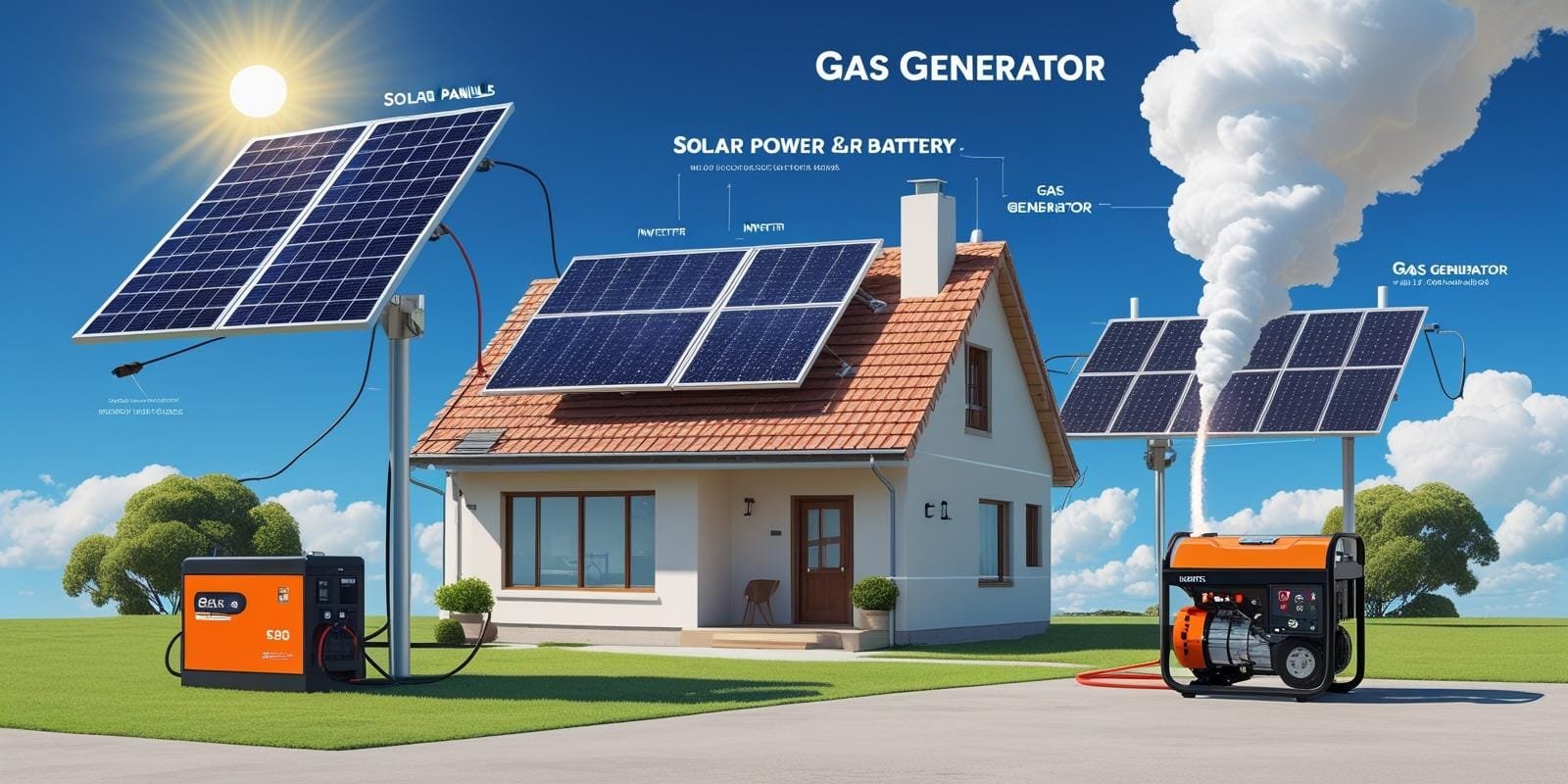
Are you torn between using solar power and a gas generator for your energy needs? You’re not alone.
Many people face this important decision, and it can feel overwhelming. You want a reliable power source, but you also want to be cost-effective and environmentally conscious. We’ll break down the key differences between solar power and gas generators. You’ll discover the pros and cons of each option, helping you make an informed choice that fits your lifestyle and budget.
By the end, you’ll be equipped with the knowledge to choose the best energy solution for your home or business. Let’s dive in and find out which option is right for you!

Credit: batteriesinc.net
Solar Power Basics
Understanding the basics of solar power is essential for anyone considering a shift from traditional energy sources. Solar power harnesses energy from the sun, converting it into electricity or heat. This clean, renewable resource offers a sustainable alternative to gas generators, which rely on fossil fuels and emit harmful pollutants.
What Is Solar Power?
Solar power is generated using solar panels, which are made up of photovoltaic (PV) cells. These cells capture sunlight and convert it into direct current (DC) electricity. An inverter then transforms DC into alternating current (AC), making it usable for your home or business.
Benefits Of Solar Power
- Environmentally Friendly:Solar power reduces your carbon footprint.
- Cost Savings:After the initial investment, solar energy can significantly lower your electricity bills.
- Energy Independence:You rely less on the grid and fluctuating gas prices.
How Does Solar Power Work?
The process begins with solar panels absorbing sunlight. This energy excites electrons in the PV cells, creating electricity. Any excess energy can be stored in batteries or sent back to the grid, offering further savings or credits.
Common Misconceptions
Many believe solar power only works in sunny climates. However, solar panels can generate electricity even on cloudy days. Your location does impact efficiency, but advancements in technology have made solar energy viable in various conditions.
Getting Started With Solar Power
Consider your energy needs and the amount of sunlight your location receives. Research local solar providers and compare their offerings. Getting multiple quotes helps ensure you choose the best system for your requirements.
Have you thought about how solar power could change your energy bills? Understanding these basics can guide you in making informed decisions about your energy future.

Credit: www.earthtechproducts.com
How Gas Generators Work
Gas generators are popular for providing backup power. They run on gasoline, propane, or natural gas. Understanding how they work helps in making informed choices.
Basic Components Of A Gas Generator
Gas generators have several key parts. The engine is the heart of the generator. It converts fuel into mechanical energy.
The alternator converts mechanical energy into electrical energy. The fuel system stores and supplies fuel to the engine. The control panel manages the generator’s operations.
How The Engine Operates
The engine uses a process called combustion. Fuel mixes with air in the combustion chamber. A spark plug ignites this mixture.
This explosion pushes the pistons. Piston movement turns the crankshaft. The crankshaft powers the alternator.
Power Generation Process
Once the engine runs, the alternator produces electricity. This electricity flows to the output panel. Users can connect their devices to this panel.
The generator provides power until it runs out of fuel. Refueling is necessary for continuous operation.
Types Of Gas Used
Gas generators can run on different fuels. Gasoline is common and easy to find. Propane burns cleaner and is more efficient.
Natural gas is another option. It is often used in homes. Each fuel type has its own pros and cons.
Energy Efficiency Comparison
Energy efficiency shows how well a system uses fuel. It affects costs and environmental impact. Solar power and gas generators differ greatly in this area.
Solar Power Efficiency
Solar panels convert sunlight into electricity. They typically have an efficiency rate of 15% to 20%. This means they use a portion of sunlight to generate power.
Solar energy is renewable. It does not deplete resources. The sun shines every day, providing a steady energy source. Also, solar power has low operational costs.
Gas Generator Efficiency
Gas generators convert fuel into electricity. Their efficiency rates vary, often between 25% to 45%. They burn natural gas or propane to create power.
Fuel costs can add up quickly. Gas generators need regular maintenance. They emit greenhouse gases, which affects air quality.
Cost-effectiveness
Solar power has higher initial costs. However, it often saves money over time. Lower utility bills can offset the initial investment.
Gas generators may be cheaper upfront. Yet, ongoing fuel costs can become expensive. Long-term use may lead to higher expenses.
Solar power is clean and renewable. It does not produce harmful emissions. This helps protect the environment.
Gas generators contribute to air pollution. They release carbon dioxide and other pollutants. This impacts climate change and public health.
Cost Analysis
Understanding the financial implications of solar power versus gas generators can guide your decision. Both options come with unique costs that impact your budget over time. Analyzing these costs helps you make an informed choice.
Initial Investment
The upfront cost of solar panels can be significant, typically ranging from $15,000 to $25,000 for a residential system. However, incentives like tax credits can reduce this amount considerably. On the other hand, gas generators usually cost between $500 and $3,000, depending on the size and model.
Consider your immediate budget. Are you ready to invest more upfront for long-term savings with solar? Or do you prefer a lower initial expense with a gas generator?
Operating Costs
Solar power systems have minimal operating costs once installed. Maintenance is low, often just requiring occasional cleaning and inspections. You might only spend $100 to $300 annually on upkeep.
Gas generators, however, require fuel, which can add up quickly. Depending on usage, fuel costs can range from $300 to $1,000 annually. Plus, you may face additional maintenance costs, especially with older models.
Long-term Savings
Solar power can provide substantial long-term savings. Many homeowners see a reduction in their electricity bills by 50% or more. Some even eliminate them entirely, meaning more money in your pocket over time.
Gas generators can be less economical in the long run. Frequent fuel purchases and maintenance may lead to higher cumulative costs. Have you calculated how long you plan to use your generator? The longer you use it, the more expensive it becomes.
Return On Investment (roi)
Solar power often offers a strong ROI. With average payback periods of 5 to 10 years, many homeowners enjoy free electricity for decades after their investment is recouped. Your home value may also increase, making it a smart financial move.
Gas generators, while cheaper to buy initially, don’t provide the same return. They are often considered a temporary solution, primarily used during outages. Will your investment truly pay off in the long run?
Environmental Impact Costs
Solar energy has minimal environmental costs. It contributes to sustainability and reduces carbon footprints. Investing in solar not only saves you money but also benefits the planet.
Gas generators, in contrast, burn fossil fuels, leading to pollution and greenhouse gas emissions. This environmental impact can also carry economic implications, such as higher healthcare costs related to air quality issues.
Which option aligns better with your values? Are you willing to pay more upfront for a sustainable future?
Assessing the costs associated with solar power and gas generators can seem daunting. By breaking down initial investments, operating costs, long-term savings, ROI, and environmental impacts, you can gain clarity. Your choice should reflect both your financial goals and your values. What will you choose?
Environmental Impact
The choice between solar power and gas generators greatly affects the environment. Each option has unique consequences. Understanding these impacts helps in making informed decisions.
Carbon Emissions
Gas generators produce carbon dioxide (CO2) during operation. This greenhouse gas warms the planet. In contrast, solar power generates energy without any emissions. It helps reduce overall pollution.
Air Quality
Gas generators emit harmful pollutants. These can affect local air quality. Poor air quality can lead to health issues. Solar power does not release these pollutants. It contributes to cleaner air for everyone.
Resource Use
Gas generators rely on fossil fuels. Extracting these fuels harms ecosystems. Solar power uses sunlight, a renewable resource. It does not deplete natural resources. This makes solar energy more sustainable.
Land Impact
Gas extraction can disrupt land and habitats. Oil spills and drilling can damage environments. Solar farms require space but can coexist with agriculture. This dual use of land is beneficial for ecosystems.
Long-term Sustainability
Solar power offers a long-term solution. Sunlight is abundant and renewable. Gas generators depend on finite resources. Once fossil fuels are gone, they cannot be replaced. Choosing solar supports a sustainable future.
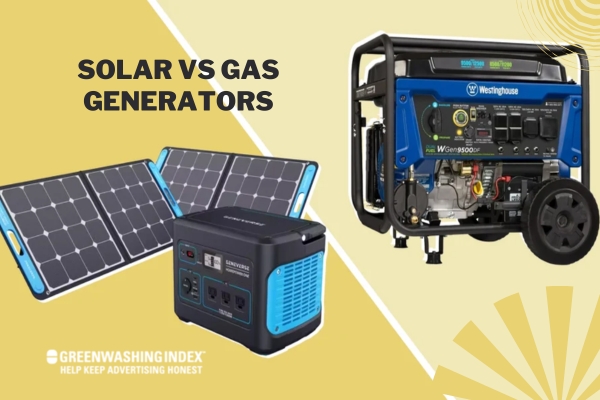
Credit: www.greenwashingindex.com
Maintenance And Lifespan
Maintaining your power source affects its lifespan. Solar power systems and gas generators have different needs. Understanding these differences helps you choose the right option.
Solar Power System Maintenance
Solar panels require minimal upkeep. Clean them a few times a year. Dust and debris can lower their efficiency. Check for shading from trees or buildings.
Inverters may need replacement after 5 to 10 years. Battery systems also require care. Monitor battery health regularly to ensure long life.
Gas Generator Maintenance
Gas generators need regular maintenance. Change the oil every 50 hours of use. Replace air and fuel filters as needed. Spark plugs should be checked annually.
Generators can last 10 to 30 years with proper care. Yet, they often require more attention than solar systems. Fuel quality affects performance and lifespan.
Lifespan Comparison
Solar panels can last 25 years or more. Most come with warranties for long periods. Gas generators have shorter lifespans, often around 10 to 30 years.
Solar systems usually offer better long-term value. The lower maintenance need makes them attractive. Gas generators may be less expensive upfront but cost more over time.
Power Output And Reliability
Power output and reliability are key factors in choosing between solar power and gas generators. Both options provide energy, but they work in different ways. Understanding these differences helps in making an informed choice.
Solar Power Output
Solar power systems generate electricity using sunlight. The amount of energy produced depends on sunlight availability. On sunny days, solar panels can produce a lot of power. On cloudy days, output drops significantly.
Solar power is ideal for daily energy needs. It can run appliances during the day. However, it may require battery storage for nighttime use. This can add to the initial cost.
Gas Generator Output
Gas generators provide consistent power. They can run on natural gas or propane. This fuel source makes them reliable for continuous use. They can power devices anytime, regardless of weather conditions.
Generators can handle heavy loads during emergencies. They are often used during power outages. Their ability to deliver instant power is a strong advantage.
Reliability Of Solar Power
Solar power reliability depends on weather and location. In sunny regions, solar systems perform well. In areas with frequent storms, reliability may decrease. Maintenance is usually low, but issues can arise.
Battery systems can store excess energy. This allows for power use when the sun isn’t shining. However, battery life and costs can be a concern.
Reliability Of Gas Generators
Gas generators are generally very reliable. They can provide power whenever needed. Regular maintenance ensures they run smoothly. Fuel supply is essential for continued operation.
Generators can be noisy and may produce emissions. This can be a drawback for some users. Still, their dependable nature makes them popular.
Suitability For Homes
Choosing the right energy source for your home is crucial. Solar power and gas generators offer different benefits and challenges. Understanding their suitability can help you make an informed decision that aligns with your needs.
Cost-effectiveness
Initial costs matter. Solar panels require a significant upfront investment, but they can save you money long-term. Gas generators usually come with lower initial costs, but you’ll incur ongoing fuel expenses.
Consider the long-term savings potential. With solar power, you might even get paid for excess energy you produce. Gas generators, while cheaper to install, can become expensive when you factor in fuel prices over time.
Solar power is the clear winner here. It produces clean energy and has a minimal carbon footprint. Gas generators emit greenhouse gases, contributing to air pollution and climate change.
Choosing solar means you’re opting for a sustainable future. This decision not only benefits you but also the environment. Would you rather power your home with clean energy or contribute to pollution?
Maintenance Requirements
Consider how much time you can dedicate to maintenance. Solar panels are relatively low-maintenance and often come with warranties. You might only need to clean them occasionally.
Gas generators require more upkeep. Regular oil changes and fuel checks are necessary. If you’re not handy or don’t have time, solar might be your best bet.
Reliability During Outages
What happens when the power goes out? Gas generators can provide immediate backup power, making them reliable during outages. You just need to ensure you have enough fuel on hand.
Solar power combined with battery storage can also offer reliability. It can keep your home powered even when the grid fails. How comfortable are you with the idea of waiting for the sun to shine?
Space Considerations
Space can be a deciding factor. Solar panels require ample roof space or land area. If your home is small or shaded, solar might not be feasible.
Gas generators, on the other hand, need less space. They can be placed in a garage or a small outdoor area. Think about your available space and how each option fits.
Ultimately, the choice between solar power and gas generators depends on your personal circumstances. What factors are most important to you—cost, environmental impact, or reliability? Take the time to evaluate your needs and make a decision that suits your home best.
Portable Applications
Portable applications are becoming increasingly popular, especially for those who enjoy outdoor activities or need power on the go. Whether you’re camping in the woods or hosting a backyard party, choosing the right power source can make all the difference. Let’s dive into how solar power stacks up against gas generators for your portable power needs.
Advantages Of Solar Power For Portable Use
Solar power has several benefits that make it an attractive option for portable applications.
- Clean Energy:Solar panels generate energy without emitting harmful pollutants. You can enjoy the great outdoors while keeping the environment safe.
- Quiet Operation:Unlike gas generators, solar power systems run silently. This means no disruptive noise while you relax or enjoy nature.
- Low Maintenance:Solar panels require minimal upkeep. Just keep them clean and they’ll last for years.
Imagine setting up your campsite and easily plugging in your devices without a loud generator ruining the serenity. With solar power, that’s possible.
Benefits Of Gas Generators For Portability
Gas generators also have their perks, especially in certain situations.
- Higher Power Output:If you need to power heavy-duty appliances, gas generators typically provide more wattage.
- Immediate Power:Gas generators can deliver power instantly. You won’t have to wait for sunlight.
- Availability:Fuel is widely available, making it easy to refuel when needed.
Picture a tailgate party where everyone is enjoying music and games. A gas generator can keep the energy alive without interruptions.
Considerations For Your Needs
Your choice between solar power and gas generators depends on what you need. Ask yourself a few questions:
- What devices will you be powering?
- How often will you use this power source?
- Do you prioritize environmental impact over convenience?
Understanding your specific needs will help you make a more informed decision. Take a moment to reflect on how you plan to use your portable power source.
Both solar power and gas generators have their strengths. Weighing these options can guide you toward the best choice for your portable applications.
Making The Right Choice
Choosing between solar power and a gas generator is a significant decision for many homeowners and businesses. Each option has its advantages and drawbacks. Understanding your needs and priorities will help you make the right choice.
Understanding Your Energy Needs
Start by assessing how much energy you use daily. List your essential appliances and their power requirements. Do you need backup for occasional outages, or are you looking for a primary energy source?
Consider your lifestyle. If you frequently host gatherings or have a home office, reliable power is crucial. Evaluate if your energy consumption fluctuates seasonally, especially with heating or cooling needs.
Evaluating Costs
Initial costs can vary significantly between solar panels and gas generators. Solar installation may require a hefty upfront investment, but incentives can help reduce expenses. Gas generators often have lower initial costs but come with ongoing fuel expenses.
Look at long-term savings too. Solar energy can significantly lower your utility bills over time. On the other hand, gas generators may need regular maintenance, which adds to their overall cost.
Consider how each option affects the environment. Solar power is clean and renewable, producing no emissions during operation. In contrast, gas generators emit carbon dioxide and other pollutants, contributing to climate change.
If you’re environmentally conscious, solar might align better with your values. Think about how your choice impacts not just your wallet, but also the planet.
Convenience And Maintenance
Think about how much time you want to spend on maintenance. Solar panels require minimal upkeep; a simple cleaning is often enough. Gas generators, however, need regular checks and fuel management.
Do you want the hassle of refueling a generator? If convenience is essential, solar power might be the better option. It operates silently and without the need for constant monitoring.
Making The Final Decision
After weighing all these factors, it’s time to decide. Reflect on your energy needs, budget, and environmental concerns. Are you ready to commit to a sustainable energy source, or do you prefer the reliability of a gas generator?
Ultimately, the right choice will depend on your specific situation. Take your time to think about what matters most to you. Your decision can lead to a more sustainable and financially sound future.
Frequently Asked Questions
What Is A Solar Power System?
A solar power system uses sunlight to generate electricity. It includes solar panels, inverters, and batteries.
How Does A Gas Generator Work?
A gas generator converts fuel into electricity. It burns gas to power an engine, producing energy.
What Are The Benefits Of Solar Power?
Solar power is renewable, reduces electricity bills, and has low maintenance costs. It also helps the environment.
What Are The Advantages Of Gas Generators?
Gas generators provide reliable power, are easy to use, and can work anywhere. They are good for emergencies.
How Much Does Solar Power Cost?
The cost of solar power systems varies. It depends on the size, installation, and location.
How Much Does A Gas Generator Cost?
Gas generators can range from a few hundred to several thousand dollars. Prices depend on size and features.
Which Is Better For The Environment?
Solar power is better for the environment. It produces no emissions, while gas generators release pollutants.
How Long Do Solar Panels Last?
Solar panels typically last 25 to 30 years. Many come with warranties for added assurance.
How Long Can A Gas Generator Run?
A gas generator can run as long as it has fuel. Continuous operation depends on the fuel supply.
Is Solar Power Worth The Investment?
Solar power can be worth it. It saves money over time and increases home value. “`
Conclusion
Choosing between solar power and gas generators matters. Solar power offers clean energy and lower costs over time. Gas generators provide reliable power but can be noisy and polluting. Consider your needs and budget carefully. Think about where you live and how often you need power.
Both options have pros and cons. Understanding these helps you make the best choice for your situation. Embrace the future by exploring energy options that suit you. Your decision can lead to savings and a positive impact on the environment.
Choose wisely for a brighter tomorrow.