

When the lights go out, what’s your backup plan? You have two main options: a battery backup system or a generator.
Both can keep your home running smoothly during outages, but they work in different ways and come with their own sets of advantages. Do you want a quiet, maintenance-free solution, or are you looking for something that can power your entire house?
Understanding the differences between battery backups and generators can help you make the best choice for your needs. We’ll break down the pros and cons of each option, so you can feel confident in your decision. Keep reading to discover which solution will keep your home safe and powered, no matter what happens.
Battery Backup Basics
Battery backup systems provide a reliable power source during outages. They store energy for later use. This system is crucial for homes and businesses.
Battery backups come in various types. They can power essential devices like lights and refrigerators. Understanding how they work helps in making informed choices.
What Is A Battery Backup?
A battery backup is a device that stores electricity. It uses batteries to keep your devices running. When the main power goes out, the battery kicks in.
How Does It Work?
Battery backups charge when electricity flows. They convert AC power to DC power. This process stores energy in the batteries.
During an outage, the system switches to battery power. It provides electricity to connected devices. This transition happens quickly, often in seconds.
Types Of Battery Backups
There are several types of battery backups. Uninterruptible Power Supplies (UPS) are common in homes. They protect computers and sensitive electronics.
Solar battery systems are growing in popularity. They store energy from solar panels. This option is eco-friendly and can lower electricity bills.
Portable battery packs are useful for outdoor activities. They charge small devices like phones and tablets. These are convenient for camping or travel.
Advantages Of Battery Backups
Battery backups offer several benefits. They provide instant power during outages. This keeps your devices safe and operational.
They are quieter than generators. No fuel is needed for operation. This makes them a cleaner choice for power outages.
Limitations Of Battery Backups
Battery backups have limitations. They can only provide power for a limited time. The duration depends on the battery size and load.
Costs can be high for larger systems. Maintenance is also necessary to ensure efficiency. Understanding these factors is key for users.
Generator Essentials
Generators provide backup power during outages. They keep your home running smoothly. Understanding generator essentials helps you choose the right one.
Generators come in different types and sizes. Knowing these differences is important. Each type serves a unique purpose. Some are portable, while others are stationary.
Types Of Generators
Generators fall into two main categories: portable and standby. Portable generators are easy to move. They are great for small tasks like camping or powering tools.
Standby generators are fixed installations. They automatically turn on during a power outage. These are ideal for homes needing constant power.
Power Output
Power output is measured in watts. Choose a generator that meets your needs. Calculate the total wattage of your appliances. This ensures you have enough power.
Look for generators with a surge rating. This rating shows how much power they can provide at startup. Appliances often need extra power when starting.
Fuel Types
Generators run on different fuels. Common options include gasoline, propane, and diesel. Each fuel type has its pros and cons.
Gasoline generators are popular but can be noisy. Propane generators are cleaner and quieter. Diesel generators are efficient but may have higher upfront costs.
Noise can be a concern with generators. Some models operate quietly. Check the decibel rating before buying.
Quiet generators are better for residential areas. They minimize disruption during use. Consider your environment when choosing a generator.
Regular maintenance extends a generator’s life. Keep it clean and check the oil regularly. Follow the manufacturer’s guidelines for upkeep.
Seasonal checks are important. Run the generator every few months. This keeps it in good working order.
Power Source Comparison
Choosing between a battery backup and a generator can be tough. Both options provide power during outages. Understanding their differences helps in making the right choice.
Battery Backup Overview
Battery backups store electricity for later use. They charge when power is available. When the power goes out, they provide immediate energy. They are quiet and easy to install. Most systems are compact and can fit in small spaces.
Generator Overview
Generators produce electricity using fuel. They can run on gasoline, propane, or diesel. Generators provide a large amount of power. They can run for hours or days during an outage. Some models are portable, while others are stationary.
Power Capacity
Battery backups usually have lower power capacity. They are best for essential devices. Generators can power larger appliances and multiple devices. They are suitable for heavy-duty needs.
Run Time
Battery backups run for a limited time. They last a few hours, depending on usage. Generators can run much longer. They can provide power for days with enough fuel.
Noise Level
Battery backups operate silently. They do not disturb your peace. Generators can be loud. Noise levels depend on the model and size.
Battery backups require minimal maintenance. Regular checks ensure they work well. Generators need more upkeep. They require oil changes and fuel checks.
Battery backups often have lower initial costs. They are cheaper to install and run. Generators can be more expensive. However, they provide more power for larger needs.

Credit: energy.briggsandstratton.com
Energy Efficiency Factors
Energy efficiency is a crucial factor when choosing between battery backups and generators. Understanding how each option affects your energy consumption can save you money and reduce your environmental impact. Let’s dive into what makes each of these energy sources efficient.
Battery Backup Efficiency
Battery backups use stored energy to provide power during outages. They convert electricity from your home into chemical energy, storing it for later use. This process minimizes energy loss, making battery systems generally more efficient than generators.
One significant advantage is that they can be charged using renewable sources like solar panels. If you have solar panels installed, your battery backup can run on clean energy, further enhancing efficiency. This combination not only lowers your electricity bills but also reduces your carbon footprint.
Generator Efficiency
Generators typically run on fuel, which means they can be less efficient compared to battery backups. While they provide immediate power, fuel combustion generates heat and exhaust, leading to energy loss. This often results in higher operating costs over time.
However, some newer models are designed for better fuel efficiency. They use advanced technology to optimize fuel consumption, which can help reduce costs. Still, the reliance on fossil fuels can limit their environmental benefits.
The initial investment is an essential factor in energy efficiency. Battery backups may have a higher upfront cost but offer savings in the long run. With fewer moving parts and less maintenance, they can be more economical over time.
On the other hand, generators usually have lower upfront costs. However, ongoing fuel and maintenance expenses can add up quickly. Consider how long you plan to use the system and your budget when making your choice.
Noise And Environmental Impact
Noise levels can significantly affect your experience with either option. Battery backups operate silently, making them ideal for residential areas. You won’t disturb your family or neighbors during an outage.
Generators, however, can be quite loud. This noise can be a nuisance, especially during the night or in quiet neighborhoods. Choosing a quieter generator can mitigate this, but it may come at a higher price.
Assessing energy efficiency factors helps you decide between battery backups and generators. Each option has its pros and cons, and understanding them can lead to smarter, more sustainable energy choices. What aspects of energy efficiency are most important to you? Your choice can significantly impact your energy bills and the environment.
Cost Considerations
Choosing between a battery backup and a generator involves understanding costs. Both options have different price points. Each option has its own long-term expenses. Knowing these costs helps in making an informed choice.
Initial Purchase Costs
The initial cost is important. Battery backups usually cost less upfront. They offer a simple installation process. Generators can be more expensive. They require professional installation and setup.
Maintenance Expenses
Maintenance costs vary between the two. Battery backups need minimal upkeep. Regular checks are enough for optimal performance. Generators need more attention. They require oil changes and fuel checks.
Fuel Costs
Fuel costs are a big factor. Battery backups run on electricity. They don’t require fuel purchases. Generators often use gas or propane. This can add to monthly expenses.
Longevity And Replacement
Consider longevity. Battery backups typically last 5 to 15 years. Their lifespan depends on usage. Generators can last longer, about 10 to 30 years. This can offset higher initial costs over time.
Resale Value
Resale value matters too. Battery backups may have lower resale value. Generators often retain value better. This can make them a smarter investment.
Environmental Impact
The choice between battery backup systems and generators often comes down to their environmental impact. Understanding how each option affects the planet can guide you in making a responsible decision. Let’s break down the environmental considerations of both systems.
Battery Backup Systems
Battery backup systems are known for their minimal environmental footprint. They operate quietly and produce no emissions during use. Their reliance on renewable energy sources, like solar panels, further enhances their green credentials.
Over time, advancements in battery technology have improved efficiency and reduced waste. Lithium-ion batteries, for instance, are becoming more common due to their higher energy density and longer life cycles. This means fewer batteries need to be produced, leading to less resource extraction and pollution.
Yet, it’s crucial to consider the entire lifecycle of batteries. Manufacturing requires raw materials, which can lead to environmental degradation. Responsible recycling programs are essential to mitigate this impact.
Generators
Generators, particularly those powered by fossil fuels, contribute significantly to air pollution. They emit carbon dioxide and other harmful gases, which can have severe consequences for air quality and climate change. If you rely on a generator, you’re likely adding to your carbon footprint.
While some generators can use biofuels, these alternatives often come with their own environmental concerns, such as land use and food production competition. It’s vital to weigh these factors against your energy needs.
Noise pollution is another aspect to consider. Generators can be loud, disrupting local wildlife and community peace. The environmental impact isn’t just about emissions; it’s also about how your energy choice affects the surroundings.
Making The Right Choice
Choosing between a battery backup and a generator involves examining your values and priorities. Do you prioritize sustainability and minimal environmental impact? If so, battery backups may be the better option.
Consider your energy needs and the frequency of power outages. If you live in an area with frequent outages, investing in a more environmentally friendly solution can make a significant difference. Ask yourself, how do your energy choices reflect your commitment to protecting the environment?
Your decision can influence not just your immediate surroundings but also contribute to broader environmental issues. Make a choice that aligns with your values, and consider how it impacts the world around you.
Maintenance Requirements
Understanding the maintenance requirements of battery backups and generators can help you make an informed decision. Both options serve to keep your home running during power outages, but they demand different levels of upkeep. Let’s break down what you need to know about maintaining each system.
Battery Backup Maintenance
Battery backups are generally low-maintenance but do require some attention.
- Regular Inspections:Check the batteries every few months for any signs of wear or leakage.
- Battery Replacement:Most batteries last 3 to 5 years. Mark your calendar for replacements.
- Clean Connections:Dust and dirt can build up. Wipe the terminals to ensure good contact.
Consider keeping a log of your maintenance checks. This can help you track any issues and determine when it’s time for a replacement. Have you ever faced a blackout only to realize your battery backup wasn’t ready?
Generator Maintenance
Generators require more effort to maintain but are often more powerful.
- Oil Changes: Just like a car, generators need regular oil changes. Aim for every 50 hours of use or at least annually.
- Fuel Stabilization: Use fuel stabilizers to prevent degradation when the generator sits unused.
- Battery Checks: Generators also have batteries that need inspection and replacement.
Many people overlook the importance of fuel quality, which can significantly affect performance. Have you checked your generator’s fuel recently? This simple step can save you from a potential headache during an outage.
Comparative Maintenance Efforts
While battery backups require less frequent attention, generators demand a more hands-on approach. Are you prepared to commit to regular oil changes and fuel management? Your choice will depend on your lifestyle and how often you experience power outages.
Ultimately, understanding these maintenance requirements will help you ensure that your backup power system is always ready when you need it. Which option aligns better with your needs and willingness to maintain it?
Noise Levels
Noise levels matter a lot when choosing between a battery backup and a generator. Both options provide power, but they do so in very different ways. Understanding the noise each produces can help you make a better choice.
Generators Produce More Noise
Generators are often loud. They run on gasoline or diesel. This fuel combustion creates a lot of sound. Many generators can reach noise levels of 60 to 90 decibels. This can be annoying, especially in quiet neighborhoods.
Some models have noise-reducing features. These can help lower sound output. Still, most generators will be noisy during operation.
Battery Backups Are Quieter
Battery backups operate silently. They use stored energy to power devices. This means no loud engines or exhaust sounds. Most battery systems produce noise only from cooling fans. These fans are usually quiet.
In residential areas, this quiet operation is a big plus. It allows you to keep your peace without disturbing neighbors.
Noise And Your Comfort
Consider how noise affects your daily life. If you work from home, a quiet environment is important. Battery backups offer a calm solution. You can focus on tasks without distractions.
Generators may disrupt your routine. Loud noise can be a source of stress. Choose wisely based on your comfort needs.
Emergency Performance
Power outages can happen anytime. Having a reliable backup system is crucial. Battery backups and generators offer different benefits during emergencies. Understanding their performance can help you make the right choice.
Battery Backup Performance
Battery backups are quiet and clean. They provide power instantly. This means no waiting during an outage. They can run essential devices like lights and refrigerators.
Battery life depends on usage. Some models can last for hours. Others may need recharging quickly. Consider your needs before choosing.
Generator Performance
Generators can power many devices at once. They usually run longer than battery backups. Most generators use gasoline or diesel. This means they can be noisy and emit fumes.
Generators take longer to start. You may need to switch them on manually. They can also require more maintenance. Make sure to keep fuel on hand for emergencies.
Safety Considerations
Battery backups are safer indoors. They don’t produce harmful gases. Generators should be used outside only. Fumes from generators can be dangerous in closed spaces.
Always follow safety guidelines. Keep generators away from windows and doors. This helps prevent carbon monoxide buildup.
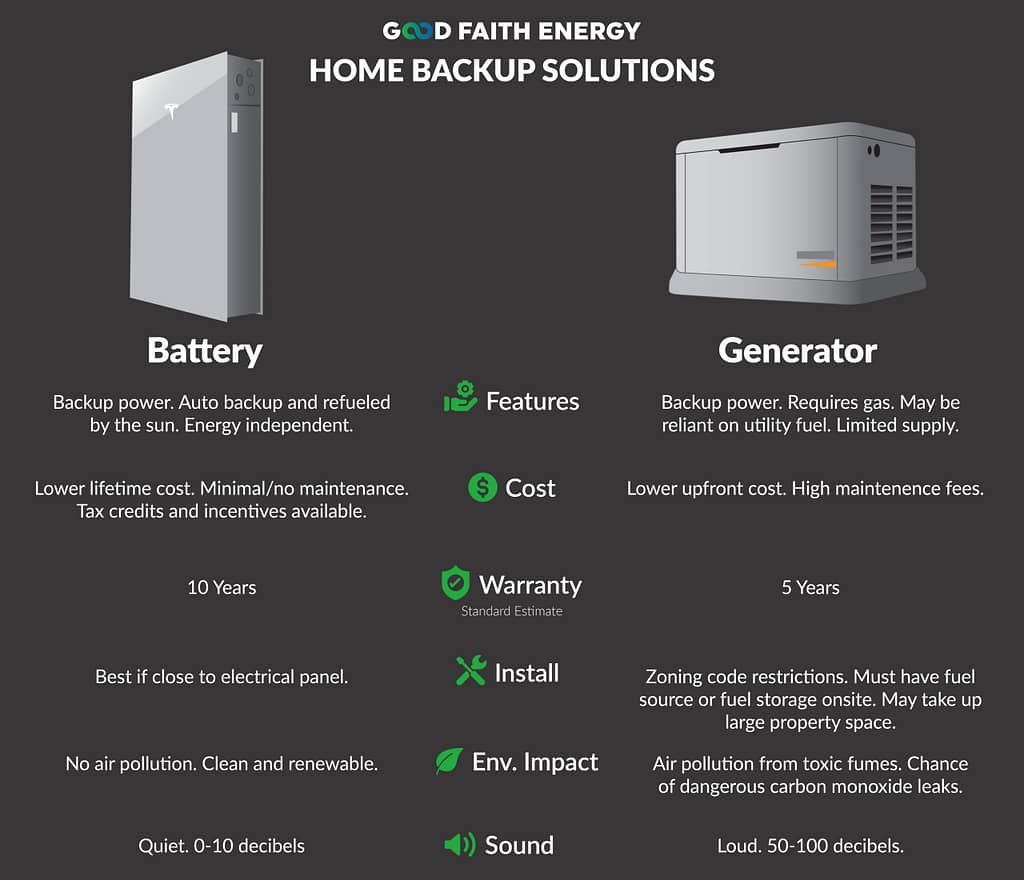
Cost And Maintenance
Battery backups usually cost less upfront. They require minimal maintenance. Generators may have higher initial costs. They also need regular upkeep and fuel checks.
Consider your budget. Think about long-term costs as well.
Credit: goodfaithenergy.com
Choosing The Right Option
Choosing the right option between battery backups and generators can feel overwhelming. Each solution has its unique advantages and fits different needs. Understanding your specific requirements will help you make the best choice.
Assess Your Power Needs
Start by evaluating your power requirements. Consider the devices you need to keep running during an outage. Make a list of essential appliances like refrigerators, lights, and medical devices.
How much wattage do these items consume? A battery backup system typically supports lower wattage devices, while generators can handle higher loads. Knowing your wattage needs is crucial in making an informed decision.
Evaluate Runtime And Efficiency
Battery backups often offer a limited runtime, usually a few hours. They are perfect for short outages or for running essential devices. However, if you experience prolonged outages, a generator may be a better fit.
Generators can run for days, depending on fuel availability. Think about how long you can be without power. Your answer will guide you toward the right choice.
Consider Maintenance And Costs
Maintenance is another key factor. Battery backups require minimal upkeep, often just periodic checks and replacements every few years. Generators, on the other hand, need regular oil changes, fuel checks, and overall maintenance.
Cost also plays a significant role. Initial investment in a battery backup may be lower, but don’t forget to factor in fuel costs for generators. What’s your budget? This will help narrow your options.
Think About Portability And Usage
Portability can be crucial depending on your lifestyle. Battery backups are generally lighter and easier to move around. If you need power while camping or during outdoor events, a battery might be more convenient.
Generators, while heavier, provide more power for larger spaces. Do you plan to use your backup power source only at home, or do you want to take it on the go?
Analyze Noise Levels
Noise can impact your quality of life during outages. Battery backups operate quietly, making them ideal for residential areas. If noise is a concern for you, this factor may sway your decision.
Generators can be quite loud, which might disturb your family or neighbors. Are you willing to compromise on noise for the sake of power? Your answer can help clarify your choice.
Choosing between a battery backup and a generator requires careful thought. Assess your specific needs, consider the factors above, and make a choice that fits your lifestyle. Your comfort and safety depend on it.

Credit: www.energysage.com
Frequently Asked Questions
What Is The Difference Between Battery Backup And Generator?
Battery backup provides stored power during outages. A generator creates power from fuel.
Which Is More Reliable: Battery Backup Or Generator?
Both can be reliable. Battery backups work for short outages, while generators handle longer ones.
How Long Does A Battery Backup Last?
Battery backups usually last from 15 minutes to several hours, depending on usage.
What Fuel Does A Generator Use?
Generators commonly use gasoline, diesel, or propane as fuel sources.
Can A Battery Backup Power My Entire Home?
Most battery backups cannot power an entire home. They are best for essential devices.
How Much Maintenance Do Generators Require?
Generators need regular maintenance, like oil changes and battery checks, to run well.
Are Battery Backups Quiet During Operation?
Yes, battery backups operate quietly. Generators can be noisy, especially larger models.
What Is The Cost Difference Between Battery Backups And Generators?
Battery backups typically cost less upfront. Generators might be more expensive but offer more power.
Can I Connect A Battery Backup To A Generator?
Yes, you can connect a battery backup to a generator for added power stability.
Which Option Is Better For Emergencies?
Generators are better for long outages. Battery backups are great for short-term needs.
Conclusion
Choosing between battery backup and a generator depends on your needs. Battery backups offer quiet and clean energy. They are great for short outages. Generators provide more power for longer times. They can run appliances and tools. Think about your budget and power needs.
Both options have pros and cons. Understanding them helps you make the right choice. Consider your lifestyle and preferences. This decision will keep your home running smoothly during power outages.