
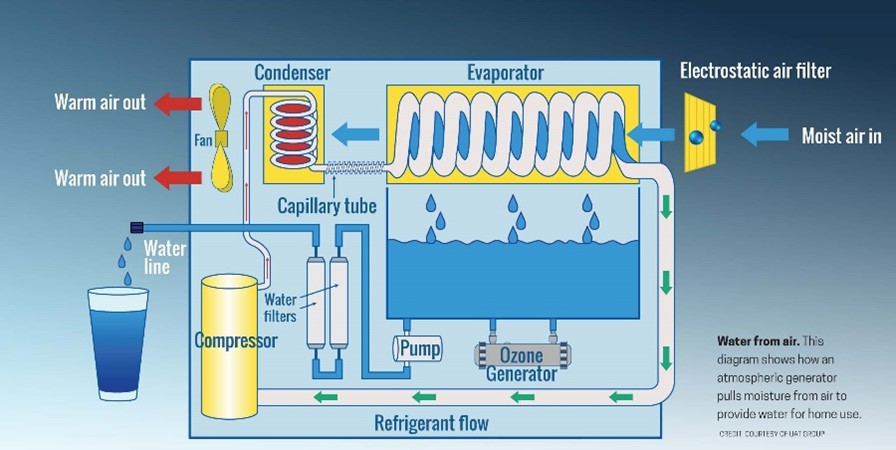
An atmospheric water generator extracts moisture from air and turns it into clean drinking water.
I have worked with water systems and tested atmospheric water generators for years. In this guide I explain how does an atmospheric water generator work, step by step, in plain language. You will learn the science, the parts, real pros and cons, and hands-on tips from my experience. Read on to gain clear, practical knowledge you can use today.
how does an atmospheric water generator work: the basic science
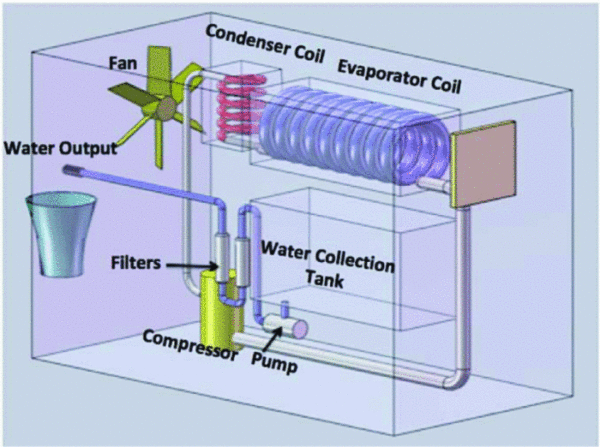
An atmospheric water generator makes water from humid air. It uses two main methods: cooling air until moisture condenses, or using a desiccant to pull water from air. The condensed moisture is then filtered and stored as drinking water. Both methods rely on air humidity and temperature to be efficient.
Cooling-condensation AWGs: step-by-step process
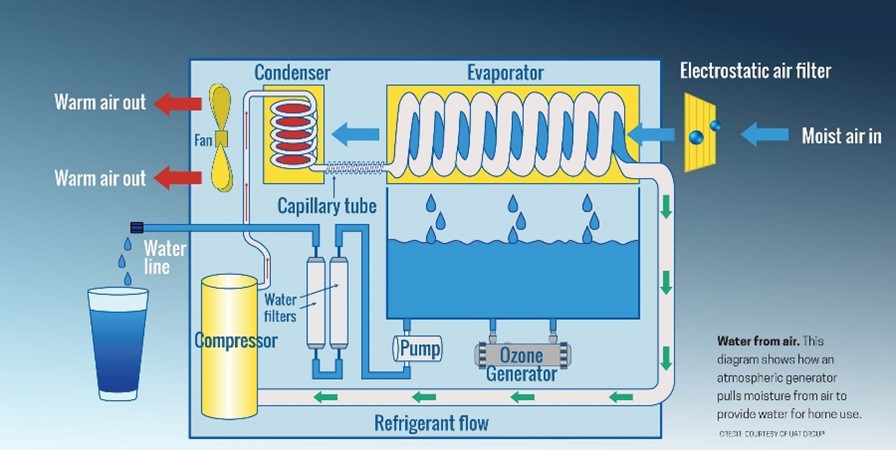
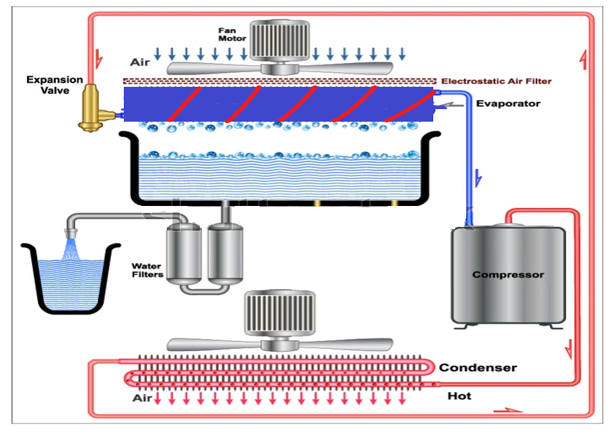
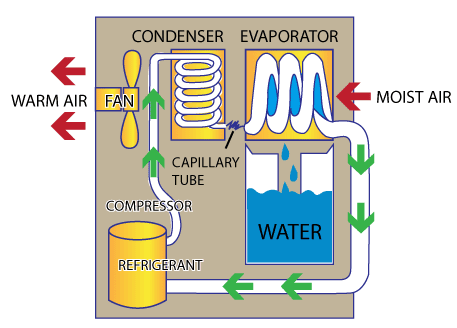
Cooling-based AWGs mimic a small-scale dehumidifier. They follow a clear cycle:
- Air intake draws room air through a filter to remove dust and large particles.
- A fan pushes the air across cold coils or an evaporator.
- Water vapor in the air cools and condenses on the cold surface.
- Condensed droplets fall into a collection tray or reservoir.
- The water moves through filters and UV or mineral cartridges for quality.
- Clean water is stored and dispensed on demand.
This is the most common method. It is efficient in warm, humid climates. Performance drops sharply in dry or cold air.
Desiccant AWGs: a low-temperature alternative
Desiccant AWGs use materials that absorb moisture from air. The process is:
- Air passes over a desiccant material like silica gel or hygroscopic salt.
- The desiccant captures water vapor and holds it.
- Heat is applied to release the captured water as vapor.
- The vapor is condensed into liquid and collected.
- The desiccant is cooled and reused in a cycle.
Desiccant systems work better in lower humidity and cooler climates. They often use less electrical cooling but need heat input and careful control.

Key components inside an atmospheric water generator
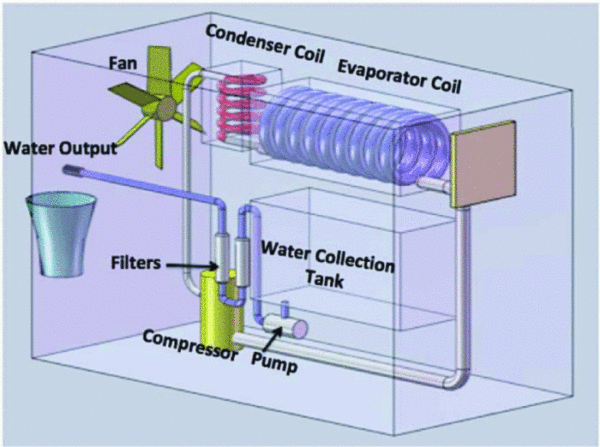
Most units share common parts. Knowing these helps with selection and maintenance:
- Air intake and pre-filters to block dust and pollen.
- Fans to move air across working surfaces.
- Cooling coils or desiccant beds to capture moisture.
- Compressor and refrigerant system for cooling models.
- Condensate trough and collection reservoir.
- Filtration stages such as carbon, sediment, and final ultrafiltration.
- UV lamp or ozone module for disinfection.
- Sensors, controls, and water-level floats for safe operation.
Understanding parts makes troubleshooting simpler and extends unit life.

Environmental and performance factors
how does an atmospheric water generator work depends heavily on environment. Key factors:
- Relative humidity: Higher humidity yields more water per hour.
- Ambient temperature: Warm air can hold more water, so warm climates help cooling AWGs.
- Air flow: Strong, steady air movement improves capture rates.
- Altitude: Lower air pressure at high altitude can reduce yield.
- Maintenance: Dirty filters or clogged coils reduce efficiency.
A unit rated for 20 liters per day may only make a few liters if humidity is low. Always match the AWG to local climate data.
Water quality and safety
how does an atmospheric water generator work is not just physics; it must produce safe water. Most reliable units include multi-stage purification:
- Sediment filters to remove particulates.
- Activated carbon to remove odors and many chemicals.
- Fine filters or reverse osmosis for small particles and microbes.
- UV light or ozone to kill bacteria and viruses.
- Mineral cartridges to balance taste and pH.
Regular testing and filter changes are essential. I recommend periodic lab tests if you plan to use AWG water as a daily source.
Energy use, costs, and efficiency
how does an atmospheric water generator work also ties to energy. Cooling AWGs use electricity for compressors and fans. Desiccant models use heat and may use less electricity but need energy input. Considerations:
- Energy per liter varies with humidity and unit design.
- Efficiency improves in hot, humid climates.
- Larger units often have better energy-per-liter ratios.
- Off-grid setups need solar or generator power planning.
In my tests, a mid-size unit in humid conditions used about 0.5 to 1.5 kWh per liter. Real numbers vary, so check manufacturer data and climate factors.
Common applications and real-world use cases
how does an atmospheric water generator work matters in many settings. Typical uses:
- Remote homes with no reliable water supply.
- Emergency relief after storms or floods.
- Offices and hospitality settings for onsite drinking water.
- Military and field operations for independent water.
- Agriculture and greenhouses needing clean water for plants and animals.
I have installed AWGs in remote cabins and seen them provide reliable water during droughts. They are not magic, but they offer independence and convenience.
Choosing the right atmospheric water generator
When choosing, ask these questions to match needs:
- What is the average humidity and temperature where you live?
- How many liters per day do you need?
- Do you want a portable unit or a fixed system?
- What are the power options and energy costs?
- How easy is routine maintenance and filter replacement?
I often recommend sizing up slightly. Real-world yield is often lower than lab ratings. Always plan for spare filters and a cleaning schedule.
Maintenance, troubleshooting, and tips from experience
how does an atmospheric water generator work well long-term with routine care. My hands-on tips:
- Replace air and water filters on schedule. Dirty filters cut output fast.
- Clean coils annually to prevent scale and biofilm.
- Run the UV or sanitization cycle monthly.
- Check water taste and smell; any change may mean a filter or sanitizer issue.
- Keep the intake area clean and free of insects and dust.
If yield drops, check fan function and clean the coils. If water tastes off, inspect carbon filters and UV lamps first.
Limitations, risks, and realistic expectations
how does an atmospheric water generator work has limits you should know. Be realistic:
- Not cost-effective in very dry or cold climates.
- Initial cost can be high for large units.
- Energy use can be significant without efficient design.
- Maintenance is required to ensure safe water.
- Some AWG units can produce mineral-poor water; remineralization may be needed.
I once tested a unit in dry winter air and it made less than 10% of its rated output. That taught me to always match unit selection to local climate data.
Future trends and innovations
how does an atmospheric water generator work is evolving. New trends include:
- Improved heat-exchange designs for better efficiency.
- Hybrid systems combining solar heat and refrigeration.
- Better sensors and automation for remote monitoring.
- Scalable community systems for disaster relief and rural supply.
These advances make AWGs more practical and lower cost over time.
Frequently Asked Questions of how does an atmospheric water generator work
How much water can an atmospheric water generator produce daily?
Production varies with humidity and temperature. Typical home units make 5 to 30 liters per day under good conditions.
Is water from an atmospheric water generator safe to drink?
Yes, when the unit has proper filtration and disinfection. Regular maintenance and testing keep the water safe.
How much electricity does an AWG use?
Usage depends on the unit and climate. Expect roughly 0.5 to 2 kWh per liter in many systems; efficiency improves in humid heat.
Do AWGs work in dry climates?
They work, but yield drops sharply in low humidity. Desiccant-based systems may perform better in drier air.
How often should I change filters and sanitize the unit?
Follow the manufacturer but plan for filter changes every 3 to 12 months. Sanitize or run UV cycles monthly to prevent biofilm.
Can I install an AWG off-grid with solar panels?
Yes, with careful planning. You need enough solar capacity and battery storage to meet peak energy draws for compressors or heaters.
Conclusion
Atmospheric water generators convert air moisture into usable water through cooling or desiccant methods. How does an atmospheric water generator work is now clearer: it needs the right climate, proper components, and consistent upkeep. If you choose wisely and maintain the unit, an AWG can be a reliable water source that adds resilience and convenience.
Try a small unit first to test your local yield. If results match your needs, scale up. If you found this guide helpful, consider subscribing, asking a question below, or sharing your own AWG experience.