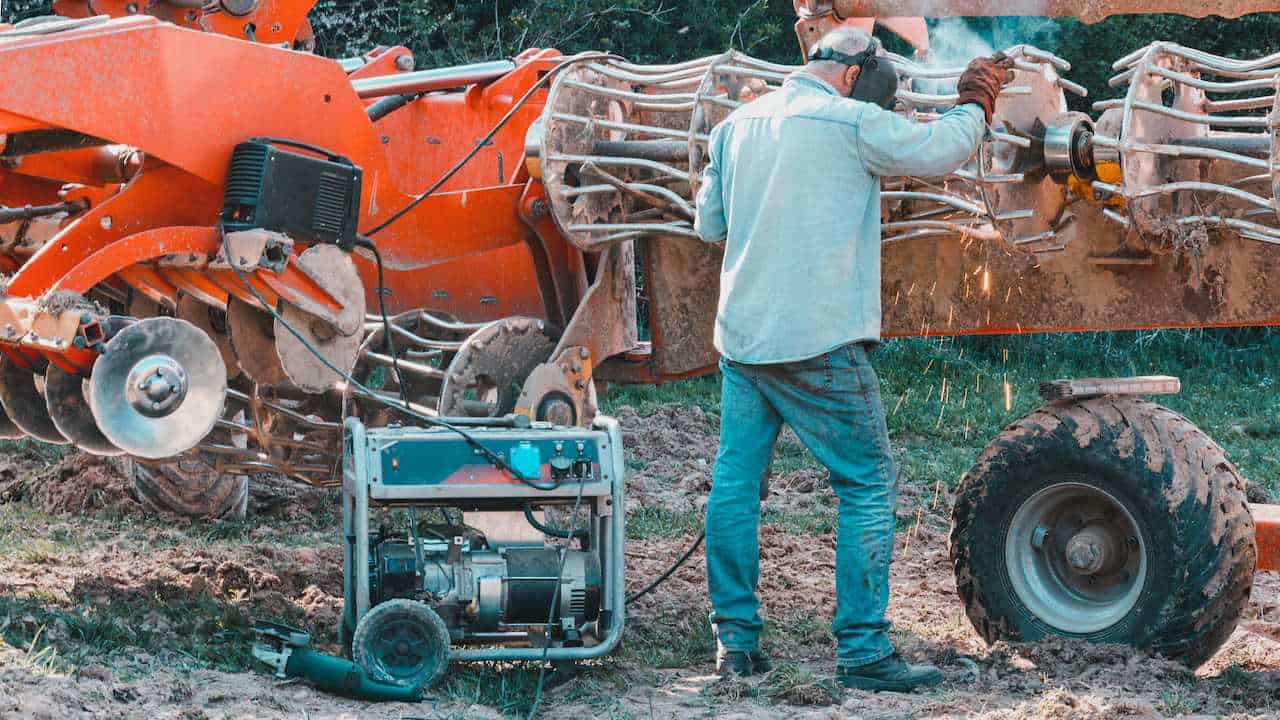
A generator sized between 5 kW and 30+ kW is needed, depending on the welder type and amperage.
Choosing the right generator for welding is more than matching watts. I’ve spent years running stick, MIG, and TIG machines on job sites and in my own shop. In this guide I’ll explain how to figure out what size generator is needed to run a welding machine, step by step. You’ll learn how to read welder specs, calculate running and surge needs, and pick a generator that keeps the arc steady and the work safe.
How generators and welders use power
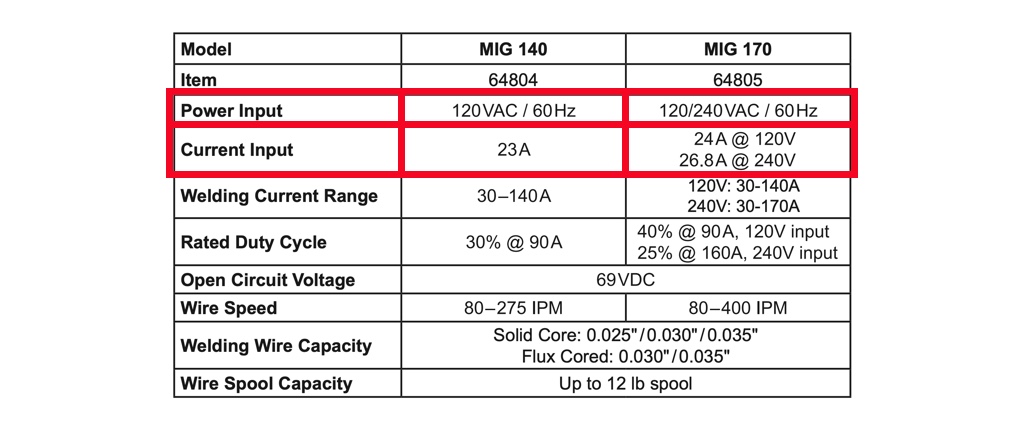
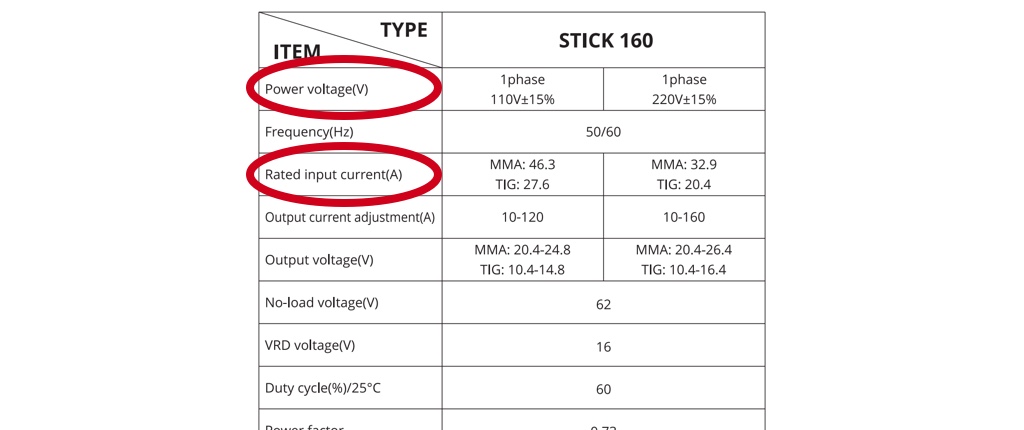
Welders pull both running power and large short surges when the arc starts. Knowing both numbers is key to answer what size generator is needed to run a welding machine. Most welders list rated input amps and voltage on the nameplate. Use those numbers to estimate required watts.
Welding machines behave like heavy loads with variable demand. Inverter welders draw less steady power than old transformer welders. But inverter welders need cleaner power and low total harmonic distortion. For welding, generator stability matters as much as raw watts.
How to size a generator for your welder
Step 1: Find the welder’s rated input amps and voltage. The nameplate or manual gives this. If input is listed in kVA or kW, use that directly.
Step 2: Convert amps to running watts with a simple formula.
- Running watts = Volts × Rated input amps.
- If welder lists 240 V and 35 A, running watts = 240 × 35 = 8,400 watts.
Step 3: Add a safety margin for surge and inefficiencies.
- Use 25% to 50% headroom. Multiply running watts by 1.25 to 1.5.
- Example: 8,400 × 1.25 = 10,500 W recommended generator size.
Step 4: Check surge capacity and continuous rating.
- Generators show two ratings: surge (peak) and continuous. The surge must cover arc-start surges.
- For many welders choose a generator whose surge is at least 1.5× running watts.
Step 5: Consider additional loads.
- If you’ll run lights, grinders, or heaters at the same time add their watts before you size the generator.
This method answers what size generator is needed to run a welding machine for most setups. Always round up to a standard generator rating.
Practical examples and quick reference
Example 1: Small inverter welder (120 A, 120 V)
- Rated input 30 A at 120 V → 3,600 W running.
- Add 25% → 4,500 W needed.
- Choose a 5,000 W (5 kW) generator at minimum.
Example 2: 140 A MIG (240 V)
- Rated input about 34 A at 240 V → 8,160 W running.
- Add 30% → 10,600 W.
- Choose a 12 kW generator for reliable performance.
Example 3: 250 A MIG or stick (240 V)
- Rated input 60 A at 240 V → 14,400 W running.
- Add 30% → 18,720 W.
- Choose a 20 kW generator or larger.
Example 4: Heavy industrial 500 A welders
- Require large continuous power and three-phase supply.
- These often need 30 kW+ generators and a professional power plan.
Remember that the exact numbers vary by welder design. If you want a quick guide, follow these rough ranges for what size generator is needed to run a welding machine:
- Small hobby welders (up to 100 A): 3.5 kW to 6 kW
- Medium welders (100–200 A): 7 kW to 15 kW
- Large welders (200–400 A): 15 kW to 30 kW
- Industrial welders (400+ A): 30 kW and up
Generator features and recommendations
Choose generators with these features for welding:
- Stable AVR or inverter output to reduce voltage swing.
- Low total harmonic distortion (THD under 5%) for inverter welders.
- High surge capacity to handle arc starts.
- 240 V single-phase or three-phase as needed by the welder.
- Durable engine cooling and fuel capacity for long welding runs.
If you use an inverter welder, an inverter generator or a generator with clean sine output is best. For transformer welders, a robust conventional generator with high surge is fine. Grounding, bonding, and correct outlets matter. Use the right adapter and follow safety codes.
Common mistakes and troubleshooting
Mistake 1: Relying only on running watts. Surge matters. If you only match running watts, the generator may dip at arc start and stall.
Mistake 2: Skipping extra loads. Lights or grinders can push the generator over its limit.
Mistake 3: Using a cheap generator with high THD. This can damage inverter electronics over time.
What to do if the arc is unstable:
- Increase generator size by 25%.
- Reduce additional loads while welding.
- Use heavier gauge extension cords and shorter runs.
- Check fuel and tune generator for full output.
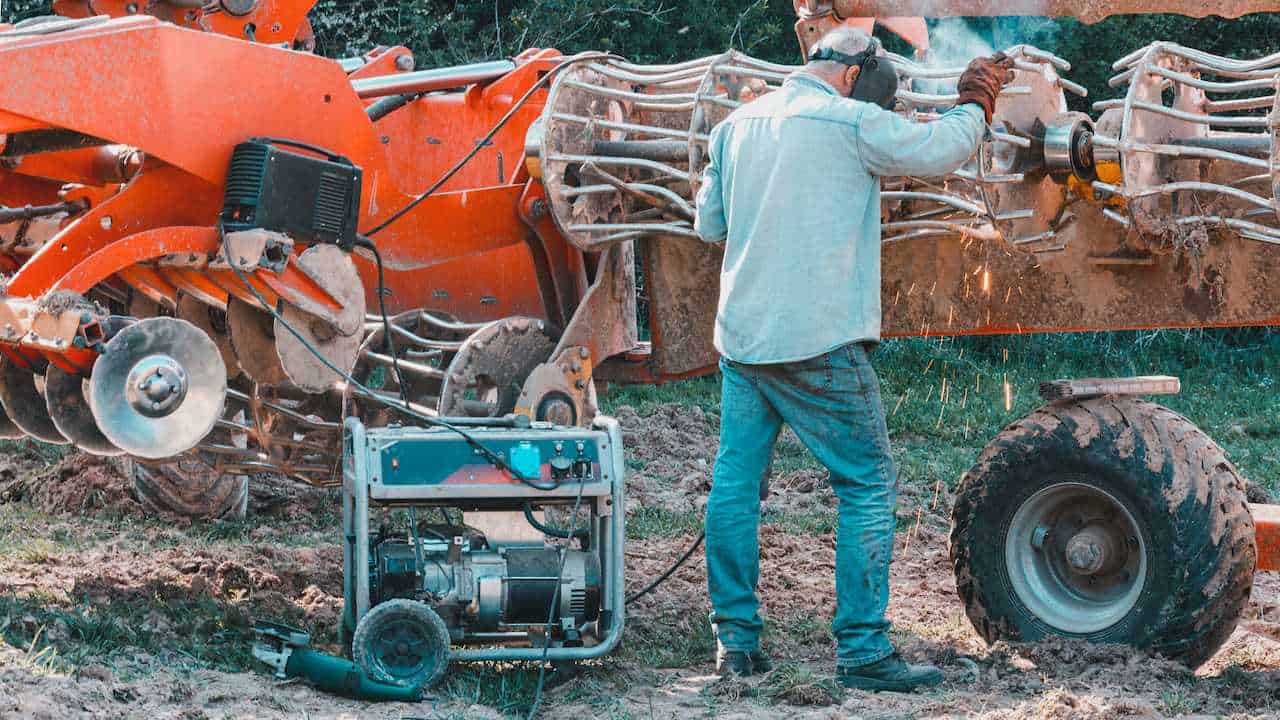
From my experience, I once used a 10 kW generator for a 250 A job and saw voltage sag when grinders kicked in. Upgrading to a 20 kW generator and separating loads solved it.

Frequently Asked Questions of What Size Generator Is Needed To Run A Welding Machine
How do I find the input amps for my welding machine?
Look at the nameplate or manual. It will show voltage and rated input amps or kVA; use those numbers to calculate watts.
Can a small 3,500 W generator run a 140 A inverter welder?
Some 140 A inverter welders can run on a 3,500 W generator but only at lower duty cycles and with no extra loads. For consistent work, choose a larger generator with headroom.
Do inverter welders need special generators?
Yes. Inverter welders prefer clean sine wave output and low THD. An inverter generator or a generator with AVR and low THD is best.
Should I size the generator by running watts or surge watts?
Both. Size for running watts plus extra headroom, and ensure the generator’s surge rating can handle arc-start spikes.
Is three-phase power required for big welders?
Large industrial welders often need three-phase power. Check the welder specs; if it lists three-phase or high kVA, you’ll need a three-phase generator.
Will extension cords affect what size generator is needed?
Yes. Long or thin cords cause voltage drop and may force you to use a larger generator or heavier gauge cable to maintain arc stability.
Can I run lights and tools while welding?
You can, but you must include their wattage in your generator sizing. Otherwise the generator may overload during welding.
Conclusion
Choosing what size generator is needed to run a welding machine comes down to reading your welder’s specs, converting amps to watts, and adding safety headroom for surge and extra tools. Pick a generator with enough continuous and surge capacity, stable output, and the right voltage and phase. Start by checking the nameplate, calculate running watts, and add 25%–50% depending on your work pattern.
Take action: check your welder’s input data now, run the simple math from this guide, and pick a generator that gives you steady arcs and fewer surprises. If you found this helpful, subscribe, ask a question below, or share your own generator-welder story.