
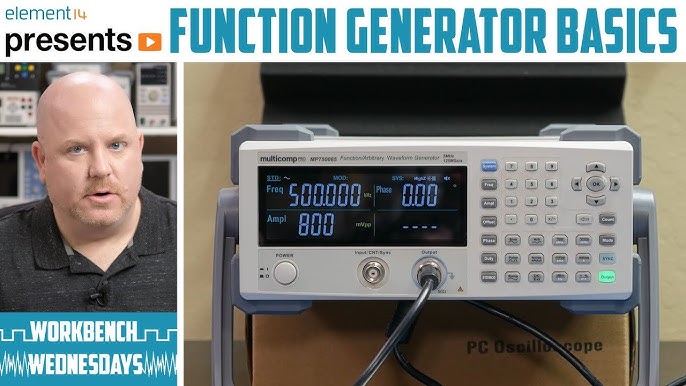
A function generator is an essential tool in electronics, but do you know what makes it work? Understanding the basic elements of a function generator can unlock a world of possibilities for your projects.
Whether you’re a student, a hobbyist, or a seasoned engineer, grasping these fundamentals will enhance your skills and boost your confidence. You’ll discover the key components that power function generators and how each plays a vital role in signal generation.
By the end, you’ll be equipped with the knowledge to use a function generator more effectively, making your experiments and designs more successful. Let’s dive in and explore the building blocks that can elevate your electronics game!
Function Generator Basics
A function generator is an important tool in electronics. It creates different types of electrical waveforms. These waveforms include sine, square, and triangle shapes. Understanding the basic elements of a function generator helps users operate it effectively.
This tool is used for testing and designing electronic circuits. It helps engineers and students learn about signals. Let’s explore the basic elements of a function generator.
The function generator can produce various waveforms. The most common types are sine, square, and triangle waves. Sine waves are smooth and continuous. They are often used in audio applications. Square waves switch between high and low states quickly. They are useful for digital circuits. Triangle waves rise and fall in a linear manner. They find use in modulation and signal processing.
Frequency Control
Frequency control is vital in a function generator. It determines how fast the waveform repeats. Users can adjust the frequency to meet their needs. It is measured in Hertz (Hz). Higher frequencies allow for quicker signal changes. Lower frequencies result in slower signals. Accurate frequency adjustment is essential for testing circuits.
Amplitude refers to the height of the waveform. It shows the strength of the signal. Users can adjust amplitude to set signal levels. A higher amplitude means a stronger signal. This adjustment is crucial for testing different circuit responses. It helps ensure that devices receive the correct signal strength.
Output Impedance
Output impedance affects how the waveform interacts with other components. It is important for matching the function generator to the load. A proper match ensures minimal signal loss. This helps maintain waveform integrity. Users should consider output impedance for effective circuit testing.
Offset Voltage
Offset voltage shifts the waveform up or down. It allows users to create waveforms centered around a specific voltage. This feature is useful for simulating real-world signals. It is especially helpful in testing amplifiers and other devices.
Display And Controls
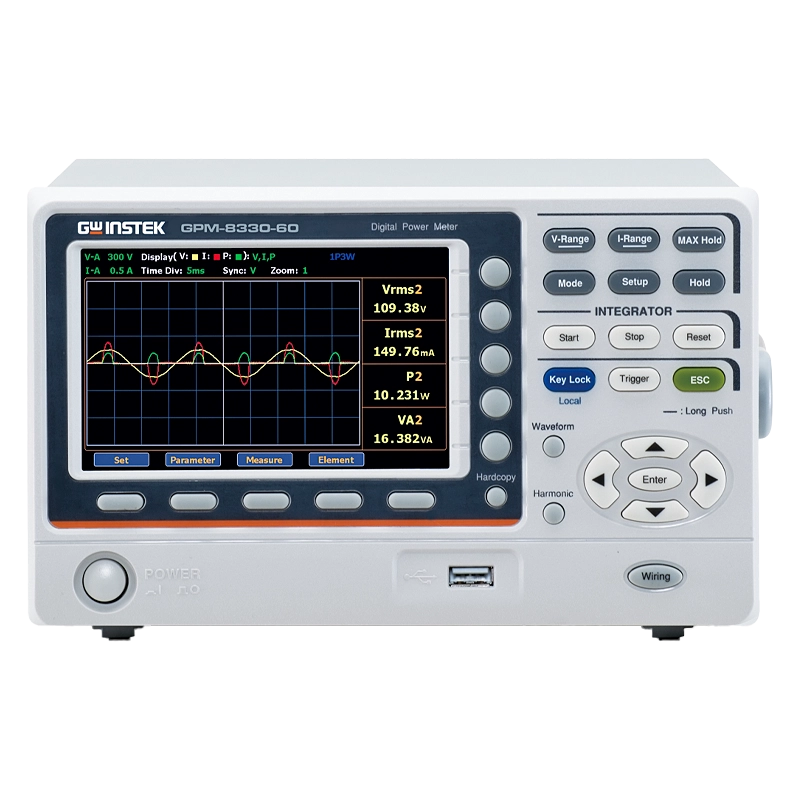
A function generator usually has a display and controls. The display shows waveform shape, frequency, and amplitude. Controls allow users to make adjustments easily. Clear labels and intuitive layouts improve usability. This helps users quickly set up the device for testing.
Understanding these basic elements enhances your ability to use a function generator. Whether for education or professional use, knowing these components is key. This knowledge leads to better circuit design and testing.
Credit: www.datatec.eu
Key Components
Understanding the key components of a function generator is essential. Each part plays a specific role. Together, they create various waveforms. Let’s explore these important elements.
Oscillator Circuit
The oscillator circuit is the heart of the function generator. It creates the basic waveform. Common types include sine, square, and triangle waves. This circuit uses different methods. Some use RC networks, while others use LC circuits. The choice affects output frequency and stability.
Waveform Shaping Unit
The waveform shaping unit modifies the basic signal. It alters the waveform’s shape and characteristics. This unit ensures the output meets specific needs. It can add features like rise time and pulse width. Filters may also be used to clean up the signal. This leads to clearer output waveforms.
Frequency Control System
The frequency control system adjusts the output frequency. Users can set the frequency easily. It often includes knobs or digital displays. Some systems use software for precise control. This flexibility is crucial for testing and experimentation. Accurate frequency adjustments improve overall performance.
Waveform Types
Function generators create various signals. The type of waveform matters. Each waveform serves different purposes. Understanding these types is key for effective use.
Sine Wave
The sine wave is smooth and continuous. It represents pure frequency. Many electronic devices use this waveform. It is essential in audio applications. Sine waves are great for testing circuits.
Square Wave
Square waves switch between high and low levels. They create sharp transitions. This waveform is useful for digital signals. Many timing circuits rely on square waves. They are simple and easy to generate.
Triangle Wave
Triangle waves rise and fall linearly. This shape creates a smooth transition. They are often used in audio synthesis. Triangle waves produce softer tones than square waves. They also help in testing amplifiers.
Amplitude Adjustment
Amplitude adjustment is a key feature of a function generator. It controls the strength of the signal produced. This setting affects how loud or strong the output signal is.
A user can change the amplitude to fit different needs. This makes it easier to test various circuits. Understanding amplitude is important for getting accurate results.
What Is Amplitude?
Amplitude refers to the height of the wave. A higher amplitude means a stronger signal. A lower amplitude means a weaker signal. This affects how the signal interacts with other components.
How To Adjust Amplitude
Most function generators have a knob or dial. Users can turn this knob to increase or decrease the amplitude. Some models also offer digital input for precise control.
Why Is Amplitude Important?
Correct amplitude ensures the signal works as intended. Too high can damage components. Too low may not trigger the device at all. Finding the right balance is essential.
Common Applications Of Amplitude Adjustment
Amplitude adjustment is useful in many fields. It is crucial in audio testing. It helps in circuit design. Engineers often rely on this feature for accurate testing.
Frequency Range
The frequency range of a function generator is key for many projects. It tells you how low or high the generator can produce signals. This range affects how you can use the function generator. Different tasks need different frequencies.
Choosing the right frequency range is important. It impacts the performance of your circuit or device. A wider range allows for more flexibility. You can test various applications effectively.
Understanding Frequency Range
Frequency range refers to the span of frequencies a generator can create. It is measured in hertz (Hz). The range can vary greatly among different function generators.
Low Frequency Range
Low frequency ranges typically start from 0.1 Hz. This range is useful for testing audio equipment. It is also helpful for simulations in engineering. Signals in this range can create effects like slow waves.
Medium Frequency Range
The medium frequency range usually goes from 1 kHz to 1 MHz. This is ideal for most electronic applications. Many devices operate within this frequency. Function generators can create sine, square, and triangular waves here.
High Frequency Range
High frequency ranges start from 1 MHz and can go up to several GHz. This range is essential for RF applications. It is used in radio and communication devices. Testing high-frequency circuits requires a generator that can handle these rates.
Choosing The Right Frequency Range
Selecting the correct frequency range matters for your needs. Consider what signals you need to generate. Ensure the function generator supports those frequencies. This choice impacts your project’s success.

Credit: www.researchgate.net
Applications
A function generator is a device that creates different types of signals. Basic elements include frequency control, amplitude adjustment, and waveform selection. Understanding these parts helps users create precise signals for various applications like testing and designing circuits.
Function generators are versatile tools used in various fields of electronics and engineering. Their ability to produce different waveforms makes them invaluable for a range of practical applications. Let’s dive into three key areas where function generators prove essential.Testing Electronic Circuits
Testing electronic circuits is one of the primary applications of function generators. You can simulate different input signals to evaluate circuit performance. – Frequency Response: By generating sine, square, or triangular waves, you can assess how circuits respond to various frequencies. This helps in identifying any potential issues in circuit design. – Component Testing: Function generators allow you to isolate and test individual components. For instance, you can apply a specific frequency to a capacitor and measure its response to ensure it operates correctly. Have you ever faced an unexpected circuit failure during testing? A function generator could have saved time by allowing you to pinpoint the issue quickly.Signal Simulation
Signal simulation is another critical application of function generators. They enable you to create waveforms that mimic real-world signals. – Communication Systems: In designing communication systems, simulating modulated signals helps in testing receivers and transmitters without physical transmission. – Sensor Calibration: You can simulate sensor outputs to calibrate devices. This ensures that your systems accurately interpret the signals they receive. Have you considered how valuable it is to test your designs under controlled conditions? Function generators can provide the flexibility needed for precise simulations.Troubleshooting
Troubleshooting is where function generators truly shine. They help identify problems quickly, saving you time and effort. – Signal Integrity Testing: If you suspect a signal degradation, you can use a function generator to inject known signals and observe the output. This reveals any inconsistencies in your circuit. – Identifying Noise Issues: By generating clean signals, you can determine if noise is affecting your circuit. This is crucial for high-precision applications where signal integrity matters. Have you ever spent hours trying to track down a fault? Function generators simplify this process, allowing you to focus on solutions rather than guesswork. Function generators are essential tools in testing, simulating, and troubleshooting electronic circuits. They enhance your ability to ensure that your designs are robust and reliable. Embracing these applications can lead to significant improvements in your projects. What challenges do you face in your electronic work that a function generator could help solve?
Credit: www.batterfly.com
Frequently Asked Questions
What Is A Function Generator Used For?
A function generator is an electronic device that produces various waveforms. It generates signals such as sine, square, and triangle waves. These signals are crucial for testing and designing electronic circuits. Engineers and technicians commonly use function generators in laboratories and educational settings.
What Are The Main Components Of A Function Generator?
The main components of a function generator include an oscillator, a control panel, and output terminals. The oscillator creates different waveforms. The control panel allows users to adjust frequency, amplitude, and waveform type. Output terminals connect to other devices for signal testing or analysis.
How Does A Function Generator Produce Waveforms?
A function generator produces waveforms through electronic oscillation. It uses components like capacitors, resistors, and inductors to create desired signals. By adjusting settings, users can modify frequency and amplitude. This versatility makes it an essential tool in electronics testing and development.
Can A Function Generator Simulate Real-world Signals?
Yes, a function generator can simulate real-world signals effectively. It allows users to create waveforms that mimic actual signals found in various applications. This capability is valuable for testing and troubleshooting electronic devices. Engineers can analyze responses to these simulated conditions for better designs.
Conclusion
A function generator is essential for many electronic projects. Understanding its basic elements helps you use it effectively. You need to know about waveforms, frequency, and amplitude. These parts are crucial for creating signals. Experimenting with these settings can enhance your learning experience.
With practice, you will gain confidence in using function generators. This knowledge opens doors to more advanced electronics. Keep exploring and learning to improve your skills. Understanding function generators is a valuable step in your electronics journey.