
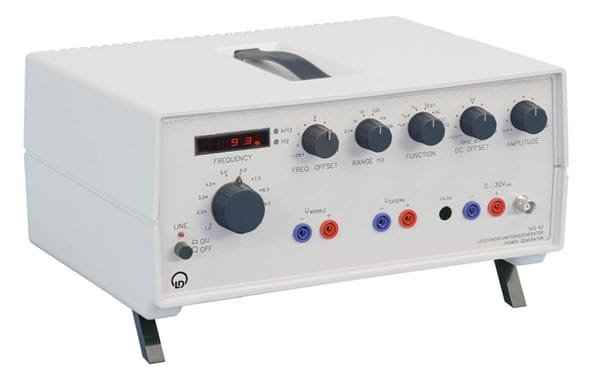
Are you curious about the versatility of a function generator? You might be surprised to learn that it can double as a power supply in certain situations.
Whether you’re a hobbyist, a student, or a professional engineer, understanding this capability can open up new possibilities for your projects. Imagine the convenience of using one device for multiple functions, saving you space and simplifying your setup. We’ll explore how a function generator can be used effectively as a power supply, the advantages it offers, and the scenarios where it shines.
By the end, you’ll have a clearer picture of how to make the most of your equipment. Don’t miss out on unlocking the full potential of your function generator—read on to discover the details!
What Is A Function Generator?
A function generator is a versatile electronic device that produces various types of electrical waveforms. It’s commonly used in laboratories, educational settings, and by hobbyists. You might be surprised at how many applications this device has beyond its typical uses.
A function generator creates different types of signals, such as sine, square, and triangle waves. These signals can be adjusted in frequency, amplitude, and offset. This flexibility makes it an essential tool for testing and designing circuits.
Types Of Waveforms
- Sine Waves:Ideal for simulating AC signals and testing audio equipment.
- Square Waves:Often used in digital circuits and clock signals.
- Triangle Waves:Useful for testing linear circuits and modulation.
Each waveform has its unique purpose. Understanding these differences can help you choose the right signal for your project.
Applications Of Function Generators
Function generators are widely used in various fields, including:
- Educational Purposes: Demonstrating principles of electronics and circuit behavior.
- Audio Testing: Analyzing frequency response in speakers and amplifiers.
- Signal Simulation: Replicating sensor outputs in testing environments.
Think about your own projects. Have you ever needed a specific signal type to test a circuit? A function generator could have simplified that process.
Function Generator Vs. Power Supply
While function generators are great for creating signals, they are not designed to supply power like a standard power supply. A power supply delivers a constant voltage or current, while a function generator varies its output. This distinction is crucial for your projects.
Using a function generator as a power supply can lead to unexpected results. The varying output may damage sensitive components. Always consider the requirements of your circuit before using a function generator for power.
Next time you’re in the lab or working on a project, think about how a function generator can enhance your testing capabilities. Have you had experiences that changed your perspective on using function generators? Share your thoughts!

Credit: www.amazon.com
How A Function Generator Works
A function generator is a versatile tool. It creates different types of electrical signals. These signals can be sine waves, square waves, or triangular waves. Understanding how it works helps in using it effectively.
Basic Components Of A Function Generator
A function generator has several key parts. It includes an oscillator, output stage, and controls. The oscillator creates the waveforms. The output stage sends the signal to your circuit. The controls let you change the waveform type and frequency.
Waveform Generation
Function generators produce various waveforms. You can select the desired type using the controls. Sine waves are smooth and continuous. Square waves switch between high and low quickly. Triangular waves rise and fall evenly.
Frequency And Amplitude Settings
You can adjust frequency and amplitude easily. Frequency determines how fast the waveform repeats. Amplitude controls the signal’s strength. Both settings influence the output you will see.
Output Characteristics
The output of a function generator is important. It can drive circuits and test components. The output signal can connect to different devices. Ensure the output voltage matches your circuit needs.
Applications Of Function Generators
Function generators serve many purposes. They are useful in testing circuits. Engineers use them to simulate signals. They also help in educational settings for experiments. The versatility makes them valuable tools.
Key Differences Between Function Generators And Power Supplies
Understanding the key differences between function generators and power supplies can help you make informed decisions for your projects. Both instruments serve distinct purposes, and knowing their unique features is essential for effective use. You might wonder if a function generator can replace a power supply, but the answer lies in their fundamental characteristics.
Purpose And Functionality
Function generators are designed to create specific waveforms, such as sine, square, and triangle waves. They are ideal for testing and simulating signals in circuits.
Power supplies, on the other hand, provide a stable voltage or current to power electronic devices. They focus on delivering consistent energy rather than generating signals.
Output Characteristics
The output of a function generator is usually variable in frequency and amplitude, allowing for versatile waveform manipulation. You can adjust the frequency from a few hertz to several megahertz.
Power supplies offer fixed or adjustable voltage and current levels. Their output is steady, ensuring your device operates reliably without fluctuations.
Load Handling
Function generators are not designed to handle heavy loads. They can typically deliver low current, which might not be sufficient for powering larger devices.
In contrast, power supplies are built to manage varying loads and can deliver higher currents, making them suitable for most electronic projects.
Cost And Complexity
Function generators can be more affordable than power supplies, especially for basic models. However, their complexity can increase with advanced features.
Power supplies range in cost depending on the specifications and capabilities. You may find simple models for basic needs or more complex ones for specialized applications.
Have you experienced a situation where using a function generator instead of a power supply led to unexpected results? Knowing these differences can save you time and effort in your experiments.
Situations Where A Function Generator Could Act As A Power Supply
Using a function generator as a power supply may seem unconventional, but there are specific situations where it can be quite effective. Understanding these scenarios can help you optimize your projects and experiments. Let’s dive into some practical applications where a function generator can step in to power your circuits.
Testing And Prototyping Circuits
When you’re designing a new circuit, you need a reliable power source for testing. A function generator allows you to simulate different voltage levels and waveforms. This flexibility helps you identify how your circuit responds under various conditions.
Imagine you’re testing an audio amplifier. You can use the function generator to provide a sine wave input at different frequencies. This method lets you observe the amplifier’s response, making adjustments easier.
Signal Analysis And Debugging
Sometimes, you encounter issues with your circuit that require signal analysis. A function generator can act as a temporary power supply while you investigate. You can generate specific signals to see how your circuit behaves, helping you pinpoint the problem.
For instance, if you suspect a component is faulty, you can replace the power supply with a function generator. This allows you to apply various test signals without needing a complete power setup.
Educational Purposes
If you’re teaching or learning about electronics, a function generator can be invaluable. It provides a hands-on way to understand how circuits work with different types of signals. You can easily demonstrate concepts like frequency response and impedance.
Consider a classroom setting where students can experiment with circuit designs. Using a function generator encourages exploration and learning by allowing them to visualize how changes in input affect output.
Low-power Applications
In low-power scenarios, a function generator can serve as a power source without the need for bulky power supplies. If you’re working with microcontrollers or small sensors, this can simplify your setup. Plus, it reduces clutter on your workbench.
For example, if you’re powering a small LED circuit, a function generator can provide the necessary voltage and current. This setup is efficient and effective for simple projects.
Frequency And Waveform Testing
Certain applications require specific frequencies or waveforms to function correctly. A function generator can produce these precisely. Whether you’re testing filters or oscillators, this capability can be essential.
Think about calibrating a radio receiver. You can generate the exact frequency needed to ensure the device is tuned correctly. This level of control is hard to achieve with a standard power supply.
Have you ever considered how versatile your function generator can be? It’s not just for generating signals; it can also be a practical power source in various scenarios. By understanding these applications, you can make better use of your equipment and enhance your projects.
Potential Risks And Limitations
Using a function generator as a power supply has risks. It may not provide stable voltage or current. This can lead to damage in sensitive devices. Users should be cautious and aware of these limitations.
The use of a function generator as a power supply can seem convenient, especially if you’re in a pinch. However, it’s crucial to understand the potential risks and limitations that come with this choice. Not every function generator is designed to handle power supply tasks, and using one incorrectly can lead to significant issues. Let’s break down these concerns.Electrical Limitations
Function generators typically output lower voltage and current levels than dedicated power supplies. – Most function generators operate within a range of 0 to 20 volts. – Current output is often limited to a few hundred milliamps. This means that if you need to power a device that requires a higher voltage or current, you could damage both the generator and your device. Have you ever experienced an unexpected failure because you underestimated the power needs of your project?Signal Integrity Issues
Using a function generator can also lead to signal integrity problems. Function generators produce waveforms, which might not be suitable for powering devices that require stable DC voltage. – Fluctuations in output can cause erratic behavior in sensitive electronics. – Devices designed for a clean power supply might not function properly. Your project could end up malfunctioning or producing inaccurate results. How would you feel if your entire setup failed because of a simple oversight?Overheating And Damage Risks
Overheating is another concern when using a function generator as a power supply. Since they are not designed to handle continuous load, prolonged use can lead to overheating. – This can damage internal components. – You might even cause a fire hazard if the generator is pushed beyond its limits. Imagine watching your equipment smoke because of a decision made in haste. It’s not just frustrating; it can also be dangerous.Lack Of Regulation And Protection Features
Dedicated power supplies come with built-in regulation and protection features, such as overcurrent and overvoltage protection. Function generators typically lack these safeguards. – You risk exposing your components to damaging conditions without these protections. – The absence of voltage regulation can lead to inconsistent performance. Would you take the chance of ruining your hard work because of inadequate protection? Understanding these potential risks and limitations is vital. The next time you think about using a function generator for your power supply needs, consider whether the convenience outweighs the possible consequences. Your equipment and safety depend on making informed choices.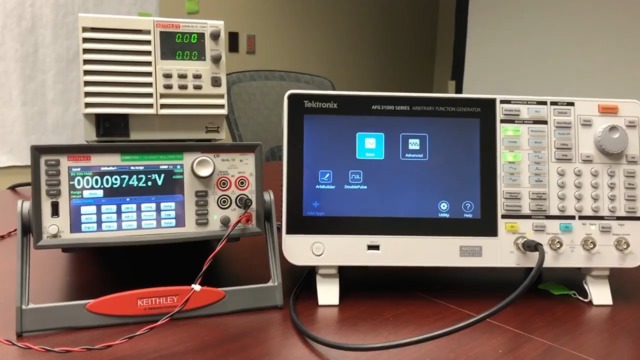
Credit: www.tek.com
Alternatives For Power Supply Applications
Many tools can serve as power supplies. Each has its own strengths. Understanding these options helps you choose the best fit for your needs.
Linear Power Supply
A linear power supply provides a stable output. It uses transformers to reduce voltage. This method is simple and reliable. It works well for sensitive devices. Noise levels are low, making it a good choice for audio applications.
Switching Power Supply
Switching power supplies are efficient and compact. They use high-frequency switching to convert power. This design allows for lighter weight and smaller size. They can handle a wide range of input voltages. Many modern devices benefit from this technology.
Batteries
Batteries are portable and versatile. They come in many sizes and types. Rechargeable options are widely available. Batteries can power devices without needing an outlet. They are essential for mobile applications.
Dc Power Adapters
DC power adapters convert AC to DC power. They are easy to use and widely available. Many electronic devices come with their own adapters. They provide a specific voltage for safe operation. This makes them a popular choice for many users.
Solar Power Systems
Solar power systems harness sunlight for energy. They are environmentally friendly and renewable. These systems can be used for remote applications. They reduce dependency on traditional power sources. This makes them an attractive option for many.
Fuel Cells
Fuel cells generate electricity through chemical reactions. They are clean and efficient. Fuel cells can be used in various applications. They provide a steady power supply. This technology is gaining interest in transportation and stationary power.

Credit: www.tek.com
Frequently Asked Questions
Can A Function Generator Replace A Power Supply?
A function generator can simulate various waveforms but is not a true power supply. It provides limited current and voltage ranges. For powering electronic devices, a dedicated power supply is usually more appropriate for stable voltage and current.
What Types Of Signals Can A Function Generator Produce?
Function generators can produce sine, square, triangle, and sawtooth waveforms. These signals can be adjusted in frequency and amplitude. This versatility makes them ideal for testing circuits and simulating different electronic conditions.
Is It Safe To Use A Function Generator For Power?
Using a function generator for power can be risky. It may not provide the necessary current or voltage stability. Always ensure the specifications match your device requirements to avoid damage or safety hazards.
What Are The Limitations Of Using A Function Generator?
Function generators have limitations in output voltage and current. They typically cannot deliver high power levels required for most devices. Additionally, they may introduce noise into the circuit, affecting performance.
Conclusion
Using a function generator as a power supply is possible. It offers flexibility and control. However, it has limitations. Function generators may not provide stable voltage or current. They are best for low-power applications. For higher power needs, a dedicated power supply is better.
Understanding your project’s requirements is key. Choose the right tool for the job. This ensures safety and efficiency. Ultimately, consider both options carefully before deciding. Your project deserves the best support possible.