
You can generally bring a qualifying power bank on a US passenger flight in your carry-on baggage, but the battery’s watt-hour rating and your airline’s current rules both matter. Do not put it in checked luggage. A bank that meets the federal size threshold can still fail an airline’s stricter quantity, storage, or onboard-use policy.
Check the label and the operating airline before packing. This guide uses official FAA guidance checked October 16, 2026, including the FAA passenger-battery page updated October 2, 2026. It explains how to build a travel checklist; it does not promise that a particular battery will be accepted at every airport or on every itinerary.
The three checks to make before packing
First, identify the exact battery and its printed watt-hour rating. Second, find the operating airline’s rules for power banks specifically, rather than only its general baggage allowance. Third, check every flight segment, including a partner airline or international connection. Keep the answers together with your itinerary.
A useful note might contain the model number, printed Wh rating, number of banks, airline policy URL, and date checked. This avoids relying on a screenshot from an old travel forum. It also makes it easier to ask a precise question when a product has an unusual label or your route involves different carriers.
Carry-on, checked luggage, and gate-checking
The FAA’s lithium-battery guidance treats power banks as spare lithium batteries and requires them in the cabin. Protect the battery from damage and short circuit. If your carry-on is checked at the gate, remove the bank before handing over the bag and keep it with you in the cabin.
Plan for that gate-check situation before boarding. Put the bank somewhere you can reach without unloading an entire suitcase in the boarding line. A small protective pouch in your personal item is more practical than burying it under clothing in a roller bag that might be taken away at the aircraft door.
Do not assume that powering the bank off changes its classification into an ordinary checked item. It is still a spare battery. Likewise, packing it inside a charging case or another bag does not remove the need to check the applicable battery rules.
Understand the watt-hour thresholds
The FAA passenger-battery FAQ allows rechargeable batteries rated 0–100 Wh, requires air-carrier approval for 101–160 Wh, and prohibits batteries above 160 Wh on passenger aircraft. Its spare-battery allowance in the larger approved range is limited to two. Airlines may impose narrower limits, so use this as the federal framework, not a final airline permission.
A simple decision sequence is more useful than shopping by advertised capacity alone. Read the Wh marking. Compare it with the federal category. Then read the airline’s power-bank section. If approval is required, request it through the carrier’s official process before travel and keep the confirmation. Do not expect a security checkpoint to arrange approval for you.
If a label is worn off or the rating is unclear, ask the manufacturer for documentation tied to the exact model. Do not replace the label with your own handwritten claim. An estimate may help you understand the product, but it does not guarantee that airline staff can verify or accept it.
Convert mAh to Wh without using the wrong voltage
The FAA explains the calculation as watt-hours equals volts multiplied by amp-hours. Divide milliamp-hours by 1,000 to obtain amp-hours. Use the battery’s specified rating voltage for that capacity figure, not a random USB output setting. When the bank already has a Wh marking, start with that manufacturer marking rather than reverse-engineering a different answer.
Here are illustrative calculations, not measurements or approval decisions:
- 10,000 mAh at a specified battery voltage of 3.7 V: 10 × 3.7 = 37 Wh.
- 20,000 mAh at 3.7 V: 20 × 3.7 = 74 Wh.
- 30,000 mAh at 3.7 V: 30 × 3.7 = 111 Wh.
The assumption matters. You cannot decide that every 20,000 mAh device has the same permitted status without checking its label, battery voltage, condition, and airline policy. Nor should you multiply a cell-capacity figure by a high USB-C output voltage simply because that voltage appears elsewhere in the specifications.
For a product with an unusual battery arrangement, send the manufacturer a photo of the label and ask which Wh figure applies to passenger travel. Then confirm the answer with the operating carrier if its acceptance is unclear. Keep both responses; do not round a rating downward to make a product fit a threshold.
Airline rules can be stricter: Southwest example
Southwest’s current policy illustrates why the federal framework is only the first check. Effective April 20, 2026, its published requirements limit each customer to one power bank of no more than 100 Wh. It must stay out of the overhead bin, should be in a personal item under the seat, cannot be recharged from in-seat power, and must remain visible when being used.
Do not apply that example to every airline, and do not assume that a different carrier permits something because Southwest does. Read your carrier’s wording for the date of your trip. Ask separately about how many banks you can bring, where they must be stored, whether you may charge a phone from one, and whether the bank itself may be charged onboard.
A useful message is: “I am traveling on these flight numbers with one power bank labeled 74 Wh. Is it accepted, where must I keep it, and is use permitted during the flight?” Include the model if requested. This is more likely to resolve the real uncertainty than asking whether “portable chargers are allowed” without giving the rating.
Check condition and recalls before the travel day
Do not bring a damaged or recalled bank that falls under the FAA’s dangerous-battery restrictions. Read the exact recall notice and follow the manufacturer’s instructions. A device can still turn on while being covered by a recall; normal-looking operation is not a substitute for checking its model and serial number.
For example, Anker provides a selected power-bank recall checker with product-specific identification and handling guidance. That notice is an example, not a complete list of all brands or recalls. Search your own manufacturer’s current official notices before packing an older unit from a drawer.
If the pack is unresponsive, do not make the airport your troubleshooting location. Our power-bank charging troubleshooting guide explains how to separate a cable/input issue from an output problem. Resolve doubts about damage, unusual heating, and recall status before deciding whether to take the product at all.
Pack for inspection and practical access
Keep the original rating visible and protect the bank against crushing or contact with metal objects. Avoid a packing arrangement where a heavy item bears directly on a connector. Use an appropriate protective case or pouch and follow any additional carrier instructions for exposed terminals.
Bring a compatible charging cable that you have already checked with your device. That recommendation concerns convenience, not airline approval: a working cable does not change battery restrictions. If you plan to rely on airport outlets, keep the wall adapter accessible as well and consider how you will manage a boarding delay without depending on unrestricted onboard use.
Before leaving home, make a final checklist: battery label readable, correct number of banks, no unresolved recall or damage concern, airline policy checked, approval obtained where required, bank accessible for a gate-check, and current onboard-use instructions understood. These are separate checks; passing one does not automatically satisfy the others.
A portable power station needs its own rating check
Do not treat a power station as an oversized phone bank with the same practical travel options. Look at its actual battery Wh and the FAA threshold before planning to fly with it. Product names such as “portable” or “solar generator” describe use or marketing, not airline acceptance.
Our Jackery Explorer 500 guide concerns a larger backup-power product. Reading about its road-trip or outage uses should not be interpreted as flight permission. For any product above the passenger-aircraft battery limit, choose a different travel plan rather than attempting to disguise it as a small charger.
If an incident happens onboard
The FAA directs passengers to notify the crew immediately when a lithium battery or device is overheating, expanding, smoking, or burning. Follow the crew’s instructions. Do not conceal a problem in a bag or assume you should quietly continue charging because the phone battery is low.
Keep this response distinct from ordinary charging troubleshooting. A flashing indicator at home may call for a manual check; smoke or expansion onboard calls for immediate crew involvement. The purpose of keeping the battery accessible is partly to allow problems to be noticed and addressed promptly.
Frequently asked questions
Can a 20,000 mAh power bank fly?
Check its printed Wh rating and your airline’s rules. The illustrative 3.7 V calculation above gives 74 Wh, but capacity wording alone is not permission. Condition, quantity, route, and carrier-specific restrictions still need to be checked.
Can I put it in a checked suitcase if I do not use it?
No. A power bank is treated as a spare lithium battery under the FAA guidance and belongs in carry-on baggage. Remove it if your carry-on is gate-checked. Do not use its off switch or packaging as a reason to leave it in a checked bag.
Does permission to carry it mean permission to use it?
No. Ask the airline about onboard use and charging separately. Southwest’s current rules demonstrate that storage, visibility during use, and recharging from seat power can each have their own restriction. Other carriers may use different rules.
What if my connecting flight has another airline?
Check both operating carriers and any relevant destination requirements before departure. Build your packing plan around the restrictions that apply across the complete itinerary. If answers conflict or approval remains unclear, ask the carriers before travel rather than assuming the first flight’s acceptance covers the connection.
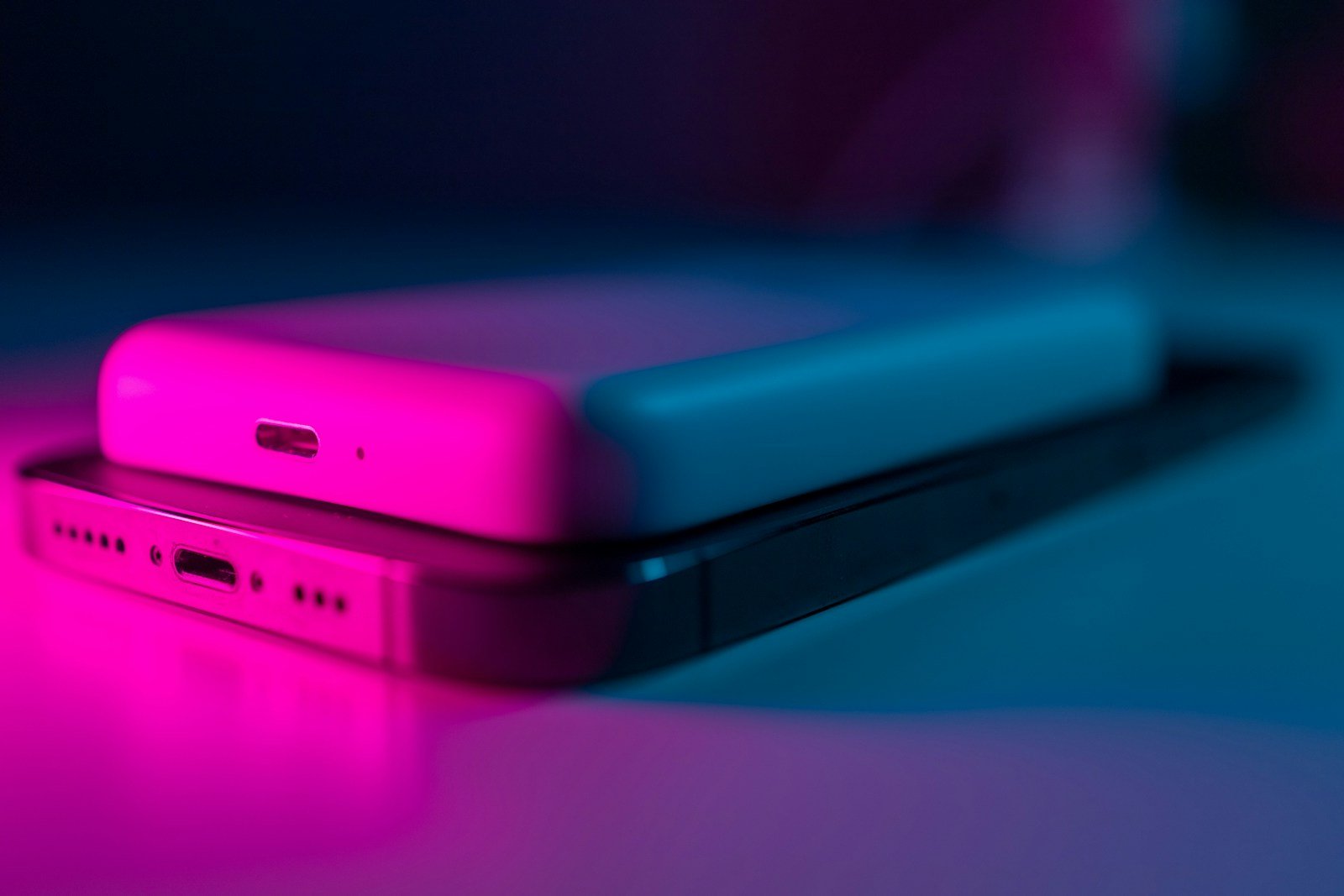
Featured photo: Kamil Switalski on Unsplash, under the Unsplash License. Illustrative stock image, not an airline approval or product test.