
A power bank’s lifespan is not a fixed number of birthdays or a direct consequence of its advertised mAh capacity. The useful answer depends on the exact model, its condition, how it has been used and stored, and whether it still meets your charging needs. Published cycle estimates are helpful context, but they are not a countdown that guarantees a pack is safe until a particular day.
Separate three questions: How long does one charge last? How much capacity remains after use over time? When should the entire device be retired? Those are different measurements. This guide explains how to interpret manufacturer statements and keep a useful condition record without inventing a health percentage or performing an unsafe battery test.
What manufacturers actually say about lifespan
Anker’s lifespan and temperature FAQ gives an estimate of up to 300–500 complete charge cycles for its portable chargers and explicitly says usage and other factors can change the result. That broad support answer should not be treated as the specification for every power bank sold today.
Its portable-charger lifespan article discusses several ranges and usage scenarios. Those are general manufacturer estimates, not evidence that a particular unit will last a guaranteed number of years. When a model-specific manual or product specification provides a different cycle claim, check the conditions and retained-capacity threshold attached to that claim.
Ask what the cycle figure measures. Is it the point at which a specified capacity remains, the end of a laboratory test, or a broad consumer estimate? Without that context, two cycle numbers may not be comparable. Do not assume that a pack suddenly fails when it reaches the advertised number.
Cycle count is different from calendar age
A usage counter and a purchase date answer different questions. A person charging several devices every day can put a bank through a very different workload from someone using it on occasional trips. Neither a young purchase date nor a low reported counter establishes the complete condition of the battery and electronics.
For an illustrative arithmetic example, a hypothetical device accumulating one equivalent full cycle per day reaches 365 such cycles in a year. At two equivalent cycles per week, it accumulates about 104 in a year. This is only workload arithmetic; it is not a prediction that either bank will fail or retain a particular capacity at that point.
If your bank shows a cycle counter, read how the manufacturer defines it. Do not assume that plugging in a cable once adds one complete cycle. Different devices may present health information differently, and a screen value is only useful when you understand what it represents.
Capacity on the label is not a remaining-health percentage
The mAh printed on a power bank is not a live report of current usable energy. It also should not be divided blindly by a phone’s mAh figure to prove how many full phone charges remain. Voltage, conversion, operating conditions, and device behavior need to be considered.
A larger advertised capacity can make a product suitable for more energy demand, but it does not establish that it will outlast every smaller product. Compare model-specific information rather than assigning an automatic lifespan from a capacity category such as 10,000 or 20,000 mAh.
For example, two hypothetical banks labeled with the same nominal capacity might have different USB output capabilities, supported charging methods, condition, and warranty terms. Those differences can matter more to your daily use than a generic table claiming a certain number of years for every product in that category.
Check for damage and recalls before evaluating runtime
A condition check comes before performance curiosity. Stop using a swollen, damaged, leaking, unusually hot, or recalled device and obtain the relevant manufacturer’s handling instructions. Do not keep cycling it to determine whether it still achieves a satisfactory phone charge.
The EPA’s lithium-ion battery FAQ identifies swelling as damage and a potential fire hazard. A battery’s apparent ability to power a device does not override that concern. Likewise, an old bank that looks normal still needs a model and serial-number recall check.
Use the manufacturer’s official recall system and the US Consumer Product Safety Commission. Do not rely only on a social-media post naming a brand. A recall may identify particular units, while an unrelated model may have a different status. Check the exact notice and follow its sequence.
Make a baseline record for a working bank
For an intact, non-recalled bank, keep a simple record while using it normally within the manual’s instructions. Note the model, purchase date, cable, connected device, selected port, starting level, and the charging task completed. Record any manufacturer-provided health reading without treating it as an independent measurement by this site.
Choose a repeatable everyday task rather than an improvised stress test. For example, you might note how much of the bank’s indicated charge is used to refill the same phone over a familiar percentage interval under similar conditions. That observation can help identify a change, but it does not calculate laboratory battery capacity.
Do not deliberately discharge a suspect pack, bypass protection, attach homemade loads, or open the case. The goal is to keep a useful history of ordinary supported use, not to force a health diagnosis from equipment you do not have.
Rule out accessory problems before blaming age
A worn cable, wrong input port, unsuitable charger, or incompatible output setup can look like an aging bank. Separate whether the bank itself fails to refill from whether it fails to charge a particular device. Compare compatible accessories one at a time.
Our power-bank troubleshooting guide walks through those external checks. Use it only for an intact product without an unresolved recall. A successful cable swap may explain a charging problem, but it does not certify the battery’s remaining lifespan.
When seeking support, describe the behavior rather than guessing the cause. “This model charges the phone with cable B but not cable A” is more useful than “the cells are dead.” Keep the model and serial number available for official support, while avoiding posting private identifiers publicly.
Use storage guidance for the exact model
Follow the manual’s temperature, storage-level, recharge-interval, and placement instructions. Avoid inventing a universal percentage or leaving the pack in a location that violates those instructions. Storage guidance can differ across products and should not be copied automatically from a phone or a large power station.
As one manufacturer example, Anker’s support FAQ recommends recharging its portable chargers at least every three months. Check whether that guidance applies to your specific product and consult its current manual. A recurring reminder to inspect and maintain stored equipment can be useful, but it does not replace checking for damage before use.
For an emergency kit, include the cable and supported wall charger in the inspection. A full battery without the correct connection can still fail your practical needs. Update the kit when your phone, laptop, or charging standard changes rather than assuming an old pack remains suitable indefinitely.
Decide when replacement is justified
Replace or retire a bank when official instructions require it, when approved support identifies a fault, or when an intact functioning unit no longer meets a reasonable energy or compatibility requirement. Do not wait for complete failure if the unit is no longer dependable for the task you need.
Define that task before shopping. A phone top-up during a commute is different from laptop use, multi-day travel, or camping equipment. List the required outputs, usable energy, charging method, weight, and travel requirements. This helps avoid replacing a small pack with an unnecessarily large device.
If you are considering a larger category, our Anker SOLIX C300 DC guide discusses a different portable-power arrangement. A larger battery box is not automatically the better choice; it must solve a demand your existing charger cannot reasonably meet.
Retirement should include an appropriate disposal plan
Do not place a retired lithium power bank in household trash or curbside recycling. Follow the manufacturer’s and receiving program’s instructions. Damaged or recalled products can need special handling and should not be dropped into a generic collection box without acceptance confirmation.
Our US power-bank disposal guide explains how to identify the device, distinguish ordinary end-of-life from damage or recall, and contact a suitable program. Finding a location online is a preparation step; disposal is complete only after an appropriate handover.
Frequently asked questions
Should every bank be replaced after three years?
No single age rule establishes the condition of every product. Use the model’s instructions, recall status, observable condition, supported performance, and manufacturer advice. A general lifespan estimate is not a guarantee or a mandatory universal replacement date.
Can a reset restore lost battery capacity?
Do not assume that it can. A manufacturer-supported reset may address a particular operational problem, but a changed display or resumed charging does not prove that aged cells recovered their original capacity. Follow the exact model’s troubleshooting procedure.
Is a health display enough to prove the bank is safe?
No. Check physical condition, recalls, and operating behavior as well. A displayed percentage is one product-provided indicator and should not be used to dismiss swelling, damage, or a recall notice.
What is the most useful next step?
Identify the exact model, check its current instructions and recall status, and decide whether it still performs the supported task you need. Keep a clear observation record and ask official support about unexplained changes. That is more useful than assigning an exact expiration date from a generic internet average.
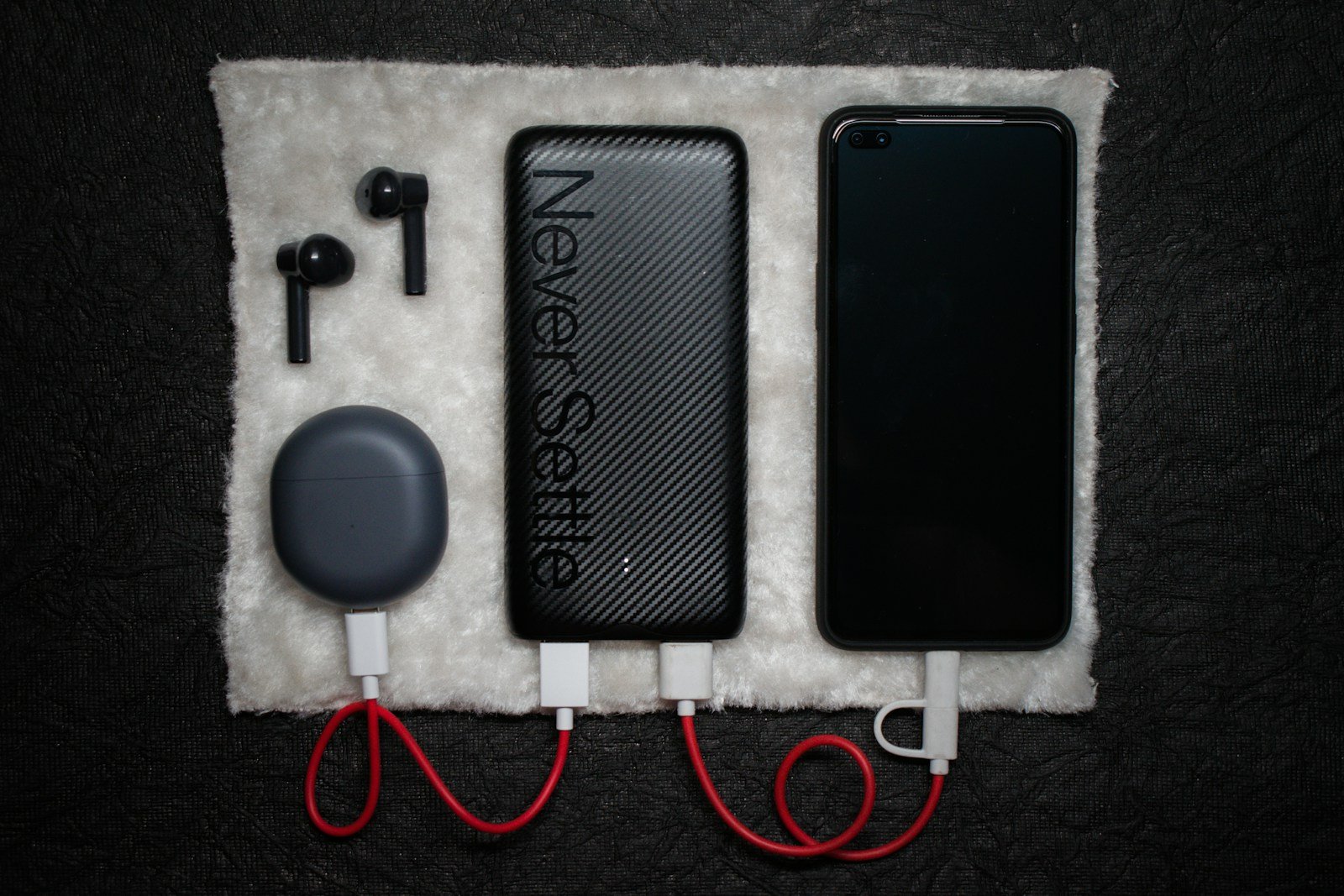
Illustrative stock photo: Atharva Whaval on Unsplash, under the Unsplash License. This is a use-case illustration, not a photograph of the reviewed model or a hands-on test.