
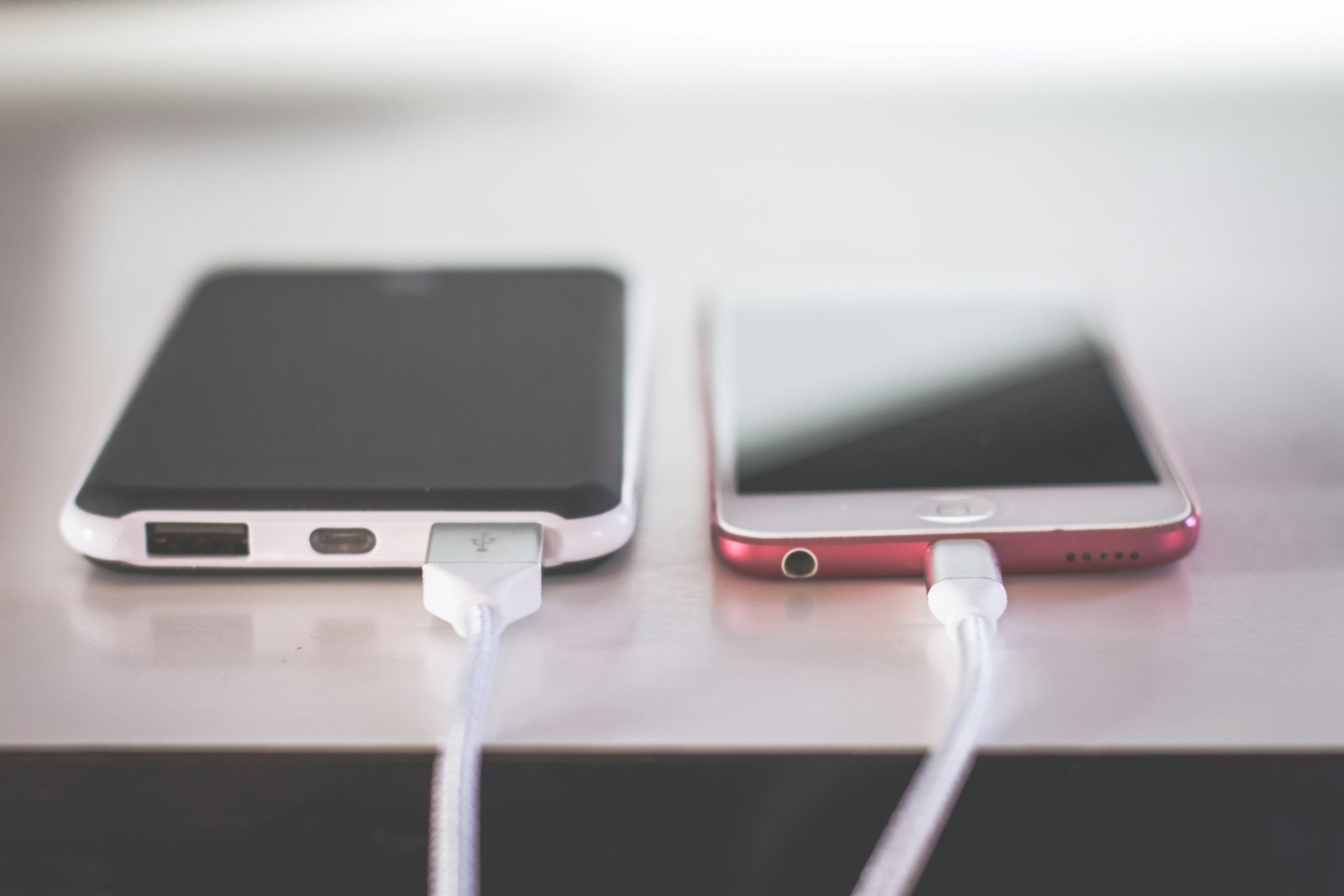
To dispose of a power bank in the United States, keep it out of household trash and curbside recycling. Find an electronics recycler or household hazardous-waste collection program that accepts the complete lithium-ion device, and confirm the program’s instructions before bringing it in. A swollen, damaged, or recalled bank needs a different conversation from an ordinary end-of-life unit.
The most useful first step is identifying the bank and its condition. Do not open the case to remove its cells, try to flatten a swollen enclosure, or assume a shop’s general battery collection box accepts every battery. This guide explains a consumer decision process using official EPA and recall guidance, not a substitute for instructions about a specific damaged product.
Identify what you are disposing of
Look for the model number, manufacturer, chemistry marking, and capacity label. Photograph the label if it can be done without handling a damaged device. A power bank is an electronic device containing a battery, so tell the collection program that you have a complete rechargeable portable charger rather than just saying “some batteries.”
The EPA’s used lithium-ion battery guidance directs these batteries and devices away from ordinary household garbage and recycling bins and toward separate collection. A device that no longer powers a phone does not become an ordinary plastic-and-metal item for curbside sorting.
Keep accessories separate in your inquiry. A USB cable, wall adapter, and lithium battery pack may follow different acceptance rules. Ask which parts the program wants and whether the bank should remain intact. Do not dismantle the pack to make it resemble a battery type shown on a collection poster.
Separate normal end-of-life from damage or recall
An old bank with reduced capacity is one situation. A pack with swelling, leakage, case damage, unusual heating, or a recall is another. Describe what you see honestly to the manufacturer or collection facility. Do not hide a condition because you worry it will make disposal less convenient.
The EPA’s consumer FAQ identifies swelling as damage and a potential fire hazard. It advises finding an appropriate disposal option and obtaining specific guidance. An ordinary drop-off routine should not be assumed suitable for a damaged unit.
If there is an immediate emergency such as smoke or fire, prioritize getting away from the hazard and contacting emergency services. Do not use the remainder of this routine disposal checklist as an incident-response procedure. Specific emergency handling should come from emergency responders and the manufacturer’s instructions.
Check the exact recall before choosing a destination
Search the manufacturer’s official recall page and the US Consumer Product Safety Commission using the model number. A recall can apply to particular models, production dates, or serial numbers. Check the actual notice rather than assuming all products from a brand are affected or that a working bank cannot be recalled.
For example, Anker’s selected power-bank recall guidance provides a product identification process and special handling instructions. It warns that recalled lithium batteries should not be placed in ordinary trash, general recycling, or standard battery drop-off boxes. Contact a suitable household hazardous-waste facility about acceptance.
A 2026 CPSC NEWDERY notice also illustrates why the notice itself matters: it describes product-specific remedy and disposal requirements. Do not copy another brand’s photo, labeling, shipping, or refund process onto your own unit.
Before disposal, check whether the remedy process requires information or photographs. Follow the notice’s sequence without continuing to charge or use an affected bank. Do not mail it back with a routine parcel label unless the manufacturer has provided an appropriate authorized process for that battery.
Find a program, then confirm acceptance
Start with your city or county’s official household hazardous-waste page, the resources linked from the EPA page, or the manufacturer’s take-back instructions. A search result saying “battery recycling nearby” is a lead to investigate, not confirmation that a location accepts your device.
Contact the program before traveling. Give the device type, brand and model, approximate size, condition, and recall status. Ask whether it accepts the complete power bank from households, whether an appointment or residency proof is required, and what preparation and transport instructions apply.
For a damaged or recalled bank, state that at the beginning of the conversation. A facility that accepts ordinary rechargeable batteries may have a separate process or may direct you elsewhere. Do not place the device in an unattended bin after being told that the program does not handle its condition.
A practical phone script
You can ask: “I have one rechargeable USB power bank, model [model]. It is [intact but no longer useful / visibly swollen / covered by this recall]. Do you accept the complete device from a household? What are your handling, packaging, appointment, and transport instructions?”
Write down the answer, the program name, the date, and any reference number. If the answer is only “we take batteries,” ask again about the condition and complete device. A precise answer helps avoid a wasted trip and prevents assumptions about what a generic collection box is meant to receive.
If the first destination cannot accept it, ask for the appropriate local program rather than improvising another route. Keep a short list of confirmed options. Do not interpret a map listing, retailer logo, or old community-event flyer as a current promise of acceptance.
Prepare an intact unit according to the receiving program
The EPA recommends protecting battery terminals against short circuit, including nonconductive tape and individual separation where appropriate. Follow the receiving program’s exact instructions for your device. Avoid a loose pile of battery packs, keys, coins, and cables in the same container.
For a bank with an enclosed USB socket, ask how the program wants its connections protected. Do not insert metal objects, force material inside a port, or open the enclosure. Keep the unit identifiable so the recipient can read its model and condition information.
For a damaged or recalled bank, obtain instructions specific to that condition before moving or packaging it. General advice about an intact battery is not automatically sufficient. If the facility cannot provide suitable guidance, contact the manufacturer or the appropriate local hazardous-waste authority.
Avoid common disposal shortcuts
Do not place the bank in the curbside recycling bin because its enclosure looks recyclable. Do not put it into household trash because it appears completely discharged. Do not assume that a full battery box outside a shop is a suitable place for a swollen or recalled pack.
The EPA household battery page distinguishes battery types and advises contacting the manufacturer for specific information when a lithium-ion battery is damaged. That is a reason to identify the chemistry and condition, rather than using one rule for every battery in a drawer.
Do not deliberately puncture, crush, soak, burn, freeze, or jump-start a bank as a disposal preparation method. Do not run a suspect unit through improvised discharge equipment. Follow the relevant program’s instructions instead of trying to make a damaged battery fit an ordinary collection route.
What if there is no convenient local drop-off?
Ask the local solid-waste authority whether it offers scheduled collection events, appointments, or another approved destination. Check dates and accepted materials directly. A once-a-year event mentioned in an old search result does not establish that it is operating now.
Ask the manufacturer about an authorized route, especially for a recall. If a mail-in program is proposed, confirm that the exact product and condition are eligible and follow its approved packaging and shipping process. Do not infer that an ordinary electronics mail-in box is suitable for a lithium battery.
While arranging the next step, follow the manufacturer’s and local authority’s instructions for the device. Do not promise yourself that a particular temporary container makes every damaged battery safe. The relevant condition, location, and available response options need specific guidance.
Keep troubleshooting separate from disposal
If an intact, non-recalled bank simply does not charge, an external accessory problem may be worth investigating before replacement. Our power-bank charging guide separates input, cable, charger, and output checks. Do not use troubleshooting to override a recall or visible damage.
If you are clearing travel equipment, our power-bank flight guide explains the separate airline checks. A battery’s eligibility for a recycling program says nothing about its eligibility for passenger travel. Resolve the appropriate disposal route before taking an unwanted or suspect bank on a trip.
Frequently asked questions
Can I recycle the plastic case separately?
Do not open the power bank merely to separate the enclosure from its cells. Ask a qualified receiving program to handle the complete device. Consumer disposal should follow the facility’s instructions, not a homemade disassembly plan.
Can a retailer take it?
Possibly, but acceptance varies by location, device, and condition. Check the retailer’s current official policy and contact the location. Never assume that ordinary retail collection accepts damaged or recalled lithium batteries.
Should I give it to someone else instead?
Do not pass along a recalled, damaged, or unresolved suspect product as a way to avoid disposal. For an intact working item, check recall status and any receiving organization’s acceptance policy first. Be transparent about its age, condition, and available accessories.
What should I keep after drop-off?
Keep any receipt or confirmation offered, especially when a manufacturer’s remedy requires documentation. Record the date and destination. A disposal record is useful evidence of what you actually did; it should not be replaced with a claim that recycling is complete merely because you found a location online.
Illustrative stock photo: Steve A Johnson on Unsplash, under the Unsplash License. This is a use-case illustration, not a photograph of the reviewed model or a hands-on test.