

When it comes to generating electricity, two main types of generators often come to mind: AC and DC generators. But what do these terms really mean for you?
Understanding the differences between these two can help you make informed decisions for your power needs, whether you’re setting up a home project, considering renewable energy options, or working in a professional setting. We’ll break down the key features, benefits, and drawbacks of AC and DC generators.
You’ll discover how each type functions, where they shine, and how to choose the right one for your specific requirements. By the end, you’ll have a clear picture of which generator best suits your needs, empowering you to make choices that enhance your energy efficiency and save you money. Let’s dive in and demystify AC and DC generators together!
How Generators Produce Electricity
Generators create electricity by converting mechanical energy into electrical energy. AC (Alternating Current) generators produce electricity that changes direction, while DC (Direct Current) generators provide a steady flow. Both types are essential in powering our homes and devices. Understanding their differences helps in choosing the right one for your needs.
Understanding how generators produce electricity can be fascinating. These machines convert mechanical energy into electrical energy, and they do so through different methods based on whether they are AC (Alternating Current) or DC (Direct Current) generators. Let’s break down the processes behind both types of generators.
How Ac Generators Work
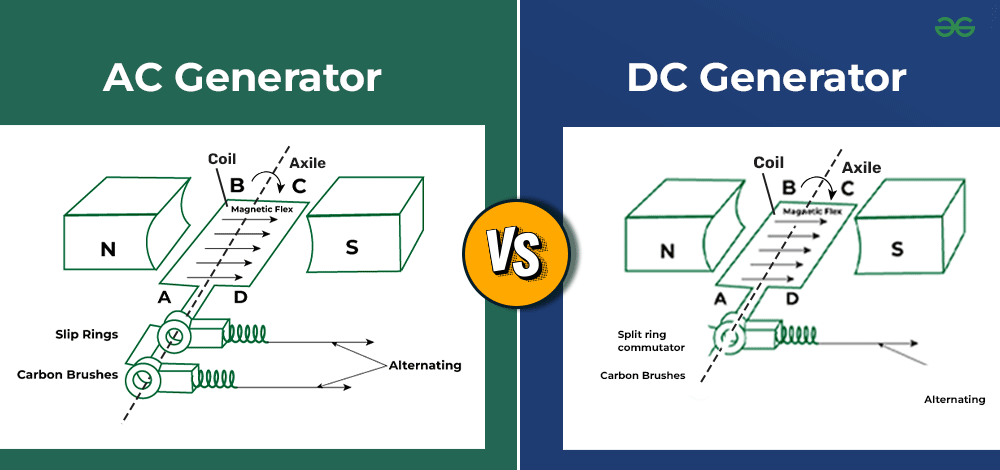
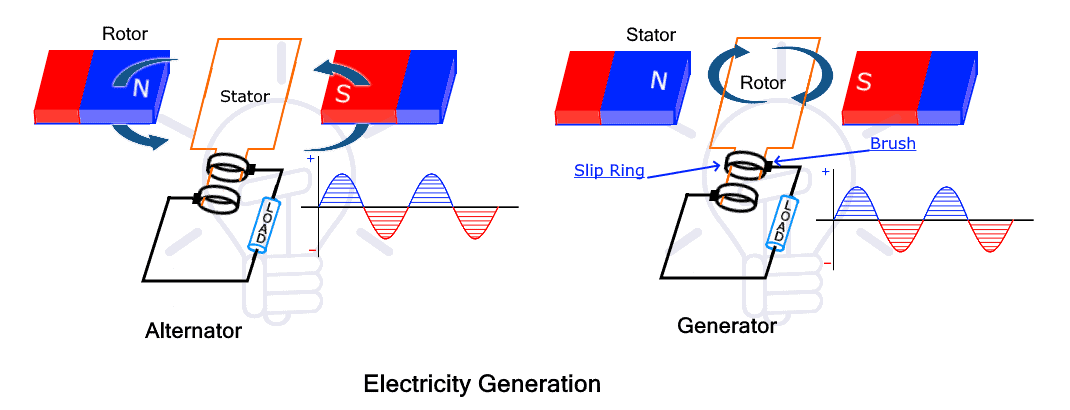
AC generators, also known as alternators, produce electricity through electromagnetic induction. This process involves a rotating magnetic field that induces an electric current in the coils of wire. You might have noticed that your car’s engine powers the alternator, which keeps your battery charged while you drive. – The key components include: – Rotor: This is the rotating part that creates the magnetic field. – Stator: This is the stationary part where the electricity is generated. – Slip Rings: They help transfer the current generated from the rotor to the external circuit. As the rotor spins, the magnetic field changes, which creates alternating current. Have you ever experienced flickering lights during a storm? That’s a sign of fluctuating AC power, often due to the generator’s alternating nature.
How Dc Generators Work
DC generators produce electricity using a similar principle but with some differences. They convert mechanical energy into direct current, which flows in one direction. This is achieved through a commutator, a device that reverses the direction of current flow in the coil as it rotates. – The main components include: – Armature: The rotating part that carries the coils of wire. – Field Windings: These create a magnetic field around the armature. – Commutator: This ensures the output remains as direct current. You may have seen DC generators in older cars or small power supplies. They are particularly useful when a steady voltage is needed for devices like batteries.
Comparing Ac And Dc Generators
Both types of generators have their strengths and weaknesses. AC generators are often more efficient for large-scale power production and transmission. On the other hand, DC generators are better suited for applications requiring stable voltage. Here’s a quick comparison: | Feature | AC Generators | DC Generators | |——————–|———————–|———————–| | Current Type | Alternating Current | Direct Current | | Efficiency | Higher for long distances | Lower for long distances | | Applications | Power grids, homes | Batteries, small devices | | Maintenance | Requires less upkeep | More maintenance needed | Knowing how these generators function can help you appreciate the technology behind the power that keeps your devices running. Have you ever thought about the generator that powers your neighborhood? It’s fascinating how these machines transform energy from one form to another.
Ac Generator Basics
Understanding AC generators is essential for anyone interested in electricity and power generation. These machines convert mechanical energy into alternating current (AC) electricity. Whether you’re powering your home or running industrial machinery, knowing how AC generators work can help you make informed decisions.
What Is An Ac Generator?
An AC generator, also known as an alternator, produces electricity through electromagnetic induction. It consists of a rotor (the moving part) and a stator (the stationary part). As the rotor spins, it creates a changing magnetic field, which induces an electric current in the stator coils.
How Does An Ac Generator Work?
The operation of an AC generator is relatively straightforward. When the rotor spins, it generates a magnetic field. This magnetic field interacts with the coils of wire in the stator, producing alternating current.
This process can be visualized as the rotor turning within the stator. The faster the rotor spins, the more electricity is generated. This relationship between speed and output is crucial for understanding how to optimize performance.
- Rotor:The rotating part that creates the magnetic field.
- Stator:The stationary part where the electricity is generated.
- Slip Rings:These allow the current to flow from the rotor to the external circuit.
- Exciter:Supplies the initial current to the rotor’s windings.
Types Of Ac Generators
AC generators can be classified into two main types: synchronous and asynchronous. Synchronous generators operate at a constant speed and frequency, while asynchronous generators can vary in speed, making them suitable for different applications.
Choosing between these types depends on your specific needs. For instance, if you require stable frequency for your home, a synchronous generator may be the better choice.
AC generators are used in various settings. From small portable generators for camping trips to large-scale power plants, their versatility is unmatched.
Have you ever considered how your local power grid operates? Most of the electricity reaching your home comes from large AC generators in power plants. Understanding this can make you appreciate the technology behind your everyday life.
In industries, AC generators play a crucial role in providing the necessary power for machinery. Knowing which generator to choose can significantly impact operational efficiency.
Next time you think about power generation, consider the vital role AC generators play in your life. They are more than just machines; they are the backbone of modern electricity supply.
Dc Generator Basics
Understanding the fundamentals of a DC generator is crucial for anyone interested in electrical engineering or practical applications. DC generators convert mechanical energy into direct current (DC) electricity. They are widely used in various applications, from small devices to larger industrial settings.
What Is A Dc Generator?
A DC generator is a device that produces direct current through electromagnetic induction. It consists of several essential components:
- Armature:The rotating part that generates electricity.
- Field Windings:Coils that create a magnetic field.
- Commutator:Converts alternating current (AC) generated in the armature into direct current.
- Brushes:Conduct electricity between the stationary and rotating parts.
These components work together to create a reliable source of DC power. Understanding how each part functions is key to grasping the entire system.
How Does A Dc Generator Work?
The operation of a DC generator is straightforward. As the armature rotates within the magnetic field created by the field windings, it induces an electrical current. The commutator then ensures that this current flows in one direction, providing you with direct current.
Think about a bicycle dynamo. When you pedal, it rotates the generator, producing electricity to power your lights. This simple mechanism illustrates the fundamental working principle of a DC generator.
Types Of Dc Generators
There are several types of DC generators, each tailored for specific uses:
- Separately Excited:The field winding is powered by an external source.
- Self-Excited:The field winding derives its power from the generator itself.
- Shunt Generator:Field winding is connected in parallel with the armature.
- Series Generator:Field winding is connected in series with the armature.
Choosing the right type depends on your application needs. Each type offers distinct advantages and can affect performance differently.
DC generators find use in various fields. They power small machines, charge batteries, and even provide emergency power in some systems. In industries, they’re used for electroplating and in battery charging stations.
Have you ever considered how these generators impact your daily life? Next time you use a device powered by a battery, think about the role a DC generator may have played in its functionality.

Credit: ffden-2.phys.uaf.edu
Key Components Of Ac Generators
AC generators, also known as alternators, have several key parts. Each part plays a crucial role. Understanding these components helps in grasping how these generators work. Let’s break down the main elements.
Stator
The stator is the stationary part of the generator. It generates the electrical output. The stator consists of coils of wire. These coils are placed around a magnetic field. When the rotor spins, it creates electricity in the coils.
Rotor
The rotor is the rotating component of the generator. It spins inside the stator. This motion creates a magnetic field. The rotor can be either a permanent magnet or an electromagnet. The type used affects the generator’s efficiency.
Exciter
The exciter provides the initial electrical current. It supplies power to the rotor. The exciter can be a separate small generator. It can also be built into the main generator. This component ensures the rotor has the right magnetic field strength.
Voltage Regulator
The voltage regulator controls the output voltage. It ensures a steady flow of electricity. This part adjusts the exciter’s output as needed. A stable voltage is important for connected devices.
Bearings
Bearings support the rotor’s rotation. They reduce friction and wear. Good bearings ensure smooth operation. This helps in extending the generator’s lifespan.
Cooling System
The cooling system prevents overheating. AC generators can generate a lot of heat. A proper cooling system keeps the generator safe. This can be done through air or liquid cooling methods.
Key Components Of Dc Generators
DC generators are essential in converting mechanical energy to electrical energy. Understanding their key components helps in grasping how they function. Each part plays a vital role in ensuring smooth operation.
Stator
The stator is the stationary part of the generator. It houses the field windings. These windings create a magnetic field. This field is crucial for generating electricity. The stator also provides structural support.
Rotor
The rotor is the rotating part of the generator. It spins within the stator’s magnetic field. This movement induces an electric current. The rotor consists of armature windings. These windings collect the generated electricity.
Commutator
The commutator is a key component in DC generators. It converts alternating current to direct current. The commutator is attached to the rotor. It consists of segments that connect to the armature windings. This ensures the output is always in one direction.
Brushes
Brushes are made of conductive material. They maintain contact with the commutator. This connection allows the current to flow out of the generator. Brushes are essential for the generator’s operation. They ensure a steady output of electricity.
Field Windings
Field windings create the magnetic field needed for electricity generation. They are usually made of copper wire. This wire is wrapped around the stator. The strength of the magnetic field depends on the current flowing through these windings.
Armature
The armature includes the windings on the rotor. It is where the electricity is generated. The armature interacts with the magnetic field. This interaction is crucial for producing electrical energy.
Differences In Working Principles
Understanding the differences between AC and DC generators helps us grasp how they work. Each generator type has a unique way of producing electricity. This affects their use and efficiency in different applications.
Ac Generators
AC generators, or alternators, produce alternating current. They use electromagnetic induction to generate electricity. A rotating magnetic field moves through coils of wire. This creates an electric current that changes direction periodically.
The frequency of this current depends on the speed of rotation. Common frequencies are 50 Hz and 60 Hz. This means the current changes direction 50 or 60 times per second. AC generators are widely used in power plants and homes.
Dc Generators
DC generators produce direct current. They also use electromagnetic induction but have a different design. A commutator is used to convert the alternating current into direct current.
The commutator ensures that the electric current flows in one direction only. This makes DC generators ideal for applications requiring stable and constant voltage. Examples include batteries and small electronic devices.
Efficiency And Applications
AC generators are generally more efficient for large-scale power generation. They can transmit electricity over long distances with less loss. This makes them suitable for powering homes and industries.
DC generators are preferred for smaller, localized applications. They power devices like motors and chargers. Their steady current is essential for these uses.
Efficiency And Power Output
Efficiency and power output are key factors in choosing between AC and DC generators. Each type has its unique strengths and weaknesses. Understanding these differences helps in selecting the right generator for your needs.
Efficiency Of Ac Generators
AC generators are often more efficient than their DC counterparts. They can convert mechanical energy into electrical energy with minimal losses. This efficiency is due to the design of the alternator. It uses electromagnetic induction effectively. AC generators are also lighter and smaller, making them easier to transport.
Efficiency Of Dc Generators
DC generators tend to have lower efficiency. They often experience more energy losses during operation. This happens mainly due to friction and heat. Despite this, they offer a stable voltage output. This stability makes them suitable for specific applications. They are commonly used in battery charging and electroplating.
Power Output Of Ac Generators
AC generators can produce higher power output than DC generators. They are capable of generating large amounts of electricity. This makes them ideal for power plants and industrial use. Their design allows for easy scaling to meet higher demands.
Power Output Of Dc Generators
DC generators usually have a lower power output. They are better for low-power applications. Despite this limitation, they provide consistent voltage. This feature is crucial for sensitive equipment. Many small machines and devices rely on DC power.
Applications Of Ac Generators
AC generators, also known as alternators, play a vital role in many sectors. They convert mechanical energy into electrical energy. This process is essential for various applications.
From powering homes to running large industries, AC generators are everywhere. They provide a reliable source of electricity. Understanding their applications helps in recognizing their importance.
Power Generation In Homes
AC generators supply electricity to residential areas. They ensure that homes have power for daily needs. Lights, appliances, and heating systems all rely on AC electricity.
Industrial Use
Industries use AC generators for heavy machinery. These machines require a stable power supply. AC generators help keep production running smoothly.
Renewable Energy Systems
AC generators are key in renewable energy. Wind turbines and hydroelectric plants use them. They convert natural energy sources into usable electricity.
Transportation
Trains and ships often use AC generators. They provide power for lights and systems on board. This ensures safety and comfort for passengers.
Emergency Power Supply
Many businesses rely on AC generators during outages. They provide backup power when needed. This helps maintain operations and protect equipment.
Applications Of Dc Generators
DC generators serve many important purposes. They convert mechanical energy into direct current electricity. Understanding their applications helps us see their value in various fields.
Power Supply For Small Devices
DC generators are ideal for powering small devices. They provide a steady voltage. This is crucial for equipment like batteries and small motors. Many gadgets rely on this stable power supply. Examples include toys and hand-held devices.
Electric Vehicles
DC generators play a key role in electric vehicles. They help charge the batteries. This makes the vehicle ready for use. The smooth power flow ensures efficient operation. Many electric cars depend on this technology.
Industrial Applications
In industries, DC generators are vital. They power machinery and tools. Consistent energy helps maintain production lines. Factories use them for various tasks. Their reliability makes them a preferred choice in manufacturing.
Telecommunication Systems
DC generators support telecommunication systems. They provide backup power during outages. This keeps communication lines open. Reliable power is essential for uninterrupted service. Telecommunication companies depend on DC generators for stability.
Renewable Energy Systems
In renewable energy, DC generators convert energy efficiently. They work well with solar panels and wind turbines. This integration enhances energy generation. Many homes use these systems for clean energy. They reduce reliance on traditional power sources.
Credit: www.geeksforgeeks.org
Choosing The Right Generator
Choosing the right generator can feel overwhelming. With options like AC and DC generators, understanding their differences is crucial. The right choice depends on your specific needs and circumstances.
Understanding Your Power Needs
Start by assessing your power requirements. Determine how much wattage you need to run your appliances and tools. For instance, a small home might require only 3,000 to 5,000 watts, while a construction site could need upwards of 10,000 watts.
Consider what you’ll be powering. Is it sensitive equipment or heavy machinery? Sensitive devices often require a stable power source, making AC generators a better fit.
Evaluating Efficiency And Cost
Efficiency can impact your long-term costs. AC generators are generally more efficient for larger loads, while DC generators might be more cost-effective for smaller applications. Analyze both the purchase price and the operational costs over time.
Think about fuel options as well. Gasoline, diesel, or renewable sources can influence your decision. Which fuel fits your budget and availability?
Portability Vs. Stability
How mobile do you need your generator to be? If you’re using it for outdoor activities like camping, a portable generator is essential. AC generators often provide more power but can be heavier.
If stability is your goal, a fixed installation might be better. Consider your space and how often you’ll need to move the generator.
Maintenance And Longevity
Different generators have varying maintenance needs. AC generators typically require less frequent upkeep compared to DC generators. You want a generator that fits your lifestyle and maintenance capability.
Think about how often you’re willing to service it. Regular maintenance can extend the life of your generator and save you money in the long run.
Making the right choice comes down to understanding your unique needs. Reflect on your power requirements, cost considerations, and maintenance preferences. This approach will guide you toward the generator that best suits your situation.
Credit: www.electricaltechnology.org
Frequently Asked Questions
What Is An Ac Generator?
An AC generator produces alternating current. It converts mechanical energy into electrical energy.
What Is A Dc Generator?
A DC generator generates direct current. It also changes mechanical energy into electrical energy.
How Does An Ac Generator Work?
An AC generator works by rotating a coil in a magnetic field. This movement creates electricity.
How Does A Dc Generator Work?
A DC generator uses a commutator. It converts alternating current into direct current through mechanical parts.
What Are The Main Uses Of Ac Generators?
AC generators power homes and businesses. They also supply electricity for industries and large machines.
What Are The Main Uses Of Dc Generators?
DC generators are used in battery charging. They also power small devices and some electric vehicles.
What Are The Advantages Of Ac Generators?
AC generators produce electricity over long distances. They are also easier to maintain and more efficient.
What Are The Advantages Of Dc Generators?
DC generators provide stable voltage. They are simple and reliable for small-scale applications.
Which Generator Is Better For Home Use?
AC generators are better for home use. They easily connect to the power grid and supply more power.
Can I Convert Ac To Dc?
Yes, you can convert AC to DC using a rectifier. This device changes alternating current into direct current. “`
Conclusion
Choosing between AC and DC generators depends on your needs. AC generators are great for homes and businesses. They provide consistent power over long distances. DC generators work well for smaller applications and battery charging. Both types have their advantages.
Understanding these differences helps you make the right choice. Consider your power needs and application. This way, you can select the generator that fits best. Knowledge is key to an informed decision. Make sure to weigh your options carefully.