
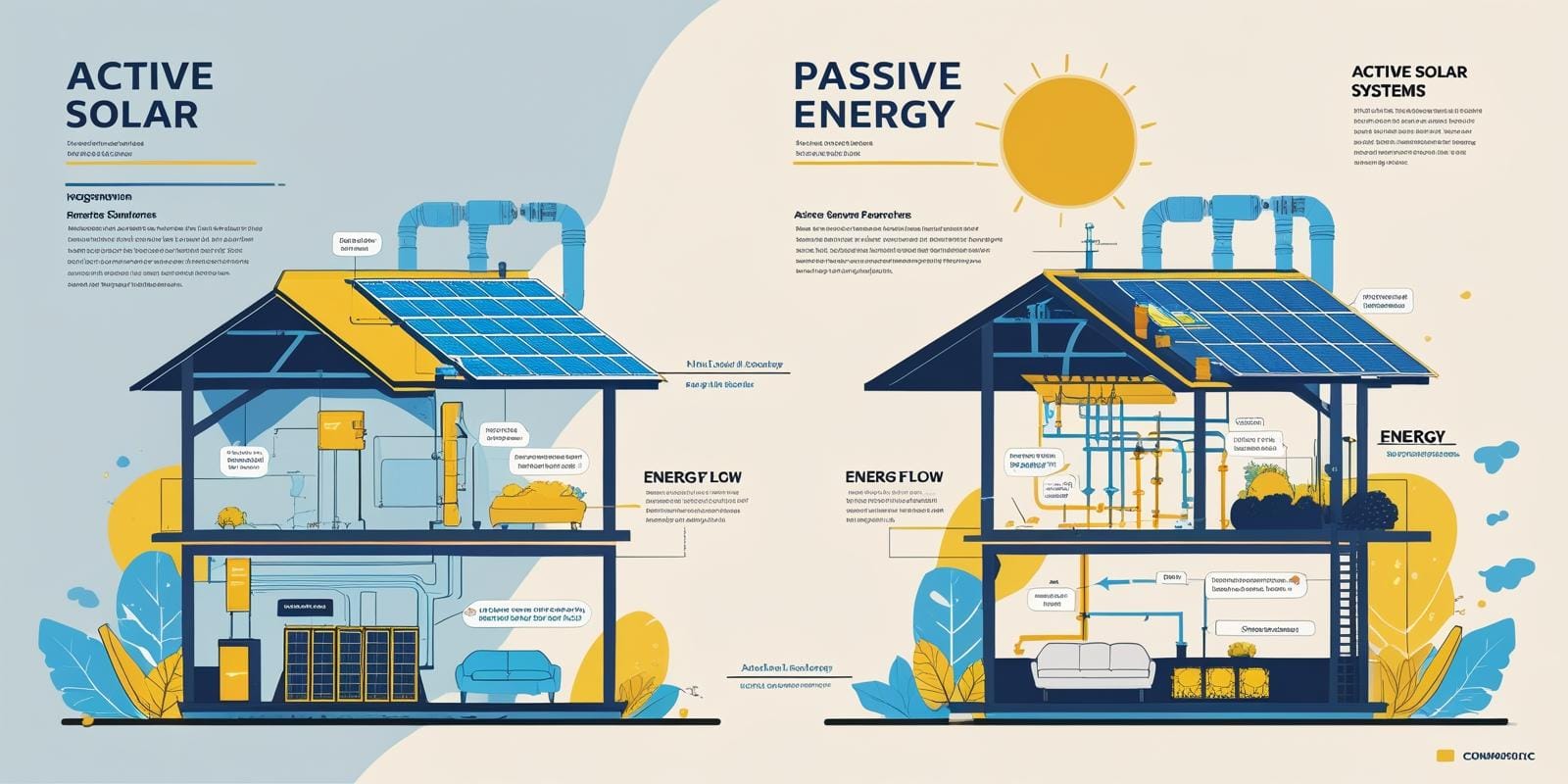
Are you curious about how to harness the sun’s power for your home or business? Understanding the difference between active and passive solar energy can help you make informed decisions that benefit both your wallet and the environment.
Active solar energy systems use technology to collect and convert sunlight into usable energy, while passive solar strategies rely on building design and natural materials to maximize sunlight. Each approach has its own set of advantages and challenges. You’ll discover how these two systems work, their benefits, and how you can incorporate them into your life.
Get ready to unlock the potential of solar energy and make choices that align with your values and needs.

Credit: ornatesolar.com
Active Solar Energy Basics
Active solar energy uses technology to capture sunlight. This includes solar panels and solar water heaters. In contrast, passive solar energy relies on building design and materials to naturally collect and store heat. Understanding the difference helps in choosing the right solar solution for energy needs.
Active solar energy systems harness sunlight to generate energy, making them a crucial part of the renewable energy landscape. These systems actively collect solar energy and convert it into usable forms, such as electricity or heat. Understanding the basics of active solar energy can empower you to make informed decisions about sustainable energy solutions for your home.
How Active Systems Work
Active solar energy systems utilize various technologies to capture and convert sunlight. They consist of solar collectors that absorb sunlight and convert it into heat. This heat can either be used directly for space heating or converted into electricity through photovoltaic (PV) cells. The heart of these systems is the pump or fan that circulates the heated fluid or air. This movement ensures that energy is efficiently distributed throughout your home. You can think of it as having a personal energy assistant, continuously working to provide you with renewable energy.
Components Of Active Systems
Active solar systems consist of several key components: – Solar Collectors: These are typically mounted on rooftops and are responsible for absorbing sunlight. They come in different types, including flat-plate collectors and concentrating collectors. – Storage Systems: This component stores the collected energy for later use. You might find water tanks for thermal energy or batteries for electricity storage. – Controls: Automated systems regulate the operation of pumps, fans, and valves. This ensures optimal performance based on energy needs and weather conditions. – Distribution Systems: These systems deliver the collected energy to where it’s needed in your home, whether for heating water or powering appliances. Understanding these components helps you appreciate how active solar systems function effectively.
Applications In Modern Homes
Active solar energy systems offer diverse applications for homeowners. Many people use these systems to heat water for domestic use, reducing reliance on conventional water heaters. You might also consider using active solar energy to power your household appliances, contributing to energy savings. With incentives and rebates available, investing in active solar systems has never been more appealing. Imagine receiving a lower utility bill each month while contributing to a cleaner environment. Wouldn’t that be an exciting transformation? Active solar energy not only reduces costs but also enhances your home’s sustainability. Taking the step toward active solar energy could mean a brighter, more energy-efficient future for you and your family.

Credit: ornatesolar.com
Passive Solar Energy Basics
Passive solar energy uses natural sunlight. It captures and stores heat without mechanical systems. This approach relies on design and building materials. The goal is to maximize energy use while minimizing waste.
Passive solar energy is cost-effective. It can lower energy bills. Homes designed for passive solar energy require less heating and cooling. This benefits both the environment and homeowners.
How Passive Systems Work
Passive solar systems work by using sunlight directly. They focus on building orientation and window placement. Large windows on the south side capture sunlight. This sunlight heats the interior during the day.
Thermal mass materials store heat. These materials include concrete, brick, and stone. They absorb heat during the day and release it at night. This keeps indoor temperatures stable.
Design Principles Of Passive Systems
Key design principles guide passive solar energy use. Orientation is crucial. Buildings should face south to catch maximum sunlight.
Windows should be strategically placed. Overhangs help block summer sun while allowing winter light. Insulation plays a big role too. It keeps heat inside during colder months.
Examples In Architecture
Many buildings use passive solar design. Adobe homes in desert areas use thick walls. They stay cool during the day and warm at night.
Greenhouses are another example. They use glass to capture sunlight. This helps plants grow while keeping warmth inside.
Modern homes also adopt passive solar design. They feature large south-facing windows and thermal mass materials. These designs help create energy-efficient living spaces.
Energy Conversion Efficiency
Energy conversion efficiency is important in solar energy systems. It measures how well a system converts sunlight into usable energy. Active and passive solar systems each have unique ways to capture and use this energy. Understanding their efficiencies helps in choosing the right system.
Efficiency In Active Systems
Active solar systems use mechanical parts to collect energy. They often include solar panels and pumps. These systems can achieve high efficiency rates, sometimes over 20%. They convert sunlight directly into electricity. This conversion allows for more precise control over energy use.
Active systems can be affected by weather conditions. Cloudy days reduce their efficiency. Regular maintenance also plays a role. Clean panels perform better. Overall, these systems provide reliable energy when designed well.
Efficiency In Passive Systems
Passive solar systems rely on building design and materials. They do not use mechanical parts. Instead, they capture sunlight through windows and thermal mass. This can include stone or concrete that absorbs heat.
Efficiency varies based on design and location. Proper placement of windows is key. Orientation towards the sun maximizes sunlight exposure. These systems are often less expensive to maintain. They can still effectively reduce heating costs.
Factors Affecting Performance
Several factors affect the performance of both systems. Location plays a major role. Areas with more sunlight produce better results. Seasonal changes also impact efficiency.
Building materials are crucial for passive systems. Insulation quality affects energy retention. For active systems, technology advancements improve efficiency. Regular checks and updates can enhance performance.
User habits influence overall energy use. Understanding how and when energy is consumed helps optimize systems. With proper knowledge, users can maximize energy conversion efficiency.

Credit: www.compassqatar.com.qa
Cost And Maintenance
Active solar energy systems often involve higher initial costs and regular maintenance. Passive solar energy requires less investment and minimal upkeep. Each approach has its financial considerations that can impact long-term savings.
Cost and maintenance are crucial factors to consider when choosing between active and passive solar energy systems. Understanding these aspects will help you make a more informed decision that fits your budget and lifestyle. Let’s break down the costs and maintenance needs of both systems.
Initial Investment Comparison
Active solar energy systems often require a higher initial investment. This includes the cost of solar panels, inverters, and installation. Prices can range from $15,000 to $30,000 for a complete setup. Passive solar systems, on the other hand, typically have lower upfront costs. They rely on building design and materials to maximize sunlight usage, which means fewer mechanical components. You might spend $5,000 to $15,000 on renovations or enhancements to your home. Consider your financial situation and how much you’re willing to invest upfront. Are you looking for a long-term solution or a quick fix?
Maintenance Requirements
Active solar systems need regular maintenance to ensure optimal performance. This includes cleaning the panels, checking the inverter, and monitoring the system’s output. You should plan for maintenance costs that might average around $200 to $400 a year. Passive systems generally require less upkeep. The main focus is on ensuring windows and insulation are in good condition. Occasional adjustments may be needed, but these costs are usually minimal. Do you prefer a system that demands more of your time and attention, or one that blends seamlessly into your daily life?
Long-term Cost Analysis
Looking at the long-term picture, active solar systems can pay off through energy savings over time. With incentives and tax credits, many find that their initial investment is recouped within 5 to 10 years. After that, your energy bills could significantly decrease. Passive solar energy also offers long-term savings, but the return may not be as immediate. You’ll likely see benefits in lower heating and cooling costs over the years. When weighing your options, think about the future. What kind of savings do you want to achieve over time? Your choice should reflect your financial goals and your comfort with maintenance tasks.
Environmental Impact
Active solar energy uses technology to capture sunlight, such as solar panels. Passive solar energy relies on building design to naturally collect sunlight. Both methods help reduce reliance on fossil fuels and lower carbon footprints. Understanding their environmental impact can guide better energy choices.
The environmental impact of energy systems is crucial to consider in a world increasingly focused on sustainability. Active and passive solar energy systems offer distinct benefits and challenges. Understanding these differences can help you make informed choices about energy consumption and environmental stewardship.
Carbon Footprint Of Active Systems
Active solar systems, which use technology like solar panels and pumps, can produce significant energy. However, they come with a carbon footprint due to manufacturing and installation. – Manufacturing emissions: The production of solar panels requires energy and materials that contribute to greenhouse gas emissions. – Maintenance energy: Active systems may need energy for operation and maintenance, which can add to their overall carbon footprint. Reducing the carbon footprint of active systems is possible through careful selection of materials and energy-efficient technologies. Are you aware of how your choices in active solar technology impact the environment?
Sustainability Of Passive Designs
Passive solar designs focus on using natural elements to heat and cool buildings. These designs often rely on orientation, insulation, and natural ventilation. – Natural materials: Many passive systems use sustainable materials, which can significantly reduce their environmental impact. – Energy efficiency: By maximizing natural light and heat, passive designs often require less energy for heating and cooling. You may find that a well-designed passive system can outperform active systems in certain scenarios. Have you considered how passive strategies could be integrated into your living space?
Role In Reducing Energy Consumption
Both active and passive systems play a role in reducing overall energy consumption. Active systems can generate renewable energy, while passive systems minimize the need for it. – Energy independence: Active systems allow homeowners to generate their energy, reducing reliance on fossil fuels. – Lower energy bills: Passive systems can lead to significant savings on energy bills by reducing the need for heating and cooling. Evaluating your energy needs and available options is essential for making sustainable choices. What steps can you take today to lower your energy consumption and environmental impact?
Choosing The Right Option
Choosing between active and passive solar energy can be challenging. Each option has unique benefits. Understanding these differences helps make the best choice.
Factors To Consider
Consider your location first. Areas with lots of sunshine favor solar energy. Analyze your budget. Active systems require higher upfront costs. Passive systems are often cheaper to install.
Evaluate your energy needs. Active systems can provide more energy. Think about maintenance as well. Active systems need regular upkeep, while passive systems require less.
Suitability For Residential Use
Active solar energy suits larger homes with high energy demands. Solar panels can generate substantial energy. Passive solar design is ideal for smaller homes. It uses natural sunlight for heating and cooling.
Look at your home’s layout. South-facing windows can maximize passive energy. Existing structures may benefit from passive systems easily.
Applications In Commercial Settings
Active solar energy is popular in commercial buildings. It can significantly lower energy costs. Many businesses invest in solar panels for sustainability.
Passive solar design can also enhance commercial spaces. It reduces heating and cooling costs. Smart building designs often use both systems for efficiency.
Conclusion
Active and passive solar energy both have unique benefits. Active systems use technology to collect and convert sunlight. They are efficient but often cost more to install. Passive systems rely on building design and materials. They require less maintenance and lower costs.
Choosing between them depends on your needs and budget. Both types help reduce energy bills and support the environment. Understanding these options can lead to smarter energy choices. Solar energy is a step toward a sustainable future. Explore your options and find what works best for you.