
An Automatic Voltage Regulator Generator keeps generator output voltage stable under changing loads.
I have spent years designing and maintaining power systems that use Automatic Voltage Regulator Generator setups. This article draws on that experience and technical best practices to explain what an Automatic Voltage Regulator Generator is, how it works, where it helps most, and how to install, maintain, and troubleshoot one. Read on for clear, practical guidance you can use on site or when buying equipment.

What is an Automatic Voltage Regulator Generator?
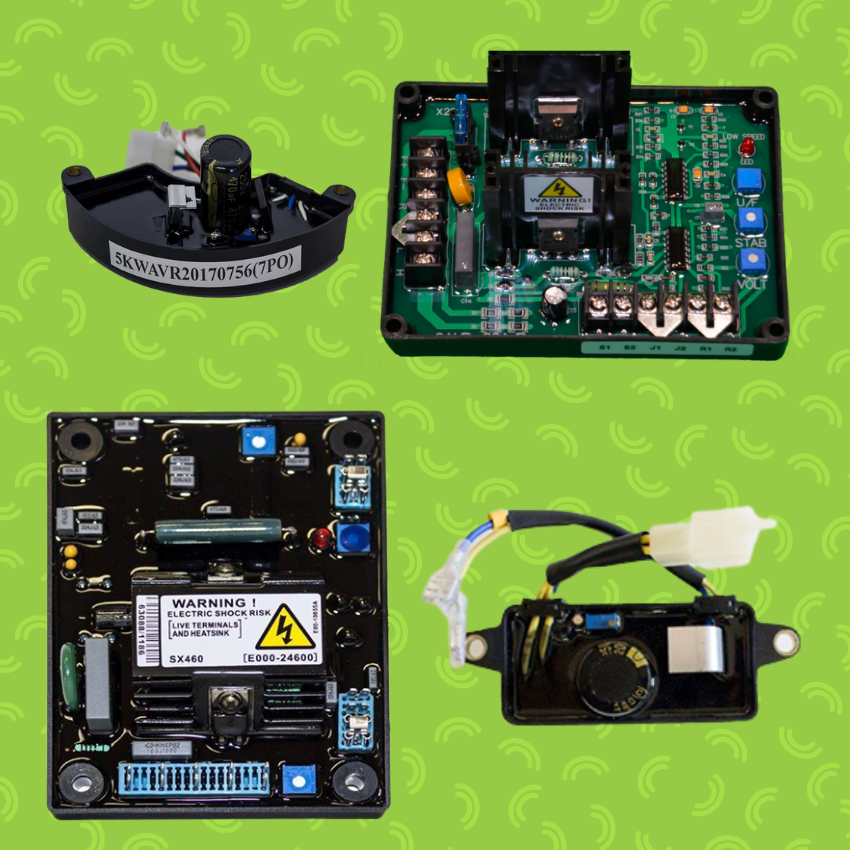
An Automatic Voltage Regulator Generator is a generator system fitted with an AVR to keep output voltage steady. The AVR senses the generator voltage and adjusts the exciter current to hold voltage within set limits. The system protects sensitive loads and prevents damage to motors and electronics. Think of it as a fast electronic guard that keeps power safe and steady.
How an Automatic Voltage Regulator Generator Works
The AVR monitors the generator output voltage continuously. When voltage drops, the AVR raises exciter current to boost output. When voltage rises, it reduces exciter current to lower output. This closed-loop control uses sensing lines, a controller, and an exciter to keep voltage within a tight band.
Key control steps include:
- Sense output voltage on the generator terminals.
- Compare sensed voltage to a set reference.
- Adjust excitation to increase or decrease alternator output.
- Repeat many times per second for stable power.
In modern systems, a digital AVR uses microcontrollers and algorithms for finer control. Older systems use analog components or electro-mechanical regulators. Both aim to maintain voltage under load changes and engine speed shifts.

Types of Automatic Voltage Regulator Generator
There are several AVR types used with generators. Common types include:
Brushless AVR
Uses a rotating exciter and rectifier. It needs no brushes and works well in rugged use.Static (Solid-state) AVR
Uses power electronics to control excitation. It is fast and reliable for most applications.Digital AVR
Uses a microcontroller for adaptive control. Offers features like droop control, remote setpoints, and diagnostics.Servo or Electromechanical AVR
Uses motors or relays to adjust excitation. It is slower and now less common in new equipment.
Each type fits different needs. Choose one based on load type, environment, and required control features.
Benefits and Limitations of Automatic Voltage Regulator Generator
Benefits:
- Protects equipment by keeping voltage stable during load changes.
- Improves power quality for electronics and motors.
- Reduces nuisance trips and downtime.
- Can improve fuel use indirectly by stabilizing generator response.
Limitations:
- Adds cost and complexity to the generator system.
- Incorrect setup can cause hunting or unstable voltage.
- Some AVRs are sensitive to harmonics or poor grounding.
- Maintenance or calibration may be needed over time.
I once saw a factory with repeated PLC faults. After fitting a properly tuned Automatic Voltage Regulator Generator, the faults stopped and productivity rose. That showed the real value beyond specs.

Installation, Commissioning, and Maintenance Best Practices
Follow these steps for reliable AVR performance:
- Read manufacturer wiring diagrams and warnings before starting.
- Use correct sensing lines and keep them short and shielded.
- Ground the generator and AVR per local code to avoid noise and faults.
- Commission with no load, then step load slowly while tuning voltage and droop.
- Record settings and label terminals for future service.
Routine maintenance tips:
- Inspect connection tightness every 6 months.
- Clean cooling paths and check for corrosion.
- Run diagnostic checks on digital AVRs and update firmware if needed.
- Replace worn parts on older electromechanical AVRs.
From hands-on work, one tip stands out: always verify sensing lead polarity and routing. Reversed or noisy sensing is a common cause of instability.

Troubleshooting Common Issues
Voltage too high or too low:
- Cause: Wrong AVR gain or setpoint.
Fix: Recalibrate setpoint and reduce gain to stop overshoot.
Voltage hunting or oscillation:
- Cause: Excessive AVR gain or poor governor coupling.
Fix: Lower AVR response, check governor tuning, and stabilize speed control.
No voltage output:
- Cause: Exciter or rectifier failure.
Fix: Test exciter circuit, replace rectifier diodes or brushes if needed.
Intermittent voltage dips:
- Cause: Loose sensing or load-side wiring.
Fix: Tighten connections and check for damaged cables.
Always record test steps and changes. Small tweaks often solve problems but document them to prevent repeat issues.

Applications and Industry Use Cases
Automatic Voltage Regulator Generator setups are common across sectors:
- Hospitals: Keeps life-support and lab gear stable.
- Data centers: Protects servers and networking gear from voltage swings.
- Telecom: Ensures steady power for base stations and switching equipment.
- Manufacturing: Stabilizes motors and drives to prevent stalls.
- Marine and remote sites: Provides reliable power under variable loads.
Each case benefits from tuned AVRs to match load dynamics and critical equipment needs.

Personal Experience and Practical Tips
I worked on a 500 kVA standby unit where the AVR was factory default. The plant saw frequent motor trips under startup loads. After tuning AVR response and enabling droop control, the unit handled peak loads smoothly. The main lessons I learned were:
- Test with real loads. Simulated checks miss dynamic behavior.
- Keep a log of AVR settings and changes. It saves time during service calls.
- Ask for a spare AVR module if the site is critical. Replacement is faster than repair.
When choosing an Automatic Voltage Regulator Generator, ask suppliers about compatibility with your generator model, spare parts, and firmware support.

Frequently Asked Questions of Automatic Voltage Regulator Generator
What does an Automatic Voltage Regulator Generator do?
An Automatic Voltage Regulator Generator keeps generator terminal voltage steady by adjusting exciter current. It protects downstream equipment and improves power quality.
How often should I service the AVR on my generator?
Service intervals depend on use and type. Inspect connections and clean components every 6 months, and perform full tests annually for critical systems.
Can an AVR fix voltage problems caused by a bad engine governor?
An AVR can correct voltage but cannot fix poor engine speed control. Both AVR and governor tuning should be done together for stable output.
Is a digital AVR better than an analog AVR?
Digital AVRs often give better control, diagnostics, and features. Analog AVRs can still be reliable and simpler for some applications.
What causes AVR hunting and how do I stop it?
Hunting is usually caused by too-high AVR gain or poor interaction with the governor. Reduce AVR response, check speed stability, and re-tune both systems.
Conclusion
A well-chosen and well-tuned Automatic Voltage Regulator Generator gives stable power, protects equipment, and reduces downtime. Follow good installation and maintenance steps, test with real loads, and keep records of settings. If you manage critical power, consider digital AVRs and keep a spare module on hand. Try the steps here on your next service or purchase decision, and leave a comment with your questions or experiences.