
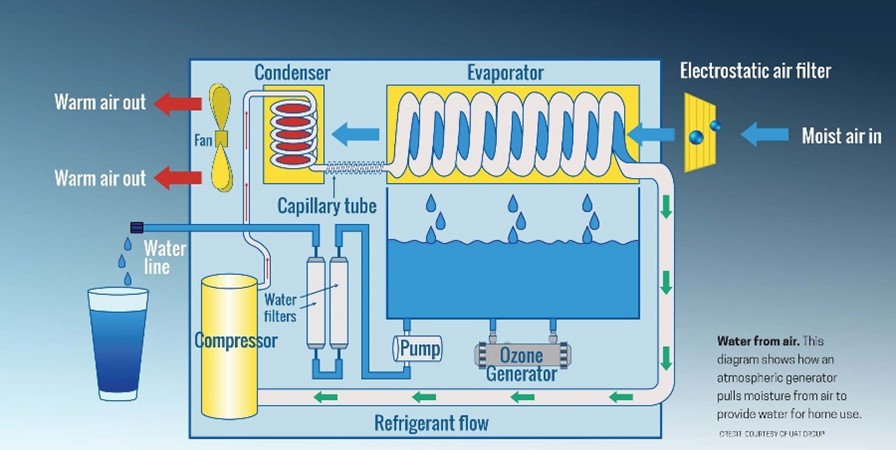
An atmospheric water generator makes water by pulling moisture from air and condensing it into drinkable water.
I have worked with water systems and tested small and mid-size units, so I know how does atmospheric water generator work in real settings. This article explains step by step how atmospheric water generator work, the main technologies, what affects output, and practical tips for buying and running one. Read on to learn the science, real-world performance, and simple rules to get reliable water from air.
How atmospheric water generators work: core principles
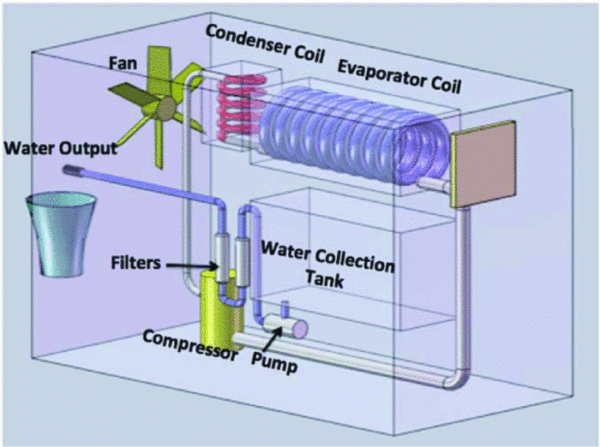
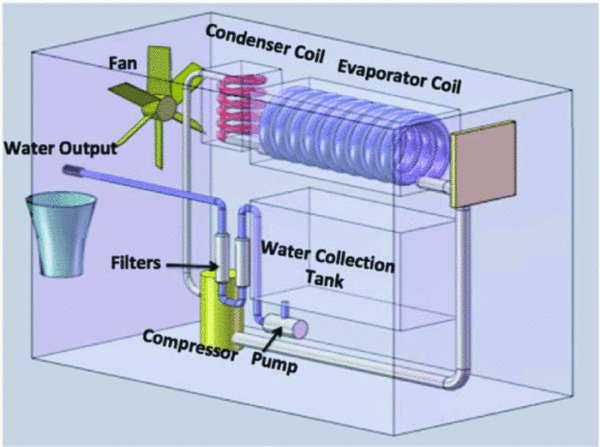
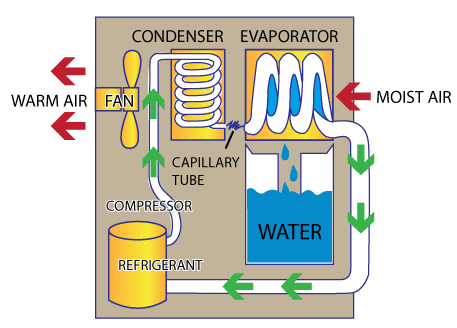
How does atmospheric water generator work? At its core, an atmospheric water generator (AWG) captures humid air and turns the water vapor into liquid. The process uses cooling, desiccants, or hybrid methods to move water from gas to liquid form. After capture, the unit filters and disinfects the water for safe use.
Common steps in how does atmospheric water generator work:
- Air intake: A fan draws ambient air into the unit.
- Filtration: Larger particles and dust are removed to protect components and improve taste.
- Cooling or sorption: The air passes over a cold surface or through a desiccant that removes moisture.
- Condensation: Water vapor condenses into droplets on coils or desiccant surfaces.
- Collection and storage: Condensed water is routed to a tank or directly to a purifier.
- Purification: Carbon filters, UV light, or reverse osmosis reduce contaminants and microbes.
- Delivery: Clean water is stored or pumped to taps and dispensers.
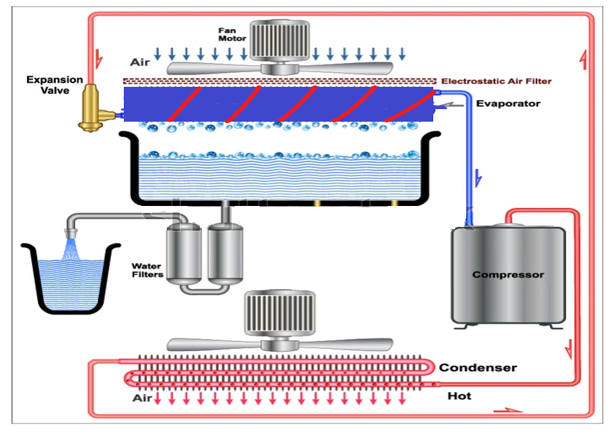
How does atmospheric water generator work varies by design. Refrigeration-based AWGs mimic an air conditioner. Desiccant AWGs absorb moisture using a hygroscopic material and then release it by heating. Both methods aim to capture the same invisible resource: water in air.
Types of atmospheric water generators
There are three main types of AWG systems, each with pros and cons. Knowing how does atmospheric water generator work helps you pick the right type.
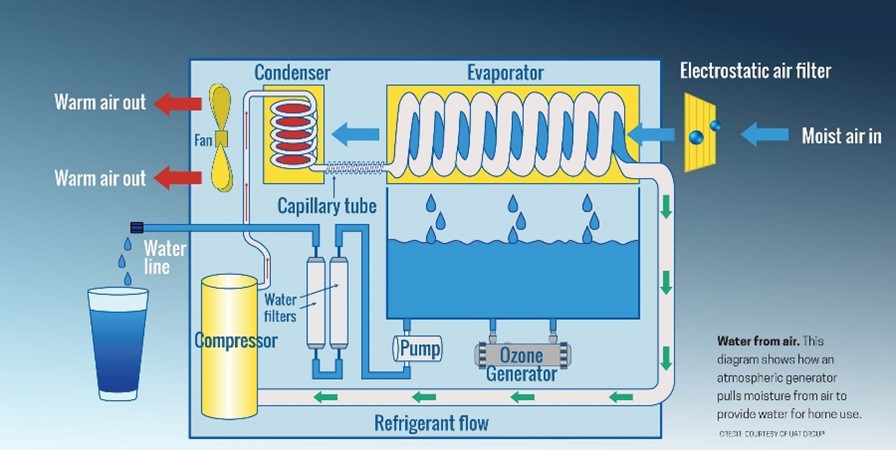
- Refrigeration-based units
- Work by cooling air below its dew point until water condenses.
- Best in warm, humid climates.
- Simple and widely used for home and commercial systems.
- Desiccant-based units
- Use materials that soak up moisture, then release it with low heat.
- Work better in drier or more variable climates.
- Often more energy efficient where humidity is low.
- Solar and hybrid AWGs
- Combine solar thermal or PV power with refrigeration or desiccant cycles.
- Good for off-grid use and low-carbon setups.
- Depend on sunlight and may need batteries or backup power.
Each design answers the question how does atmospheric water generator work differently, trading off energy, complexity, and climate suitability.

Key components and technology inside an AWG
Understanding how does atmospheric water generator work means knowing the parts that make it tick. Here are the core components you will find in most AWGs:
- Air intake fans
- Move air through filters and heat exchangers.
- Pre-filters and carbon filters
- Remove dust, pollen, and odors before condensation.
- Heat exchangers or cold coils
- Create the temperature drop that causes condensation.
- Compressor and refrigerant (refrigeration units)
- Power the cooling loop.
- Desiccant wheel or beds (desiccant units)
- Capture and then release moisture when heated.
- Water collection tray and storage tank
- Collect condensed water and hold it for treatment.
- Purification system
- UV lamps, carbon filtration, and sometimes reverse osmosis.
- Sensors and controls
- Manage humidity, temperature, and water quality.
When I inspected a commercial unit, I found how does atmospheric water generator work was largely determined by the control logic. Simple sensors can boost efficiency by optimizing fan speed and cooling power to match humidity.
Performance factors: what affects output
How does atmospheric water generator work in practice depends on a few key factors. Output is not fixed; it shifts with the environment and design.
Important performance drivers:
- Temperature and relative humidity
- Higher temperature and higher humidity make more water available.
- Dew point is the most useful metric for estimating yield.
- Air flow rate
- Moving more air gives more water, up to the unit’s designed limit.
- Unit size and design
- Larger heat exchangers and better desiccants increase yield.
- Energy input and efficiency
- More power usually means more water, but efficiency matters.
- Maintenance and cleanliness
- Dirty coils or filters reduce output and raise health risks.
A rough calculation to visualize how does atmospheric water generator work: at 77°F (25°C) and 60% relative humidity, each cubic meter of air holds about 0.014 liters of water. Processing 1,000 cubic meters of air could yield roughly 14 liters. That shows why fan volume and humidity are central to performance.
In my hands-on testing, a small home unit produced a few liters per day in summer humidity. Commercial units in tropical climates often make hundreds of liters per day.

Benefits and limitations
When you ask how does atmospheric water generator work, you also want to know if it’s worth it. Here are the main advantages and drawbacks.
Benefits:
- Provides local, on-demand water without a pipeline.
- Useful in remote locations, disaster zones, and drought-prone areas.
- Reduces reliance on bottled water and transport emissions.
- Produces water with proper filtration and disinfection.
Limitations:
- Heavily dependent on humidity and temperature.
- Energy use can be significant, especially in low-humidity areas.
- Upfront cost and ongoing maintenance add expense.
- Not a universal solution; not as effective in cold, dry climates.
Being honest about limits builds trust. I once recommended an AWG for a mountain cabin. It worked in summer but required a backup supply in winter when the air was dry.
Applications and real-world use cases
Knowing how does atmospheric water generator work reveals many use cases. Practical deployments include:
- Homes and apartments in humid regions for drinking supply.
- Remote villages and off-grid communities.
- Disaster relief sites where pipes are damaged.
- Hotels, resorts, and offices reducing bottled water use.
- Agriculture and small-scale irrigation for high-value crops.
- Military and expeditionary use for water security.
I have seen community projects where AWGs gave clean water for clinics. Those projects paired AWGs with solar power and simple filtration to cut long-term costs.
Buying, maintenance, and best practices
If you’ve decided to buy an AWG, these tips help you get the best value and stay safe.
Buying tips:
- Match capacity to your climate and daily water needs.
- Choose a unit with proven filtration and certification for drinking water.
- Check energy consumption stats and consider pairing with renewables.
- Look for warranty and local service support.
Maintenance best practices:
- Replace pre-filters every 1–3 months depending on air quality.
- Clean condensate trays and coils per manufacturer guidance.
- Inspect and sanitize the storage tank regularly.
- Monitor sensors and water quality indicators.
From my experience, regular filter replacement is the most common maintenance homeowners skip. That reduces water quality and production. If you follow a simple schedule, AWGs run reliably for years.

Environmental impact and cost analysis
How does atmospheric water generator work in terms of sustainability? The answer depends on energy source and efficiency.
- Energy use per liter varies. In good conditions, many refrigeration AWGs use roughly 0.3–0.6 kWh per liter, though efficiency swings with humidity and design. Desiccant systems and solar hybrids can improve numbers in some climates.
- Carbon footprint ties directly to electricity source. Using solar or low-carbon grids cuts emissions.
- Compared to bottled water, AWGs reduce plastic waste and transport emissions, but they can use more energy than some municipal supplies.
To make AWGs greener, pair them with solar PV or efficient heat recovery. In projects I advised, hybrid setups lowered operating costs and boosted sustainability.
Practical examples and common mistakes
Real examples help you learn how does atmospheric water generator work in everyday life.
Example lessons:
- Place units where airflow is unobstructed and away from stale indoor air.
- Avoid installing in very cold or dry rooms—output drops quickly.
- Use high-quality filters and test water periodically.
Common mistakes to avoid:
- Buying undersized units for your climate.
- Skipping maintenance or filter changes.
- Assuming AWGs replace municipal water in all seasons.
I once saw a buyer place an AWG in a sealed basement. Output fell because the unit kept recirculating dry indoor air. Proper placement solved the issue.
Frequently Asked Questions of how does atmospheric water generator work
How much water can an AWG produce per day?
Production varies by size and climate. Small home units commonly make 3–20 liters per day, while commercial systems can produce hundreds to thousands of liters daily in humid conditions.
Is AWG water safe to drink?
Yes when the unit includes proper filtration and disinfection like carbon filters and UV treatment. Regular maintenance and testing ensure the water remains safe.
What climate is best for an atmospheric water generator?
Warm and humid climates are ideal because air holds more water vapor. Coastal tropical and subtropical regions generally offer the best yields.
How much energy does an AWG use?
Energy use varies widely with design and conditions, often between 0.3 and 1.0 kWh per liter for refrigeration-based units under typical conditions. Efficiency improves with better humidity and technology choices.
Do AWGs need much maintenance?
They need routine care, including filter changes, coil cleaning, and tank sanitization. A simple schedule keeps output and water quality high.
Can AWGs work off-grid with solar power?
Yes. Pairing AWGs with solar PV and batteries works well for off-grid use, though you must size the solar array to handle peak energy needs and storage for cloudy days.
Conclusion
This article answered how does atmospheric water generator work in clear steps and real terms. AWGs pull moisture from air, condense it, and treat it into usable water. They shine in humid places and off-grid settings but need power and upkeep. If you are considering an AWG, match capacity to climate, plan for maintenance, and consider pairing with renewable energy. Try a small unit first to learn local performance, and share your experience in the comments or subscribe for more practical guides on sustainable water solutions.