
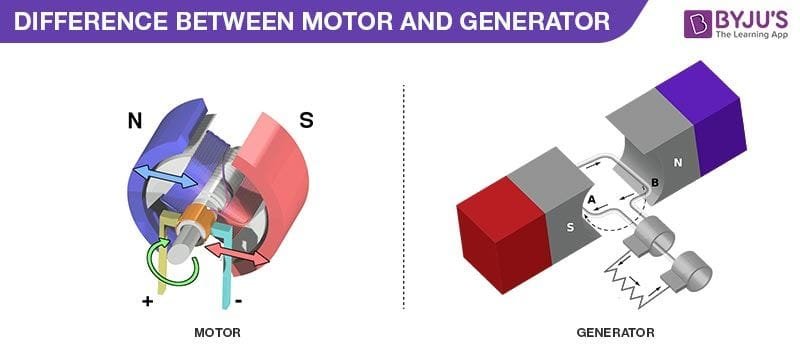
Have you ever wondered what sets a generator apart from a motor? You’re not alone.
Many people find themselves confused by these two essential devices. They both play crucial roles in our daily lives, yet they operate on different principles. Understanding the difference can help you make better choices in your projects and repairs. You’ll discover how generators convert mechanical energy into electrical energy, while motors do the opposite.
By the end, you’ll feel confident in discussing these machines and knowing when to use each one. Let’s dive in and clear up the confusion once and for all!

Credit: www.etechnog.com
Core Functions
Generators and motors serve different purposes. A generator converts mechanical energy into electrical energy. In contrast, a motor transforms electrical energy into mechanical energy. Understanding these core functions helps clarify their roles in various applications.
Understanding the core functions of generators and motors is key to grasping their roles in everyday life. Although they are often confused, each serves a distinct purpose. Let’s break down their core functions to see how they differ.Energy Conversion Process
Generators convert mechanical energy into electrical energy. They rely on the principle of electromagnetic induction. When you turn a generator’s rotor, it moves through a magnetic field, producing electricity. This process powers everything from homes to industries. Motors, on the other hand, do the opposite. They convert electrical energy into mechanical energy. When electricity flows through a motor, it creates a magnetic field that causes the rotor to spin. This is how your appliances and electric vehicles get moving.Purpose And Applications
Generators are primarily used to supply power. You might use one during a power outage, or in remote areas where electricity isn’t available. They are common in construction sites, farms, and even for outdoor events. Motors are everywhere in our daily lives. They power fans, refrigerators, and even your favorite electric toothbrush. Each application requires different types of motors, tailored for specific tasks like speed and torque. Have you ever thought about how much you rely on these devices? Whether you’re charging your phone or driving your car, understanding the core functions of generators and motors can enhance your appreciation for technology. Knowing how they work opens up a world of possibilities in energy use and efficiency.Key Components
Understanding the key components of generators and motors helps clarify their differences. Both devices have essential parts that perform specific functions. Let’s explore the main components: the rotor, stator, source, and load.
Rotor And Stator
The rotor is the moving part of both generators and motors. It spins inside the machine. This spinning creates electricity in generators. In motors, it helps convert electricity into motion.
The stator is the stationary part. It surrounds the rotor. The stator provides a magnetic field. This field interacts with the rotor. This interaction is vital for operation.
Source And Load
The source provides energy to the system. In a generator, the source is mechanical energy. This could be from wind, water, or engines. It converts this energy into electrical energy.
The load is the device using the electricity. In motors, the load is what the motor moves. It can be anything from fans to cars. Understanding the source and load helps grasp how these devices function.
Working Principles
Generators and motors have different working principles. Understanding these principles helps to see how each device functions. Let’s explore how they work.
Electromagnetic Induction
Electromagnetic induction is key in generators. A generator converts mechanical energy into electrical energy. It uses a magnetic field and a coil of wire. When the coil moves through the magnetic field, it creates electricity.
In contrast, a motor works differently. A motor uses electricity to create motion. It relies on the same electromagnetic principles but in reverse. Electric current flows through coils, creating a magnetic field. This field causes the motor’s rotor to spin.
Mechanical To Electrical Conversion
Generators focus on mechanical to electrical conversion. They need a source of mechanical energy. This can come from wind, water, or engines. As the mechanical energy turns the generator, it produces electric power.
Motors take electrical energy and convert it to mechanical energy. They drive machines and appliances. The flow of electricity energizes the coils. This action results in movement.
Types And Variations
Generators and motors serve different purposes. A generator converts mechanical energy into electrical energy. In contrast, a motor changes electrical energy into mechanical energy. Understanding these variations helps clarify their roles in everyday devices.
Understanding the types and variations of generators and motors can help you choose the right device for your needs. Both serve distinct functions but can sometimes overlap in application. Let’s dive into the specifics.Ac And Dc Versions
AC (Alternating Current) and DC (Direct Current) versions of generators and motors differ fundamentally in how they operate. – AC Generators: These produce alternating current, which means the flow of electricity changes direction periodically. They are commonly used in power plants and for household electricity supply. – DC Generators: These generate direct current, where the electricity flows in one constant direction. You often find them in battery-powered devices and electric vehicles. – AC Motors: These work with alternating current. They are widely used in household appliances like washing machines and fans due to their efficiency and simplicity. – DC Motors: These utilize direct current and are typically found in devices requiring precise speed control, like electric cars and robotics. Understanding the difference between these types is crucial for selecting the right equipment for your projects.Specific Use Cases
Different applications require specific types of generators and motors. – Generators: – Portable Generators: Great for camping or during power outages. They provide AC power for small devices. – Industrial Generators: Used in factories and large facilities to ensure a reliable power supply. – Motors: – Induction Motors: Common in HVAC systems and conveyor belts due to their durability. – Stepper Motors: Ideal for printers and CNC machines where precise movement is essential. Think about your needs. Are you looking for something to power your outdoor adventures, or do you need a motor for a project? Your choice will depend on the specific requirements of your application. In both cases, understanding the operational differences between AC and DC can guide your decisions effectively. What projects do you have in mind that could benefit from this knowledge?Efficiency And Performance
Efficiency and performance are crucial in understanding generators and motors. Both devices convert energy, but they do so differently. This affects how well they work. Knowing their efficiency helps in choosing the right device for specific needs.
Energy Loss Factors
Energy loss occurs in both generators and motors. For generators, losses can come from heat and friction. These losses reduce the energy output. Motors also face energy loss. Heat generated in the windings is a common issue. Other factors include mechanical wear and electrical resistance. These losses lower the overall performance of both devices.
Optimization Techniques
Improving efficiency is possible through various techniques. For generators, using high-quality materials can help. Better insulation reduces heat loss. Regular maintenance keeps generators running smoothly. For motors, using variable frequency drives can enhance performance. These drives optimize speed and torque. Proper sizing of motors can also minimize energy waste. Each technique plays a vital role in maximizing efficiency.
Applications In Daily Life
Generators and motors play essential roles in our everyday lives. Their functions affect many areas, from industry to home use. Understanding their applications helps us appreciate their importance.
Industrial Machinery
In factories, motors drive machines. They power tools like drills and lathes. This helps in manufacturing products efficiently.
Generators supply electricity to run heavy equipment. They provide power for cranes and forklifts. Without these machines, industrial operations would slow down.
Mining and construction use both generators and motors. Motors move materials, while generators ensure a steady power supply.
Consumer Electronics
At home, motors are in many appliances. They run refrigerators, washers, and fans. These devices make daily tasks easier.
Generators come in handy during power outages. They keep essential appliances running. This includes lights, refrigerators, and medical equipment.
Small generators are useful for camping or outdoor events. They provide electricity for lighting and charging devices. This makes outdoor activities more enjoyable.
Comparison Chart
The comparison chart below highlights the main differences between generators and motors. Understanding these differences helps in choosing the right device for your needs. Each device serves a unique purpose in the world of electricity and mechanics.
Basic Function
A generator converts mechanical energy into electrical energy. It produces electricity when it spins. A motor does the opposite. It converts electrical energy into mechanical energy. It uses electricity to create movement.
Energy Source
Generators use external mechanical energy sources. This can be wind, water, or fuel. Motors require an electrical energy source. Common sources include batteries or power outlets.
Direction Of Energy Flow
In generators, energy flows from mechanical to electrical. In motors, energy flows from electrical to mechanical. This is a key distinction between the two devices.
Applications
Generators are often used in power plants and backup systems. They provide electricity in emergencies. Motors are found in various appliances and vehicles. They help in moving parts or driving machinery.
Efficiency
Generators can be very efficient in producing power. Their efficiency depends on the fuel type and design. Motors also have high efficiency levels. They often convert a large portion of electricity into movement.
Size And Design
Generators vary in size. Some are large and stationary, while others are portable. Motors also come in various sizes. They can be small like those in toys or large like those in industrial machines.

Credit: www.youtube.com

Credit: www.quora.com
Frequently Asked Questions
What Is The Main Function Of A Generator?
A generator converts mechanical energy into electrical energy. It uses electromagnetic induction to produce electricity. This process involves rotating a coil within a magnetic field. Generators are crucial for power generation in various applications, from small portable units to large power plants.
How Does A Motor Work?
A motor transforms electrical energy into mechanical energy. It operates on the principle of electromagnetism. When electric current flows through the motor’s coils, it generates a magnetic field. This field interacts with the permanent magnets, causing the motor to spin and perform work.
Can A Motor Be Used As A Generator?
Yes, a motor can function as a generator. When mechanically driven, it can produce electricity. This process occurs by reversing the flow of energy. However, not all motors are designed for this dual purpose, so efficiency may vary.
What Are The Types Of Generators?
Generators come in several types, including portable, standby, and inverter generators. Portable generators are ideal for temporary power needs. Standby generators automatically supply power during outages. Inverter generators are efficient and provide clean energy, making them suitable for sensitive electronics.
Conclusion
Generators and motors serve different purposes. Generators convert mechanical energy into electrical energy. Motors do the opposite, turning electrical energy into motion. Understanding these differences helps in choosing the right device for your needs. Both play vital roles in our daily lives.
Knowing how they work can aid in making informed decisions. Keep exploring these concepts for better clarity. This knowledge empowers you to tackle various projects effectively.