A 9000 watt generator can run most home essentials, power tools, and small air conditioners.
I’ve spent years installing and testing portable generators, so I know what a 9000 Watt Generator Will Run and what it can’t. This guide breaks down real-world loads, running vs. starting watts, typical run times, safety tips, and my own hands-on lessons to help you choose and use a 9000 Watt Generator Will Run What you need reliably. Read on for clear examples, easy math, and practical advice.

What does a 9000 Watt Generator mean and how it’s rated
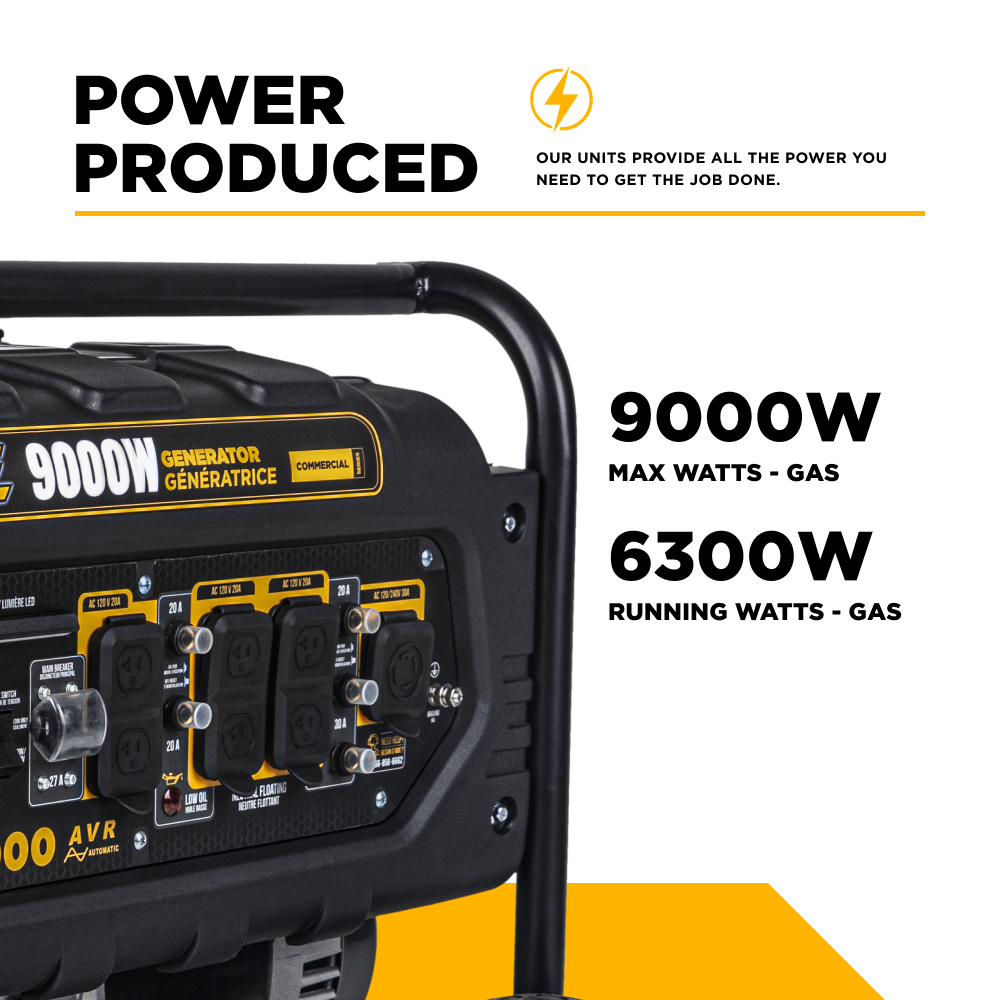
A 9000 watt rating can mean peak (surge) watts or continuous running watts. Many portable units advertise 9000 watts as peak output and 7000–7500 watts as continuous. Always read the spec plate. The phrase 9000 Watt Generator Will Run What depends on whether you mean surge or running watts.
Running watts power steady loads. Starting (surge) watts handle motor kicks at startup. Appliances with motors need much more surge than they run. Knowing both numbers tells you if a 9000 Watt Generator Will Run What you plan to attach.
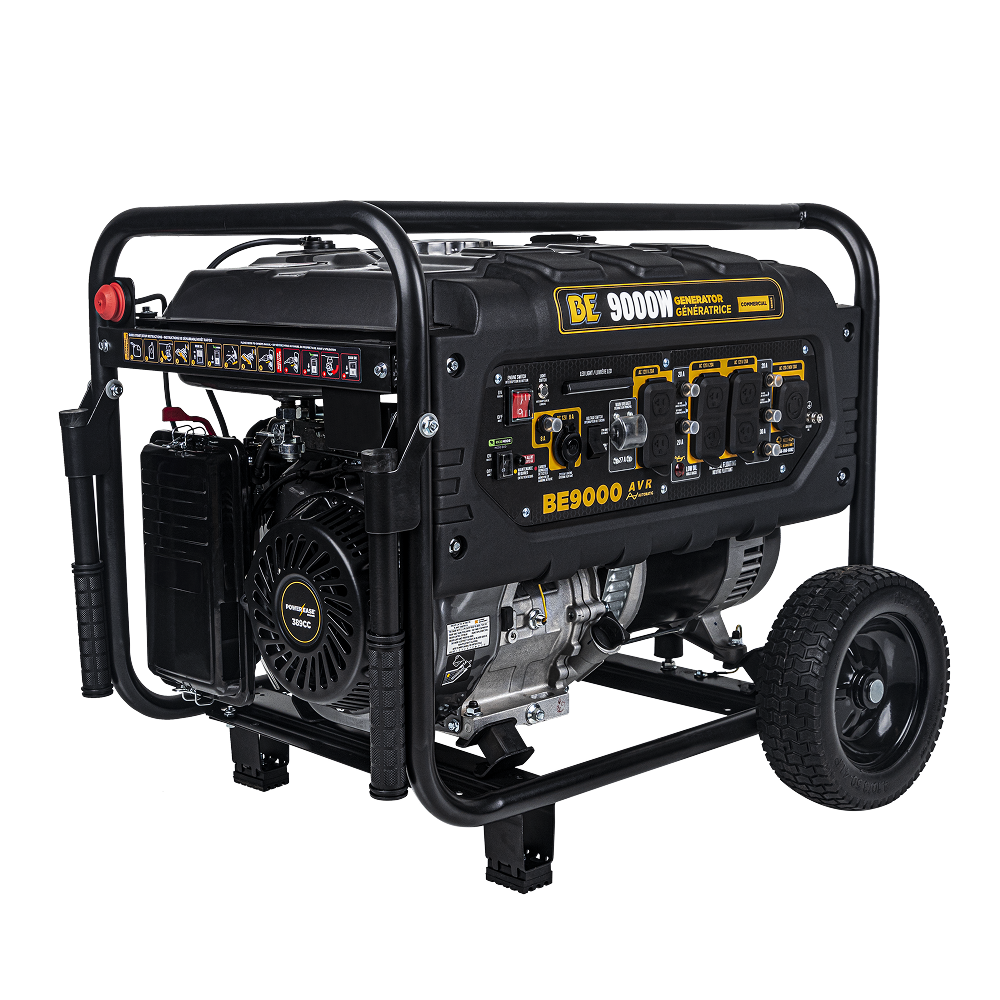
What a 9000 Watt Generator Will Run: typical loads and combos
Here are common household and jobsite loads with typical running and starting watt ranges. Use these to add up loads and test if a 9000 Watt Generator Will Run What you need.
- Refrigerator
- Running 150 to 800 watts
- Starting 600 to 2000 watts
- Sump pump
- Running 400 to 1200 watts
- Starting 1000 to 3000 watts
- Window air conditioner (8,000–12,000 BTU)
- Running 800 to 1600 watts
- Starting 2000 to 3000 watts
- Electric water heater (tank-style)
- Running 3000 to 4500 watts
- No large motor start, so steady draw
- Space heater (1500 W)
- Running 1500 watts
- No big surge
- Well pump or larger motors
- Running 800 to 3000 watts
- Starting 2000 to 8000 watts depending on motor size
- Power tools (circular saw, table saw)
- Running 1000 to 3000 watts
- Starting varies; some draw extra surge
Example combos a 9000 Watt Generator Will Run:
- Refrigerator + sump pump + LED lights + modem/router (most home essentials).
- One 12000 BTU window AC or a 10000 BTU AC plus fridge and lights.
- Several power tools on a jobsite up to the continuous rating if peak starts are staged.
A 9000 Watt Generator Will Run What you add up within running watt limits and handle startups within peak capacity. If many motors start at once, you can exceed surge capacity.

Estimating run time and fuel use
Run time depends on load, generator efficiency, tank size, and fuel type. Typical portable 9kW-class generators have 4 to 8 hour run times at 50% load on a full tank.
- Fuel use rough guide
- At half load expect roughly 0.5 to 1.0 gallons per hour depending on model
- At full load expect 1.0 to 1.5 gallons per hour
- Example: a 6-gallon tank might run 6–12 hours at moderate load
To know if a 9000 Watt Generator Will Run What you need for a full outage day, estimate total watt hours, then compare fuel capacity and expected gallons per hour.
Starting vs running watts: why it matters
Many people assume rated watts is all that matters. It is not. Starting (surge) watts can be two to seven times running watts for motors. That is why a 9000 Watt Generator Will Run What you plug in only if you respect both numbers.
Tips:
- Turn on big motors one at a time to avoid simultaneous surges.
- Use soft-start kits or VFDs for large pumps or AC units when possible.
- If surge needs exceed capacity, a generator with higher peak or a split-start strategy helps.
Choosing the right generator, panel setup, and safety
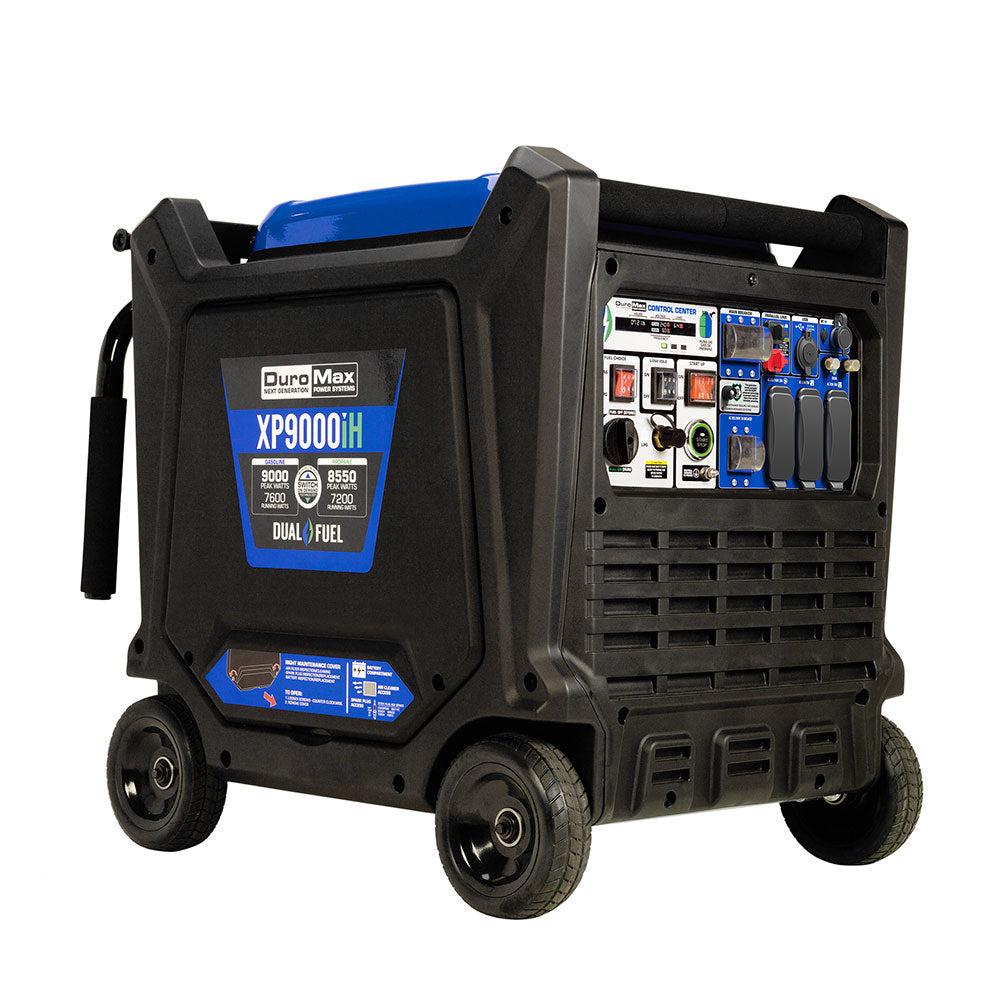
Pick a model with specs that match your needs. If you need 9000 Watt Generator Will Run What includes central HVAC or large water heaters, consider a larger standby or whole-house unit. For partial loads, a 9000W portable might be perfect.
Safety checklist:
- Use a transfer switch or manual interlock when hooking to house panel to avoid backfeed.
- Ground the generator per manual and local code.
- Keep the generator outdoors, away from windows due to CO risk.
- Use heavy-duty, outdoor-rated cords sized for the load.

Maintenance, my field tips, and mistakes to avoid
From years of fieldwork I learned simple steps that extend life and performance. Treat your 9000 Watt Generator Will Run What you depend on as a vehicle—regular checks and practical habits matter.
- Run the generator monthly for 20 minutes under load to keep parts lubricated.
- Change oil after initial break-in and at recommended intervals.
- Use fresh, stabilized fuel for storage and drain carburetors if idle long.
- Avoid running at 100% for long periods; aim for 50–75% for best fuel economy.
- Keep extra filters, spark plugs, and a small fuel can on hand.
Common mistakes:
- Plugging too many startup-motor devices at once.
- Using undersized cords or piggybacking multiple extension cords.
- Overlooking CO safety and transfer switch wiring.

PAA-style quick questions
What can a 9000 Watt Generator Will Run in a whole house?
- It can power essential circuits: fridge, sump pump, a few lights, and one AC or heater. Whole-home central HVAC and electric water heaters usually need more capacity.
How long will a 9000 Watt Generator run on one tank?
- Typical run is 4–12 hours depending on tank size and load. At 50% load, expect the longer end of that range.
Can a 9000 Watt Generator Will Run an electric range or dryer?
- Not usually. Electric ovens and dryers draw 3000–6000 watts each. You might run one but not much else simultaneously.

Frequently Asked Questions of 9000 Watt Generator Will Run What
What is the difference between surge and running watts?
Surge watts cover brief spikes when motors start. Running watts are the steady power draw. A 9000 Watt Generator Will Run What you need depends on both figures.
Can a 9000 watt generator run a central air conditioner?
Most central AC systems need 3000 to 7000 starting watts and 1000 to 4000 running watts. A 9000 Watt Generator Will Run many central units if specs fit, but larger systems may need a standby unit.
Is a 9000 watt generator enough for my whole house?
It can handle essential circuits but rarely powers every circuit at once. If you want full-home coverage, a larger standby system is usually required.
Do I need a transfer switch to connect a 9000 watt generator to my home?
Yes. A transfer switch prevents dangerous backfeed and meets code for grid-connected operation. It’s a must for safe, reliable use.
How do I size a generator for power tools and jobsite use?
Add up running and starting watts for each tool and allow margin. A 9000 Watt Generator Will Run many jobsite setups, but plan starts and sequence heavy draws.
Can I run a 9000 watt generator indoors in a garage with the door open?
No. Even with the door open, carbon monoxide can build up. Always run generators outdoors and away from openings.
Conclusion
A 9000 Watt Generator Will Run What most people need for hotspots of power: refrigerators, pumps, lights, small to medium AC units, and many power tools. Check running and starting watt ratings, add loads carefully, and use safe wiring and transfer equipment. My real-world tips—monthly runs, staged motor starts, and simple maintenance—will keep your unit reliable when you need it most. Take a moment to list your essential loads, compare them to your generator’s specs, and make a plan for safe use. If you found this helpful, try sizing your loads now, subscribe for more guides, or leave a comment with your setup questions.