
Solar panels in series add voltage; panels in parallel add current. Neither arrangement is automatically better for every system. The right choice must fit the charge controller or power station’s voltage, current, power, connector, and protection requirements, including the conditions expected at the installation.
Start with the receiving equipment’s manual, then the panel datasheets. Do not choose wiring from panel wattage alone or copy a diagram for a different controller. This guide explains the comparison and a planning worksheet; it does not provide a custom installation design or instructions for making live electrical connections.
The basic difference with matched panels
Renogy’s series-versus-parallel explanation describes the basic electrical distinction. For matched panels under comparable conditions, a series arrangement adds their voltages while the string current corresponds to one panel. A parallel arrangement keeps approximately one panel’s voltage while the branch currents add.
Consider two purely illustrative panels, each operating at 20V and 5A. Each would represent 100W at that operating point. In series, the simplified result is 40V at 5A; in parallel, it is 20V at 10A. Both are 200W in this idealized arithmetic example. Real panels and conditions must be evaluated from actual specifications.
The example shows why rewiring does not create extra energy from the same sunlight. It changes the voltage/current combination delivered toward the controller. That combination can fit one input and violate another, even when the total rated watts appear unchanged.
Know which panel numbers you are comparing
Panel labels can include operating voltage and current, open-circuit voltage, short-circuit current, maximum system voltage, and other ratings. Do not substitute one number for another because they share the same unit. The controller manual determines which values must be checked for each limit.
For example, operating voltage describes a different condition from open-circuit voltage. A string that appears acceptable when you add operating voltages may exceed the permitted input when you evaluate open-circuit voltage and temperature. Record the correct datasheet values before considering a connection arrangement.
Victron’s controller installation guidance specifically tells users to consider panel open-circuit voltage and its temperature coefficient when calculating how many panels can be placed in series. Use the guidance for your actual equipment rather than borrowing a numerical limit from that example controller.
Series: voltage becomes the first obvious constraint
Adding panels in series raises the string voltage. This can be useful when a controller requires an appropriate input above the battery voltage, but the resulting string must remain within all permitted limits. “Higher voltage” is not a goal independent of the equipment receiving it.
Imagine two hypothetical panels with a stated open-circuit voltage of 25V each. Their simple series sum is 50V at the stated reference condition. That calculation alone does not approve the array for a 60V input: cold-condition voltage, tolerances, and the manufacturer’s required margin still need to be evaluated.
Ask the installer or equipment manufacturer to show the design calculation when the result is close to a limit. Keep the panel model and temperature assumptions with the answer. A momentary display reading after connection does not prove that the system remains within bounds throughout the year.
Parallel: current and branch design need attention
Putting matched panels in parallel adds current. That changes the requirements for the receiving input and the complete wiring arrangement. Do not assume an available branch connector or a cable that physically fits establishes that the proposed current is supported.
For an arithmetic illustration, three hypothetical branches at 5A would sum to 15A under the same stated condition. A real design must use the correct current specification, applicable rules, and equipment instructions. The example is not a cable, fuse, connector, or controller selection recommendation.
Parallel layouts can introduce branch protection and connector questions that a simple voltage comparison overlooks. Obtain a validated design for conductor size, overcurrent protection, disconnects, and grounding where applicable. Do not choose those components from a generic online table without checking the complete installation.
Controller type and input limits determine the usable choice
Renogy’s controller-specific discussion explains why the controller belongs at the center of the decision. A wiring arrangement is useful only if the controller can accept it and operate as intended. A panel arrangement suitable for one PWM or MPPT product is not automatically suitable for another.
Record maximum PV open-circuit voltage, permitted current, usable operating range, supported PV power, and the instructions for panel combinations. Keep input limits separate from output ratings. A controller’s battery-side output-current number should not be assumed to be its permitted panel-side input current.
If the manual allows an oversized panel wattage under specific conditions, read those conditions carefully. Do not treat power clipping as proof that excess voltage or an unsupported current arrangement will also be tolerated. Different limits serve different purposes.
Portable power stations need model-specific panel planning
A power station contains its own charging electronics, so the same voltage/current checks still apply. Compare the exact model rather than relying on a brand’s general solar-generator description. Similar-looking inputs across related models may have different limits or charging arrangements.
For example, our DELTA 3 Classic guide and DELTA 3 Plus guide explain different solar-input arrangements. Those differences are a reason to consult each model’s documentation, not an invitation to transfer the larger model’s limits to the smaller one.
The Plus manual instructs users to evaluate the panels’ total open-circuit voltage and short-circuit current and specifies a compatible charging cable. That illustrates the questions to answer; it does not establish limits for a Jackery, BLUETTI, or another EcoFlow model.
Shading and mixed panels complicate a simple comparison
Do not reduce the decision to “series for distance, parallel for shade” without checking the actual array and controller. Partial shade, panel construction, bypass arrangements, and electrical mismatch affect results. A general preference is not a prediction of the energy your particular shaded site will collect.
Victron’s discussion of different-sized PV modules illustrates why mixed panels need more careful evaluation. Matching only the advertised watts is insufficient. Compare the actual electrical characteristics and ask whether the proposed combination is supported.
For a practical site assessment, sketch the intended panel locations and record when shade reaches each position. Note whether the panels will share one input or use separately managed inputs. Bring that information to the person checking the design instead of asking only whether series or parallel is “best.”
A worksheet to complete before buying connectors
Make one row for each panel model and one for the receiving controller or power station. Record panel quantity, operating voltage/current, open-circuit voltage, short-circuit current, temperature coefficient, connector type, and the relevant manual links. Mark missing values as unknown rather than filling them from a similar product.
Next, describe the proposed arrangement in ordinary words: how many panels per series string and how many strings in parallel. Ask for verification of the resulting voltage and current under the required conditions, plus wiring, protection, and connection requirements. Keep the confirmed design with the product documentation.
Include cable distance, placement, exposure, mounting, and transport requirements in the review. A technically compatible portable array can still be inconvenient if you cannot deploy or store it. A permanent system may have installation and inspection obligations that a portable shopping comparison does not address.
How to compare complete options
Compare the full system rather than the price of the panels alone. Count the controller or station, suitable cables, approved connectors, protection equipment, mounting, professional work where required, and the time needed to operate it. Include any manufacturer limitation that could make future expansion difficult.
Write down what each option improves. One might fit the controller’s voltage range more comfortably; another might fit panel placement better. If neither satisfies the manual’s limits, choose different equipment or a different design. Do not try to solve an incompatible array with an adapter that changes only the connector shape.
For future expansion, ask whether the initial arrangement leaves a supported path for additional panels. Adding one panel to an existing string can change voltage, while adding a parallel branch changes current. Record the approved expanded configuration now if expansion is part of the purchase decision; do not assume there is spare electrical capacity because there is physical space.
Frequently asked questions
Does series produce more watts than parallel?
For the same matched panels in the idealized example, the voltage/current combination changes while the total arithmetic power remains the same. Real output depends on conditions and system behavior. Do not promise a universal energy gain from changing the arrangement.
Can I mix panels from different brands?
Only evaluate that using the full electrical specifications and receiving-equipment instructions. Brand alone does not establish compatibility, and equal watt ratings do not prove a good match. Obtain a checked design when uncertain.
Can I use any solar branch connector?
No. Verify the connector system, ratings, polarity, cable requirements, and manufacturer instructions for the complete arrangement. Physical fit is not enough evidence. Do not make or break connections under load contrary to instructions.
What should I do first?
Identify the exact controller or station and collect its manual plus the panel datasheets. Check electrical compatibility before purchasing extra panels or cables. If any required value is unavailable, ask the manufacturer or installer rather than guessing from a generic series/parallel diagram.
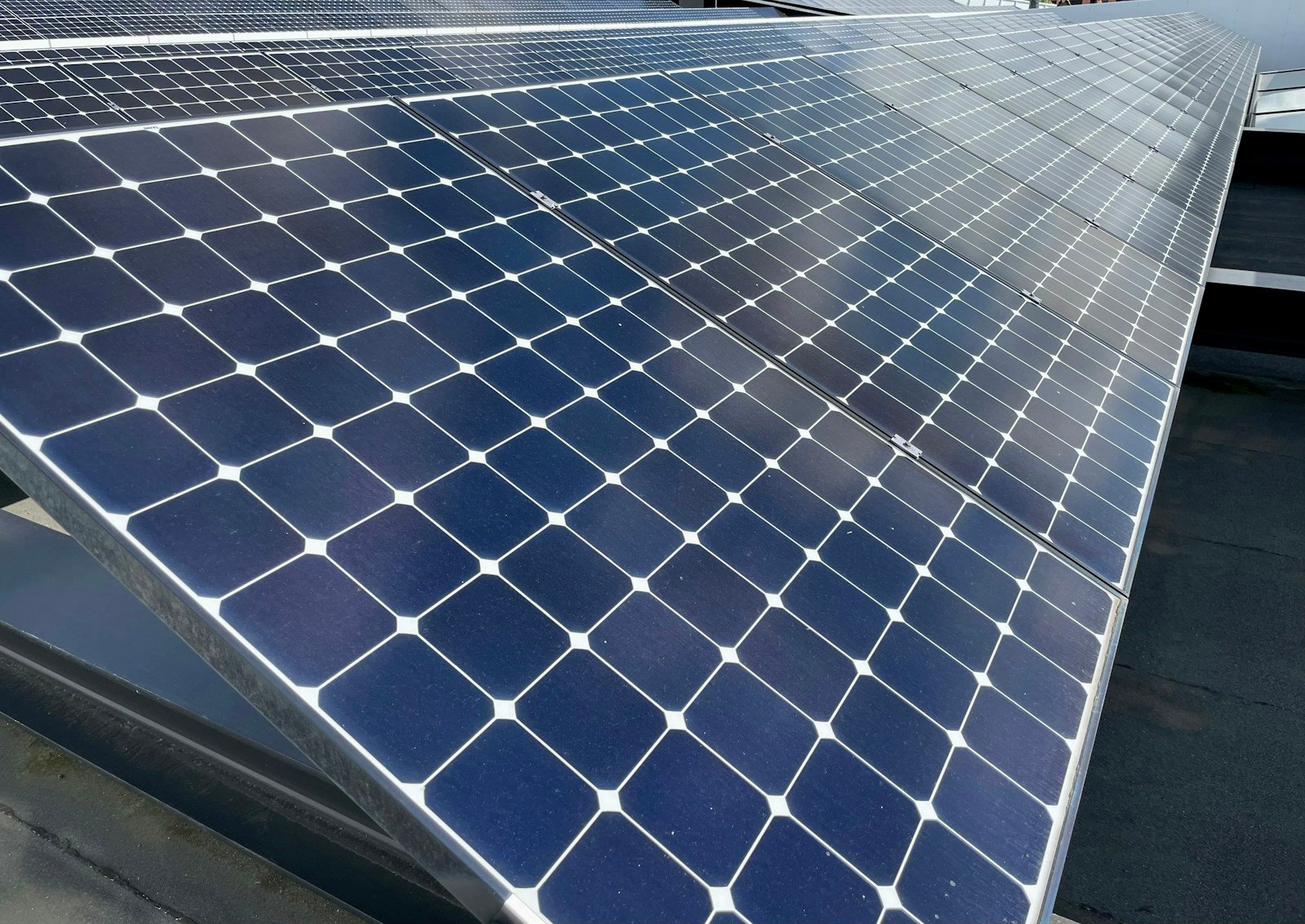
Illustrative stock photo: Kay Dittner on Unsplash, under the Unsplash License. This is a use-case illustration, not a photograph of the reviewed model or a hands-on test.