

When it comes to powering your devices and vehicles, you might have heard the terms “alternator” and “generator” thrown around. But do you really know the difference between the two?
Understanding these two essential components can help you make smarter choices for your car, home, or even your business. We’ll break down the key differences between alternators and generators, helping you grasp their unique functions and advantages. Whether you’re dealing with a car battery issue or considering backup power options, knowing how each device works will empower you to make informed decisions.
Stick around, and by the end, you’ll have a clear understanding of which option is best for your needs. Let’s dive in!

Credit: www.youtube.com
What Is An Alternator?
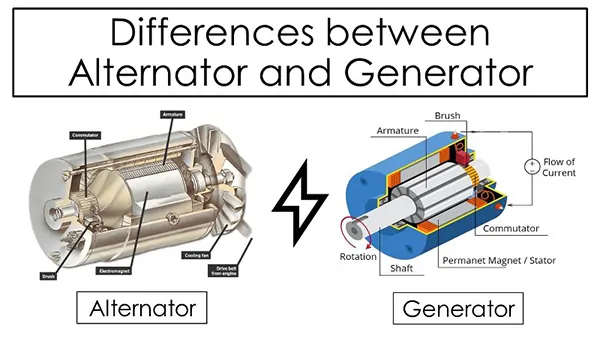
Understanding what an alternator is can significantly enhance your knowledge about vehicle mechanics and power generation. An alternator is a device that converts mechanical energy into electrical energy, primarily in the form of alternating current (AC). It plays a crucial role in keeping your vehicle’s battery charged and powering the electrical systems.
How Does An Alternator Work?
An alternator works by using a magnetic field to produce electricity. Inside, you’ll find a rotor that spins within a stator. As the rotor turns, it creates a magnetic field that induces an electric current in the stator windings.
This process generates AC electricity, which is then converted to direct current (DC) by the rectifier. This ensures that your battery receives the correct type of power for charging.
Key Components Of An Alternator
- Rotor:The rotating part that generates a magnetic field.
- Stator:The stationary part that produces electricity when the rotor spins.
- Rectifier:Converts AC to DC for battery charging.
- Voltage Regulator:Maintains the voltage output to prevent overcharging.
Why Is An Alternator Important?
Your vehicle relies heavily on its electrical systems. The alternator ensures that your battery remains charged and that electrical components like headlights, radio, and air conditioning function effectively.
Imagine driving at night with your headlights dimming suddenly. That’s often a sign of alternator issues. A reliable alternator keeps your vehicle running smoothly, giving you peace of mind on the road.
Common Signs Of A Failing Alternator
- Dimming lights or flickering dashboard indicators.
- Strange noises, such as grinding or whining sounds.
- Frequent battery issues, like a dead battery.
Have you ever experienced any of these signs? Addressing issues early can save you from more significant problems down the line.
Knowing what an alternator is and how it functions empowers you as a vehicle owner. Understanding these components not only helps you maintain your car but also prepares you for conversations with mechanics or when considering repairs.
Credit: famcocorp.ae
What Is A Generator?
Understanding what a generator is can be crucial, especially when you find yourself in a power outage or on a camping trip. Generators provide a reliable source of electricity in various situations. They convert mechanical energy into electrical energy, allowing you to power your devices when you need it the most.
A generator is a device that transforms mechanical energy into electrical energy. This process usually involves the use of fuel, such as gasoline or diesel, to create the necessary mechanical energy. You can find generators in homes, construction sites, and even at outdoor events.
How Does A Generator Work?
Generators operate on a simple principle: they use a rotating magnet to create electricity. As the magnet spins, it generates an electric current through coils of wire. This process is known as electromagnetic induction.
Types Of Generators
- Portable Generators: Compact and easy to move, these generators are perfect for outdoor activities or emergency situations.
- Inverter Generators: These are quieter and more fuel-efficient. They produce clean energy, making them suitable for sensitive electronics.
- Standby Generators: Permanently installed, these generators automatically kick in during a power outage, providing a seamless transition.
Common Uses Of Generators
Generators serve various purposes. They provide backup power for homes during outages, ensuring your fridge keeps running and your lights stay on. Construction sites often rely on generators to power tools and equipment when grid electricity isn’t available.
Choosing The Right Generator
Picking the right generator depends on your needs. Consider the wattage requirements of the devices you want to power. Think about portability and fuel type as well. Do you need a quiet option for camping, or is a larger, more robust model suitable for home use?
Have you ever faced a power outage during an important event? Imagine having a generator ready to save the day. Understanding generators can not only provide peace of mind but also ensure you’re prepared for unexpected situations.
Core Working Principles
Understanding the core working principles of alternators and generators is essential. Both devices convert mechanical energy into electrical energy. Yet, they do this in different ways. Here, we will break down how each one operates.
How Alternators Work
Alternators produce alternating current (AC). They use a rotating magnetic field. This field moves past stationary coils of wire. The movement generates electricity.
Inside an alternator, a rotor spins. The rotor is a magnet or electromagnet. As it spins, it creates a magnetic field. This field induces an electric current in the stator coils. The resulting electricity is sent to charge batteries or power devices.
How Generators Work
Generators can produce either alternating current (AC) or direct current (DC). They use a different method to create electricity. Generators typically have a stationary magnetic field and a rotating armature.
The armature spins within the magnetic field. This movement generates electric current in the coils. The current can then be used directly or converted to the desired type.
Key Differences
One key difference lies in the type of current produced. Alternators mainly produce AC, while generators can produce both AC and DC. Another difference is efficiency. Alternators are usually more efficient than generators. They produce more electricity with less mechanical effort.
Maintenance is another factor. Alternators typically require less maintenance than generators. This is due to fewer moving parts. Understanding these core principles helps in choosing the right device for your needs.
Energy Conversion Process
An alternator and a generator both convert mechanical energy into electrical energy. The alternator produces alternating current (AC), while the generator typically creates direct current (DC). Understanding their differences helps choose the right device for specific energy needs.
The energy conversion process is at the heart of understanding how alternators and generators work. Both devices transform mechanical energy into electrical energy, but they do so in different ways. Recognizing these differences can help you make informed choices for your energy needs.
How Alternators Work
Alternators convert mechanical energy into alternating current (AC) electricity. – Magnetic Field: An alternator uses a rotating magnetic field. This is created by either rotating magnets or electromagnets within the alternator. – Coils: As the magnetic field moves, it induces an electrical current in stationary coils of wire. – Output: The result is AC electricity, which is typically used in most homes and businesses. When I was camping, I noticed my RV had an alternator to keep the battery charged. It operated quietly and efficiently, providing power for lights and appliances without interruption.
How Generators Function
Generators, on the other hand, convert mechanical energy into direct current (DC) or AC electricity. – Mechanism: They usually consist of a rotor and a stator. The rotor spins within the stator, creating electricity through electromagnetic induction. – Types: There are two main types of generators: AC generators and DC generators. Each serves different applications based on the electricity they produce. Once, during a power outage, a portable generator powered my home. It was straightforward to use, and it provided immediate electricity, highlighting its practicality in emergencies.
Key Differences In Energy Conversion
The main difference between alternators and generators lies in the type of current they produce. – Alternators: Produce AC electricity, which is more efficient for long-distance transmission. – Generators: Can produce either AC or DC electricity, depending on the design and requirements. Understanding these differences allows you to choose the right device based on your specific needs. What kind of power source do you rely on for your daily activities? The efficiency of energy conversion also varies. Alternators are generally more efficient than traditional generators. This efficiency translates to less energy loss during the conversion process. Consider what you might need for your next project or adventure. Will an alternator or a generator serve you better? The answer could greatly influence your experience.
Power Output Differences
Understanding the power output differences between alternators and generators is crucial for making informed decisions about your electrical needs. Both devices serve to convert mechanical energy into electrical energy, but they do so in different ways and with varying efficiencies. This can greatly impact your equipment’s performance and reliability.
Alternator Power Output
Alternators are designed to produce alternating current (AC) power. They typically provide a consistent output, which is ideal for modern electrical systems.
- Higher efficiency: Alternators can achieve efficiency levels above 70%.
- Variable output: They can adjust their power output based on the load, ensuring optimal performance.
- Compact design: They are generally lighter and smaller, making them easier to install in tight spaces.
When I upgraded my car’s electrical system, switching to an alternator significantly improved the power supply for my audio equipment. The consistent AC output allowed my speakers to perform at their best, enhancing my driving experience.
Generator Power Output
Generators produce direct current (DC) power, which can be less efficient for certain applications. They are often used in situations requiring a steady power source, like in remote locations.
- Steady output: Generators provide a stable voltage, which is beneficial for sensitive electronics.
- Lower efficiency: Most generators operate at around 50-60% efficiency.
- Variety of fuel sources: They can run on gasoline, diesel, or propane, offering flexibility.
When camping in a remote area, I relied on a generator to power my appliances. Despite its lower efficiency, the steady DC output was perfect for running my refrigerator and lights without any flickering.
Choosing Based On Power Needs
Your choice between an alternator and a generator should hinge on your specific power requirements. Do you need consistent output for sensitive devices, or is variable output more suitable for your needs?
- For vehicles and modern electrical systems, alternators are often the better choice.
- If you’re looking for a backup power source for home use, a generator may be more appropriate.
Evaluating your power output needs can help you make the right decision. What are your primary applications, and how will each option impact your setup?
Design And Construction
The design and construction of alternators and generators differ significantly. Each device has unique components and functions. Understanding these differences helps clarify their roles in energy production.
Alternator Design
Alternators are designed to produce alternating current (AC). They use a rotating magnetic field to generate electricity. A rotor spins inside a stationary set of windings called the stator. This movement creates electrical energy through electromagnetic induction.
Alternators are compact and lightweight. They have fewer moving parts than generators. This design increases their reliability and efficiency. Most modern vehicles use alternators for their electrical systems.
Generator Design
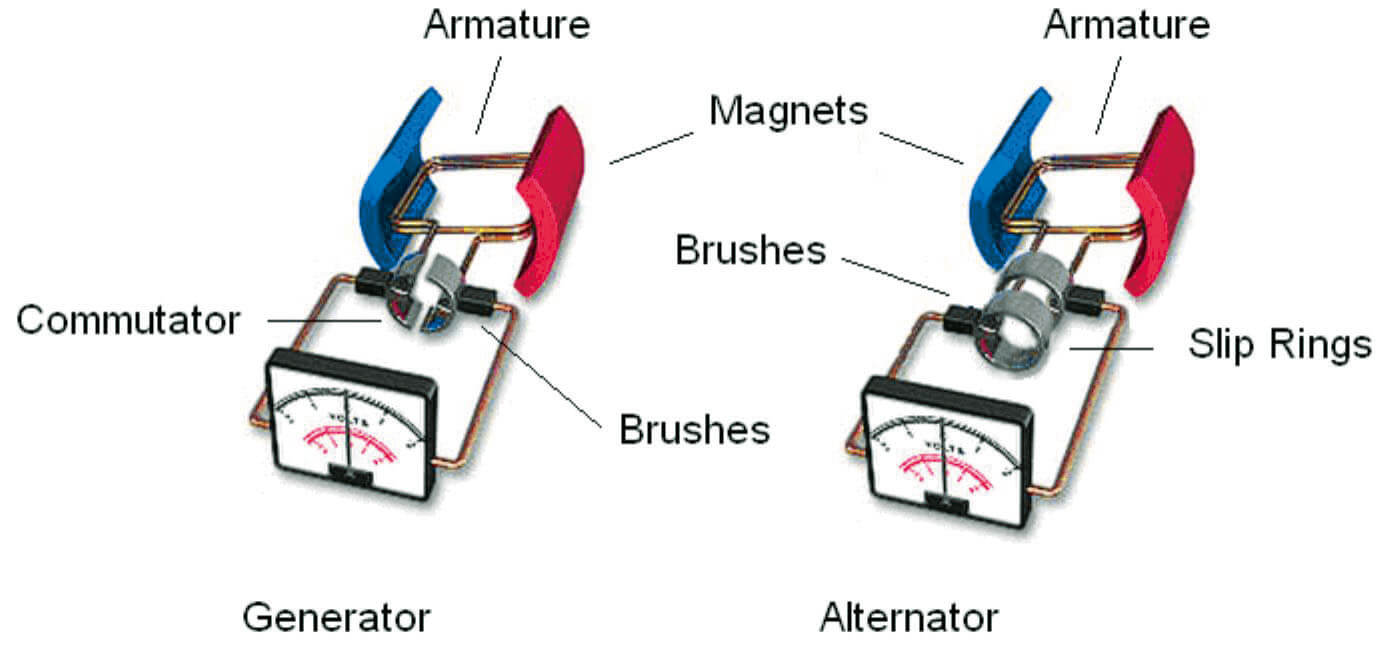
Generators produce direct current (DC) or alternating current (AC). Their design includes a rotor and stator, similar to alternators. However, generators often use brushes and commutators. These parts help convert the energy produced into usable power.
Generators are usually larger and heavier than alternators. They are built to withstand more stress and higher power demands. This makes them suitable for industrial and commercial use.
Material And Build
Both alternators and generators use durable materials. Alternators often have aluminum or plastic housings. This keeps them light yet strong. Generators typically use metal casings for strength and durability.
Inside, alternators have coils of wire and magnets. Generators include more complex components like brushes. These differences affect performance and maintenance needs.
Efficiency And Performance
Understanding efficiency and performance helps in choosing between an alternator and a generator. Both devices convert mechanical energy into electrical energy. However, they do this differently, affecting their efficiency and output.
Efficiency Of Alternators
Alternators are highly efficient. They produce more electricity at lower speeds. This efficiency means less fuel is needed for the same power output. Alternators can adjust their output based on load. They deliver consistent power under various conditions.
Efficiency Of Generators
Generators are generally less efficient than alternators. They require higher speeds to produce electricity. This can lead to higher fuel consumption. Generators often produce more heat, wasting energy. Their output is less adaptable to changing loads.
Performance Of Alternators
Performance is strong in alternators. They provide stable voltage and current. This stability is crucial for sensitive electronics. Alternators are also lightweight and compact. Their design allows for easy maintenance and longer life spans.
Performance Of Generators
Generators can perform well but have limitations. They offer steady power but may struggle with sudden load changes. This can cause voltage drops. Generators are heavier and bulkier than alternators. They require more space for installation.
Real-world Applications
Alternators are common in vehicles and small engines. Their efficiency supports modern automotive needs. Generators often serve in construction sites or backup power. They are best for situations needing high power for a short time.
Applications In Daily Life
Understanding the applications of alternators and generators in daily life helps you appreciate the role they play in powering your world. From your car to household appliances, these devices ensure a steady supply of electricity. Let’s dive into how each one functions in various everyday scenarios.
Automotive Applications
Your car relies heavily on an alternator. It charges the battery while you drive, ensuring that all electrical components function properly. Without it, you’d face dead batteries and malfunctioning lights.
- Powering headlights and dashboard lights
- Running the radio and air conditioning
- Supporting the engine control unit
Have you ever experienced a breakdown due to a faulty alternator? This common issue can leave you stranded and frustrated, emphasizing the importance of regular vehicle maintenance.
Household Applications
Generators come into play during power outages. They provide backup electricity to your home, ensuring you stay comfortable and safe. You can keep your refrigerator running and your lights on, even when the grid fails.
- Portable generators for camping trips
- Standby generators for home use
- Construction site power supply
Imagine hosting a gathering and the lights suddenly go out. A generator can save the day, allowing you to continue the festivities without interruption.
Industrial And Commercial Uses
In industries, both alternators and generators are vital. Factories rely on them to maintain production levels. The absence of these devices can lead to significant losses.
- Alternators in machinery for consistent power
- Generators for emergency power in hospitals
- Backup systems in data centers to prevent data loss
Consider a hospital where every second counts. A reliable generator can ensure that life-saving equipment remains operational during a power failure.
Renewable Energy Integration
With the rise of renewable energy, generators often work with wind and solar systems. They provide additional power when sunlight or wind isn’t available. This combination promotes energy independence and sustainability.
- Wind turbines using generators to produce electricity
- Solar power systems with battery backup
Are you considering switching to renewable energy? Understanding how generators can enhance your energy setup is essential for making informed decisions.
Alternators and generators are more than just mechanical devices. They are integral to your daily life, influencing everything from your morning commute to your evening relaxation. Recognizing their applications can help you make better choices for your home and lifestyle.
Maintenance Requirements
Understanding the maintenance requirements of alternators and generators can save you time and money. Both devices play crucial roles in power generation, but they demand different levels of care. Knowing what each needs can help you keep your equipment running smoothly.
Alternator Maintenance Requirements
Alternators are generally low-maintenance compared to generators. Regular checks can help ensure they function efficiently.
- Visual Inspection:Check for loose connections and signs of wear.
- Brush Replacement:If your alternator has brushes, replace them every 50,000 miles.
- Battery Check:Ensure your battery is in good condition, as a weak battery can strain the alternator.
During my last car service, I learned that a simple battery check could prevent alternator damage. It’s easy to overlook, but it can save you from costly repairs.
Generator Maintenance Requirements
Generators require more attention than alternators. They have several moving parts that need regular checks.
- Oil Changes:Change the oil every 100 hours of operation.
- Fuel System Maintenance:Clean fuel filters and check for leaks regularly.
- Cooling System Check:Ensure the coolant levels are adequate to prevent overheating.
Have you ever experienced a power outage? I once relied on a generator during a storm and realized how important regular maintenance is. A well-maintained generator can be your lifeline in emergencies.
Common Maintenance Mistakes
People often overlook basic maintenance tasks. Ignoring simple checks can lead to bigger issues later.
- Skipping Inspections:Regular inspections help catch problems early.
- Neglecting Fluid Levels:Low fluids can cause overheating and damage.
- Using Old Fuel:Old fuel can clog the system and lead to poor performance.
Have you ever put off maintenance only to face bigger problems down the line? Keeping a maintenance schedule can prevent unexpected breakdowns and extend the life of your equipment.
Whether you have an alternator or a generator, staying on top of maintenance is key. A proactive approach will ensure your power source is reliable when you need it most. So, what will you check first?
Credit: www.bison-machinery.com
Choosing The Right Option
Choosing between an alternator and a generator can be tough. Each has unique features. Understanding these can help you make a better choice.
First, think about your power needs. How much power do you need? Consider the devices you will run. This affects your decision greatly.
Understanding Your Power Requirements
Power requirements differ for everyone. Some need small amounts of power. Others need more. Know your needs before choosing.
For light tasks, a generator might work well. For larger tasks, an alternator is often better. It provides steady power over time.
Evaluating Efficiency
Efficiency matters in your choice. Alternators are generally more efficient. They produce more power with less fuel.
Generators can waste energy. They may use more fuel to produce the same power. Think about long-term costs.
Assessing Portability
Portability is another key factor. Generators are often lighter and easier to move. They can be perfect for outdoor events.
Alternators are usually built into vehicles. They are not as portable. Consider where you will use your power source.
Considering Maintenance Needs
Maintenance is important for both options. Generators need regular checks and fuel. This can add up over time.
Alternators require less maintenance. They are often more reliable. This can save you time and money in the long run.
Budgeting For Your Choice
Budget plays a big role in your decision. Generators can have lower upfront costs. However, consider the long-term costs.
Alternators may cost more initially. They can provide better efficiency and reliability. Think about what fits your budget best.
Frequently Asked Questions
What Is The Main Difference Between An Alternator And A Generator?
The main difference is how they produce electricity. Alternators generate alternating current (AC), while generators produce direct current (DC).
Which Is More Efficient: An Alternator Or A Generator?
Generally, alternators are more efficient than generators. They convert more mechanical energy into electrical energy.
Can An Alternator Charge A Battery?
Yes, alternators can charge batteries. They provide the electrical power needed to recharge them while running.
What Are Common Uses For Alternators?
Alternators are commonly used in vehicles to power electrical systems and charge batteries.
What Are Common Uses For Generators?
Generators are often used for backup power, in construction sites, and during power outages.
Do Alternators Require Maintenance?
Alternators require minimal maintenance, mainly checking belts and connections for wear and tear.
Are Generators Portable?
Yes, many generators are portable, making them easy to move and use in different locations.
How Long Can A Generator Run Continuously?
Most generators can run for 8 to 12 hours on a full tank of fuel, depending on the model.
Can You Run A Generator Indoors?
No, running a generator indoors is dangerous. It produces harmful carbon monoxide gas.
Is An Alternator More Expensive Than A Generator?
Typically, alternators are more expensive than generators due to their advanced technology and efficiency. “`
Conclusion
Choosing between an alternator and a generator matters. Each has its own strengths. Alternators are efficient and lighter. They produce power at higher speeds. Generators provide steady power at lower speeds. Understanding your needs helps you decide. Consider your vehicle type and usage.
Both options have unique benefits. Take time to think about your choice. A good decision ensures reliable power for your needs. Make an informed choice today for better performance tomorrow.