
Ac And Dc Generator convert mechanical motion into alternating or direct electrical power for many uses.
I have over a decade of hands-on work with generators. I test and repair units for homes and small industry. This article explains how an Ac And Dc Generator works, when to pick one, and real tips from my field experience. Read on for clear, practical, and trustworthy guidance.
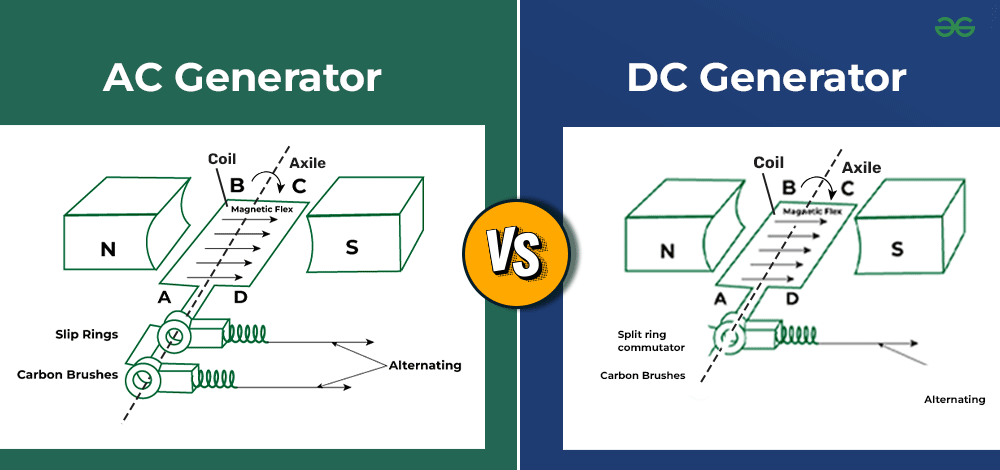
How AC and DC Generators Work
An Ac And Dc Generator turns motion into electricity. It uses magnetic fields and conductors to make current. The key idea is electromagnetic induction. A coil or conductor moves in a magnetic field. That motion pushes electrons and creates voltage.
AC generators make alternating current. The coil spins and the voltage changes polarity each half turn. DC generators use a commutator to turn the alternating output into direct current. The commutator flips connections so current flows one way.
Common terms to know:
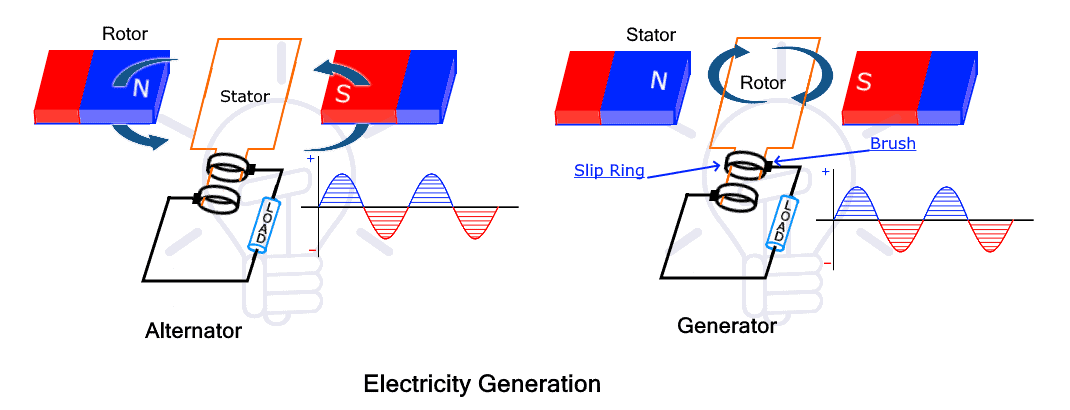
- Rotor — the part that spins.
- Stator — the stationary part that holds magnets or coils.
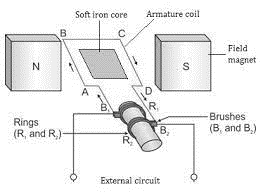
- Armature — the coil where voltage is generated.
- Commutator — used in DC machines to switch polarity.
An Ac And Dc Generator uses these parts in different layouts to achieve AC or DC output.
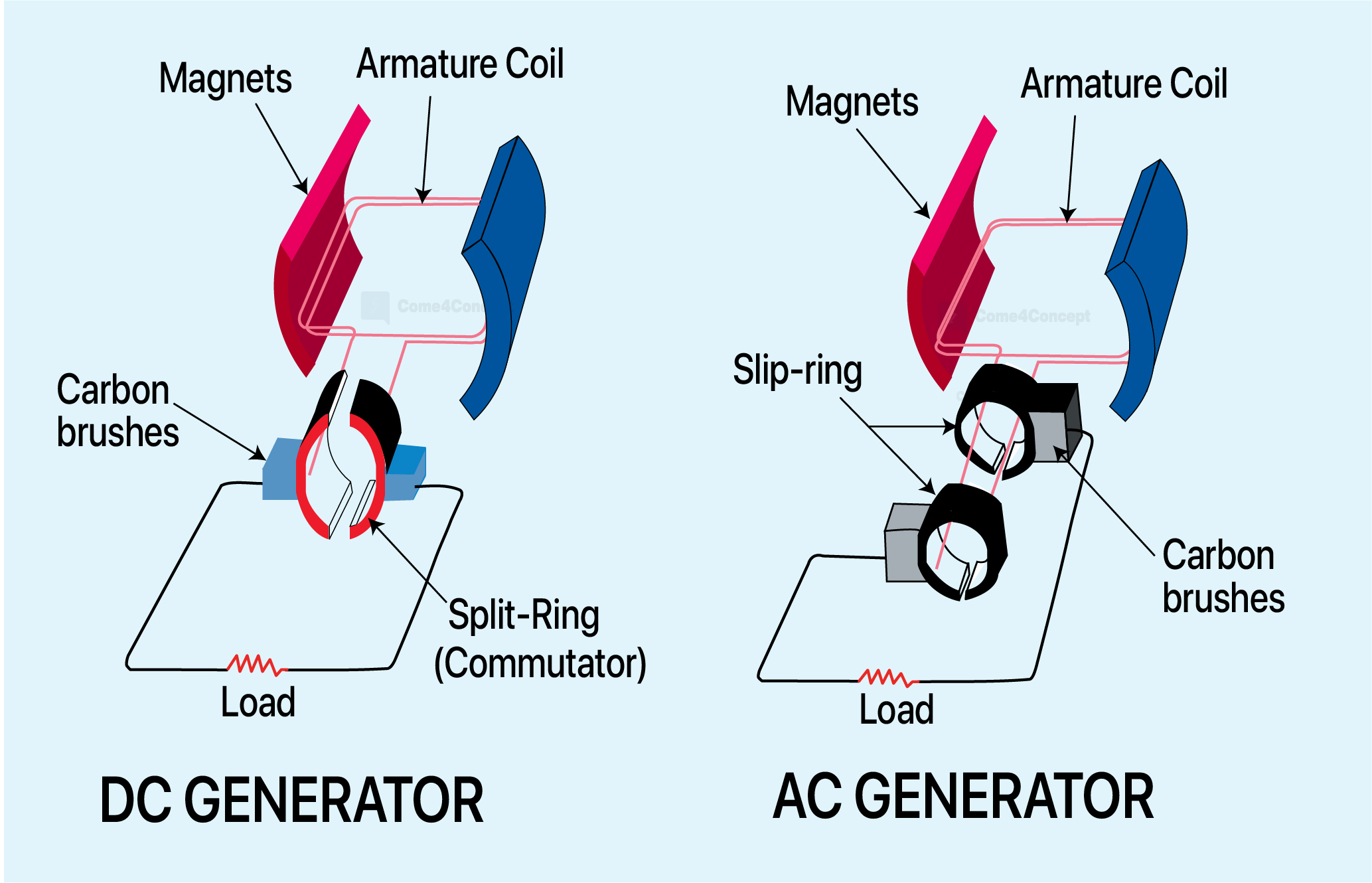
What is the main difference between AC and DC generators?
AC generators produce current that changes direction. DC generators deliver current that flows one way. The internal wiring and use of a commutator set them apart.
How does a commutator change generator output?
A commutator switches the coil connection at the right moments. This produces steady direct current even though the coil voltage alternates internally.
Types and Applications
There are many types of Ac And Dc Generator designs. Choose based on power needs and use case.
Common types:
- Small portable AC generators — good for camping and home backup.
- Automotive DC generators — used in older cars and some specialty gear.
- Industrial alternators — large AC units for factories and grid ties.
- Brushless DC generators — modern, efficient, and low maintenance.
Where each fits:
- Home backup — portable AC units or standby generators.
- Off-grid solar systems — DC generators or alternators paired with inverters.
- Vehicles and boats — DC systems for batteries and motors.
- Industry — large AC alternators for steady grid power.
Knowing the application helps you pick the right Ac And Dc Generator for safety and cost.

Key Components and Design Differences
Understanding parts helps with selection and repair. An Ac And Dc Generator shares many parts but also shows key differences.
Shared components:
- Shaft and bearings — let the rotor spin smoothly.
- Magnets or field coils — create the magnetic field.
- Armature windings — where the voltage is induced.
- Terminals and wiring — carry the power out.
Design differences:
- AC machines often use fixed stator windings and rotating magnetic fields.
- DC machines add a commutator and brushes to produce direct current.
- Brushless designs avoid brushes and commutators for longer life.
An Ac And Dc Generator may look similar but the internal wiring and control change how it behaves.
Performance, Efficiency, and Maintenance
Performance depends on load, speed, and design. Efficiency matters for fuel cost and heat.
Tips to improve life and efficiency:
- Keep the generator clean and dry.
- Change oil and filters on fuel units regularly.
- Check brushes and commutators on DC machines.
- Balance the rotor and inspect bearings for wear.
- Avoid overloading. Match the load to rated capacity.
When I worked on small plants, routine checks cut failures by half. A well-kept Ac And Dc Generator runs cooler and saves money. Track hours and replace wear parts on schedule.

Safety and Installation Tips
Safety prevents accidents and extends service life. Follow codes and manufacturer guides.
Basic safety steps:
- Install in a dry, ventilated spot.
- Use proper grounding and bonding.
- Keep clearances around exhaust and cooling vents.
- Use correct fuses and circuit protection.
- Train users on shutoff and emergency procedures.
If you connect an Ac And Dc Generator to a home or grid, use a transfer switch. A transfer switch prevents backfeed and protects utility workers. Hire a licensed electrician for complex installs. I have seen incorrect grounding create dangerous backfeeds, so take safety seriously.

Frequently Asked Questions of Ac And Dc Generator
What is an Ac And Dc Generator best used for?
An Ac And Dc Generator is versatile. Use AC for general power and DC for battery charging or electronics.
Can an Ac And Dc Generator be converted from AC to DC?
Yes, some units can be adapted with rectifiers or commutators. Conversion adds cost and may reduce efficiency.
How often should I service my Ac And Dc Generator?
Service intervals vary by model and use. For regular use, check every 50 to 100 hours and do full service yearly.
Are brushless Ac And Dc Generator options better?
Brushless designs tend to last longer and need less maintenance. They are often quieter and more efficient.
What size Ac And Dc Generator do I need for my home?
List essential loads and add up watts. Choose a generator with at least 20% more capacity than your calculated peak load.
Conclusion
You now have a clear view of how an Ac And Dc Generator works and when to choose AC or DC. Use this info to pick, maintain, and install a unit that fits your needs. Start by listing your loads, then match those to reliable specs. Share your questions below, subscribe for more guides, or test a small unit to learn hands-on.