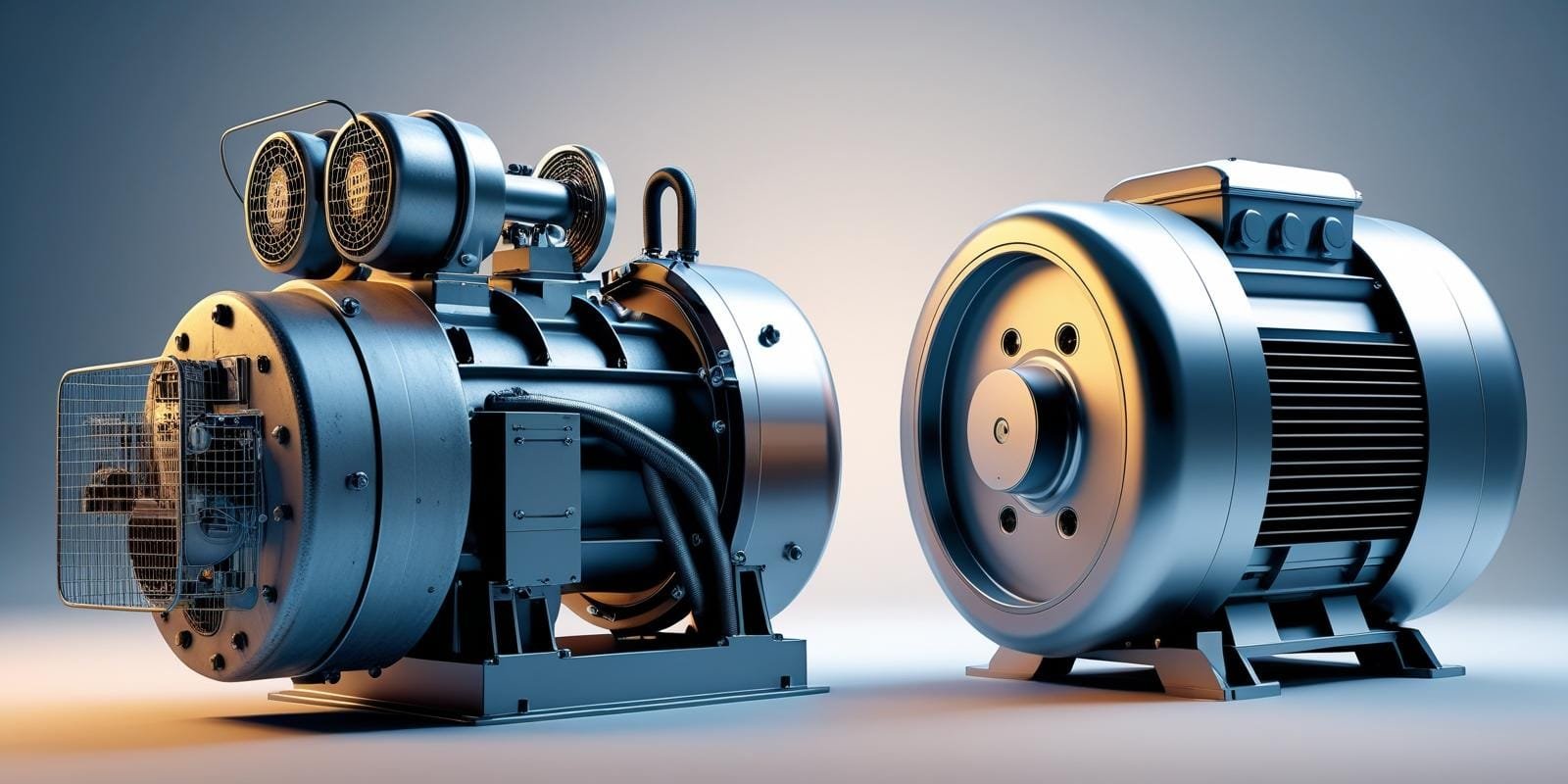
When it comes to powering devices, you might find yourself wondering about the differences between a generator and an electric motor. Both play crucial roles in converting energy, but they do it in very different ways.
Understanding these differences can help you make informed choices for your projects, whether at home or in a professional setting. Have you ever experienced a power outage and relied on a generator to keep your essentials running? Or perhaps you’ve used an electric motor to drive your favorite tools?
Knowing which option suits your needs can save you time, money, and frustration. We’ll break down the key features of generators and electric motors, comparing their functions, applications, and advantages. By the end, you’ll be equipped with the knowledge to choose the right solution for your energy needs. Keep reading to discover the insights that could make all the difference in your next project.
Basics Of Generators
Generators are machines that convert mechanical energy into electrical energy. They are essential for providing power in many situations. Understanding how generators work is important for anyone interested in electricity. This section will cover the key concepts of generators.
What Is A Generator?
A generator is a device that produces electricity. It uses motion to create electric current. This motion usually comes from a rotating engine. Generators can run on various fuels, like gasoline or diesel.
How Do Generators Work?
Generators work based on electromagnetic induction. This process involves moving a conductor through a magnetic field. As the conductor moves, it generates electric current. The faster the movement, the more electricity produced.
There are different types of generators. Portable generators are small and easy to move. Standby generators provide power during outages. Inverter generators produce clean and stable electricity. Each type serves a specific need.
Applications Of Generators
Generators have many applications. They are used in homes, businesses, and industries. Construction sites often rely on them for power. Events like festivals and concerts also use generators.
Benefits Of Using Generators
Generators provide reliable power when needed. They can be used in remote areas without electricity. They also serve as backup during power outages. Generators ensure that daily activities continue smoothly.
Basics Of Electric Motors
Electric motors are devices that convert electrical energy into mechanical energy. They play a vital role in many machines and tools. Understanding how they work helps us see their importance in daily life.
Electric motors are used in fans, pumps, and appliances. They are found in cars and industrial machines too. Knowing the basic parts of an electric motor is essential.
What Is An Electric Motor?
An electric motor uses electromagnetic force to create motion. It has a rotor and a stator. The rotor spins while the stator remains fixed. This movement generates mechanical power.
There are several types of electric motors. The most common types are AC and DC motors. AC motors run on alternating current. DC motors use direct current.
Each type has its own uses and benefits. AC motors are often used in home appliances. DC motors are more common in small devices.
How Electric Motors Work
Electric motors work through the interaction of magnetic fields. When current flows through the motor, it creates a magnetic field. This field interacts with another magnetic field in the stator.
The interaction causes the rotor to turn. This turning motion creates mechanical energy. The speed and power depend on the motor’s design and current.
Applications Of Electric Motors
Electric motors are everywhere. They power tools, fans, and conveyor belts. They are essential in robotics and manufacturing.
From small toys to large machines, electric motors make our lives easier. Their wide range of applications shows their importance.
Energy Conversion Process
Generators convert mechanical energy into electrical energy. Electric motors do the opposite, changing electrical energy into mechanical energy. Both play vital roles in powering devices and machines in everyday life. Understanding their functions helps in choosing the right equipment for specific needs.
The energy conversion process is a fascinating subject that reveals how generators and electric motors transform energy from one form to another. Understanding this process can help you make informed decisions when selecting the right device for your needs. Let’s break down how each device operates within this crucial framework.
How Generators Convert Energy
Generators primarily convert mechanical energy into electrical energy. They work on the principle of electromagnetic induction. – Mechanical Energy: This can come from various sources like wind, water, or fossil fuels. – Electromagnetic Induction: When a conductor moves through a magnetic field, it generates electricity. When I first used a portable generator during a power outage, I was amazed at how quickly it transformed the mechanical energy from its engine into usable electricity. This process not only provides power but also highlights the efficiency of energy conversion.
How Electric Motors Transform Energy
Electric motors do the opposite of generators. They convert electrical energy into mechanical energy. – Electrical Energy: This is supplied from a power source like a battery or the electrical grid. – Mechanical Energy: The motor uses this energy to produce motion. Imagine starting your electric bike. The moment you press the pedal assist button, you feel the surge of power transforming electrical energy into the motion that gets you moving. It’s a seamless energy conversion that makes everyday tasks easier.
Comparing Energy Conversion Efficiencies
Efficiency plays a significant role in the energy conversion process for both devices. – Generators: Typically have efficiency rates ranging from 70% to 90%, depending on their design and fuel source. – Electric Motors: Can achieve efficiencies of 80% to 95%, especially with advancements in technology. Have you ever wondered why energy loss matters? Less efficient devices can lead to higher operating costs and increased environmental impact.
Applications Of Energy Conversion
Understanding the applications of generators and electric motors can guide your choices. – Generators: Commonly used in backup power systems, renewable energy installations, and construction sites. – Electric Motors: Found in household appliances, electric vehicles, and industrial machinery. Both devices serve vital roles in our daily lives. Knowing where they excel can help you harness their full potential. Recognizing the differences in the energy conversion process between generators and electric motors empowers you to make smarter choices. Which device would you choose for your next project or home improvement task?

Credit: www.geeksforgeeks.org
Core Components Comparison
Generators and electric motors play key roles in converting energy. Each has unique components that define its function. Understanding these components helps in choosing the right equipment.
Power Source
Generators convert mechanical energy into electrical energy. They use fuel or wind to create power. Electric motors use electrical energy to produce mechanical energy. They rely on electricity from batteries or power grids.
Stator And Rotor
The stator is the stationary part in both devices. In generators, it houses the windings for producing electricity. In electric motors, the stator creates a magnetic field. The rotor is the moving part. In generators, it turns to generate power. In motors, it spins to create motion.
Commutator And Brushes
Generators often use a commutator and brushes. These parts help convert AC to DC power. Electric motors may also use brushes. They help transfer electrical energy to the rotor. Some electric motors do not use brushes at all.
Cooling System
Generators need cooling systems to prevent overheating. They often use air or liquid cooling. Electric motors may also require cooling. Smaller motors might not need extensive cooling methods. Larger motors benefit from better cooling designs.
Control Systems
Generators have control systems to manage output voltage. They help maintain a stable power supply. Electric motors also feature control systems. They adjust speed and torque based on demand.
Applications
Generators are often found in power plants. They supply electricity to homes and businesses. Electric motors are used in appliances, fans, and vehicles. Each serves a different purpose in our daily lives.
Types Of Generators
Understanding the different types of generators can help you choose the right one for your needs. Each generator serves a unique purpose and comes with its own set of features. Whether you’re powering a home, a construction site, or a camping trip, knowing your options is crucial.
Portable Generators
Portable generators are versatile and easy to transport. They typically run on gasoline and are perfect for outdoor activities or emergency power needs at home.
- Lightweight and compact
- Ideal for camping and tailgating
- Can power small appliances and tools
Have you ever been caught in a storm without power? A portable generator could have saved the day, keeping your fridge running and your lights on. Their accessibility makes them a popular choice for many homeowners.
Inverter Generators
Inverter generators provide clean and stable power. This makes them ideal for sensitive electronics like laptops and smartphones.
- Quieter operation than traditional generators
- Fuel-efficient with less emissions
- Can be connected in parallel for extra power
If you enjoy camping but rely on gadgets, an inverter generator is a smart investment. You’ll appreciate its low noise levels while keeping your devices charged.
Standby Generators
Standby generators are permanently installed and automatically activate during power outages. They usually run on natural gas or propane.
- Provides continuous power supply
- Requires professional installation
- Ideal for homes in storm-prone areas
Imagine never worrying about power loss during a storm. Standby generators offer peace of mind, ensuring your home stays powered when you need it most.
Diesel Generators
Diesel generators are known for their durability and efficiency. They are commonly used for industrial applications but can also serve residential needs.
- Longer lifespan compared to gasoline generators
- More fuel-efficient for heavy loads
- Suitable for remote locations
Have you considered how much power your tools need? A diesel generator might be the best choice if you require heavy-duty energy for construction projects.
Wind And Solar Generators
Wind and solar generators harness natural resources for power. They are eco-friendly options that can reduce your carbon footprint.
- Renewable energy sources
- Lower operating costs
- Can be used in remote areas
Switching to renewable energy feels good, doesn’t it? These generators can help you save on utility bills while contributing to a sustainable future.
Types Of Electric Motors
Understanding the different types of electric motors can help you choose the right one for your needs. Each type has unique features that make it suitable for specific applications. Let’s break down the most common types of electric motors and their uses.
Brushless Dc Motors
Brushless DC motors are popular in many applications due to their efficiency and low maintenance requirements. They have no brushes, which means less wear and tear over time.
These motors offer precise control and high torque at low speeds, making them ideal for electric vehicles and drones. If you’re looking for reliability, consider a brushless motor.
Induction Motors
Induction motors are widely used in industrial applications. They operate on the principle of electromagnetic induction, which generates a magnetic field that turns the rotor.
These motors are robust and can handle heavy loads. If you need a motor that can run continuously in a factory, an induction motor is often the best choice.
Stepper Motors
Stepper motors are excellent for applications requiring precise positioning and control. They move in discrete steps, allowing for accurate control of speed and position.
You’ll find stepper motors in 3D printers and CNC machines, where precision is vital. If your project needs exact movements, a stepper motor might be your go-to option.
Servo Motors
Servo motors are designed for high-performance applications. They provide high torque and speed, along with precise control over movement.
These motors are often used in robotics and automation. If your project demands quick and accurate movements, consider investing in a servo motor.
Universal Motors
Universal motors can run on both AC and DC power. This flexibility makes them useful in various household appliances, from power tools to vacuum cleaners.
They are lightweight and compact, but they can be noisy. If you need a motor for a portable device, a universal motor might fit the bill.
Choosing the right electric motor depends on your specific requirements. Think about the application, efficiency, and maintenance needs. Which type do you think would work best for your project?
Applications In Daily Life
Understanding the applications of generators and electric motors in daily life can help you appreciate their impact on your routine. These devices play crucial roles in various settings, from powering your home to enabling countless industries. Let’s break down where you might encounter them.
Generators In Everyday Use
Generators are essential during power outages. They provide backup electricity for your home, keeping your lights on and appliances running. Many people invest in portable generators for camping trips or outdoor events, allowing them to enjoy modern conveniences in nature.
Consider your last family gathering. If you were grilling outdoors, a generator might have powered the lights and music. This simple device ensures that fun moments don’t get cut short by unexpected power loss.
Electric Motors In Household Appliances
Electric motors are the heartbeat of many household appliances. From refrigerators to washing machines, they make everyday tasks easier. A motor spins the drum in your dryer or powers the fan in your HVAC system, keeping your home comfortable.
Think about your morning routine. The coffee maker brews your favorite drink thanks to a tiny electric motor. Without it, you might struggle to wake up on time!
Industrial Applications Of Generators And Motors
In industries, generators and electric motors are indispensable. Factories rely on electric motors to drive machinery, helping to manufacture everything from cars to smartphones. Generators provide backup power, ensuring operations run smoothly even during outages.
Have you ever visited a manufacturing plant? The sheer scale of electric motors powering conveyor belts and robotic arms is impressive. These machines work tirelessly, making production faster and more efficient.
Transportation And Mobility
Generators and electric motors are also key in transportation. Electric vehicles (EVs) use powerful electric motors to deliver quick acceleration and energy efficiency. Meanwhile, generators often power large vehicles and construction equipment.
Imagine driving an electric car. The silent hum of the motor is a stark contrast to traditional gas-powered vehicles. This shift not only reduces noise pollution but also contributes to a cleaner environment.
Energy Production And Sustainability
Generators play a vital role in renewable energy. Wind turbines convert wind energy into electricity through generators. Solar panels often use inverters that function like motors to convert stored energy for use in homes.
Have you considered how much energy your household uses? Learning about renewable sources can inspire you to make more sustainable choices in your energy consumption.
Generators and electric motors are everywhere in daily life. Understanding their applications can help you appreciate the technology that powers your world. What are some ways you can incorporate more efficient devices into your routine?
Efficiency And Performance
Understanding efficiency and performance is key for choosing between a generator and an electric motor. Both have different roles and characteristics. Their efficiency impacts energy consumption and performance. This section will explore these aspects in detail.
Generator Efficiency
Generators convert mechanical energy into electrical energy. Their efficiency can vary widely. Factors like design and load affect this. A well-designed generator can achieve efficiency rates of 80% to 95%. However, lower quality generators often perform poorly.
Efficiency decreases as the load fluctuates. A generator running at full load performs better than one running at half load. Regular maintenance can improve efficiency. Clean filters and proper lubrication help keep generators running smoothly.
Electric Motor Efficiency
Electric motors turn electrical energy into mechanical energy. They typically have higher efficiency than generators. Many electric motors reach 90% to 95% efficiency under normal conditions. This high efficiency means less energy waste.
Electric motors also have a wide range of applications. They perform well in various environments. Factors like motor type and design influence their efficiency. Induction motors are common and reliable. They suit many industrial uses.
Performance Comparison
Performance is crucial for both generators and electric motors. Generators provide power during outages or remote operations. They are essential for backup systems. Their performance depends on load management and fuel type.
Electric motors excel in continuous operations. They provide steady and reliable power. Their performance is consistent across different applications. Electric motors often require less maintenance than generators.
In many cases, motors are quieter and cleaner. This makes them suitable for indoor use. Generators may produce noise and emissions. Choosing between them depends on specific needs and applications.
Maintenance And Durability
Understanding the maintenance and durability of generators and electric motors can greatly impact your decision on which one to use. Both have their own set of requirements, and knowing these can save you time and money down the line. Let’s break down what you need to know about keeping these machines running smoothly.
Maintenance Requirements
Generators need regular upkeep to function effectively. This includes:
- Checking and changing oil regularly.
- Inspecting air filters and fuel lines.
- Testing battery health periodically.
I’ve learned the hard way that neglecting these tasks can lead to costly repairs. For instance, my generator failed during a power outage because I overlooked the oil change. That experience taught me the importance of routine maintenance.
Electric motors, on the other hand, are generally easier to maintain. They require less frequent servicing, which can be a huge advantage for busy users. Most maintenance involves:
- Cleaning dust and debris from the motor.
- Lubricating bearings and moving parts.
Both machines have their own unique maintenance needs. Consider your lifestyle and how much time you can devote to upkeep.
Durability Comparison
When it comes to durability, generators are built for robust performance. They are often exposed to harsh conditions, making them more resilient than many electric motors. However, this does come at a cost—generators can wear down quicker if not maintained properly.
Electric motors are typically designed for longer service life under normal conditions. A well-maintained electric motor can last for years with minimal issues. But, if overloaded or improperly installed, their lifespan can be significantly reduced.
Have you ever considered how the environment affects these machines? For example, a generator used outdoors may face more wear from moisture and temperature changes compared to an electric motor in a controlled environment. Think about where and how you plan to use your equipment.
Cost Of Maintenance And Repairs
Maintenance costs can add up over time, especially for generators. Routine checks and repairs can be pricey. If a generator breaks down during a critical moment, the cost of repairs can skyrocket.
Electric motors usually have lower long-term maintenance costs. Fewer moving parts mean less chance of failure. That said, if a motor does fail, replacement can sometimes be more expensive than fixing a generator.
How do you weigh the costs against your needs? Consider your budget and the potential downtime each machine may cause. The right choice could save you both time and money in the long run.
Understanding maintenance and durability can guide you in making an informed decision between a generator and an electric motor. Your choice will depend on your specific needs and how much effort you want to put into upkeep.

Credit: www.youtube.com
Cost And Economic Factors
Understanding the costs and economic factors is vital. Generators and electric motors serve different purposes. Their costs can differ significantly. These differences affect budgets for homes and businesses.
Initial Purchase Price
The purchase price of generators is often higher. They need complex parts like engines. Electric motors, on the other hand, are usually cheaper. They have fewer components and simpler designs.
Operational Costs
Generators require fuel to operate. This adds to ongoing expenses. Electric motors mainly use electricity. Their operational costs are often lower. This can save money over time.
Maintenance Expenses
Generators need regular maintenance. They have more moving parts that wear out. This can lead to higher maintenance costs. Electric motors typically need less upkeep. They are more reliable and last longer.
Return On Investment
Investing in electric motors often yields better returns. Lower operational and maintenance costs can lead to savings. Generators may be necessary for backup power. They might not provide the same long-term savings.
Impact On Energy Bills
Electric motors can lower energy bills. They use less electricity than generators. This is crucial for businesses and homes. Reducing energy costs can help with budgets.
Frequently Asked Questions
What Is The Main Difference Between A Generator And Electric Motor?
Generators convert mechanical energy into electrical energy, while electric motors convert electrical energy into mechanical energy.
How Does A Generator Work?
A generator uses movement, like spinning, to create electricity. It relies on electromagnetic induction to generate power.
What Is The Function Of An Electric Motor?
An electric motor takes electrical energy and turns it into motion. It powers many devices, like fans and toys.
Can A Generator Work Without A Power Source?
Yes, a generator needs mechanical energy, not electrical power, to function. It can run on fuel or other energy sources.
Are Generators And Motors Used In The Same Applications?
Not always. Generators produce electricity, while motors use it. They serve different purposes in various machines.
What Types Of Generators Exist?
Common types include portable, standby, and inverter generators. Each type has its own features and uses.
What Are The Main Types Of Electric Motors?
The main types are AC motors and DC motors. Each type has different characteristics and applications.
Which One Is More Efficient: Generator Or Motor?
Efficiency depends on the specific model and application. Motors generally have higher efficiency in converting energy.
Can A Motor Act As A Generator?
Yes, some motors can work as generators. This happens when they are turned mechanically without electrical input.
How Do I Choose Between A Generator And An Electric Motor?
Choose based on your needs. If you need power, go for a generator. For movement, choose an electric motor.
Conclusion
Generators and electric motors serve different but important purposes. Generators produce electricity, while electric motors use it. Understanding these differences helps you choose the right one for your needs. Both have their own strengths and weaknesses. Think about efficiency, cost, and application.
Choosing wisely can save you time and money. Consider your specific situation carefully. Make an informed decision based on your requirements. This will lead to better results in your projects.