
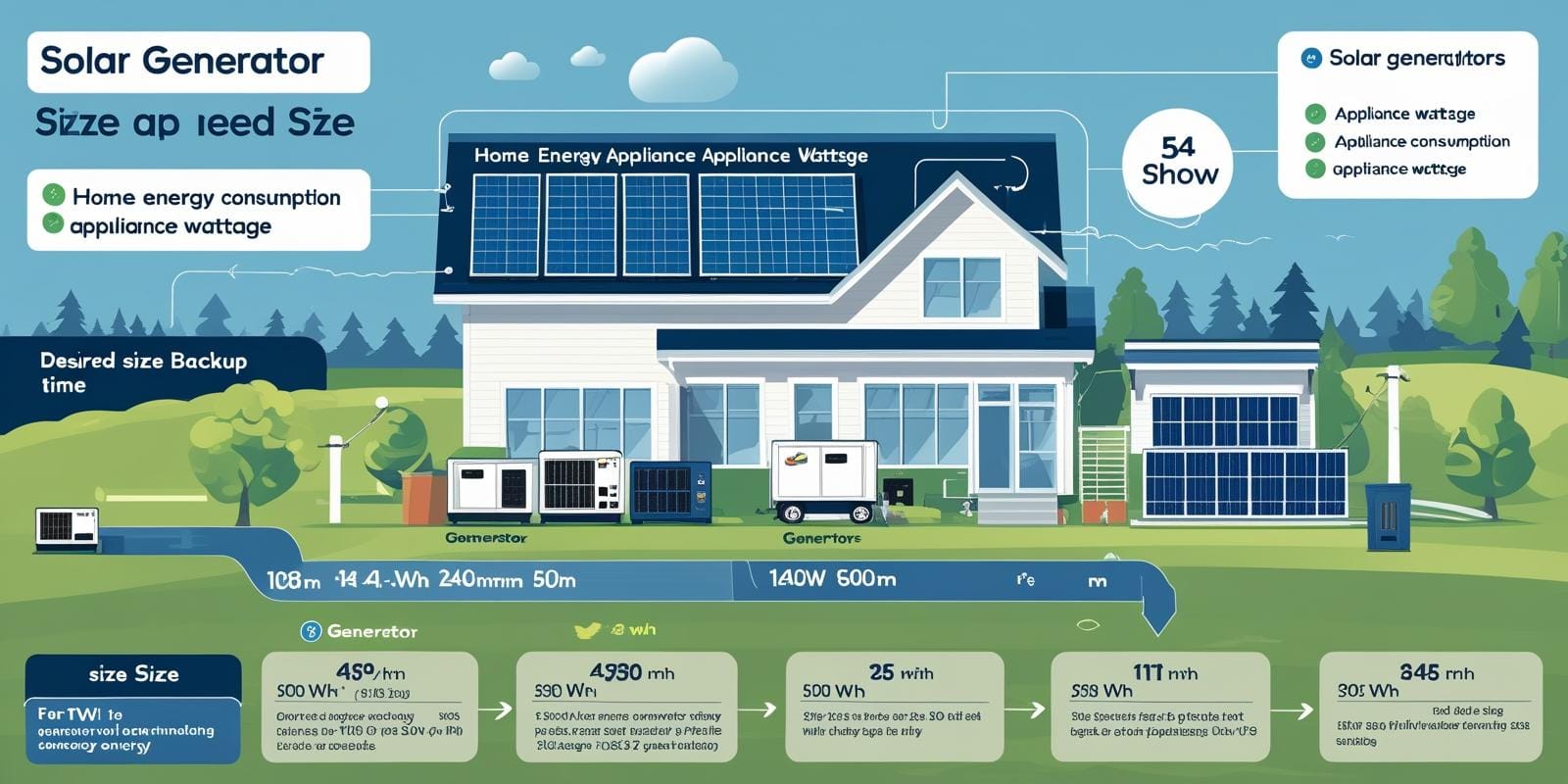
Choosing the right solar generator can feel overwhelming. You might wonder, “How big of a solar generator do I need?” The answer depends on your unique needs.
Whether you want to power your home during a blackout, take it on camping trips, or use it for outdoor events, understanding your power requirements is crucial. We’ll break down everything you need to know about selecting the perfect solar generator for your situation.
You’ll discover how to calculate your energy needs, what features to look for, and tips to make the best choice. By the end, you’ll have the confidence to pick a generator that fits your lifestyle. Let’s get started on making your power needs clear!
Understanding Solar Generators
Choosing the right size for a solar generator is important. Consider how much power you need for your devices. Think about the total wattage of your equipment. This helps ensure you have enough energy for your needs.
Solar generators are more than just a trendy gadget for eco-conscious consumers. They provide a reliable, portable power source for various needs, from outdoor adventures to emergency backup at home. Knowing how they work can help you choose the right size for your needs.
What Is A Solar Generator?
A solar generator converts sunlight into electricity. It typically consists of solar panels, a battery, and an inverter. The solar panels collect sunlight and convert it into DC electricity, which is stored in the battery. The inverter then changes this DC electricity into AC electricity, which you can use to power your devices. Solar generators are quiet and emit no harmful emissions. They can be used anywhere there’s sunlight, making them versatile and convenient. If you enjoy camping or need power during a blackout, a solar generator can be a game-changer.
How Do Solar Generators Work?
Understanding the components is crucial for choosing the right solar generator. The solar panels are the first step, gathering sunlight and generating electricity. The battery stores the energy for later use. This is especially useful during the night or on cloudy days. The inverter then takes this stored energy and makes it usable for your appliances. Knowing this process helps you assess how much power you need.
Key Features To Consider
When selecting a solar generator, keep these features in mind:
- Battery Capacity:Measured in watt-hours (Wh), this tells you how much energy the generator can store.
- Output Power:This indicates how many devices you can run simultaneously.
- Portability:Consider the weight and size, especially if you plan to take it on trips.
Think about your energy needs. Do you want to power a small fridge, or just charge your phone? The choices you make here will determine the generator size.
Choosing The Right Size For Your Needs
Calculate your energy requirements first. List the devices you want to power and their wattage. You can use this formula:
Total Wattage = (Wattage of Device 1 + Wattage of Device 2 + ... + Wattage of Device N)
Once you have the total wattage, factor in how long you will use each device. This will guide you in selecting the right battery capacity. If you have a 100W laptop that you use for 5 hours, you will need at least 500Wh of battery capacity just for that device. Don’t forget to add a buffer for efficiency losses.
Real-life Applications
Think about your lifestyle. If you often go camping, a lightweight generator with enough power to charge multiple devices is essential. When I went on a weekend trip, my small solar generator kept our phones charged and powered our portable fridge. It was a relief not to worry about running out of power. For emergency situations, a larger generator might be necessary to keep essential appliances running. What will you need when the power goes out? Consider your specific needs and plan accordingly to avoid surprises later.

Credit: ca.jackery.com
Factors To Consider Before Choosing
Choosing the right size of a solar generator involves several key factors. First, assess your power needs based on devices you plan to use. Consider how long you need power and the generator’s capacity. Understanding these elements helps ensure you select a generator that fits your requirements.
Choosing the right solar generator is crucial for meeting your energy needs. With various options available, it’s essential to understand specific factors that will impact your decision. Here, we’ll break down key elements you should consider before making a purchase.
Power Requirements
Your first step is to assess your power requirements. What devices do you plan to run? Make a list of your essential appliances and their wattage. Common items like a refrigerator can consume 100-800 watts, while smaller devices like a phone charger might only need 5-20 watts. Add up the total wattage to find your minimum power requirement. This ensures you select a generator that can handle your energy needs without overloading.
Battery Capacity
Battery capacity is another critical factor. It determines how long you can run your devices before needing a recharge. Look for a generator with ample amp-hours (Ah) or watt-hours (Wh). For instance, if you have a device that uses 100 watts and want to run it for 10 hours, you need at least 1,000 Wh of battery capacity. Consider your usage pattern. Do you need extended power for camping or short bursts for home backup? This will help you choose the right battery size.
Inverter Size
The inverter size is pivotal for converting DC power from the battery to AC power for your appliances. Check the inverter’s continuous and peak wattage ratings. Continuous wattage indicates how much power it can supply without interruption. Peak wattage is the power needed to start appliances. If you plan to run multiple devices simultaneously, ensure the inverter can handle the total wattage of all those devices.
Portability And Weight
Portability and weight are often overlooked but can significantly affect your experience. If you plan to take your solar generator on trips, a lightweight model with wheels is a great choice. Heavy generators might be cumbersome for outdoor use. Consider how often you’ll need to move it. If you’re using it as a backup at home, weight may not be as crucial. However, if you envision it as a travel companion, prioritize portability. Understanding these factors will empower you to choose the right solar generator for your needs. This way, you can enjoy the benefits of renewable energy without the hassle of purchasing the wrong equipment. What energy adventures do you envision with your solar generator?
Calculating Your Power Needs
Choosing the right size for a solar generator requires understanding your power needs. Start by listing your devices and their wattage. This helps you determine how much energy you need to generate. Knowing this will guide you in selecting the right solar generator for your home or travel.
Calculating your power needs is a crucial step in determining the right solar generator for your lifestyle. You want to ensure you have enough energy to keep your essential devices running, especially during power outages or outdoor adventures. Let’s break down how to accurately assess your power requirements.
Listing Essential Devices
Start by making a list of the devices you rely on daily. Think about everything you use, from small gadgets to larger appliances. Here’s a quick list to get you started:
- Smartphones
- Laptops
- Refrigerators
- Lights
- Fans or heaters
- Medical equipment
Consider not only what you want to power but also what you need to power. You might be surprised at how many devices you have.
Estimating Daily Power Consumption
Now that you have your list, it’s time to estimate how much energy each device consumes. Look at the wattage listed on each device. If you can’t find it, you can usually find this information online. To calculate daily consumption: 1. Multiply the wattage by the number of hours you use each device daily. For example: – A 60-watt bulb used for 5 hours = 60 x 5 = 300 watt-hours. 2. Add up the watt-hours for all devices. This total will give you a good idea of your daily energy needs.
Accounting For Peak Usage
Your power needs can change based on peak usage times. Some devices require more energy to start up than they do to run continuously. This is especially true for appliances like refrigerators or power tools. To account for this, consider the following: – Identify devices with high startup wattage. – Add a buffer to your total wattage. A common recommendation is to increase your total watt-hours by 20-30% to ensure you have enough power during peak times. How often do you find yourself running multiple devices at once? Understanding these peak times will help you choose a solar generator that won’t let you down. Taking the time to calculate your power needs will make a significant difference in your solar generator selection. You’ll feel more confident knowing you can power your essentials when it counts.
Battery Capacity And Runtime
Battery capacity and runtime are key factors in choosing a solar generator. Understanding how much energy your devices need helps determine the right size. A larger capacity means longer use, so think about your power needs before making a decision.
Understanding battery capacity and runtime is crucial when choosing the right solar generator for your needs. The right combination ensures you have enough power to meet your requirements without over or under-investing. Let’s break this down so you can make an informed decision.
Watt-hours Vs. Amp-hours
When evaluating battery capacity, you’ll often come across two key terms: watt-hours (Wh) and amp-hours (Ah). – Watt-Hours (Wh) measures the total energy stored in the battery. – Amp-Hours (Ah) indicates how much current a battery can provide over a certain period. To convert between these two, you can use the formula: Wh = Ah × Voltage (V). For example, a 12V battery with a capacity of 100Ah has a total energy of 1200Wh. Knowing this helps you choose a generator that matches your energy consumption.
Understanding Depth Of Discharge
Depth of discharge (DoD) refers to how much of the battery’s capacity you can safely use. – A common rule is to discharge lead-acid batteries only to 50% to prolong their life. – Lithium batteries can typically handle a deeper discharge, often up to 80% or more. Consider your usage habits. If you tend to rely heavily on your generator, opt for a battery with a higher DoD. This ensures that you maximize your available power without risking damage to the battery.
Runtime Expectations
How long will your solar generator last during an outage? Understanding runtime is key. – Calculate the total wattage of the devices you plan to run. – Divide the watt-hour capacity of your battery by this total wattage to estimate runtime. For instance, if your battery has 1200Wh and you’re running devices totaling 300W, your runtime would be approximately 4 hours (1200Wh ÷ 300W = 4 hours). Always factor in the efficiency of your solar generator and any solar input you might receive. If your generator can recharge during the day, you might extend your runtime significantly. What devices will you be running, and how critical is their uptime? Knowing this will guide you in selecting the right size and capacity for your solar generator.
Inverter Types And Power Output
Choosing the right inverter is key for your solar generator. The inverter converts DC power from the solar panels to AC power. This is the type of power most devices use. Understanding inverter types helps you select the right size for your needs.
Pure Sine Wave Vs. Modified Sine Wave
Inverters come in two main types: pure sine wave and modified sine wave. Pure sine wave inverters produce smooth, clean power. They work well with all devices. This includes sensitive electronics like laptops and medical equipment.
Modified sine wave inverters are cheaper. They create a choppy waveform. Some devices may not function well with this type. They can cause issues with certain electronics. Always consider what devices you will use.
Matching Inverter Size To Devices
Knowing the power needs of your devices is essential. Each device has a wattage rating. This rating shows how much power it needs to run. Add up the wattage of all devices you plan to use.
It is wise to choose an inverter with a higher capacity. This allows for extra devices or unexpected power needs. A good rule is to add 20% more capacity. This ensures the inverter runs efficiently without stress.
Check the start-up wattage for devices with motors. These devices often need more power to start. Make sure your inverter can handle that surge.
Solar Panel Compatibility
Choosing the right solar generator depends on solar panel compatibility. Panels convert sunlight into electricity. Not all generators work with every panel. Understanding compatibility helps you make the best choice.
Input Requirements
Solar generators have specific input requirements. Check the voltage and wattage needed. Most panels produce 12V or 24V. Ensure the generator matches these values. Mismatched values can cause damage.
Panel Size And Efficiency
Panel size affects power output. Larger panels usually produce more energy. Efficiency ratings show how well a panel converts sunlight. Look for panels with higher efficiency ratings. These panels generate more power in less space.
Charging Speed
Charging speed varies by panel type. Some panels charge generators faster than others. Check the amperage output of the panels. Higher amperage means quicker charging. Fast charging is important for energy needs.
Portability And Design
Choosing a solar generator is not just about power. You must consider its portability and design. A portable generator makes outdoor activities easier. It should be easy to carry and move around.
Weight Considerations
Weight is a key factor in choosing a solar generator. Lighter models are easier to transport. This is important for camping or road trips. Many portable solar generators weigh between 20 and 50 pounds. Consider how far you need to carry it. Heavier units may require more effort.
Built-in Handles And Wheels
Built-in handles and wheels enhance portability. They make it easier to move the generator. Check for sturdy handles. They should provide a good grip. Wheels should roll smoothly over different surfaces. This feature helps in transporting the generator on uneven ground.
Durability And Weather Resistance
Durability is crucial for outdoor use. A generator should withstand rough conditions. Look for models made from strong materials. Weather resistance is also important. Rain and dust can damage less durable units. Choose a solar generator that can handle various weather conditions.

Credit: www.renogy.com
Budget And Cost Analysis
Choosing a solar generator involves understanding your budget. Costs can vary widely. Knowing what you can spend helps narrow down options. This section covers how to balance features with price. It also looks at long-term savings.
Balancing Features And Price
Solar generators come with many features. Higher prices often mean more power and extra functions. Think about what you need. Will you use it for camping or home backup? Your needs will guide your choice.
Check wattage and battery capacity. More power costs more money. Look for models that fit your needs without extra features you won’t use. Finding the right balance is key. Aim for a generator that meets your needs without breaking the bank.
Long-term Savings
Investing in a solar generator saves money over time. Compare the initial cost with future savings. Solar generators reduce electricity bills. They also need less maintenance than traditional generators.
Consider potential tax credits or incentives for solar energy. These can lower your overall cost. Factor in these savings when planning your budget. A solar generator is not just a purchase; it’s a long-term investment.
Top Use Cases For Solar Generators
Solar generators are versatile tools that can enhance your lifestyle in various ways. Understanding how to utilize them can help you choose the right size for your needs. Here are the top use cases for solar generators that might inspire you to invest in one.
Camping And Outdoor Adventures
Picture yourself camping under the stars, enjoying nature’s beauty. A solar generator can power your essential devices like lights, phones, and even small appliances. You don’t want to miss capturing that perfect moment because your phone died.
Imagine cooking a warm meal in the great outdoors. With a solar generator, you can run a portable stove or keep your cooler cold. This convenience adds comfort to your adventures, making them more enjoyable.
Think about how often you need to charge devices. A solar generator can keep your gear powered up without the hassle of gas or noise. This way, you can truly immerse yourself in nature.
Emergency Backup Power
Natural disasters can strike unexpectedly. Having a solar generator on hand provides peace of mind during power outages. You can keep your refrigerator running or charge your medical devices, ensuring your family stays safe.
During a blackout, the last thing you want is to feel helpless. Solar generators can keep lights on and phones charged, allowing you to stay informed. You’ll be grateful for the ability to access news and updates.
Consider the freedom a solar generator provides. You can stay connected without relying on traditional power sources. This independence can be a game-changer during emergencies.
Off-grid Living
Living off the grid is becoming increasingly popular. A solar generator is an essential part of that lifestyle. It allows you to harness the sun’s energy, giving you the power you need without monthly bills.
Think about how you can power your home appliances. With the right-sized solar generator, you can run lights, a refrigerator, and even a washing machine. This makes off-grid living not just possible, but comfortable.
Many people find joy in sustainable living. Using a solar generator supports a green lifestyle while giving you the power to live independently. Are you ready to take the plunge into a self-sufficient way of life?

Credit: www.jackery.com
Tips For Maximizing Efficiency
Choosing the right solar generator size is key for efficiency. Consider your energy needs carefully. Assess the devices you want to power and their total wattage. This will help you select a generator that meets your requirements without wasting energy.
Maximizing the efficiency of your solar generator can significantly enhance its performance and longevity. By focusing on a few key areas, you can ensure you’re getting the most out of your investment. Here are some practical tips to help you optimize your solar generator experience.
Proper Battery Maintenance
Taking care of your battery is crucial for maximizing efficiency. Regularly check the battery’s water levels if it’s a lead-acid type, and keep the terminals clean to prevent corrosion. Make it a habit to monitor the battery’s charge cycles. Overcharging or deep discharging can shorten its lifespan. Consider using a smart charger that prevents these issues. Keeping your batteries at an optimal temperature also matters. Extreme heat or cold can affect performance. Aim for a temperature range between 32°F and 85°F (0°C to 29°C).
Optimizing Solar Panel Placement
The placement of your solar panels can make a significant difference. Position them where they receive the most sunlight throughout the day. This might mean adjusting their angle seasonally to capture the sun more effectively. Avoid shading from trees, buildings, or other obstacles. Even a small amount of shade can reduce efficiency. If you’re not sure about the best spot, consider using a solar pathfinder tool. Regularly clean your solar panels too. Dust, dirt, and debris can block sunlight. A simple rinse with water can keep them working at peak performance.
Reducing Energy Waste
Cutting down on energy waste is essential for efficiency. Start by identifying which appliances consume the most energy in your home. Switch to energy-efficient LED bulbs and unplug devices when they’re not in use. Even small changes can add up to significant savings. Consider using energy monitoring devices. These can provide insights into your usage patterns and help you make informed decisions. You might be surprised at how much energy you can save with just a few adjustments. Are you ready to maximize the efficiency of your solar generator? Making these practical changes can lead to better performance and lower energy costs.
Frequently Asked Questions
How Do I Calculate Solar Generator Size?
To calculate solar generator size, first determine your power needs. Add up the wattage of all devices you plan to use. Then, consider how long you need to power them. This will help you find the appropriate solar generator capacity in watt-hours (Wh) or kilowatt-hours (kWh).
What Is The Typical Wattage For Solar Generators?
Typical wattage for solar generators ranges from 300 to 3000 watts. Smaller models can power lights and small devices. Larger models can support appliances like refrigerators and power tools. Choose a generator based on your specific power requirements and usage duration.
Can A Solar Generator Run My Home?
Yes, a solar generator can run your home, but it depends on your energy needs. For essential appliances, a generator with sufficient capacity is necessary. Consider your daily energy consumption to determine if a solar generator is viable for your home.
What Appliances Can A Solar Generator Power?
A solar generator can power various appliances, including lights, refrigerators, and laptops. Smaller generators are suitable for charging devices and running lights. Larger generators can handle power tools and kitchen appliances. Always check the wattage requirements of your devices.
Conclusion
Choosing the right size for your solar generator matters. It affects your energy needs and efficiency. Assess your power requirements first. Consider the devices you want to run. Understand the wattage and battery capacity needed. A well-sized generator offers better performance and reliability.
It can save you money in the long run. Take your time to research options. Finding the right fit will enhance your experience. Enjoy the benefits of clean energy without worry. Make an informed choice for your solar power journey.