
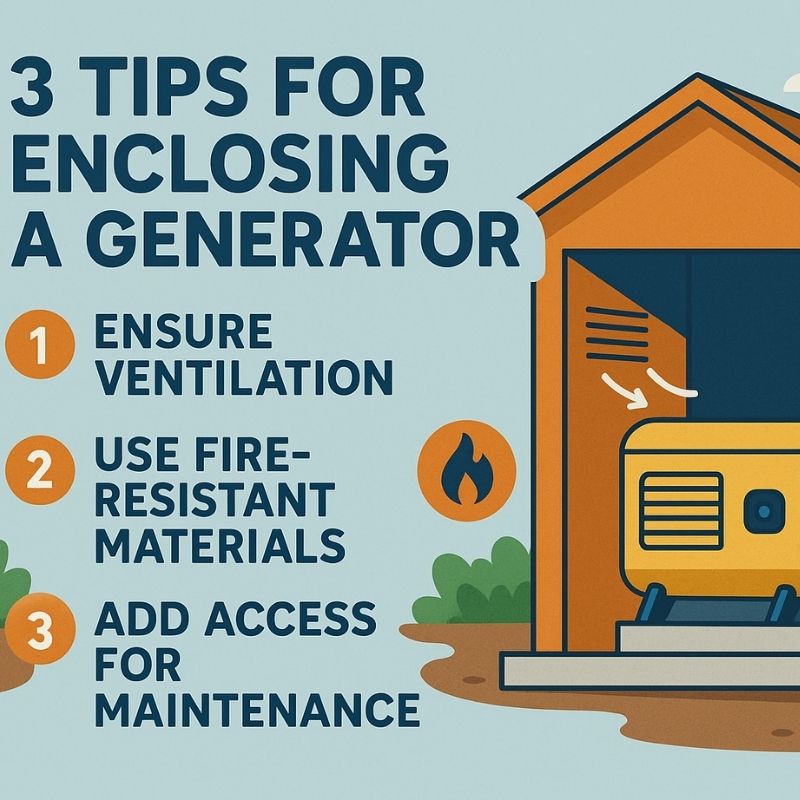
When it comes to your generator, proper ventilation isn’t just a good idea—it’s essential. Without the right airflow, your generator can overheat, emit dangerous fumes, and even become a fire hazard.
You might think placing your generator in a small shed or enclosed space saves room, but without proper ventilation, you’re risking your safety and the reliability of your power source. You’ll discover exactly how to keep your generator well-ventilated, protect your home or business, and ensure your generator runs smoothly when you need it most.
Don’t wait for a breakdown or worse—read on to learn the simple steps that make all the difference.

Credit: customskirting.com
Ventilation Basics
Proper ventilation is essential for any generator setup. It keeps the generator cool and safe during operation. Without good airflow, the generator can overheat or produce dangerous gases inside enclosed spaces.
Ventilation helps remove heat and harmful exhaust gases. It also ensures fresh air reaches the engine for better performance. Understanding basic ventilation principles is key to safe and efficient generator use.
Airflow Importance
Generators produce heat and fumes when running. Good airflow removes hot air and exhaust quickly. This prevents heat build-up that can damage the generator.
Fresh air intake is also vital. It supplies oxygen needed for fuel combustion. Without enough air, the engine may run poorly or stop.
Ventilation Methods
There are two main ways to ventilate generators: natural and mechanical. Natural ventilation uses vents or openings for air movement. Mechanical ventilation uses fans to push or pull air.
Choosing the right method depends on the generator size and location. Large generators usually need mechanical ventilation for proper cooling.
Vent Placement
Positioning vents affects airflow efficiency. Intake vents should be low and away from exhaust outlets. Exhaust vents belong higher to let hot air escape.
Clear paths between vents avoid air blockages. This allows cool air to flow in and hot air to exit without interruption.
Duct Installation Tips
Proper duct installation plays a crucial role in ventilating generators. Ducts move hot air out and bring fresh air in. Correct installation ensures the generator runs safely and efficiently. Here are important tips for installing ducts properly.
Choose The Right Duct Material
Select ducts made from durable, heat-resistant materials. Metal ducts work well for high temperatures. Avoid materials that can warp or melt near the generator. Proper material prevents damage and maintains airflow.
Maintain Correct Duct Size
Use ducts sized according to the generator’s airflow needs. Too small ducts restrict airflow and cause overheating. Too large ducts waste space and reduce efficiency. Follow industry guidelines for sizing ducts precisely.
Insulate Ducts Properly
Insulate ducts to keep cool air cold and hot air hot. Insulation reduces heat loss and prevents condensation. Proper insulation also protects nearby structures from heat damage. Use materials suited for the local climate.
Ensure Straight And Short Duct Runs
Keep ducts as straight and short as possible. Long or twisted ducts reduce airflow and increase resistance. Use smooth bends instead of sharp angles to maintain airflow. This setup improves ventilation and generator performance.
Seal All Duct Joints
Seal duct joints tightly to avoid air leaks. Use appropriate sealants or tapes designed for ventilation ducts. Leaks reduce ventilation efficiency and can cause hot spots. Proper sealing keeps airflow steady and reliable.
Cooling Methods
Cooling methods are vital for keeping generators running smoothly. Proper cooling stops overheating, which can damage parts and reduce generator life. Different cooling techniques help manage heat based on generator size and use.
Choosing the right cooling method improves generator performance. It also ensures safety by preventing heat buildup in enclosed spaces. Here are common cooling methods used for generators.
Air Cooling
Air cooling uses fans to blow air over the generator’s engine. This method moves heat away quickly and keeps the engine temperature stable. It is simple and cost-effective for small to medium generators.
Fans draw cool air in and push hot air out. Proper ventilation is needed to let fresh air flow freely. Without enough airflow, air cooling loses its effectiveness.
Liquid Cooling
Liquid cooling uses water or coolant to absorb engine heat. The liquid circulates through pipes and passes through a radiator to cool down. This method works well for larger generators.
Liquid cooling maintains a steady temperature, even under heavy loads. It reduces engine wear and helps the generator last longer. Regular checks on coolant levels keep the system running smoothly.
Combination Cooling
Some generators use both air and liquid cooling. This combination improves heat management in tough conditions. Air cools some parts while liquid cools others.
This method suits generators that run for long hours or in hot climates. It offers balanced cooling and protects the engine from overheating.
Carbon Monoxide Risks
Generators produce carbon monoxide (CO), a deadly gas without color or smell. This gas can quickly build up in enclosed or poorly ventilated spaces. Breathing carbon monoxide can cause serious health problems or death.
Proper ventilation is essential to keep carbon monoxide levels safe around generators. It helps move the gas outside, away from people and animals. Knowing the risks helps prevent accidents and protects everyone nearby.
What Is Carbon Monoxide?
Carbon monoxide is a toxic gas created when fuel burns. Generators burn gasoline, diesel, or propane, which all release CO. It mixes with the air and can enter homes or buildings if not vented properly.
How Carbon Monoxide Affects Health
Breathing carbon monoxide blocks oxygen in the blood. This causes headaches, dizziness, nausea, and confusion. High exposure can lead to unconsciousness or death within minutes. Children, elderly, and pets are very vulnerable.
Signs Of Carbon Monoxide Poisoning
Common signs include headache, weakness, and nausea. Feeling dizzy or confused is also a warning. If you notice these symptoms near a running generator, move to fresh air immediately.
Preventing Carbon Monoxide Buildup
Always run generators outdoors and away from windows or vents. Never use them inside homes, garages, or sheds without proper ventilation. Install carbon monoxide detectors in your home for extra safety.
Importance Of Proper Ventilation
Good airflow removes carbon monoxide from the generator area. Ventilation ducts and fans help push exhaust gas outside. This lowers the risk of CO poisoning and keeps the air safe to breathe.
Ventilation Requirements
Proper ventilation is vital for safe and efficient generator operation. It removes heat, exhaust gases, and supplies fresh air. Without good ventilation, generators can overheat and produce dangerous fumes.
Every generator installation needs a well-planned ventilation system. This system keeps the generator cool and prevents harmful gas buildup. Understanding the key ventilation requirements helps protect people and equipment.
Airflow Volume
Adequate airflow is essential to cool the generator. The ventilation system must provide enough fresh air to replace hot air. A general rule is to supply at least 1 cubic meter of air per minute for each kilowatt of generator power.
This airflow removes heat and exhaust fumes quickly. Insufficient airflow causes overheating and reduces generator lifespan. Proper ducts and vents ensure smooth air movement around the unit.
Exhaust Gas Removal
Exhaust gases contain carbon monoxide, which is toxic. Ventilation must direct these gases safely outside the building. Installing exhaust fans near the generator’s top helps remove hot gases efficiently.
Exhaust vents should be placed where fumes cannot re-enter the building. Clear pathways for exhaust prevent dangerous gas accumulation. This protects health and meets safety codes.
Vent Placement And Size
Vents must be placed to allow both air intake and exhaust. Intake vents should be low to bring in cool air. Exhaust vents go high to release warm air and gases.
The size of vents depends on the generator’s power and room size. Larger generators need bigger or more vents. Correct vent sizing avoids airflow restrictions and overheating.

Credit: truegear.com.au
Exhaust Fan Placement
Proper placement of exhaust fans is critical for effective ventilation of generators. Exhaust fans remove hot air and harmful gases from the generator area. This helps keep the generator cool and safe during operation. Incorrect placement reduces airflow and increases risks.
Positioning Exhaust Fans Above The Generator
Exhaust fans should be installed above the generator. Heat and exhaust gases naturally rise. Placing fans higher allows them to capture and expel hot air efficiently. This prevents heat buildup near the generator.
Ensuring Clear Airflow Paths
Fans need a clear path to push exhaust outside. Avoid placing fans near obstacles or walls that block airflow. Open and unobstructed vents improve ventilation and reduce carbon monoxide risks.
Using Multiple Fans For Larger Spaces
Large generator rooms may require more than one exhaust fan. Multiple fans spread airflow evenly and improve ventilation. Position fans strategically to cover all areas around the generator.
Space Clearance
Space clearance is a key factor in proper generator ventilation. It means leaving enough open area around the generator for air to flow freely. Good airflow helps cool the generator and removes harmful gases.
Without enough space, heat can build up quickly. This causes the generator to overheat and may shorten its life. Also, exhaust fumes can collect, creating a safety hazard. Proper space clearance reduces these risks.
Recommended Distance Around Generators
Keep at least 3 feet of clear space around all sides of the generator. This distance allows air to move freely and prevents heat buildup. It also helps in easy access for maintenance and emergency situations.
Clearance From Walls And Structures
Avoid placing generators too close to walls or buildings. Leave at least 4 feet between the generator and any structure. This gap ensures exhaust gases do not enter living spaces and keeps fresh air flowing.
Obstruction-free Airflow
Remove any objects blocking airflow near the generator. Items like plants, furniture, or storage boxes can reduce ventilation. Keep the area clear to maintain steady air circulation and safe operation.
Consider Outdoor Vs. Indoor Placement
Generators placed indoors need extra clearance and ventilation systems. Make sure vents or fans provide fresh air and remove exhaust. Outdoor generators require open space but still need clearance from walls and obstacles.

Credit: truegear.com.au
Indoor Vs Outdoor Use
Choosing the right place to run your generator is vital for safety and performance. Generators produce fumes and heat that must move away quickly. Understanding the differences between indoor and outdoor use helps keep your space safe. Good ventilation is key to avoid dangerous gas buildup and overheating.
Indoor Generator Use
Indoor use of generators needs careful planning. Rooms must have strong airflow to stop carbon monoxide buildup. Install vents or fans to push fumes outside. Without proper ventilation, toxic gases can fill the room quickly. This risk makes indoor generator use less common and more controlled.
Outdoor Generator Use
Running a generator outdoors is safer for most people. Fresh air moves freely, carrying fumes away fast. Place the generator on a flat, dry surface far from doors and windows. Avoid areas with poor air circulation or near flammable materials. Outdoor use reduces the need for special ventilation systems.
Ventilation Tips For Both Settings
Always position generators where air flows well. Check that exhaust gases do not enter living spaces. Maintain clear space around the unit to allow heat to escape. Regularly inspect vents and fans for blockages. Proper ventilation extends generator life and ensures safe operation.
Temperature Control
Temperature control is vital for generator performance and safety. Generators produce heat during operation. Without proper ventilation, heat builds up quickly. Excess heat can cause damage and reduce generator life. Good airflow helps maintain optimal temperature levels. It keeps the generator cool and running smoothly.
Controlling temperature prevents overheating and mechanical failures. It also reduces fire risks and protects nearby equipment. Proper ventilation systems remove hot air and bring in fresh air. This balance ensures the generator stays within safe temperature limits.
How Ventilation Affects Generator Temperature
Ventilation directly impacts heat dissipation. Air vents and exhaust fans move hot air away. Cool air enters through intake vents. This air exchange lowers the internal temperature. Without it, heat remains trapped inside. This causes parts to overheat and fail faster.
Signs Of Poor Temperature Control
Watch for signs of overheating. These include unusual noises, smoke, or shutdowns. The generator may also emit a burning smell. High engine temperature warnings may appear. These signs indicate ventilation needs improvement.
Best Practices For Temperature Control
Install vents near the generator’s hottest parts. Use exhaust fans to pull out warm air. Keep intake areas clear of obstructions. Regularly clean filters and vents to maintain airflow. Monitor temperature gauges during operation. These steps help maintain steady temperature control.
Safety Precautions
Proper ventilation for generators is vital for safety. Without it, dangerous gases and heat can build up quickly. These hazards affect health and the lifespan of the generator. Following safety precautions helps protect people and property from harm.
Generators produce carbon monoxide, a colorless, odorless gas. It can cause serious illness or death if inhaled in large amounts. Good airflow prevents this gas from accumulating indoors. It also keeps the generator cool, reducing fire risks.
Ventilation Placement And Airflow
Install ventilation openings near the generator’s exhaust outlet. Position vents to let fresh air in and hot air out. Avoid blocking vents with furniture or debris. Proper airflow clears harmful gases fast. It also stops overheating by cooling engine parts.
Using Exhaust Fans Safely
Exhaust fans help remove heat and fumes. Place fans above or near the generator. Fans must vent air outside the building. Check fan operation regularly to ensure they work well. Faulty fans can trap dangerous gases inside.
Carbon Monoxide Detectors
Install carbon monoxide detectors near the generator area. These alarms warn about unsafe gas levels early. Test detectors monthly and replace batteries as needed. Detectors save lives by alerting before gas reaches harmful levels.
Regular Maintenance And Inspections
Check ventilation systems often. Clean vents and fans to avoid clogs. Inspect generator exhaust pipes for leaks or damage. Fix problems quickly to keep ventilation effective. Proper upkeep extends generator life and increases safety.
Frequently Asked Questions
How To Properly Ventilate A Generator?
Place the generator outdoors with at least three feet of clearance on all sides. Install ventilation ducts to direct hot air away and allow cool air in. Use exhaust fans above the unit to remove heat and fumes. Ensure proper airflow to prevent carbon monoxide buildup and overheating.
What Are The Ventilation Requirements For A Generator Room?
Generator rooms require continuous airflow with intake and exhaust vents sized per generator specifications. Install exhaust fans above the unit to remove heat and gases. Maintain at least three feet of clearance around the generator for effective ventilation and safety.
Ensure ventilation meets local codes and manufacturer guidelines.
What Is The 20/20/20 Rule For Generators?
The 20/20/20 rule for generators means running the generator for 20 minutes every 20 days at 20% load. This keeps the engine lubricated and ready.
Does A Generator Need To Be Vented?
Yes, generators require proper ventilation to prevent overheating and dangerous carbon monoxide buildup. Ensure clear airflow around the unit.
What Is Proper Ventilation For Generators?
Proper ventilation means enough airflow to cool the generator and remove exhaust gases safely.
Why Is Generator Ventilation Important?
Ventilation prevents overheating and removes harmful gases like carbon monoxide from the generator area.
How Much Ventilation Does A Generator Need?
Ventilation size depends on generator power; usually, vents must allow continuous fresh air flow.
Can Generators Be Used Indoors With Ventilation?
Indoor use requires strong ventilation to avoid toxic gas buildup and ensure safe operation.
What Are The Risks Of Poor Generator Ventilation?
Poor ventilation causes overheating, carbon monoxide poisoning, and can damage the generator.
How To Install Ventilation For A Generator Room?
Install intake and exhaust vents placed to allow fresh air in and hot air out.
Conclusion
Proper ventilation keeps generators cool and safe during use. It prevents dangerous gas buildup and reduces fire risks. Good airflow improves generator performance and extends its life. Always ensure vents and exhaust fans work well. Proper care helps your generator run smoothly when needed most.
Don’t ignore ventilation—it protects both people and equipment. Simple steps make a big difference in safety and reliability.