

When the power goes out, keeping your fridge running can be a top priority. You don’t want to lose all that food, and you definitely don’t want to deal with spoiled groceries.
But which generator can actually keep your fridge powered up? This question is crucial for anyone looking to maintain food safety during outages or even while camping. You’ll discover the types of generators that can effectively run your fridge, how to determine the right wattage, and tips for choosing the best option for your needs.
By the end, you’ll have the knowledge you need to make an informed decision and ensure your food stays fresh, no matter what happens. Let’s dive in!
Types Of Generators For A Fridge
Choosing the right generator for your fridge is important. Different generators offer unique benefits. Understanding these options helps you make a smart choice. Here are the main types of generators you can use.
Portable Generators
Portable generators are easy to move. They are great for outdoor use or emergencies. These generators usually run on gasoline. They can provide enough power for a fridge.
When using a portable generator, consider the wattage. Most fridges need between 600 to 800 running watts. Check your fridge’s label for exact needs. This ensures the generator can handle the load.
Inverter Generators
Inverter generators are quieter than portable ones. They produce clean energy, which is safe for sensitive electronics. These generators can adjust power output based on demand.
Inverter generators are ideal for small fridges. They often have lower wattage requirements. These generators are also lightweight, making them easy to transport.
Standby Generators
Standby generators are permanent fixtures. They automatically turn on during a power outage. These generators connect directly to your home’s power system.
They provide enough power for multiple appliances. Standby generators usually run on natural gas or propane. They are a good choice for larger fridges or whole-house needs.
Credit: www.homedepot.com
Key Power Requirements
Understanding the key power requirements for running a fridge with a generator is essential for ensuring your food stays fresh during outages or while camping. Knowing how much power your fridge needs can help you select the right generator for your needs. Let’s break down the important factors to consider.
Understanding Wattage Needs
Every appliance has a specific wattage requirement. This includes your refrigerator, which typically needs a certain amount of power to operate efficiently.
Fridges generally fall within the range of 100 to 800 watts, depending on their size and type. To find out the exact wattage, check the label on your fridge or refer to the user manual.
Understanding these wattage needs is the first step in choosing the right generator. You want to ensure your generator can handle the fridge’s demands without any issues.
Starting Vs Running Watts
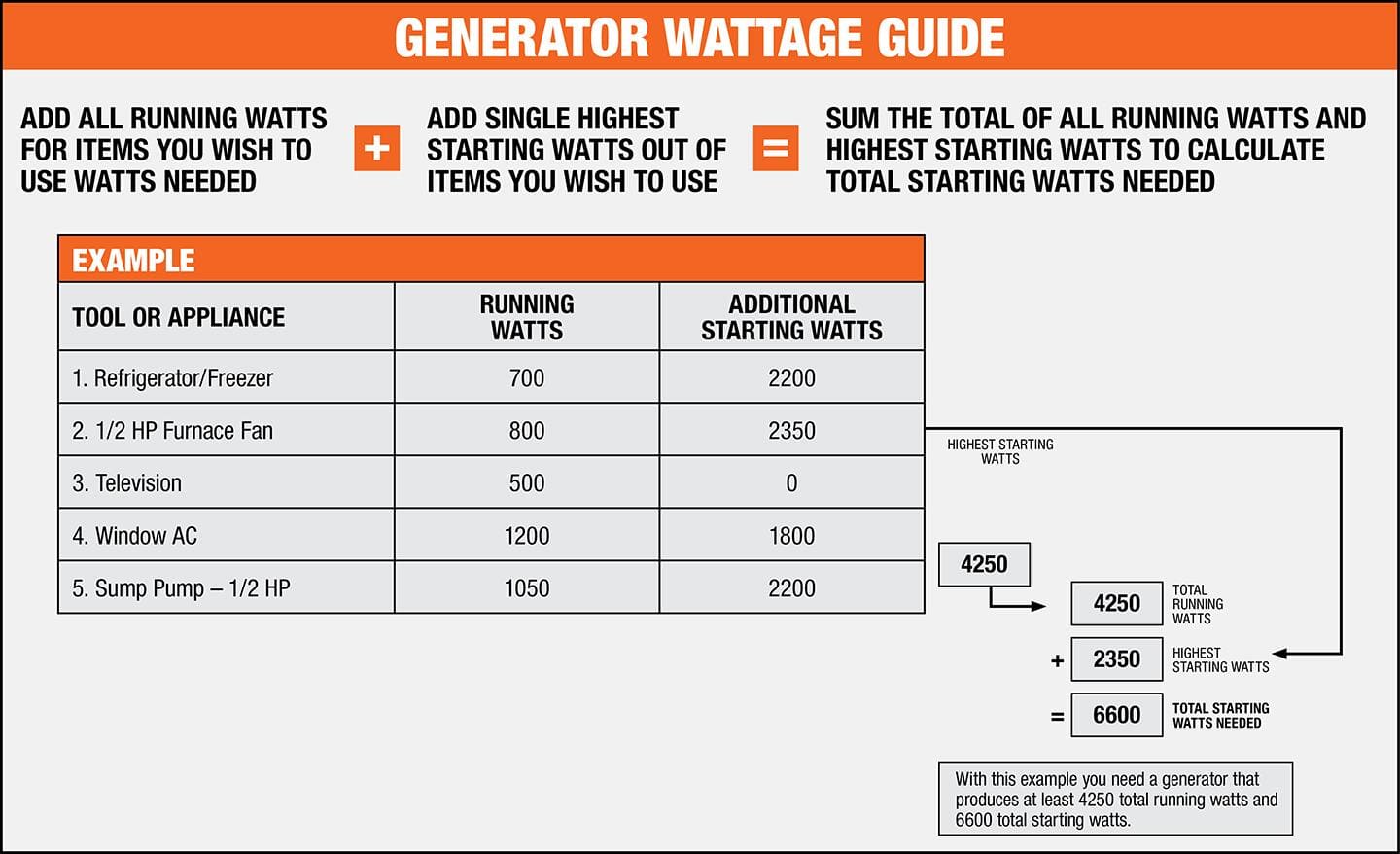
Every fridge has two important wattage figures: starting watts and running watts. Starting watts are the extra power needed to start the fridge, while running watts are what it consumes during normal operation.
Starting watts can be significantly higher than running watts. For instance, a fridge that runs on 300 watts may require up to 1200 watts to start.
Always consider both figures when selecting a generator. If your generator only supports the running wattage, it might not be able to start your fridge.
Calculating Total Power Consumption
To determine the total power consumption, add the starting wattage of your fridge to the wattage of any additional appliances you plan to run simultaneously. This will give you a clear picture of your power needs.
For example, if your fridge needs 300 running watts and 1200 starting watts, and you also want to run a microwave that uses 1000 watts, you would need a generator that can provide at least 2200 watts.
- Fridge: 1200 starting watts, 300 running watts
- Microwave: 1000 watts
- Total needed:2200 watts
Knowing how to calculate your total power consumption will prevent surprises when you need your fridge to run. You don’t want to be left without cold food during an emergency.
What’s your fridge’s wattage requirement? Knowing this can make all the difference in your generator selection process.
How To Choose The Right Generator
Choosing the right generator for your fridge requires knowing its wattage needs. Most refrigerators need about 600 to 800 watts to run. Look for a generator that can handle this demand, especially during startup when more power is needed. Always check the specifications before making a purchase.
Choosing the right generator for your fridge can make a significant difference in your daily life, especially during power outages or when camping. You want a generator that not only keeps your fridge running but also fits your lifestyle and needs. Here’s how to ensure you pick the perfect one.Matching Generator Capacity
Start by determining the wattage your fridge requires. Most standard refrigerators need between 100 to 800 watts to operate. Look for the label on your fridge, usually found inside the door or on the back. Once you know the wattage, choose a generator with a slightly higher capacity to accommodate starting watts, which can be 2-3 times the running watts. For example, if your fridge needs 600 watts, a generator that provides at least 1200 watts will ensure it runs smoothly without overloading.Fuel Type Considerations
Generators typically run on gas, propane, or diesel. Each fuel type comes with its own advantages and disadvantages. Gasoline generators are widely available and easy to use, but they can be noisy and consume fuel quickly. Propane generators tend to be quieter and have a longer shelf life for fuel, but may require additional storage. Diesel generators are more efficient for larger appliances but can be more expensive upfront. Consider your typical use case. Are you looking for something to use occasionally, or do you need a dependable solution for extended outages?Noise Level And Portability
Noise can be a major factor, especially if you’re using the generator in residential areas. Look for models that advertise lower decibel levels, usually under 60 dB, for quieter operation. Portability is equally important. If you plan to move the generator around, choose one that is lightweight and has wheels. Some models even come with handles for easy transport. Think about your specific needs. Will you be using it at home, or do you want to take it on camping trips? Selecting the right generator can enhance your experience and make your life easier. Choosing the right generator is not just about wattage; it’s about understanding how it fits into your lifestyle. What features matter most to you?Top Generator Features For Fridges
Choosing the right generator for your fridge is important. Not all generators are the same. Some features make certain generators better for running fridges. Here are key features to consider.
Automatic Voltage Regulation
Automatic Voltage Regulation (AVR) keeps the power steady. It prevents voltage spikes or drops. These changes can harm your fridge. AVR ensures that your fridge runs smoothly. It helps maintain a constant temperature. This feature is essential for preserving food.
Fuel Efficiency
Fuel efficiency is crucial for long-term use. A generator that uses less fuel saves money. Look for models with better fuel consumption rates. Efficient generators run longer on a single tank. This feature is especially useful during power outages. You want your fridge running without frequent refueling.
Safety Features
Safety features protect both the generator and your fridge. Look for overload protection to prevent damage. Circuit breakers can stop power surges. Some generators also have low-oil shutdown. This feature prevents engine damage when oil levels are low. Keeping your appliances safe is a top priority.
Tips For Using A Generator With A Fridge
Using a generator with a fridge needs careful planning. Proper setup helps keep food fresh. Here are some tips to ensure smooth operation.
Proper Connection And Setup
Start by checking the generator’s power rating. It should match your fridge’s needs. Use a heavy-duty extension cord. This prevents overheating and damage.
Plug your fridge directly into the generator. Avoid connecting through a power strip. This keeps your fridge safe from power surges.
Maintaining Stable Power Supply
Fridges need steady power to work well. Fluctuations can cause food spoilage. Keep the generator on a stable surface. This reduces the risk of it tipping over.
Monitor the generator while it runs. Listen for strange noises. Check the fuel level regularly. This prevents unexpected shutdowns.
Extending Generator Lifespan
Regular maintenance keeps your generator running longer. Change the oil as recommended. Clean or replace the air filter often.
Store the generator in a dry place. Protect it from rain and dust. This helps avoid rust and damage.
Follow the manufacturer’s guidelines. This ensures safe and efficient use.

Credit: www.bluedm.com.au
Common Mistakes To Avoid
Running a fridge with a generator can be tricky. Many people make mistakes that can lead to problems. Here are some common mistakes to avoid.
Underrating Power Needs
One major mistake is not calculating power needs correctly. A fridge requires more power to start than to run. This is called surge power. Many generators do not provide enough surge power. Check the fridge’s specifications before buying a generator.
Look for the starting wattage. Make sure the generator can handle it. If you choose a generator with too little power, your fridge may not work properly. This can lead to food spoilage and waste.
Overloading The Generator
Another mistake is overloading the generator. It’s tempting to connect multiple devices. This can exceed the generator’s capacity. Overloading can damage both the generator and the fridge.
Always check the generator’s wattage rating. Only connect devices that stay within this limit. This ensures safe operation and prolongs the life of your equipment.
Ignoring Maintenance
Skipping maintenance is a common error. Generators need regular checks to run well. Clean the air filters and check the oil levels often. Neglecting these tasks can lead to breakdowns.
Read the user manual for maintenance tips. Regular servicing helps the generator last longer. A well-maintained generator runs efficiently and keeps your fridge working.
Best Generators For Fridges
Choosing the right generator for a fridge is important. Look for models that provide enough wattage to keep your fridge running smoothly. A generator with at least 2000 watts should work for most standard fridges. Consider fuel type and runtime for your needs.
Choosing the best generator for your fridge is essential for maintaining food safety and comfort during power outages. The right generator can ensure your refrigerator runs smoothly, keeping your food fresh and your drinks cold. Here’s a guide to help you find the perfect generator to suit your needs.Top Portable Options
Portable generators are perfect if you need flexibility and convenience. They can be easily moved around your home or taken on camping trips. – Honda EU2200i: This model is known for its quiet operation and fuel efficiency. It delivers 2,200 watts of power, which is typically enough to run most fridges. – Westinghouse iGen4500: This generator combines portability with high output. It can run up to 18 hours on a single tank, making it ideal for extended outages. – Champion 2000-Watt: Lightweight and compact, this generator is easy to transport. It provides enough power for your fridge while remaining budget-friendly. Think about how often you will need to move the generator. Will you use it mainly at home or take it on the go?Recommended Inverter Models
Inverter generators are quieter and produce cleaner power. They are perfect for sensitive electronics, including your fridge. – Yamaha EF2200iS: This inverter generator is compact and powerful. It operates quietly and can run your fridge without fluctuations in power. – Jackery Explorer 1000: While technically a portable power station, it’s great for running a fridge during short outages. It’s lightweight and can be charged via solar panels. – Generac GP2200i: Known for its reliability, this inverter generator runs smoothly. It’s also equipped with a USB port for charging small devices. Consider your power needs. Does your fridge require a steady supply of energy?Reliable Standby Units
Standby generators are a more permanent solution. They automatically kick in during a power outage, ensuring your fridge and other appliances stay powered. – Generac Guardian Series: This unit comes with a variety of wattage options. It can power your entire home, including your fridge, seamlessly. – Kohler 20RESCL: Known for its durability, this standby generator can handle larger fridges and other high-demand appliances. – Briggs & Stratton 40346: This model is both powerful and quiet. It’s designed to run continuously, giving you peace of mind during outages. Evaluate your home’s energy needs. Would a standby generator provide the reliability you want? Selecting the right generator can make all the difference in keeping your fridge running smoothly. Consider your specific needs and the features of each option. This way, you’ll ensure your food stays fresh and your home remains comfortable, no matter the power situation.
Credit: www.youtube.com
Frequently Asked Questions
What Size Generator Do I Need For A Fridge?
To run a standard refrigerator, you typically need a generator with a minimum of 1,000 to 2,000 watts. This power range accommodates the starting wattage required when the fridge compressor kicks in. Always check your fridge’s specifications for exact wattage needs.
Can A Portable Generator Run A Refrigerator?
Yes, a portable generator can run a refrigerator. Ensure it has sufficient wattage to handle both starting and running power. Most portable generators are suitable for this purpose, but verify the specs before use to avoid damage.
How Many Watts Does A Refrigerator Use?
Refrigerators generally use between 100 to 800 watts. The wattage varies based on the size and model. Larger fridges with more features usually consume more energy. It’s essential to check your appliance label for accurate wattage information.
What Type Of Generator Is Best For Home Use?
For home use, inverter generators are often the best choice. They provide stable power, are quieter, and are fuel-efficient. Additionally, they are suitable for sensitive electronics and appliances, including refrigerators, ensuring safe operation.
Conclusion
Choosing the right generator for your fridge is important. Focus on power output. Look for models that provide enough wattage. Check both starting and running wattage. Consider fuel type and efficiency. A reliable generator ensures your food stays fresh. Always prioritize safety and maintenance.
Research different brands and read reviews. This helps you make a smart choice. With the right generator, your fridge will run smoothly. Enjoy peace of mind, knowing your food is safe. Make the best decision for your needs today.