
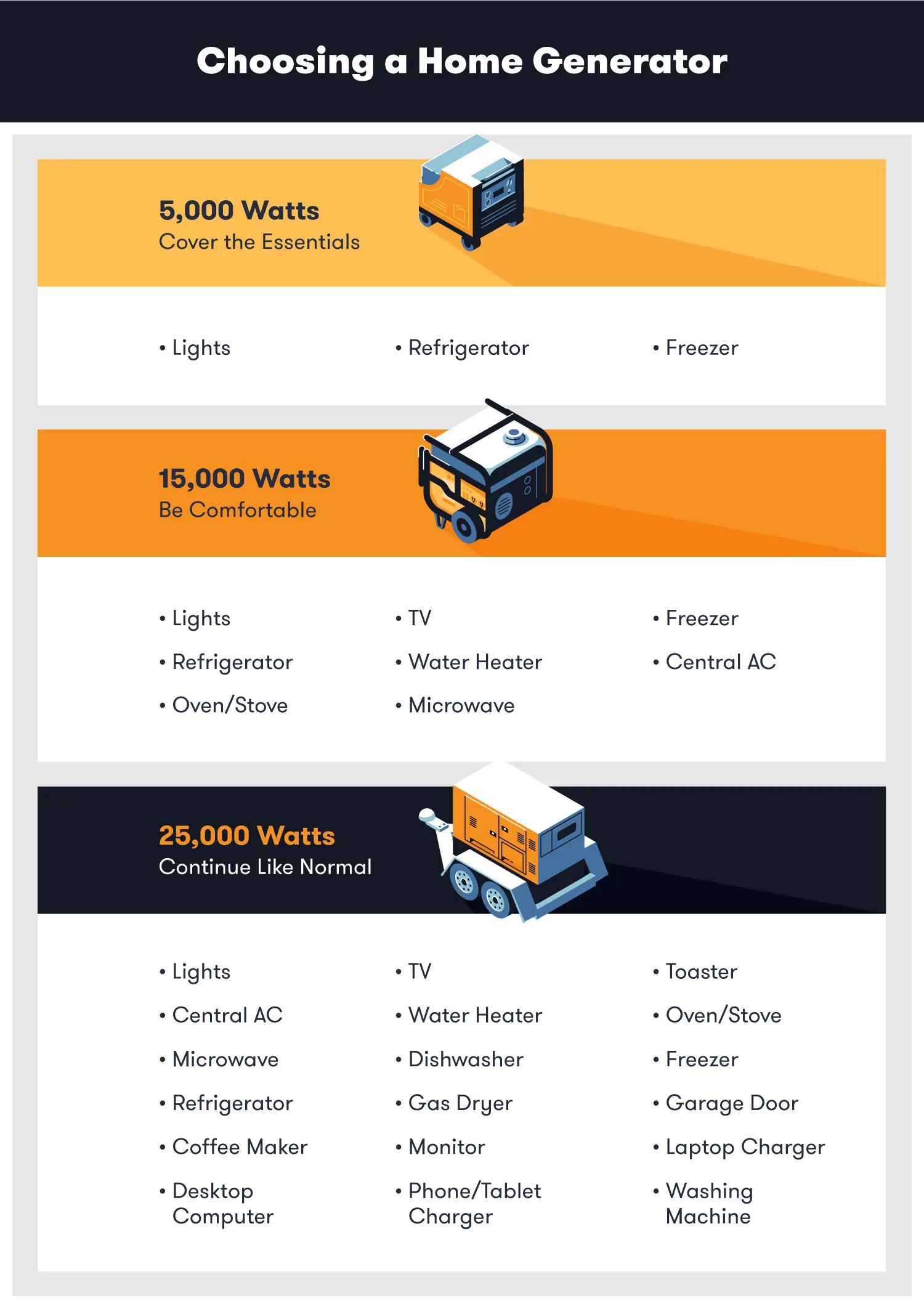
Choosing the right generator can feel overwhelming. With so many options available, how do you know which one suits your needs?
Whether you’re planning a camping trip, preparing for a power outage, or looking to power your tools, the right generator makes all the difference. We’ll break down the key factors to consider when selecting a generator. You’ll learn how to determine the right size, type, and features for your specific situation.
By the end, you’ll have the confidence to make an informed decision that will keep your power needs met without breaking the bank. Let’s get started!

Credit: www.cooltoday.com
Types Of Generators
Choosing the right generator can be confusing. Different types serve different needs. Understanding these types helps in making the right choice.
Portable Generators
Portable generators are versatile and easy to move. They provide power for camping, tailgating, or job sites. Most models run on gasoline or propane. They are great for short-term use. Make sure to check the wattage. This ensures it meets your power needs.
Inverter Generators
Inverter generators are quieter and more efficient. They produce clean power suitable for sensitive electronics. These generators adjust their output based on demand. This feature saves fuel and reduces noise. They are perfect for outdoor events and home backup. Consider the wattage for your devices.
Standby Generators
Standby generators are fixed installations. They automatically turn on during a power outage. These generators run on natural gas or propane. They provide seamless power to your home. Installation requires a professional. Check local codes and regulations before choosing.
Solar Generators
Solar generators use sunlight to create energy. They are eco-friendly and quiet. These generators have solar panels and batteries. They are ideal for remote locations. Limited sunlight can affect performance. Assess your energy needs carefully.
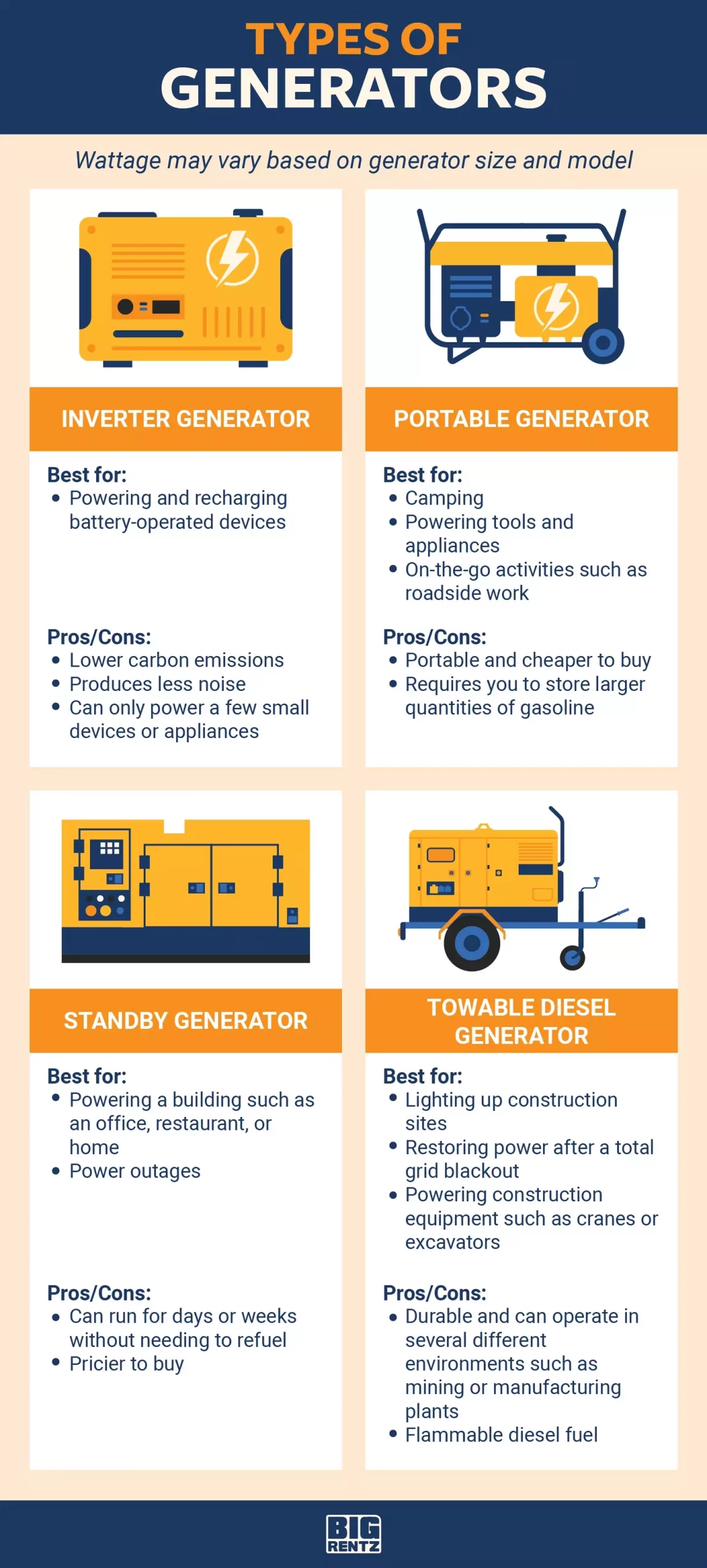
Credit: www.bigrentz.com
Power Requirements
Choosing the right generator starts with understanding your power needs. Knowing how much power you require is vital. This knowledge helps you pick a generator that fits your situation.
Power requirements can vary. They depend on what you plan to power. Knowing your wattage needs is the first step.
Calculating Wattage Needs
Start by listing all devices you want to run. Find the wattage ratings for each device. You can find this on the device label or in the manual.
Add up the wattage of all devices. This total gives you your basic power requirement. It’s important to account for every device you plan to use.
Essential Vs. Non-essential Appliances
Identify which appliances are essential. Essential appliances keep your home running smoothly. Examples include refrigerators, lights, and medical devices.
Non-essential appliances can wait. These include TVs and gaming consoles. Decide what you need most during a power outage.
Peak Power Vs. Running Power
Understand the difference between peak and running power. Running power is the wattage needed to keep devices running. Peak power is the extra wattage needed to start devices.
Some appliances use more power to start. For example, a refrigerator needs extra power when it first kicks on. Make sure your generator can handle both power types.
Fuel Options
Choosing the right fuel for your generator is crucial. Options include gasoline, propane, and diesel. Each type has different benefits, so consider your needs and usage before making a decision.
Choosing the right fuel option for your generator can significantly affect its efficiency, maintenance, and overall performance. Each fuel type has its own advantages and drawbacks, and understanding these can help you make an informed decision that aligns with your needs. Let’s break down the main fuel options available for generators.Gasoline-powered Generators
Gasoline-powered generators are among the most common types available. They are typically easy to find and relatively affordable. – Pros: – Readily available at gas stations. – Generally lighter and more portable. – Great for short-term use or emergencies. – Cons: – Fuel can deteriorate quickly, requiring frequent replacement. – Less efficient than other options. – Emits more noise and fumes. If you’re looking for a generator for occasional camping trips or short power outages, gasoline may be your best bet. Just be prepared to keep an eye on the fuel levels and store it properly to avoid degradation.Diesel-powered Generators
Diesel-powered generators are known for their durability and fuel efficiency. They can run longer on less fuel, making them a popular choice for commercial applications. – Pros: – Longer lifespan and lower operating costs. – Better fuel efficiency. – More torque, making them ideal for heavy-duty tasks. – Cons: – Generally heavier and less portable. – Higher upfront costs. – Can be noisy. If you need a generator for construction sites or backup power for your home, consider diesel. I’ve seen construction crews rely on diesel generators because they can run continuously without frequent refueling.Propane Generators
Propane generators are becoming increasingly popular due to their cleanliness and efficiency. They burn cleaner than gasoline or diesel, making them an environmentally friendly option. – Pros: – Longer shelf life for fuel. – Quieter operation. – Less carbon buildup, leading to lower maintenance. – Cons: – Fuel availability can be limited depending on your location. – Slightly more expensive than gasoline. If you’re environmentally conscious or want a generator that requires less maintenance, propane might suit you well. Many RV owners prefer propane generators for their quiet operation and ease of use.Dual-fuel Generators
Dual-fuel generators offer the flexibility of using either gasoline or propane. This versatility makes them a convenient choice for various situations. – Pros: – Flexibility to switch fuel types. – Extended run time with two fuel options. – Can adapt to fuel availability during emergencies. – Cons: – Typically more expensive than single-fuel generators. – Slightly more complex in terms of maintenance. Imagine a scenario where a storm knocks out power lines. With a dual-fuel generator, you can easily switch to propane if gasoline is hard to find. This adaptability can be a lifesaver during emergencies. Consider your specific needs, budget, and usage scenarios when choosing a generator. Which fuel option aligns best with your lifestyle? Take your time to weigh the pros and cons of each to find the perfect fit.Key Features To Look For
Choosing the right generator is important. Certain features make a generator more useful. Focus on these key features to find the best fit.
Noise Levels
Noise can be a big issue with generators. Look for models with low decibel ratings. Quiet generators are better for camping or residential areas. Check customer reviews for noise complaints. A quieter generator allows for peaceful surroundings.
Portability And Weight
Portability is essential for many users. Lightweight generators are easier to move. Look for models with wheels or handles. Consider where you will use the generator. A portable unit works well for outdoor activities or emergencies.
Automatic Transfer Switch
An automatic transfer switch is a helpful feature. It allows for seamless power transfer. This switch keeps your appliances safe during outages. Look for generators that support this feature. It adds convenience and peace of mind.
Electric Start Vs. Manual Start
Starting a generator should be easy. Electric start models are simple to use. Just push a button to start. Manual start models require more effort. Choose based on your preference and needs.
Safety Considerations
Choosing the right generator involves safety considerations. Think about the power needs and the environment where it will be used. Always ensure proper ventilation to avoid carbon monoxide buildup. Using appropriate extension cords and following manufacturer guidelines can help keep everyone safe while using the generator.
When choosing a generator, safety considerations must be at the forefront of your decision-making. Generators can be incredibly useful during power outages or while camping, but they also come with risks. Understanding the safety measures associated with generator use can protect you and your loved ones.Proper Ventilation
Generators emit carbon monoxide, a colorless and odorless gas that can be deadly. Always place your generator outdoors, far from windows, doors, and vents. Make sure the area is well-ventilated. A good rule of thumb is to position your generator at least 20 feet away from your home. If you’re camping, set it up in an open area away from tents. You want to enjoy your outdoor adventures without the threat of carbon monoxide poisoning.Surge Protection
Power surges can damage your devices when you start your generator. Invest in a surge protector to shield your electronics. Look for a generator that offers built-in surge protection or use a quality surge protector with multiple outlets. This small step can save you from costly repairs or replacements of your valuable gadgets. Have you ever lost a device to a power surge? It’s frustrating and entirely avoidable.Ground Fault Circuit Interrupters
Ground Fault Circuit Interrupters (GFCIs) are essential for preventing electrical shocks. They work by shutting off the power if they detect an imbalance in the electrical current. Use GFCIs when plugging in your generator, especially in wet conditions. Check for generators that come with GFCI outlets. This feature can provide peace of mind, ensuring your safety while using power tools or appliances outdoors. Have you considered how easily accidents can happen? Taking these precautions can make all the difference. Remember, your safety is paramount. By prioritizing ventilation, surge protection, and GFCIs, you can enjoy the benefits of your generator without unnecessary risks.Budget And Cost Factors
Choosing the right generator involves understanding your budget and costs. Consider the purchase price, fuel expenses, and maintenance costs. Assessing these factors helps ensure you select a generator that meets your needs without breaking the bank.
Understanding the budget and cost factors is crucial when choosing the right generator for your needs. You want to ensure that your investment aligns with your financial situation while providing reliable power. Let’s break down the key elements you should consider to make an informed decision.Initial Purchase Cost
The initial purchase cost is often the most significant factor in your generator decision. Prices can range from a few hundred to several thousand dollars, depending on the type and capacity. Consider your specific power needs; a small portable generator might suffice for occasional use, while a whole-house generator will demand a larger budget. Research various brands and models to find the best fit. Don’t forget to check for promotions or discounts, which can help lower your initial expense.Fuel And Maintenance Costs
Fuel costs can add up quickly, affecting your long-term budget. Gasoline, propane, and diesel vary in price and availability. If you plan to use your generator frequently, opt for one with better fuel efficiency. Keep in mind that maintenance costs, such as oil changes and parts replacements, are also part of the equation. Regular maintenance can prevent costly repairs down the line, so factor in those expenses when calculating your overall budget.Warranty And Longevity
A generator’s warranty can be a good indicator of its quality and longevity. Longer warranties often mean that manufacturers are confident in their products. Look for models with at least a two-year warranty. Consider how long you expect to use the generator. A higher upfront cost might be worth it if the unit lasts longer and requires less maintenance. Ask yourself: how much value do you place on reliability versus initial cost? Your answer will guide your decision.Common Mistakes To Avoid
Choosing the right generator can be tricky. Many people make mistakes that lead to problems later. Avoiding these common errors can save time and money. Here are some mistakes to watch out for.
Overlooking Power Needs
Many buyers ignore their actual power needs. This can lead to buying a generator that is too small. A small generator won’t power all your devices. It can also cause damage to your electronics.
Calculate the total wattage of your appliances. Consider starting and running watts. This helps you choose a generator that meets your needs.
Choosing The Wrong Fuel Type
Not all generators run on the same fuel. Some use gasoline, while others use propane or diesel. Choosing the wrong fuel can lead to issues.
Think about availability and storage. Gasoline may be easy to find, but it can expire. Propane lasts longer but may require special tanks. Select a fuel type that suits your situation.
Ignoring Noise Levels
Noise can be a big problem with generators. Some models are very loud, which can disturb you and your neighbors. Check the noise rating before buying.
Look for generators with quieter operation. A quieter generator can improve your experience. It is important for camping or backyard use.
Top Brands To Consider
Choosing the right generator can be overwhelming, especially with so many brands on the market. Knowing the top brands can help you make an informed decision. Here’s a closer look at some of the most reputable names in the generator industry.
Popular Portable Generator Brands
Portable generators are handy for camping, tailgating, or emergency power outages. Brands like Hondaand Yamahahave built a solid reputation for their reliability and efficiency. Customers often rave about their quiet operation and fuel efficiency.
- Honda:Known for durability and performance.
- Yamaha:Offers lightweight options that are easy to transport.
- Champion:Provides budget-friendly models without sacrificing quality.
Have you ever experienced a power outage during a storm? A portable generator can be your lifeline, ensuring your fridge stays cold and your lights stay on.
Reliable Standby Generator Manufacturers
Standby generators are essential for homeowners who want peace of mind during outages. Generacis a leading name in this category, known for its automatic transfer switches. Their systems kick in within seconds of a power loss.
Briggs & Strattonis another trusted brand, offering various sizes to fit different home needs. Many users appreciate their easy installation and robust support services.
- Generac:Quick response time and great customer service.
- Briggs & Stratton:Offers a wide range of options for various budgets.
- Kohler:Known for high-quality construction and long lifespans.
Have you considered how a standby generator could enhance your home’s safety and comfort?
Emerging Solar Generator Companies
Solar generators are gaining popularity as eco-friendly alternatives. Brands like Goal Zeroand Jackeryare at the forefront of this innovation. Their products are designed for outdoor enthusiasts and those looking to reduce their carbon footprint.
Many users enjoy the convenience of solar charging, making these generators perfect for camping trips. The investment pays off in the long run, especially as you save on fuel costs.
- Goal Zero:Offers versatile options for both home and outdoor use.
- Jackery:Known for compact designs that are easy to carry.
What features would make a solar generator appealing to you?
Choosing the right generator brand can set you up for success, whether you need a portable, standby, or solar option. Assess your needs and consider these trusted brands to find the perfect match.

Credit: ggenerators.wordpress.com
Frequently Asked Questions
What Size Generator Do I Need For My Home?
To determine the right size generator for your home, calculate the total wattage of essential appliances. Consider items like refrigerators, heaters, and lights. Generally, a generator between 5,000 to 7,500 watts is suitable for average households. Always choose a generator with slightly higher capacity than your calculated needs.
How Much Fuel Does A Generator Consume?
A generator’s fuel consumption varies based on size and load. On average, a portable generator uses about 0. 5 to 0. 75 gallons of gas per hour at half load. Larger standby generators can consume more, typically around 1 to 2 gallons per hour.
Check your generator’s specifications for accurate fuel consumption rates.
Can I Run My Generator Continuously?
Most generators can run continuously, but it’s crucial to check the manufacturer’s guidelines. Portable generators often have a limited runtime due to fuel tank size. Standby generators are designed for longer usage but require maintenance. Always allow for cooling periods to prevent overheating and extend the generator’s lifespan.
What Is The Difference Between Portable And Standby Generators?
Portable generators are mobile and ideal for temporary power needs. They are often less expensive and suitable for camping or small outages. Standby generators are permanently installed and automatically supply power during outages. They are more powerful and designed for continuous use but come at a higher cost.
Conclusion
Choosing the right generator matters. It affects your comfort and safety. Think about your power needs first. Consider the size and fuel type next. Check reviews and ratings for guidance. Make sure it fits your budget, too. Remember, a good generator is an investment.
It can provide peace of mind during outages. Take time to research before buying. This way, you will find the best option for you. Your power solution awaits. Make an informed choice today.