
Understanding the difference between generator potential and action potential is crucial for anyone interested in neuroscience or biology. You might wonder how these two concepts impact the way your body responds to stimuli.
Generator potentials are the initial changes in membrane potential that occur when a sensory receptor is activated. In contrast, action potentials are the rapid spikes that carry signals along neurons. This distinction is more than just academic; it’s essential for grasping how your nervous system communicates and processes information.
By the end of this article, you’ll not only know the key differences between these two types of potentials but also appreciate their roles in your daily life. Let’s dive in and unravel the science behind your body’s electrical signals!
Generator Potential
Generator potential is a type of electrical signal. It occurs in sensory cells. These signals help the body sense different stimuli. They play a key role in how we perceive our environment.
Role In Sensory Transduction
Generator potential is crucial for sensory transduction. It converts physical stimuli into electrical signals. For example, touch, light, or sound can trigger these signals. This process allows our nervous system to understand sensations.
Origin In Receptor Cells
Generator potentials start in receptor cells. These cells respond to specific stimuli. For instance, photoreceptors react to light. Mechanoreceptors respond to touch. The strength of the generator potential depends on the intensity of the stimulus.
Graded Nature Of Response
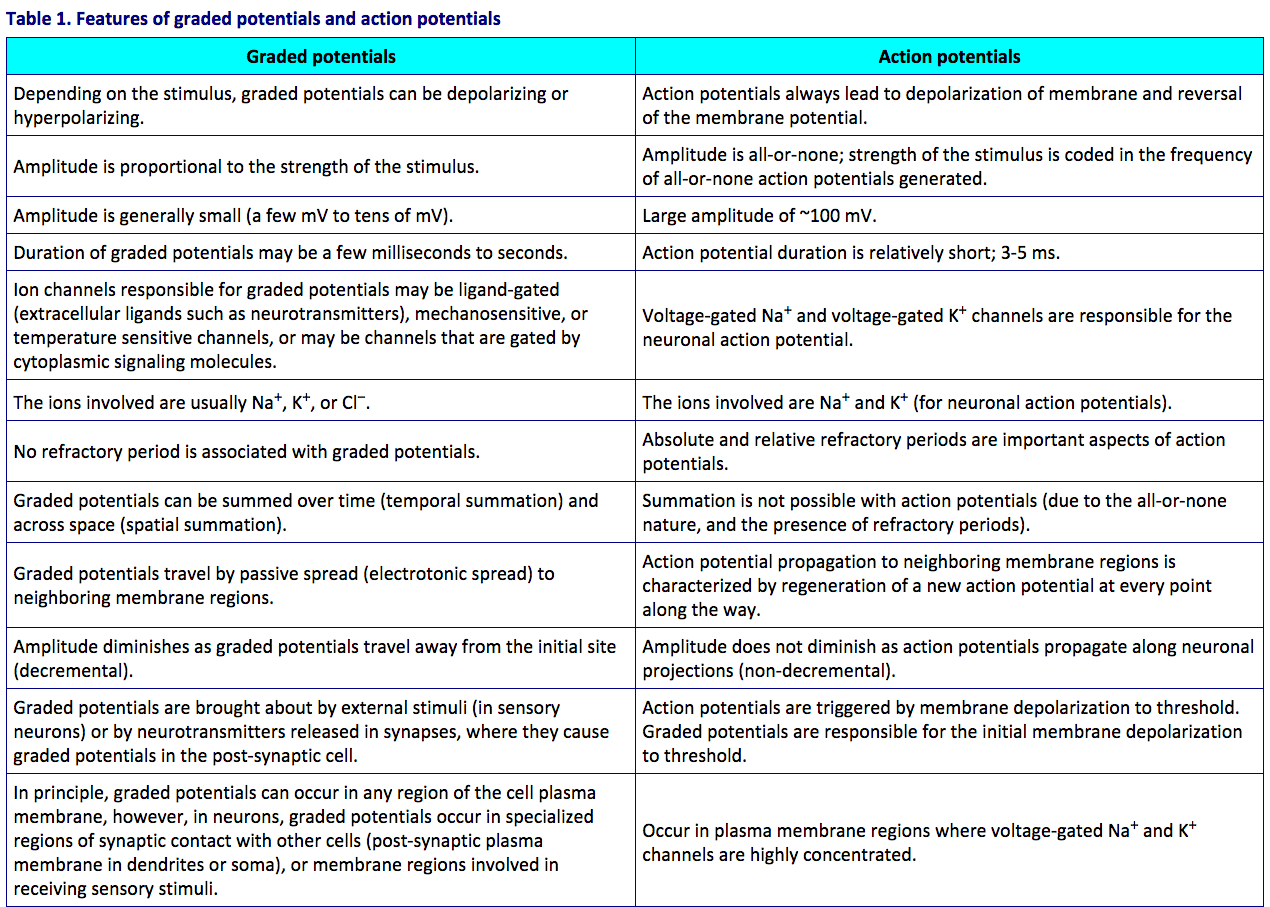
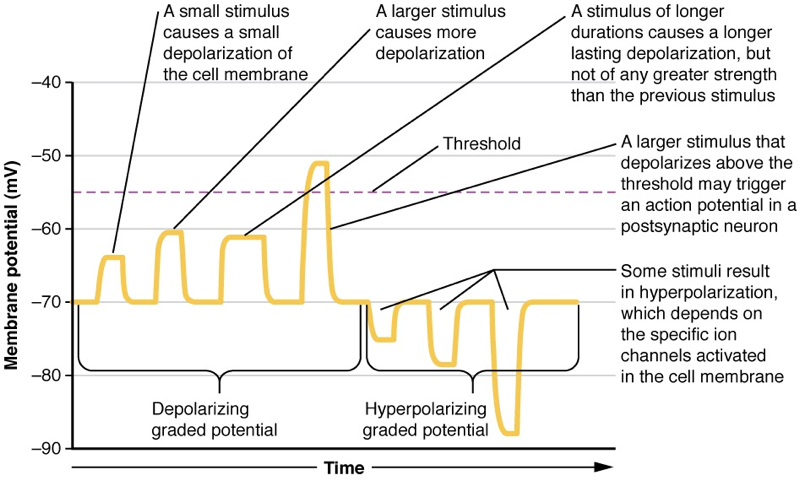
Generator potentials are graded responses. This means their strength varies. A stronger stimulus creates a larger potential. A weaker stimulus produces a smaller potential. This variation helps the brain interpret different levels of sensation.

Credit: www.youtube.com
Action Potential
Action potential is a key process in the nervous system. It allows neurons to send signals quickly. This process is vital for communication between nerve cells. Understanding action potentials helps us grasp how our body functions.
Role In Neural Communication
Action potentials play a crucial role in neural communication. They transmit information along axons. This allows neurons to communicate with each other and with muscles.
When a neuron fires, it sends a signal. This signal travels rapidly to the next neuron. It is essential for reflexes and reactions. Without action potentials, our nervous system would not work.
Initiation At Axon Hillock
The axon hillock is where action potentials begin. This area is at the base of the axon. It integrates incoming signals from other neurons.
If the combined signals reach a certain threshold, an action potential starts. This is a critical point in neural signaling. It determines whether a signal will be sent or not.
All-or-none Phenomenon
Action potentials follow the all-or-none principle. Once initiated, they travel down the axon fully. There is no partial firing.
If the threshold is not met, no signal occurs. This ensures clear and consistent communication. Neurons either fire or remain inactive. This principle is fundamental in understanding nerve impulses.
Key Distinctions
Generator potential and action potential are key concepts in neurobiology. Generator potential is a local change in membrane potential, while action potential is a rapid, all-or-nothing response. Understanding these differences helps clarify how signals are transmitted in the nervous system.
Understanding the key distinctions between generator potential and action potential is essential for grasping how our nervous system functions. While both are vital for signaling, they operate under different principles and serve unique roles in neuronal communication. Let’s break down these differences to clarify how they contribute to our body’s responsiveness.
Graded Vs. All-or-none
Generator potential is graded. This means its strength varies depending on the stimulus. A light touch generates a small potential, while a firm push produces a larger one. In contrast, action potential operates on an all-or-none principle. Once a certain threshold is reached, it fires fully. There’s no in-between; it either occurs or it doesn’t. This difference is crucial in understanding how signals are transmitted through neurons.
Location And Function
Generator potentials occur in sensory neurons, specifically in the receptor sites where stimuli are first detected. They help translate various types of environmental signals into electrical signals. Action potentials, however, take place along the axon of a neuron. They serve to transmit these signals rapidly over long distances, ensuring that information reaches its destination quickly. Think about the speed at which you react to touching something hot; action potentials make that rapid response possible.
Threshold Requirement
Generator potentials can vary in intensity, but they need to reach a specific threshold to trigger an action potential. This threshold is like a gatekeeper, ensuring only significant signals get passed along. If the generator potential is too weak, it won’t reach this threshold, and no action potential will occur. This mechanism prevents your nervous system from being overloaded with minor stimuli. Have you ever ignored a minor itch because it didn’t feel urgent? That’s your nervous system at work, filtering out the noise. Understanding these distinctions can enhance your appreciation for how your body processes information. How do you think these mechanisms affect your daily life?
Credit: pressbooks.umn.edu
Biological Significance
Generator potential and action potential are key concepts in biology. Generator potential occurs when a sensory receptor detects a stimulus. Action potential is an electrical signal that travels along neurons. Understanding these differences is crucial for grasping how the nervous system communicates.
The biological significance of understanding the difference between generator potential and action potential lies in their roles in how we perceive and interact with the world around us. These two types of potentials are essential for various physiological functions, particularly in the nervous system. Grasping how they function can deepen your appreciation for sensory processing and signal transmission in your body.
Importance In Sensory Processing
Generator potentials serve as the initial response to stimuli. They occur in sensory receptors when they detect changes in the environment, such as light, sound, or touch. Think about the last time you felt a gentle breeze on your skin. That initial sensation is due to generator potentials activating the nerve endings in your skin. Once a generator potential reaches a certain threshold, it converts into an action potential. This transition is crucial for transforming sensory information into signals that your brain can interpret. Without this process, you wouldn’t be able to enjoy your favorite activities, like feeling the warmth of the sun on your face or hearing your favorite song. Have you ever wondered how quickly your body reacts to a sudden loud noise? The swift transition from generator potential to action potential allows for immediate responses, safeguarding you from potential dangers.
Impact On Signal Transmission
Action potentials are essential for transmitting signals over long distances within the nervous system. They travel along neurons, enabling communication between different parts of the body. This is similar to how messages travel through a network, reaching their destination rapidly and efficiently. The speed of action potentials can significantly impact how you respond to stimuli. For example, athletes rely on fast signal transmission to react quickly during competitions. A delay in action potential transmission could mean the difference between scoring a point or missing an opportunity. Moreover, understanding these potentials can have practical implications in medicine. Disorders affecting signal transmission can lead to serious health issues. Recognizing the importance of generator and action potentials can enhance your understanding of conditions like multiple sclerosis or neuropathy. How does knowing the difference between these potentials change your perspective on how your body works? Understanding these mechanisms enriches your connection to your own biology and highlights the intricate processes happening within you every day.

Credit: biology.stackexchange.com
Frequently Asked Questions
What Is A Generator Potential?
A generator potential is a local change in the membrane potential of a sensory receptor. It occurs in response to a stimulus, leading to a graded response. Unlike action potentials, generator potentials can vary in magnitude and do not necessarily lead to neuronal firing.
How Does Action Potential Occur?
An action potential occurs when a neuron’s membrane depolarizes sufficiently. This depolarization triggers voltage-gated sodium channels to open. As sodium ions rush in, the membrane potential rapidly rises, leading to a brief spike. This electrical impulse propagates along the neuron, transmitting signals.
What Are The Main Differences Between Them?
The main differences lie in their nature and function. Generator potentials are graded and localized, while action potentials are all-or-nothing events. Generator potentials can summate, whereas action potentials are fixed in magnitude. Additionally, action potentials travel long distances, while generator potentials do not.
Can Generator Potentials Lead To Action Potentials?
Yes, generator potentials can lead to action potentials if they reach a threshold. When the generator potential is strong enough, it depolarizes the membrane. If this depolarization exceeds the threshold level, an action potential is triggered, allowing signal transmission.
Conclusion
Understanding the difference between generator potential and action potential is essential. Generator potentials help trigger action potentials. They work together in the nervous system. Generator potentials are graded, while action potentials are all-or-nothing. Knowing these differences aids in grasping how our bodies communicate.
This knowledge can enhance your appreciation of biology. Keep exploring these concepts for a deeper understanding. They play a vital role in how we respond to the world around us.