
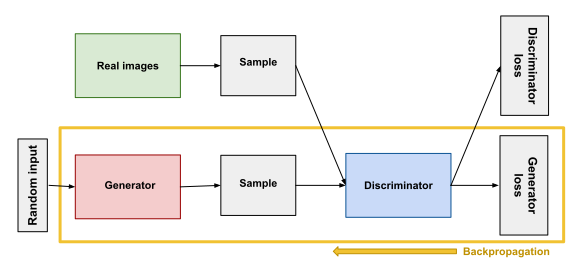
Have you ever wondered about the role of a generator in Generative Adversarial Networks (GANs)? Understanding this component is crucial for anyone interested in artificial intelligence and machine learning.
A generator plays a vital part in creating new data, mimicking real-world examples, and pushing the boundaries of what machines can achieve. We’ll break down the purpose of the generator in GANs, making it easy for you to grasp its significance.
By the end, you’ll see how this powerful tool not only enhances creativity in AI but also impacts various industries. Stay with us to unlock the secrets behind this fascinating technology and discover how it can shape the future.
Role Of The Generator
The generator plays a crucial role in the realm of Generative Adversarial Networks (GANs). Understanding this role can deepen your grasp of how GANs function and their applications in various fields. Let’s take a closer look at the responsibilities and significance of the generator.
What Does The Generator Do?
The generator’s primary task is to create new data that mimics real data. It takes random noise as input and transforms it into something that resembles authentic images, sounds, or texts. This process is essential for training the GAN effectively.
How Does It Learn?
The generator learns through a feedback loop with its counterpart, the discriminator. As the generator produces samples, the discriminator evaluates them against real data. This back-and-forth helps the generator improve over time, refining its outputs to become more realistic.
Why Is The Generator Important?
The generator is vital for the success of GANs because it fosters creativity in machine learning. It can generate unique content, making it valuable in art, music, and even fashion design. Imagine being able to create original artwork just by tweaking parameters in a generator!
Examples Of Generator Applications
- Image Generation: The generator can create lifelike images from sketches.
- Text Generation: It can produce coherent and contextually relevant text.
- Video Synthesis: The generator can even create short video clips that seem realistic.
The Future Of Generators In Gans
The potential for generators in GANs is immense. As technology advances, we may see improvements in the quality and diversity of generated content. What kind of applications do you think could emerge from enhanced generators?
Understanding the role of the generator can inspire new ideas and innovations. With each advancement, the boundaries of creativity and technology continue to blur. Are you ready to explore what you can create with this powerful tool?
Core Components Of Gans
The core components of Generative Adversarial Networks (GANs) are essential for understanding how these powerful models function. At the heart of GANs are two primary players: the Generator and the Discriminator. Each has a unique role, and together they create a dynamic and competitive environment that fuels the learning process.
Understanding The Generator
The Generator is responsible for creating new data instances. Think of it as an artist trying to produce a masterpiece. Its goal is to generate data that is indistinguishable from real data.
As you dive into the workings of GANs, you might wonder how the Generator learns to create realistic outputs. It starts with random noise, which it processes through several layers of neural networks. Each layer transforms the noise into more structured data, ultimately producing an output that mimics the target dataset.
The Role Of The Discriminator
The Discriminator acts as the critic in this creative duo. Its job is to distinguish between real data and data created by the Generator. This feedback loop is crucial; without it, the Generator wouldn’t know how to improve.
Picture yourself at an art gallery. The Discriminator is like an expert art critic, constantly evaluating the art pieces. It provides feedback to the Generator, allowing it to refine its craft and produce better works over time.
The Adversarial Process
GANs thrive on competition. The Generator and Discriminator are locked in a game where each tries to outsmart the other. This adversarial process is what drives innovation in GANs.
As the Generator gets better at creating data, the Discriminator must also enhance its ability to identify fakes. This constant back-and-forth leads to a higher quality of generated data. You might find it fascinating how this interplay mirrors real-world scenarios where competition fosters growth and improvement.
Loss Functions: The Driving Force
Loss functions play a crucial role in guiding both the Generator and Discriminator. They measure how well each component is performing. The Generator aims to minimize its loss, while the Discriminator seeks to maximize its accuracy.
Understanding these loss functions can offer insights into how GANs evolve. A well-designed loss function ensures that both players are challenged and continue to improve. Have you ever thought about how important feedback is in your own learning process?
Grasping the core components of GANs provides a solid foundation for exploring their potential. Whether you’re creating art, music, or even data, these networks open up a world of possibilities. What are your thoughts on the future applications of GANs in various fields?
How The Generator Works
The generator in a Generative Adversarial Network (GAN) plays a key role. It creates new data based on patterns learned from existing data. Understanding how the generator works helps clarify its function in the GAN process.
Data Transformation Process
The generator starts with random noise. This noise is a set of random numbers. The generator uses this noise to create new data. It transforms the noise into something meaningful.
The transformation involves several layers of processing. Each layer adjusts the data step by step. The goal is to shape the output into something that resembles real data.
Latent Space And Input Noise
Latent space is an abstract area where data is represented. It captures the essential features of the input data. The generator samples points from this latent space.
The random input noise helps explore this space. It allows the generator to create diverse outputs. This randomness is crucial for generating unique samples.
Output Generation Mechanism
The final step is generating output. The generator produces images, text, or other data types. It uses the transformed data from the previous layers.
The output should resemble real-world data. The generator learns from feedback during training. This feedback helps it improve and create better outputs over time.
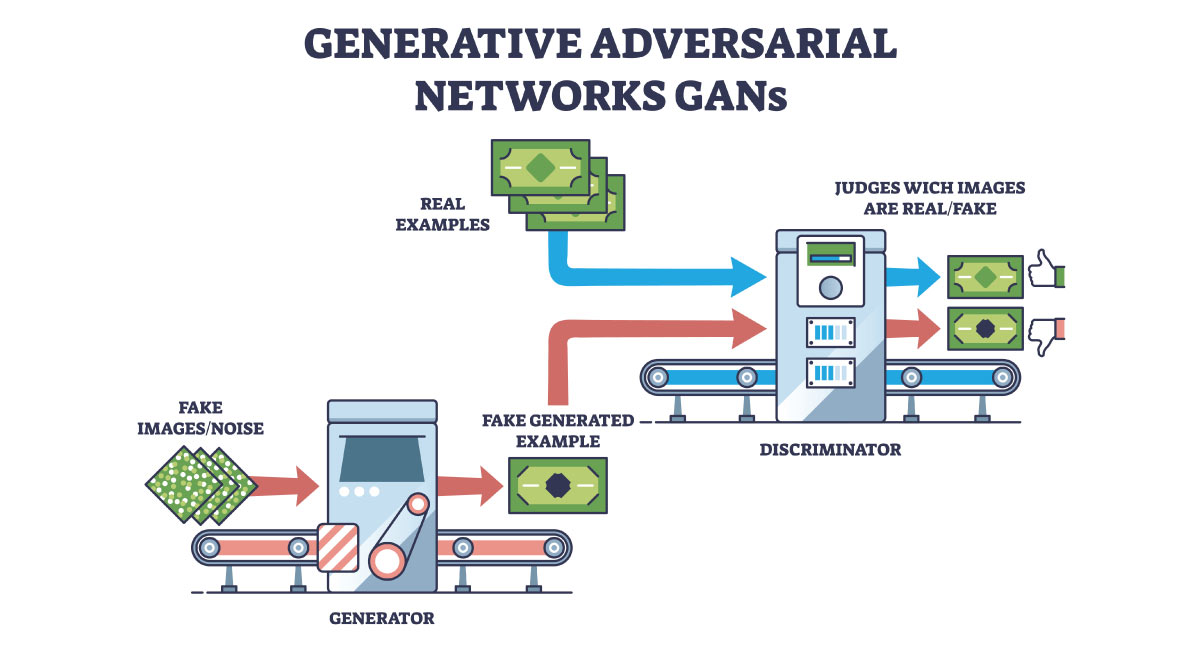
Credit: pg-p.ctme.caltech.edu
Generator’s Purpose In Gans
The generator is a key part of Generative Adversarial Networks (GANs). It creates new data samples. This process helps the network learn and improve. The generator competes with another part called the discriminator. Together, they form a powerful system for generating realistic data.
Creating Realistic Data Samples
The main job of the generator is to create data. It takes random noise as input. This noise is transformed into data samples. The generator aims to produce data that looks real. It could be images, music, or text. The quality of these samples is crucial. The better the samples, the more effective the GAN becomes.
The generator uses complex algorithms. These algorithms help it learn from the data it creates. With each attempt, it improves its output. This learning process is essential for creating realistic samples.
Challenging The Discriminator
The generator also plays a critical role in challenging the discriminator. The discriminator’s job is to tell real data from fake data. It learns from the samples provided by both the generator and real sources. The generator must produce better samples to fool the discriminator.
This competition drives innovation. As the generator improves, the discriminator also gets better. This back-and-forth helps both parts of the GAN evolve. The generator pushes the boundaries of what is possible in data generation.
Applications Of The Generator
Generators play a key role in GANs, or Generative Adversarial Networks. They create realistic data by learning from existing samples. This process helps improve various applications, such as image generation, video creation, and even music production. Generators are essential for training AI to produce new and original content.
The generator in Generative Adversarial Networks (GANs) plays a crucial role in various applications. Its ability to create new data based on learned patterns opens doors to innovative solutions across multiple fields. Let’s dive into some key applications of the generator that showcase its versatility and impact.Image Synthesis
Image synthesis is one of the most exciting applications of the generator. It can produce realistic images from scratch, making it invaluable in industries like gaming and film. Imagine designing an entire virtual world with unique characters and landscapes. Your creativity can flourish when you harness this technology. Artists and designers can generate inspiration by creating countless variations of an image. This streamlines the creative process, allowing you to focus on refining your vision rather than starting from a blank canvas.Text-to-image Conversion
Text-to-image conversion showcases the generator’s ability to turn descriptions into vivid visuals. You can input a simple phrase, and the generator will create a corresponding image. This capability is particularly beneficial for marketing and advertising, where visuals can capture attention instantly. Consider how this can enhance your projects. Need an image for a blog post? Just describe what you want, and the generator does the rest. This not only saves time but also allows for a more personalized touch in your visual content.Data Augmentation
Data augmentation is another powerful application of the generator. It helps enhance datasets by creating variations of existing images. This is especially useful in machine learning, where diverse data improves model accuracy. Imagine training a model with limited images. By using data augmentation, you can create multiple versions of each image, boosting the dataset’s size and diversity. This leads to better-performing models, which can make a significant difference in your projects. The applications of the generator in GANs are vast and impactful. Whether you’re synthesizing images, converting text to visuals, or augmenting data, each application opens new possibilities for creativity and efficiency. How will you leverage these innovative tools in your own work?
Credit: www.researchgate.net
Challenges In Generator Design
Designing a generator in Generative Adversarial Networks (GANs) comes with many challenges. These challenges can affect how well the generator works. Understanding these issues helps in creating better models.
Mode Collapse Issues
Mode collapse is a common problem in GANs. It happens when the generator produces limited outputs. Instead of generating diverse results, it sticks to a few options. This reduces the effectiveness of the model. It fails to capture the full range of data distribution.
Researchers face difficulties in solving mode collapse. They try different techniques to promote diversity. Some use mini-batch discrimination. Others adjust the training process. Each method aims to encourage the generator to create a wider variety of outputs.
Balancing With The Discriminator
Balancing the generator and the discriminator is crucial. Both components must learn at the same pace. If one becomes too strong, it can hinder the other. For example, if the discriminator is too good, the generator struggles to improve.
This imbalance can lead to poor performance. Finding the right balance requires careful tuning. Training strategies can help maintain this balance. Regular adjustments ensure both models learn effectively.
Future Directions For Generators
Generators play a key role in Generative Adversarial Networks (GANs). They create new data samples that mimic real data. This process helps improve machine learning models and enhances various applications in art, design, and more. Future advancements will focus on making generators more efficient and versatile.
The future directions for generators in Generative Adversarial Networks (GANs) hold exciting possibilities. As technology evolves, the capabilities of generators will expand, leading to enhanced output quality and new applications. Understanding these developments can help you stay ahead in the fast-paced world of AI.Improving Output Quality
Enhancing the quality of generated outputs is a primary focus in future generator development. Researchers are continuously working on algorithms that produce more realistic and coherent results. Key areas of improvement include: – Higher Resolution Outputs: Innovations are enabling generators to create images and videos with finer details. This means more lifelike visuals that can be used in various industries. – Better Texture and Color Accuracy: Advances in training data and techniques are leading to more vibrant and realistic textures. You’ll notice this in applications like fashion and design, where accurate representation is crucial. – Reduced Artifacts: Artifacts can detract from the quality of generated content. Future generators will minimize these flaws, resulting in polished outputs that require less post-editing. You might wonder how these improvements will affect your projects. Higher quality outputs can lead to more engaging content, whether you’re creating art, generating synthetic data, or developing virtual environments.Expanding Use Cases
The potential use cases for generators are broadening rapidly. As technology progresses, you’ll find generators being applied in unexpected areas. Consider these emerging applications: – Virtual Reality (VR) and Augmented Reality (AR): Generators can create immersive environments, enhancing user experiences in gaming and training simulations. – Healthcare: Generators can simulate medical images for training purposes, allowing practitioners to improve their skills without the need for real patients. – Content Creation: Automated generation of articles, marketing materials, or even music is becoming more sophisticated. This could save you time and resources in your creative processes. What new possibilities can you imagine for generators in your field? The expansion of use cases means that you can harness this technology to enhance creativity, efficiency, and innovation in your work. As generators evolve, keeping an eye on these trends will help you leverage their capabilities effectively.
Credit: www.leewayhertz.com
Frequently Asked Questions
What Is The Role Of A Generator In Gan?
The generator in a Generative Adversarial Network (GAN) creates new data. It learns from the training data to produce outputs resembling the original dataset. This process involves generating images, audio, or other data types. Essentially, the generator strives to fool the discriminator by producing realistic outputs.
How Does A Generator Function In Gan Architecture?
In GAN architecture, the generator uses random noise as input. It processes this noise through layers to produce data outputs. The generator’s main goal is to improve over time by learning from feedback. This feedback comes from the discriminator assessing the authenticity of the generated data.
Why Is The Generator Crucial For Gan Success?
The generator is essential for the success of a GAN because it drives creativity. Without a strong generator, the network would fail to produce meaningful data. Its ability to generate realistic samples directly impacts the overall performance. Thus, a well-trained generator is vital for generating high-quality outputs.
What Types Of Data Can A Generator Produce?
A generator can produce various types of data, including images, music, and text. In image generation, it creates visuals that mimic real-life objects. In music, it can compose melodies based on learned patterns. The versatility of the generator makes it a powerful tool in different domains.
Conclusion
Generators play a vital role in GANs. They create data that mimics real samples. This process helps improve the quality of generated outputs. A strong generator leads to better performance in various tasks. Understanding its purpose helps in developing effective models.
Focus on how generators enhance learning. They contribute to innovation in AI and machine learning. Embracing this knowledge can lead to exciting discoveries. The generator’s role is key for anyone exploring GANs. It shapes the future of artificial intelligence.