
Have you ever wondered why generators produce alternating current (AC) instead of direct current (DC)? Understanding this concept is crucial for anyone interested in electricity, whether you’re a DIY enthusiast, a student, or just curious about how your devices work.
AC is the backbone of our modern electrical systems, powering everything from your home appliances to industrial machines. We’ll break down the reasons behind this essential technology. You’ll discover how generators create AC, the advantages it offers, and why it’s the preferred choice for most applications.
By the end, you’ll have a clearer understanding of this fascinating topic and why it matters to you. Keep reading to unlock the secrets of alternating current and enhance your knowledge of the energy that fuels your everyday life.
Credit: www.cmm.gov.mo
How Generators Work
Generators are machines that convert mechanical energy into electrical energy. They do this using a simple principle called electromagnetic induction. Understanding how generators work helps us appreciate their role in producing alternating current (AC).
The Role Of Electromagnetic Induction
Electromagnetic induction is the key process in generators. It happens when a conductor moves through a magnetic field. This movement creates an electric current.
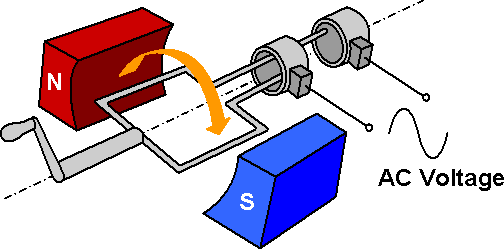
Generators typically use magnets and coils of wire. When the coils spin in the magnetic field, electricity flows. This process produces alternating current, which changes direction regularly.
Components Inside A Generator
Generators have several important parts. The main components include the rotor, stator, and field coils. The rotor is the rotating part that creates motion.
The stator is the stationary part that houses the coils. Field coils produce the magnetic field needed for induction. Together, these components work to generate electricity efficiently.
The Process Of Energy Conversion
Energy conversion in generators is straightforward. Mechanical energy, often from a turbine, spins the rotor. This motion interacts with the magnetic field.
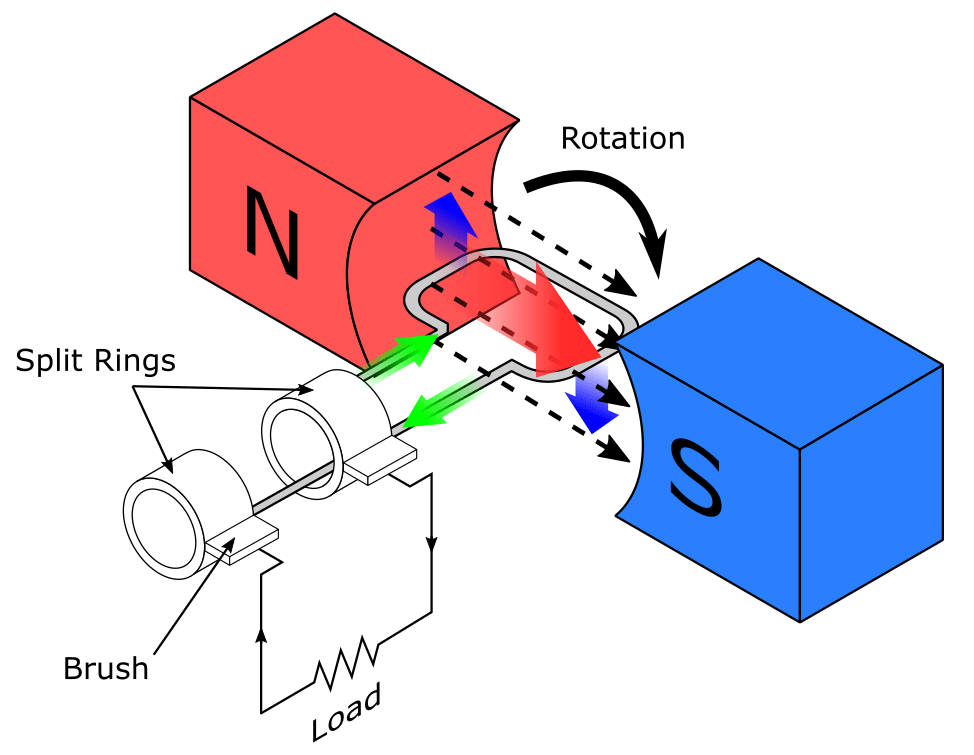
As the rotor turns, it generates an electric current in the coils. The current produced is alternating because of the rotor’s continuous movement. This is how generators create usable electricity.
Credit: savree.com
What Is Alternating Current
Alternating current (AC) is a type of electrical current where the flow of electricity periodically reverses direction. This is different from direct current (DC), where the flow remains constant. Understanding AC is essential, especially when you consider how it powers your home and the devices you use every day.
Ac Vs Dc: Key Differences
AC and DC serve different purposes in the world of electricity. Here are some key differences:
- Direction:AC changes direction periodically, while DC flows in one constant direction.
- Waveform:AC is represented as a sine wave, making it suitable for long-distance transmission. DC is a straight line on a graph, indicating steady flow.
- Applications:AC is primarily used in homes and businesses, while DC is commonly found in batteries and electronics.
Think about your daily life. Most of the appliances you use run on AC, from your refrigerator to your computer. Understanding how AC works helps you appreciate the technology around you.
The Nature Of Ac Waveforms
AC waveforms are typically sinusoidal. This means they oscillate smoothly and continuously, creating a predictable pattern. This smooth flow is what allows for efficient power delivery over long distances.
Other types of AC waveforms include square waves and triangular waves. Each has unique characteristics and applications. However, the sine wave remains the most common due to its efficiency and ease of generation.
Have you ever noticed how the frequency of AC can differ? In the United States, the standard frequency is 60 Hz, while many other countries use 50 Hz. This small difference can impact how appliances function, so it’s important to be aware of it when traveling.
Applications Of Alternating Current
Alternating current is everywhere, powering your everyday life. It’s used in lighting, heating, and cooling systems. AC allows for easy voltage transformation, making it ideal for transmission over large distances.
In industrial settings, AC powers heavy machinery and equipment. Its versatility makes it suitable for various applications, including electric motors and generators.
Have you ever considered how your smartphone charges? While it uses DC for its internal components, it typically connects to an AC power source through a charger. This showcases how both AC and DC work together seamlessly in modern technology.
Understanding AC not only enhances your knowledge of electricity but also helps you make informed decisions about energy use in your home. How can you better utilize AC in your daily life to save energy and costs?
Why Generators Produce Ac
Generators are essential for producing electricity. They can create two types of current: alternating current (AC) and direct current (DC). Most generators produce AC. Understanding why requires looking at a few key principles.
Rotational Motion And Current Direction
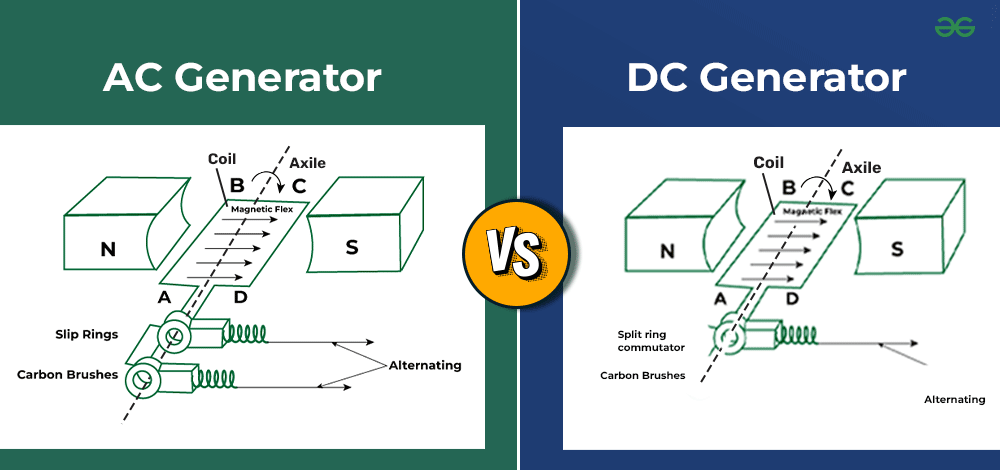
Generators work by rotating a coil in a magnetic field. This rotation causes the direction of the current to change. As the coil spins, the current flows in one direction, then the opposite. This back-and-forth flow creates alternating current.
This method is efficient. It allows for easy adjustments to voltage levels. Rotational motion is at the heart of AC generation. It is a simple yet effective way to produce electricity.
The Influence Of Magnetic Fields
Magnetic fields play a crucial role in AC generation. When a conductor moves through a magnetic field, it generates electricity. The strength and direction of the magnetic field affect the output. A strong, rotating magnetic field increases electricity production.
This interaction between motion and magnetism is vital. It creates a steady flow of AC. This process is fundamental in many types of generators.
Practical Benefits Of Ac Generation
AC has many practical benefits. It is easier to transport over long distances. High voltages can be used without losing much energy. This makes AC ideal for power grids.
AC also allows for simpler transformer designs. Transformers can easily change voltage levels. This adaptability enhances efficiency in power distribution.
Most household appliances use AC. This is due to its availability and efficiency. Generators producing AC meet our daily energy needs effectively.
Advantages Of Alternating Current
Alternating current (AC) offers many benefits. Its use is widespread in homes and industries. Understanding these advantages helps us appreciate AC’s role in daily life.
Efficient Power Transmission
AC travels long distances easily. High voltage reduces energy loss during transmission. This makes power supply more efficient. Electric companies prefer AC for this reason. Less energy waste means lower costs for everyone.
Compatibility With Transformers
Transformers work best with AC. They can easily change voltage levels. This helps match power supply to user needs. High voltage transmission reduces loss. Lower voltage is safer for homes and businesses.
Versatility In Modern Applications
AC powers many devices we use daily. It runs everything from light bulbs to appliances. AC is also essential for industrial machines. Its flexibility makes it suitable for various uses. This includes heating, cooling, and electric vehicles.
Challenges Of Using Alternating Current
Alternating current (AC) is widely used for power distribution. Yet, it comes with challenges. Understanding these challenges helps in making informed choices. Let’s explore some key issues related to using AC.
Complexity In Generation And Design
Generating alternating current can be complex. It requires careful design of generators. The process involves rotating magnetic fields. This can lead to inefficiencies in energy conversion.
AC systems need transformers for voltage adjustments. These components add to the system’s complexity. Maintenance can also be more challenging compared to direct current (DC) systems.
Potential Safety Concerns
Safety is a major concern with alternating current. AC can cause severe electric shocks. The frequency of AC can affect how the body reacts. Even low voltages can be dangerous.
Proper insulation and grounding are essential. Users must be aware of the risks. Regular inspections help ensure safety in AC systems.
Alternatives In Specific Use Cases
Some situations call for alternatives to AC. For example, DC is often used in batteries and electronics. It provides a steady voltage, making it ideal for sensitive devices.
Solar panels typically produce DC. In such cases, inverters convert it to AC for home use. Understanding these alternatives can help in selecting the right power source.
Real-world Examples Of Ac Generators
AC generators create alternating current through electromagnetic induction. This process involves rotating a coil within a magnetic field. Real-world examples include power plants and wind turbines, which convert mechanical energy into electrical energy efficiently. Understanding this helps explain why generators are essential for our daily power needs.
Real-world examples of AC generators highlight their crucial role in various applications. From large-scale power plants to small portable units, these generators are essential for providing electricity in diverse settings. Let’s dive into some practical examples of where you’ll find AC generators in action.Power Plants And Energy Grids
Power plants are the backbone of our electrical systems. They use massive AC generators to convert mechanical energy into electrical energy. These generators are often powered by steam turbines or hydro turbines, creating alternating current that feeds directly into the energy grid. Have you ever thought about how your home stays powered during peak hours? It’s the reliability of these large AC generators that ensures your lights stay on and your appliances run smoothly, even when demand is high.Portable And Backup Generators
Portable generators are a game changer for outdoor enthusiasts and homeowners alike. Whether you’re camping or facing a power outage, these compact units provide a reliable source of AC power. You can easily plug in your devices, lights, or even power tools. They typically run on gasoline or propane, making them versatile for various situations. Have you ever been caught in a blackout? A portable generator can be a lifesaver, allowing you to keep your refrigerator running and your phone charged.Renewable Energy Systems
Renewable energy systems increasingly rely on AC generators to harness natural resources. Wind turbines, for example, use AC generators to convert wind energy into electricity. Solar power systems also utilize inverters that convert the direct current (DC) generated by solar panels into alternating current. This makes solar energy usable for your home and compatible with the grid. Do you consider how much energy you could save by using renewable sources? AC generators play a vital role in making clean energy accessible and practical for everyday use. These real-world examples illustrate how AC generators impact your life directly and indirectly. Understanding their applications can help you appreciate the technology that powers your world.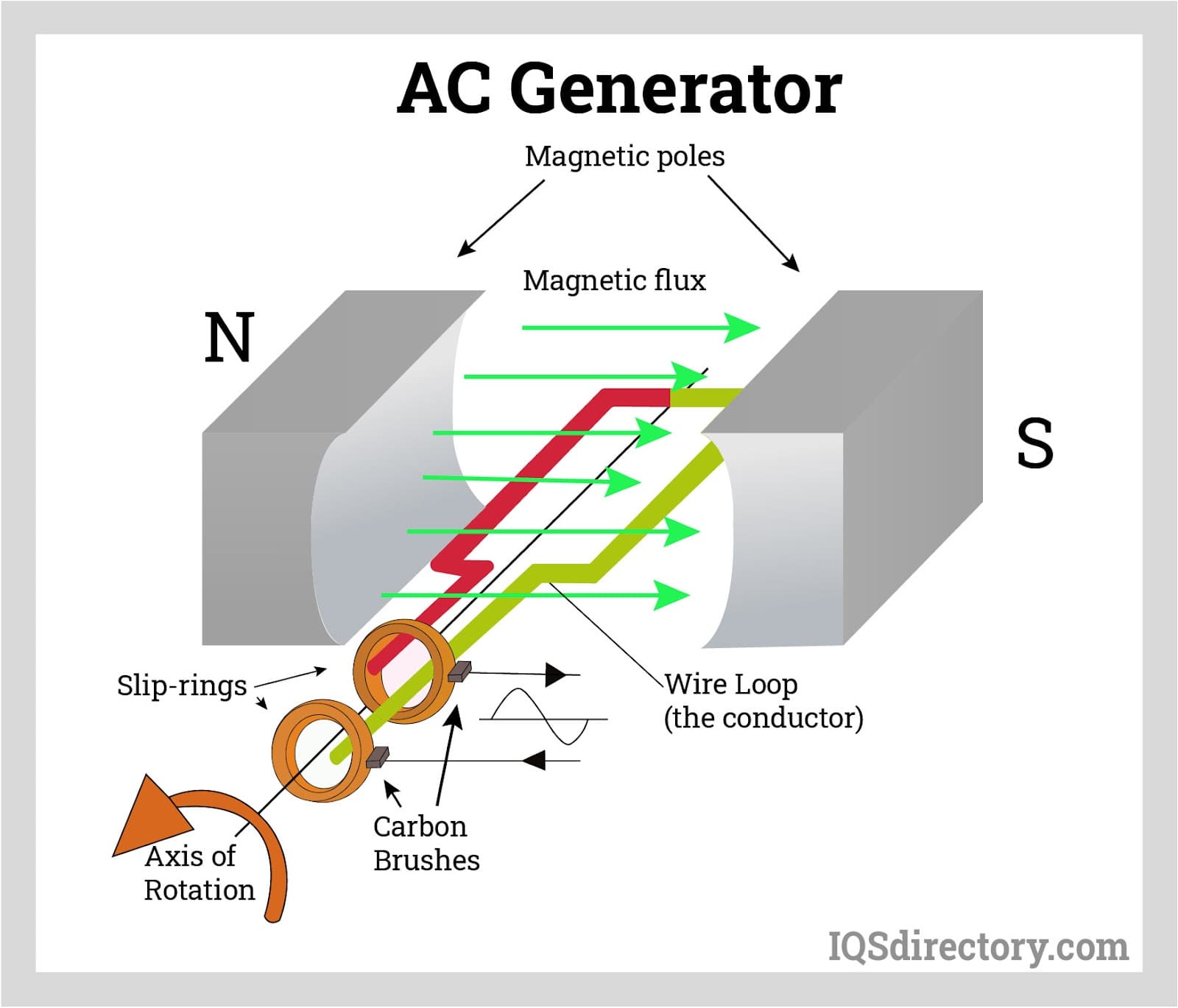
Credit: www.iqsdirectory.com
Frequently Asked Questions
Why Do Generators Produce Alternating Current?
Generators produce alternating current (AC) due to the design of their electromagnetic systems. As the rotor spins within a magnetic field, it induces an electric current that alternates direction. This process allows for efficient transmission of electricity over long distances, making AC a preferred choice for power distribution.
What Is The Principle Behind Ac Generation?
The principle behind AC generation is electromagnetic induction. This occurs when a conductor, such as a wire, moves through a magnetic field. The movement causes electrons in the conductor to flow, creating an alternating current. This principle is fundamental to how most generators operate.
How Does Ac Differ From Dc?
AC, or alternating current, changes direction periodically, while DC, or direct current, flows in one direction. This key difference affects how electricity is used in various applications. AC is more efficient for long-distance transmission, whereas DC is often used in batteries and electronic devices.
What Are The Advantages Of Using Ac?
Using AC offers several advantages, including efficient long-distance transmission and the ability to easily transform voltages. AC generators can produce high voltage, which reduces energy loss during transmission. Additionally, many appliances are designed to operate on AC power, making it more versatile for everyday use.
Conclusion
Generators produce alternating current due to their design. This type of current is efficient for power distribution. It travels long distances without losing much energy. Alternating current can easily change voltage levels. This makes it suitable for homes and industries.
Understanding why generators create AC helps us appreciate their role. They power our daily lives and support modern technology. Knowledge of this process can help us use electricity wisely. Embracing this understanding leads to a better appreciation of electricity’s importance.