
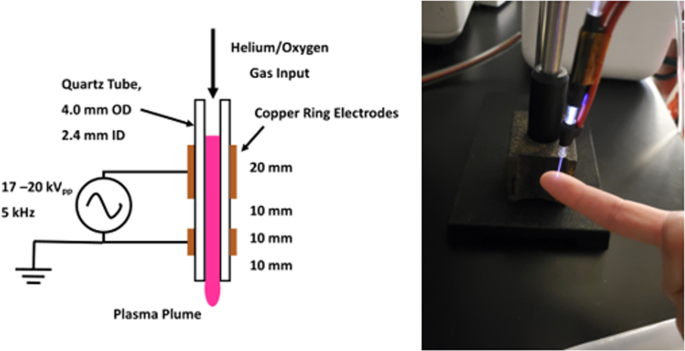
By applying strong electric fields or electromagnetic energy to air using DBD, corona, jets, arcs, or microwaves.
I have worked with plasma tools and taught lab classes on how to generate atmospheric plasma safely and effectively. This guide explains the core ideas, common methods, safety rules, and real-world tips so you can understand how to generate atmospheric plasma and decide the right approach for your needs.
Understanding atmospheric plasma
Atmospheric plasma is a partially ionized gas that exists at or near atmospheric pressure. It contains free electrons, ions, excited atoms, and photons. Atmospheric plasmas can be hot or cold. Cold plasmas have gas temperatures close to room temperature while electrons remain energetic. This allows surface processing without bulk heating.
Why this matters when learning how to generate atmospheric plasma:
- Plasma type affects equipment choice and safety.
- Non-equilibrium plasmas are useful for materials and bio work.
- Thermal plasmas are used for cutting and welding.
Common terms you will meet when studying how to generate atmospheric plasma:
- Ionization: removing electrons from atoms.
- Dielectric barrier discharge: a method using insulating layers to limit current.
- Plasma jet: a focused stream of plasma expelled into air.
- Corona discharge: a localized ionization near sharp electrodes.
Safety and legal considerations
Plasma work carries risks. High voltages, ozone, UV light, heat, and reactive species can harm people and materials. Treat all experiments as potentially dangerous.
Basic safety rules for learning how to generate atmospheric plasma:
- Always wear eye protection rated for UV and visible.
- Use gloves and lab coats when working with active plasma.
- Ensure good ventilation to remove ozone and nitrogen oxides.
- Work behind barriers and keep flammable materials away.
- Use low-power commercial kits or work under trained supervision.
Legal and compliance notes:
- Check local rules on ozone-producing devices and emissions.
- For medical or food uses, follow regulatory approvals and standards.
- Never perform experiments in public places or without permission.

Methods to generate atmospheric plasma
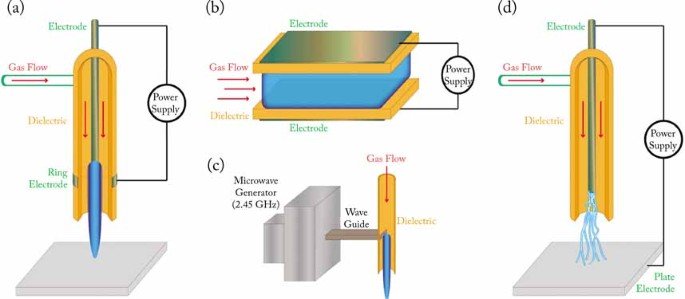
Below are the common practical approaches to learn how to generate atmospheric plasma. Each method has its strengths and typical uses.
Dielectric barrier discharge (DBD)
Principle: A high-voltage AC field across electrodes separated by at least one dielectric causes many short micro-discharges.
Applications: Surface cleaning, polymer activation, ozone generation.
Advantages: Relatively safe current levels and uniform treatment.
Limitations: Harder to focus into a jet or tight beam.
Equipment and general notes:
- Two electrodes with a dielectric layer on at least one.
- AC power source appropriate to the device design.
- Gas flow when treating localized areas.
Corona discharge
Principle: High field near sharp edges ionizes nearby air producing a corona.
Applications: Ionizers, electrostatic charge control.
Advantages: Simple geometry, low cost.
Limitations: Less uniform and produces more ozone.
Equipment and general notes:
- Sharp electrode paired with a grounded plane.
- Use under ventilation due to ozone.
Plasma jets (guided or free)
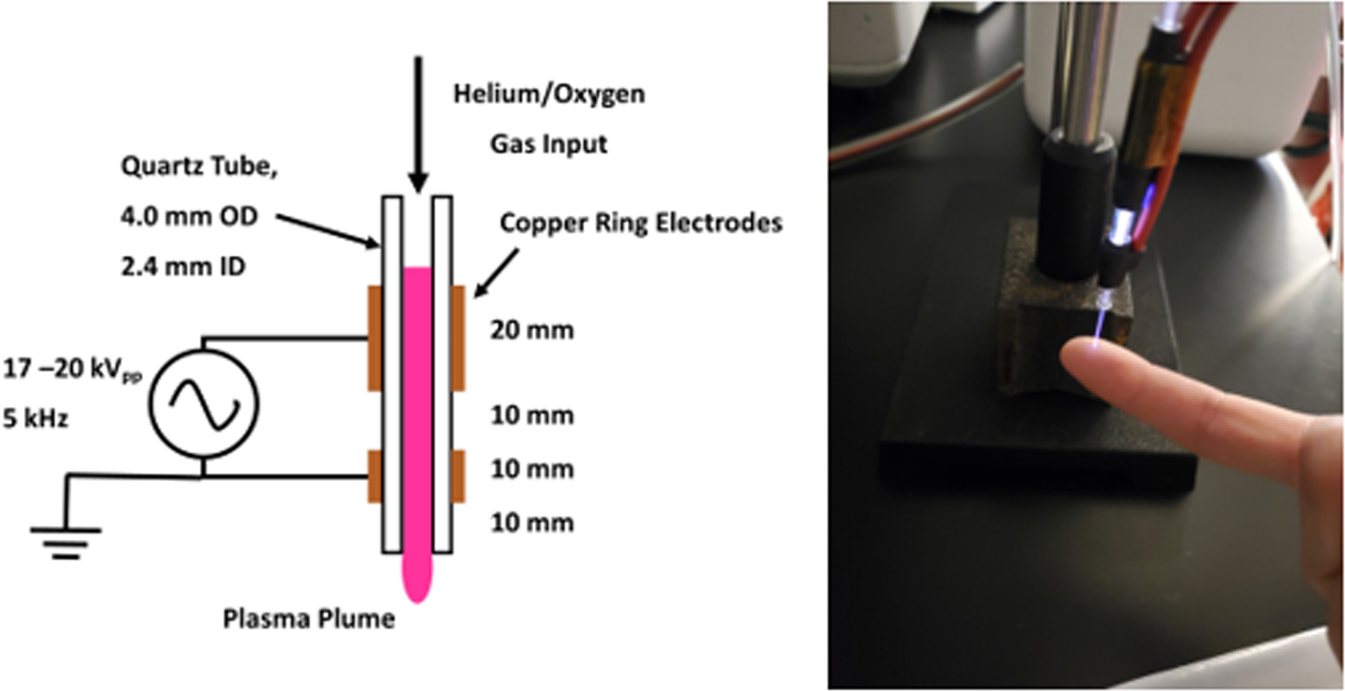
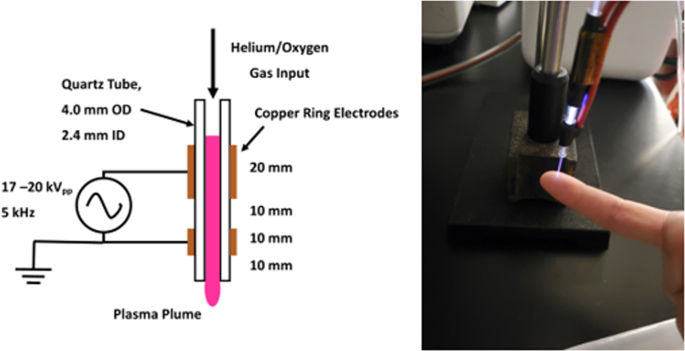
Principle: A carrier gas flows through a chamber where an electric field ionizes it, producing a jet of plasma into ambient air.
Applications: Localized surface treatment and biomedical research.
Advantages: Focused treatment, controllable chemistry with gas choice.
Limitations: Equipment is more complex and typically needs gas supply.
Equipment and general notes:
- Gas cylinder or generator for carrier gases like helium or argon.
- Nozzle or tube to shape the jet.
- Power supply and electrical coupling.
Microwave and RF plasmas
Principle: Electromagnetic waves couple energy into gas to drive ionization.
Applications: Thin film deposition, plasma etching, remote processing.
Advantages: Can produce stable plasmas over larger areas.
Limitations: More complex RF hardware and shielding needs.
Equipment and general notes:
- Waveguide or antenna structures to inject energy.
- Matching network and shielding to protect operators.
Arc discharges and glows
Principle: Sustained current between electrodes produces a bright plasma arc or glow.
Applications: Cutting, welding, lighting.
Advantages: High power and temperature.
Limitations: Hot plasma unsuitable for temperature-sensitive materials.
Equipment and general notes:
- Robust electrodes and cooling strategies.
- Strong safety measures for heat and light.
Practical setup guidance and best practices
If you are exploring how to generate atmospheric plasma, follow a clear plan. Focus on learning and safety rather than pushing limits.
Choose the right method:
- For learning and demos: consider small DBD kits or low-power plasma pens.
- For localized chemistry: plasma jets with a carrier gas are useful.
- For high-temperature tasks: arcs and thermal plasmas are common.
High-level setup steps (conceptual):
- Define your goal and safety constraints.
- Select a method that matches the application and skill level.
- Source components from reputable suppliers or use commercial kits.
- Test at low settings in a controlled area with proper shielding.
- Monitor air quality for ozone and NOx if you run open-air plasmas.
Diagnostics and validation:
- Use simple visual cues: color, glow shape, and stability.
- Use thermal checks to ensure surfaces do not overheat.
- Advanced labs use optical emission spectroscopy to identify species.
Troubleshooting tips from experience:
- If the discharge flickers, check electrode alignment and contamination.
- If ozone is high, increase ventilation or change operating mode.
- Replace worn dielectrics or electrodes that show pitting.
Applications, benefits, and limitations
Practical uses when you learn how to generate atmospheric plasma:
- Surface activation for adhesives and coatings.
- Sterilization and decontamination research.
- Material modifications like cross-linking or etching.
- Biomedical research into wound healing and sterilization.
- Plasma lighting and decorative effects.
Benefits:
- Can work at room pressure and with low gas heating.
- Enables chemical reactions that are hard to get with heat alone.
- Often fast and localized.
Limitations:
- Some methods produce ozone and reactive nitrogen species.
- Uniform treatment over large areas can be hard.
- Device lifetime depends on electrode and dielectric wear.
Materials and components commonly used
Understanding materials helps you choose the right approach for how to generate atmospheric plasma.
Typical components:
- Electrodes: copper, stainless steel, or coated metals.
- Dielectrics: glass, ceramic, or polymer layers to limit current.
- Carrier gases: argon, helium, or nitrogen for plasma jets.
- Power supplies: AC, RF, or microwave sources sized for the device.
- Flow controls and fittings for gas-delivery systems.
Maintenance tips:
- Clean electrodes regularly to avoid unstable discharges.
- Inspect dielectrics for cracks or contamination.
- Store gas cylinders securely and check regulators.
Personal experience and lessons learned
I learned how to generate atmospheric plasma during work on surface coating projects. Early on, I tried a homemade setup without proper ventilation. The room quickly filled with a sharp odor. That taught me to always run tests with strong exhaust and to monitor air quality.
Lessons I share:
- Start with a commercial educational kit to learn basics.
- Be patient with electrode alignment — small shifts change the plasma.
- Track what gas you use; a cheap change in carrier gas changed the treatment chemistry in my tests.
- Document every change. Small variations matter.
Frequently Asked Questions of how to generate atmospheric plasma
What is the safest way to start learning how to generate atmospheric plasma?
Begin with a commercial educational kit or work under supervision in a university lab. Use proper PPE and good ventilation to limit exposure to ozone and UV.
Can I generate atmospheric plasma at home?
It is possible but not recommended without experience, ventilation, and safety controls. Home setups often create ozone and UV that can be harmful.
Which method is best for surface sterilization?
Cold plasma jets and DBD devices are commonly used for sterilization research because they deliver reactive species without high heat. Device choice depends on the target and required chemistry.
Do I need special gases to generate atmospheric plasma?
You can use ambient air, but carrier gases like helium and argon make plasmas easier to sustain and focus. Gas choice affects chemistry and cost.
How do I know if my plasma is cold or hot?
Cold plasmas feel near room temperature at the treated surface while glow color and small heat signatures indicate non-thermal conditions. Thermal plasmas are visibly hot and can damage materials.
Conclusion
Learning how to generate atmospheric plasma combines curiosity, care, and methodical practice. Focus on safe methods, start small with proven kits or supervised lab time, and select the appropriate discharge type for your goal. With patience and proper safety, you can apply atmospheric plasma to cleaning, material work, or research. Try a guided project, document what you learn, and share results with a community or mentor to deepen your skills. Consider subscribing or commenting below to share your experiments or ask about specific setups.